Global Insights – QA Testing by Anusha
nks as necessary, making this the first true generator on the Internet. It uses a dictionary of over 200 Latin words, combined with a handful of model sentence structures, to generate Lorem Ipsum which looks reasonable. The generated Lorem Ipsum is therefore always free from repetition, injected humour, or non-characteristic words etc.

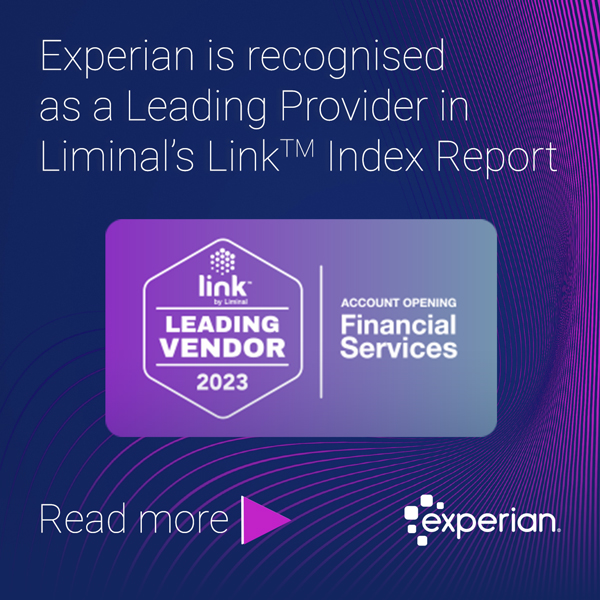
Liminal, a leading market intelligence firm recently recognized Experian as a market leader for compliance and fraud prevention capabilities and execution in its Liminal Link Index on Account Opening in Financial Services.

In today's fast-paced digital landscape, businesses are inundated with an unprecedented amount of data and information. Making informed decisions with the data quickly and effectively has become a crucial factor for success. Enter digital decisioning—a transformative approach that harnesses the power of data, analytics, and automation to drive reliable and expedited decision-making. This article delves into the world of digital decisioning, exploring its significance, components, and benefits. The Essence of Digital Decisioning At its core, digital decisioning is the process of leveraging software solutions that use digital decisioning platforms or custom-built engines to author decision logic; use decision intelligence technologies such as machine learning and AI; use digital decisions in vertical and horizontal use cases; and manage the full decision logic lifecycle, including feedback loops, to continuously improve decision logic. It enables organizations to make well-informed choices by automating and optimizing complex decision processes. By amalgamating data from various sources in real-time, including credit data, user behavior, market trends, historical data, and external factors, digital decisioning ensures that timely decisions are not only data-driven but also contextually relevant. Components of Digital Decisioning Continuous Data Feed: This is the lifeblood of digital decisions. Organizations normalize data from disparate sources to form comprehensive and accurate datasets. Customer data might include income, credit history, transactional data, bill payment, or digital footprint data; however, regardless of the sources, it’s critical that data is coalesced into a single, virtualized view. Advanced Analytics and Machine Learning: Analytics and machine learning algorithms are deployed to extract meaningful insights from the collected data. These insights are used to model decision scenarios, predict outcomes, and uncover hidden patterns. Decision Models: Decision models are created based on the insights derived from data analysis. These models define the rules and logic for making decisions, incorporating factors such as risk tolerance, business goals, and regulatory compliance. Direct Feedback Loop: Every decision has an outcome. For example, an automated loan offer is either accepted or declined by the customer. These outcomes — good and bad — automatically feed into the decisioning model, which enables the machine learning technology to “learn” which decisions are optimal, given the circumstances and customer profile. This enables the model to adapt and grow more accurately and precisely over time. Automation: Automation engines execute the decision models in real time, allowing for rapid and consistent decision-making without human intervention. This enhances efficiency and minimizes the risk of errors. According to a 2022 Gartner poll, the CIO Agenda, more than 80% of companies plan to keep or grow their investment in automation solutions. Benefits of Digital Decisioning Enhanced Accuracy: Digital decisioning eliminates human biases and inconsistencies, resulting in more accurate and objective decisions. Improved Efficiency: Automation reduces decision-making time from hours or days to milliseconds, enabling organizations to respond swiftly to market changes and customer demands. Hyper Personalization: By considering individual preferences, behaviors, and history, digital decisioning facilitates the creation of tailored experiences for customers, leading to higher satisfaction and engagement. Scalability: The automated nature of digital decisioning ensures that it can handle a high volume of decisions seamlessly, making it ideal for businesses experiencing rapid growth. Regulatory Compliance: Explainable decision models can be designed to incorporate regulatory guidelines and compliance requirements, reducing the risk of legal complications. Use Case: Respond faster to credit card applications and personalize cross-sell offers Customers apply online for a credit card from a bank. As they’re being pre-qualified, digital decisioning will instantly analyze the customers’ accounts with the bank including disclosed and undisclosed cash flow. A digital decisioning software solution enables the bank to assess risk exposure and anticipate the customer’s immediate need(s), thereby automating the application assessment and approval steps to reduce approval times from weeks to minutes. Based on the bank’s comprehensive understanding of that customer at that moment, it triggers a personalized cross-sell offer for another relevant financial product, automatically boosting incremental revenue. Conclusion Digital decisioning marks a pivotal advancement in how choices are made in business. By harnessing the power of data, analytics, and automation, organizations can make faster, more accurate decisions that are aligned with their goals and market realities. As this technology continues to evolve, it will reshape industries and empower individuals to navigate the complex digital landscape with confidence. Experian’s decisioning management platform allows clients to operationalize the power of rich data, advanced analytics, and automated decisioning software to support the customer lifecycle. Its key differentiators include credit risk, fraud risk, and strategy expertise, fast deployment of strategies into test and production, empowerment of business users, and proactive monitoring of strategy performance by users. Its key use cases include reducing acquisition costs, credit risk, and fraud risk, and improving acceptance rate and the customer journey. Experian has been named a Technology Leader in the August 2023 SPARK Matrix on Digital Decisioning Platforms report published by Quadrant Knowledge Solutions. The report highlights the growth of decisioning platforms and the changing market trends that are driving adoption, including the role machine learning and AI are playing in the technology market. This placement is proof that Experian offers best-in-class capabilities through market-leading data, orchestration and automation, advanced analytical models, decision performance, and reporting. Our cloud-based infrastructure enables a scalable and modular platform that allows our solutions to be suitable for customers of all sizes. Read the report Experian’s Decisioning Management Platform: Accelerating analytics, decisioning, and fraud detection automation Continuous improvement loop: Advanced machine learning models improve decisioning quality

As economic uncertainty continues to loom, the threat of fraud continues to grow and is becoming more sophisticated. It’s only going to get worse. Due to intensifying inflationary pressures, prices and costs have been increasing which has led to financial hardship impacting individuals and businesses. This provides an opportunity and motive for bad actors to figure out new ways to commit fraud. Federal Trade Commission data shows that consumers reported losing nearly $8.8 billion to fraud in 2022, an increase of more than 30 percent over the previous year. PwC’s Global Economic Crime and Fraud Survey 2022 shows 51% of surveyed organisations say they experienced fraud in the past two years, the highest level in their 20 years of research. Additional investments in fraud prevention technology are a priority for businesses to combat these evolving threats, according to Experian's Sept. 2022 Global Insights report, which states that 94% of businesses report it as the top priority. Since fraud is becoming more sophisticated, part of the challenge that businesses face is to constantly evaluate multiple solutions so that they can continuously improve their fraud detection and prevention capabilities. Investments that can deliver the highest ROI are the solutions that are integrated and orchestrated in a comprehensive fraud reduction intelligence platform. This gives businesses the flexibility to manage evolving strategies and mitigate threats with real-time decisioning. Experian’s CrossCore is an integrated digital identity and fraud risk platform. It offers global solutions to help protect businesses from fraud and maintain compliance with regulatory requirements, using real-time risk analytics and decision-making strategies. The platform aggregates various fraud and identity verification sources to consolidate risk and trust decisions for Experian clients throughout the consumer journey. Experian’s CrossCore has been recognized as an Overall Leader, Innovation Leader, Product Leader, and Market Leader in KuppingerCole’s Fraud Reduction Intelligence Platform Leadership Compass 2023. This recognition highlights Experian's comprehensive approach to combating fraud. It validates that CrossCore offers best-in-class capabilities by augmenting Experian’s industry-leading identity and fraud offerings with a highly curated ecosystem of partners which enables further optionality for our clients based on their specific needs. Read the report CrossCore's Capabilities