All posts by Guest Contributor

Experian defines how businesses should approach Identity Relationship Management for user authentication and devices to enable better fraud protection.

With a wave of HELOCs reaching the end-of-draw period, lenders are anxious to see how this will impact their portfolio. A new Experian study reveals likely consumer behaviors.

Organizations are beginning to use data to optimize or improve nearly every aspect of their organization. Make your data quality business case.

Bank executives don’t realize is they’re facing fraud because they’re literally inviting the fraudsters in bank branches.

Time heals countless things, including credit scores. Many of the seven million people who saw their VantageScore® credit scores drop to sub-prime levels after suffering a foreclosure or short sale during the Great Recession have recovered and are back in the housing market. These Boomerang Buyers — people who foreclosed or short sold between 2007 and 2014 and have opened a new mortgage — will be an important segment of the real estate market in the coming years. According to Experian data, through June 2016 roughly 800,000 people had boomeranged, with Los Angeles, Phoenix, and Sacramento housing the most buyers. Some analysts believe more than three million Americans will become eligible for a home over the next three years. Are potential Boomerang Buyers a great opportunity to boost market share or a high risk for a portfolio? Early trends are positive. The majority of Boomerang Buyers who opened mortgages between 2011 and June 2016 are current on their debts. An Experian study revealed more than 29 percent of those who short sold have boomeranged, and just 1.5 percent are delinquent on their mortgage —falling below the national average of 2.8 percent. This group is also ahead of or even with the national average for delinquency on auto loans (1.2 percent vs. the national average of 2.2 percent), bankcards (3 percent vs. 4.3 percent) and retail (even at 2.7 percent). For those Boomerang Buyers who had foreclosed, the numbers are also strong. More than 12 percent have boomeranged, with just 3 percent delinquent on their mortgage. They also match or are below national average delinquency rates on auto loans (1.9 percent) and bankcards (4.1 percent), and have a slightly higher delinquency rate for retail (3.5 percent). Due to their positive credit behaviors, Boomerang Buyers also have higher VantageScore® credit scores than before. On average, the overall non-boomerang group’s credit score sunk during a foreclosure but went up 10 percent higher than before the foreclosure, and Boomerang Buyers rose by nearly 14 percent. For people who previously had a prime credit score, their number dropped by nearly 5 percent, while those who boomeranged returned to the score they had prior to the foreclosure. By comparison, the overall non-boomerang and boomerang group saw their credit score drop during a short sale and increase more than 11 percent from before the short sale. For people who previously had prime credit, they dropped 2 percent while those who boomeranged were almost flat to where they were before the short sale. Another part of the equation is the stabilized housing market and relatively low loan-to-value (LTV) limits that lenders have maintained. In the past, borrowers most often strategically defaulted on their mortgages when their LTV ratios were well over 100 percent. So as long as lenders maintain relatively low LTV limits and the housing market remains strong, strategic default is unlikely to re-emerge as a risk.

Experian’s annual global fraud report reveals trends that can help organizations mitigate fraud and improve the customer experience
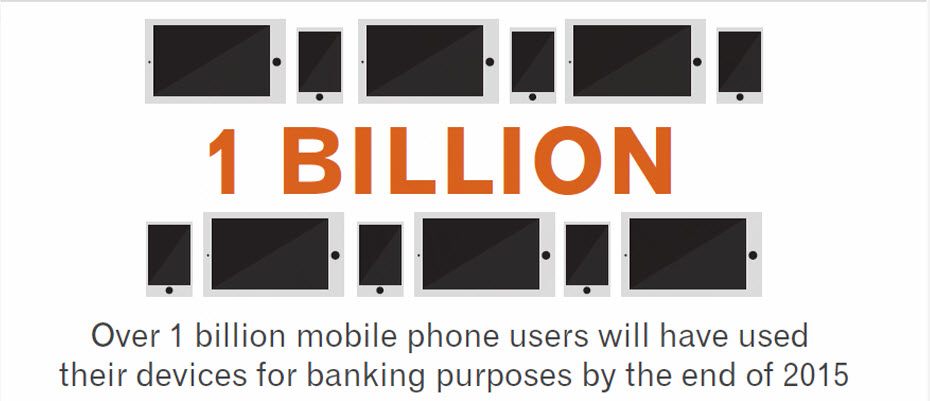
In an attempt to stay ahead of fraud, systems have become more complex, more expensive and more difficult to manage, leading to more customer friction

We are excited to announce that Experian Fraud and Identity Solutions will be presenting at Finovate Fall 2016!

As credit behavior and economic conditions evolve, using a model that's validated regularly can give lenders greater confidence in the model’s performance.
Congress recently took several actions signaling a growing interest in regulatory issues surrounding the Fintech sector. This growing attention follows a number of recent inquiries by federal and state regulators into the business practices in the industry. Subcommittee takes a deep dive into Fintech and OML regulatory landscape In July, the House Subcommittee on Financial Institutions and Consumer Credit held a hearing entitled Examining the Opportunities and Challenges with Financial Technology (“Fintech”). Witnesses and lawmakers voiced optimism that online marketplace lending can help to expand access to capital for consumers and small businesses, but the hearing also focused on a growing schism as to whether new regulations or changes to the underlying framework is necessary to ensure consumers are protected. Some lawmakers and the witness from the American Banking Association expressed concerns that the Fintech and marketplace lenders may benefit from being outside of the supervisory scope of prudential regulators and the Consumer Financial Protection Bureau (CFPB). Witnesses from the marketplace lending industry argued that they are obligated to meet all of the same regulatory compliance requirements as traditional lenders. Rep. McHenry introduces package of Fintech bills aimed at spurring innovation In addition, Congressman Patrick McHenry (R-NC), a member of the House Republican Leadership team and the Vice Chairman of the House Financial Services Committee, introduced two bills this month aimed at spurring innovation in the Fintech industry. H.R. 5724, the Protecting Consumers’ Access to Credit Act of 2016, would clarify that federal law preempts a loan’s interest rate as valid when made. The bill is in response to the Supreme Court’s recent decision not to hear Madden v Midland, a case in which the Second Circuit court ruled that the National Bank Act does not have a preemptive effect after the national bank has sold or otherwise assigned the loan to another party. The reading of this law has created uncertainty for Fintech companies and the banks that partner with them. H.R. 5725, the IRS Data Verification Modernization Act of 2016, requires the IRS to automate the Income Verification Express Service process by creating an Application Programming Interface (API). The legislation is aimed at speeding up and improving the automation of the loan application process. In particular, it is aimed at streamlining the process by which lenders gain access to tax transcript data. Currently, lenders may require applicants to fill out IRS form “4506-T,” which gives the lender the right to access a summarized version of their tax transcript as part of the process to confirm certain data points on their application. According to industry reports, this manual process at the IRS takes two to eight days, creating unnecessary delays for Fintech companies and banks that rely on leveraging data and technology to make faster, informed decision for consumer and small business lending Both bills have been referred to the House Financial Services Committee for review.

Recent survey by Experian revealed opportunities for businesses to build relationships with future homebuyers before they’re ready to obtain a loan.
Many fraud and compliance teams are struggling to keep pace with new business dynamics.

Securing systems from the Internet of Things - Credit Cornerstone

College grads ill-prepared to manage credit

Experian®, today announced that it has been included in Forrester’s 2016 “Vendor Landscape: Mobile Fraud Management Solutions” report