
Last week I attended the Merchant Risk Council’s 2011 MRC Annual e-Commerce Payments & Risk Conference. I presented a session titled “Efficiency and Empowerment in Risk-based Authentication” with a client who has been able to use knowledge based authentication as a sales enabler – Home Shopping Network. You might be wondering what I mean by this. It is actually pretty simple: Home Shopping Network already has a fraud prevention program in place and utilizes risk based authentication to send a percentage of orders to an outsort queue. By using knowledge based authentication to further verify the true consumer, Home Shopping Network has been able to release an increased portion of those orders for shipping, increasing both revenue and the customer experience. The paradigm shift was thinking of knowledge based authentication as a sale enabler, rather than just a fraud tool. It was a great experience, to help share the story of this client’s success. If you are interested in the Merchant Risk Council: The Merchant Risk Council (MRC) is a merchant-led trade association focused on electronic commerce risk and payments. They lead industry networking, education, benchmarking and advocacy programs to make electronic commerce more efficient, safe and profitable. For more information on the Home Shopping Network, visit: http://www.hsn.com
By: Kristan Frend I was recently pleased to see that the state I reside in, Minnesota finished in the bottom third of a state ranking. Luckily the rankings weren’t about overall health (#6), high school graduation (#3), or SAT scores (#2); instead it was the Federal Trade Commission’s state identity theft complaint ranks. Minnesota has just 49.2 complaints per 100,000 population, whereas the highest ranked state, Florida, as 114.8 complaints per 100,000 population. The top three states leading identity theft consumer complaints (per 100,000 population) included Florida, Arizona, and California. Besides warm sunshine and top-tier golf courses, what do these three states have in common? According to the February 2011 RealtyTrac U.S. Foreclosure Market Report™, all three rank in the top 5 states for foreclosure, and two of the three (Florida and California) rank #49 and #50 in unemployment rates, according to a March 2011 report released by the Bureau of Labor Statistics. On a national level unemployment rates and identity fraud incidence rates both improved from 2009 to 2010. From 2009 to 2010, unemployment rates went from 10.0% to 9.4% while according to Javelin’s 2010 Annual Identity Fraud Survey Report, identity fraud incidence rates fell from 4.8% to 3.5%. While it may be inaccurate to state that economic distress causes higher rates of identity fraud, there does seem to be a natural correlation between economic downswings and fraudulent activity. As we move further into 2011, it will be interesting to see if identity fraud incidence rates will continue to decrease as unemployment and economic outlook is on the upward swing.
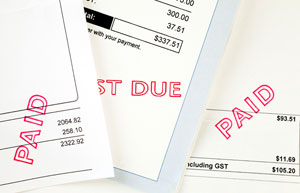
There’s no question times have been tough for consumers in the last few years due to the higher incidence of unemployment, bankruptcies, home foreclosures and increased credit balances. Unfortunately, these issues have a way of trickling down to communication companies’ collection departments, many of which are scrambling with heavier workloads and fewer resources. The key for cable, wireless, and telecom companies like yours is to prioritize your collection portfolio by first contacting the people most likely to pay. Once you’ve identified these people, your next task is to access and record any changes to their accounts, such as a new phone number or any improvements to their credit profile. But how can you get these updates without having to check their credit reports on a regular basis? Trigger program to the rescue By scrapping the usual manual skip tracing activities and using a “trigger” program, telecom industry collection staff can proactively obtain information as fresh as 24 hours old. Most trigger programs allow you to monitor any type of data, such as phone numbers, addresses, or places of employment. You can even use events, such as a change in the debtor’s financial status, to trigger an alert. This is especially helpful for cases in which your collection team has the right contact information, but the customer does not have the ability to pay. Being the first to contact the debtor when he or she again has money is crucial, because many collectors are likely competing for these funds to pay off debt. Save time, save money Most trigger program providers will monitor your portfolio for free, only charging on a per-trigger basis. Not only does this save valuable collector time, it also avoids the expense of pulling a full credit report on the consumer (and hoping that the information was recently updated). As more and more of your collection accounts become active again, and your customers’ credit improves, a trigger program helps your company be first in line to contact them for repayment. To learn more about how collection account monitoring tools can benefit your company, read our case study about how accounts receivable management firm First Financial Asset Management, Inc. was able to increase its collections by $3.5 million—a return of $72 for every $1 spent on trigger data.
- List 1
- List 2
- List 3
<iframe width=”560″ height=”315″ src=”https://www.youtube.com/embed/35exOG0jSJ0?si=amHCm-pJmzhZc9TT” title=”YouTube video player” frameborder=”0″ allow=”accelerometer; autoplay; clipboard-write; encrypted-media; gyroscope; picture-in-picture; web-share” referrerpolicy=”strict-origin-when-cross-origin” allowfullscreen></iframe>
Testing the Border Radius
Changing the heading Page
Last week I attended the Merchant Risk Council’s 2011 MRC Annual e-Commerce Payments & Risk Conference. I presented a session titled “Efficiency and Empowerment in Risk-based Authentication” with a client who has been able to use knowledge based authentication as a sales enabler – Home Shopping Network. You might be wondering what I mean by this. It is actually pretty simple: Home Shopping Network already has a fraud prevention program in place and utilizes risk based authentication to send a percentage of orders to an outsort queue. By using knowledge based authentication to further verify the true consumer, Home Shopping Network has been able to release an increased portion of those orders for shipping, increasing both revenue and the customer experience. The paradigm shift was thinking of knowledge based authentication as a sale enabler, rather than just a fraud tool. It was a great experience, to help share the story of this client’s success. If you are interested in the Merchant Risk Council: The Merchant Risk Council (MRC) is a merchant-led trade association focused on electronic commerce risk and payments. They lead industry networking, education, benchmarking and advocacy programs to make electronic commerce more efficient, safe and profitable. For more information on the Home Shopping Network, visit: http://www.hsn.com
By: Kristan Frend I was recently pleased to see that the state I reside in, Minnesota finished in the bottom third of a state ranking. Luckily the rankings weren’t about overall health (#6), high school graduation (#3), or SAT scores (#2); instead it was the Federal Trade Commission’s state identity theft complaint ranks. Minnesota has just 49.2 complaints per 100,000 population, whereas the highest ranked state, Florida, as 114.8 complaints per 100,000 population. The top three states leading identity theft consumer complaints (per 100,000 population) included Florida, Arizona, and California. Besides warm sunshine and top-tier golf courses, what do these three states have in common? According to the February 2011 RealtyTrac U.S. Foreclosure Market Report™, all three rank in the top 5 states for foreclosure, and two of the three (Florida and California) rank #49 and #50 in unemployment rates, according to a March 2011 report released by the Bureau of Labor Statistics. On a national level unemployment rates and identity fraud incidence rates both improved from 2009 to 2010. From 2009 to 2010, unemployment rates went from 10.0% to 9.4% while according to Javelin’s 2010 Annual Identity Fraud Survey Report, identity fraud incidence rates fell from 4.8% to 3.5%. While it may be inaccurate to state that economic distress causes higher rates of identity fraud, there does seem to be a natural correlation between economic downswings and fraudulent activity. As we move further into 2011, it will be interesting to see if identity fraud incidence rates will continue to decrease as unemployment and economic outlook is on the upward swing.
There’s no question times have been tough for consumers in the last few years due to the higher incidence of unemployment, bankruptcies, home foreclosures and increased credit balances. Unfortunately, these issues have a way of trickling down to communication companies’ collection departments, many of which are scrambling with heavier workloads and fewer resources. The key for cable, wireless, and telecom companies like yours is to prioritize your collection portfolio by first contacting the people most likely to pay. Once you’ve identified these people, your next task is to access and record any changes to their accounts, such as a new phone number or any improvements to their credit profile. But how can you get these updates without having to check their credit reports on a regular basis? Trigger program to the rescue By scrapping the usual manual skip tracing activities and using a “trigger” program, telecom industry collection staff can proactively obtain information as fresh as 24 hours old. Most trigger programs allow you to monitor any type of data, such as phone numbers, addresses, or places of employment. You can even use events, such as a change in the debtor’s financial status, to trigger an alert. This is especially helpful for cases in which your collection team has the right contact information, but the customer does not have the ability to pay. Being the first to contact the debtor when he or she again has money is crucial, because many collectors are likely competing for these funds to pay off debt. Save time, save money Most trigger program providers will monitor your portfolio for free, only charging on a per-trigger basis. Not only does this save valuable collector time, it also avoids the expense of pulling a full credit report on the consumer (and hoping that the information was recently updated). As more and more of your collection accounts become active again, and your customers’ credit improves, a trigger program helps your company be first in line to contact them for repayment. To learn more about how collection account monitoring tools can benefit your company, read our case study about how accounts receivable management firm First Financial Asset Management, Inc. was able to increase its collections by $3.5 million—a return of $72 for every $1 spent on trigger data.