Regulatory Compliance

Federal agencies are most directly impacted by new NIST standards but is a shift in identity proofing for consumers, businesses and public sector agencies.

The U.S. Senate Banking Committee passed a financial regulatory relief bill recently, which will impact credit reporting in the new year. Learn what changes are to come.

Mandatory updates to data reporting and collections procedures have been announced and implemented. Have you made the required changes?

New CFPB study demonstrates the importance of moving forward with inclusion of new sources of high-quality financial data — like on-time payment data from rent, utility and telecommunications providers — into a consumer’s credit file.

Later this year, FICO will retire its Score V1, making it mandatory for those lenders still using the old software to find another solution.
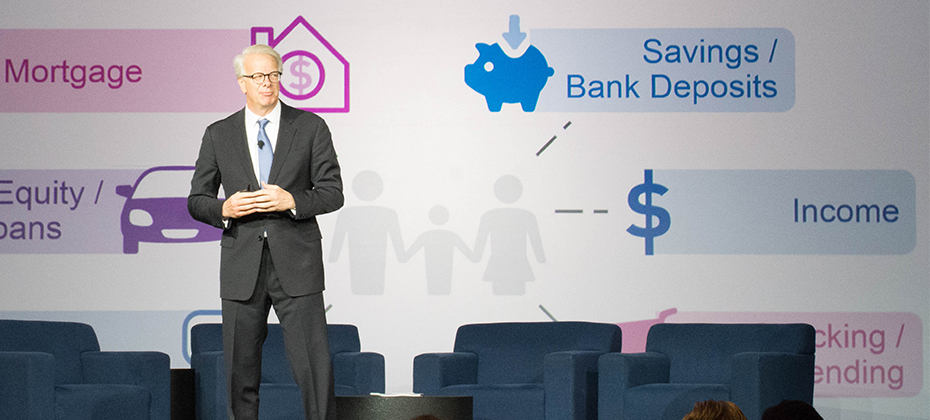
So many insights and learnings to report after the first full day of 2017 Vision sessions. From the musings shared by tech engineer and pioneer Steve Wozniak, to a panel of technology thought leaders, to countless breakout sessions on a wide array of business topics … here’s a look at our top 10 from the day. A mortgage process for the digital age. At last. In his opening remarks, Experian President of Credit Services Alex Lintner asked the audience to imagine a world when applying for a mortgage simply required a few clicks or swipes. Instead of being sent home to collect a hundred pieces of paper to verify employment, income and assets, a consumer could click on a link and provide a few credentials to verify everything digitally. Finally, lenders can make this a reality, and soon it will be the only way consumers expect to go through the mortgage process. The global and U.S. economies are stable. In fact, they are strong. As Experian Vice President of Analytics Michele Raneri notes, “the fundamentals and technicals look really solid across the countries.” While many were worried a year ago that Brexit would turn the economy upside down, it appears everything is good. Consumer confidence is high. The Dow Jones Index is high. The U.S. unemployment rate is at 4.7%. Home prices are up year-over-year. While there has been a great deal of change in the world – politically and beyond – the economy is holding strong. The rise of the micropreneur. This term is not officially in the dictionary … but it will be. What is it? A micropreneur is a business with 0 to 4 employees bringing in no more than $200k in annual revenue. But the real story is that numbers show microbusiness are improving on many fronts when it comes to contribution to the economy and overall performance compared to other small businesses. Keep an eye on these budding business people. Fraud is running fierce. Synthetic identity losses are estimated in the hundreds of millions annually, with 50% year-over year growth. Criminals are now trying to use credit cleaners to get tradelines removed from used Synthetic IDs. Oh, and it is essential for businesses to ready themselves for “Dark Web” threats. Experts advise to harden your defenses (and play offense) to keep pace with the criminal underground. As soon as you think you’ve protected everything, the criminals will find a gap. The cloud is cool and so are APIs. A panel of thought leaders took to the main stage to discuss the latest trends in tech. Experian Global CIO Barry Libenson said, “The cloud has changed the way we deliver services to our customers and clients, making it seamless and elastic.” Combine that with API, and the goal is to ultimately make all Experian data available to its customers. Experian President of Decision Analytics Steve Platt added, “We are enabling you to tap into what you need, when you need it.” No need to “rip and replace” all your tech. Expect more regulation – and less. A panel of regulatory experts addressed the fast-changing regulatory environment. With the new Trump administration settling in, and calls for change to Dodd-Frank and the Consumer Financial Protection Bureau (CFPB), it’s too soon to tell what will unfold in 2017. CFPB Director Richard Cordray may be making a run for governor of Ohio, so he could be transitioning out sooner than the scheduled close of his July 2018 term. The auto market continues to cruise. Experian’s auto expert, Malinda Zabritski, revealed the latest and greatest stats pertaining to the auto market. A few numbers to blow your mind … U.S. passenger cars and light trucks surpassed 17 million units for the second consecutive year Most new vehicle buyers in the U.S. are 45 years of age or older Crossover and sport utility vehicles remain popular, accounting for 40% of the market in 2016 – this is also driving up finance payments since these vehicles are more expensive. There are signs the auto market is beginning to soften, but interest rates are still low, and leasing is hot. Defining alternative data. As more in the industry discuss the need for alternative data to decision, it often gets labeled as something radical. But in reality, alternative data should be simple. Experian Sr. Director of Government Affairs Liz Oesterle defined it as “getting more financial data in the system that is predicted, validated and can be disputed.” #DeathtoPasswords – could it be a reality? It’s no secret we live in a digital world where we are increasingly relying on apps and websites to manage our lives, but let’s throw out some numbers to quantify the shift. In 2013, the average U.S. consumer had 26 online accounts. By 2015, that number increased to 118 online accounts. By 2020, the average person will have 207 online accounts. When you think about this number, and the passwords associated with these accounts, it is clear a change needs to be made to managing our lives online. Experian Vice President David Britton addressed his session, introducing the concept of creating an “ultimate consumer identity profile,” where multi-source data will be brought together to identify someone. It’s coming, and all of us managing dozens of passwords can’t wait. “The Woz.” I guess you needed to be there, but let’s just say he was honest, opinionated and notes that while he loves tech, he loves it even more when it enables us to live in the “human world.” Too much wonderful content to share, but more to come tomorrow …

In a May 4 speech before the ACA International Conference in Washington, FCC Commissioner Michael O’Rielly criticized the FCC’s past decisions on Telephone Consumer Protection Act (TCPA) and outlined his vision on the direction that the new Commission should head to provide more certainty to businesses. Commissioner O’Rielly noted that prior decisions by the FCC and courts have “expanded the boundaries of TCPA far beyond what I believe Congress intended.” He said that the new leadership at the Commission and a new Bureau head overseeing TCPA, provides the FCC with the opportunity to “undo the misguided and harmful TCPA decisions of the past that exposed legitimate companies to massive legal liability without actually protecting consumers.” O’Rielly laid out three principles that he thought would help to frame discussions and guide the development of replacement rules. First, he said that legitimate businesses need to be able to contact consumers to communicate information that they want, need or expect to receive. This includes relief for informational calls, as well as valid telemarketing calls or texts. Second, Commissioner O’Rielly said that FCC should change the definition of an autodialer so that valid callers can operate in an efficient manner. He went on to say that if FCC develops new rules to clarify revocation of consent, it should do so in a clear and convenient way for consumers, but also does not upend standard best practices of legitimate companies. Third, O’Rielly said that the FCC should focus on actual harms and bad actors, not legitimate companies. While Commissioner O’Rielly’ s comments signal his approach to TCPA reform, it is important to note that FCC action on the issue us unlikely to happen overnight. A rule must be considered by the Commission, which will have to allow for public notice and comment. Experian will continue to monitor regulatory and legislative developments on TCPA.

May is Military Appreciation Month, and also a fitting time to check in on the latest news attached to the Military Lending Act, with card compliance coming in October 2017.

Policymakers in Washington continue to grapple with how to spur responsible innovation and how fintech fits into the existing regulatory paradigm.

Prescreen, prequalification and preapproval. They sound similar, but it's important for lenders to understand the differences between these credit offers.

Experian shares five trends and twists coming over the next 12 months, that could push new boundaries and in many cases improve the customer experience as it pertains to the world of credit and finance.
As 2016 comes to a close, many in the financial services industry are trying to assess the impact the Trump administration and Republican controlled Congress will have on regulatory issues. Answers to these questions may be clearer after President-elect Trump is inaugurated on Jan. 20. However, those in the federal regulatory environment are already exploring oversight and regulation of the FinTech and marketplace lending sector. Warning on alternative credit risk models Inquiries by federal and state policymakers over the past year have centered on how FinTech and marketplace lenders are assessing credit risk. In particular, regulators have asked about how credit models different from traditional credit scoring models and what, if any, new attributes or data are being incorporated into credit risk models for consumers and small businesses. On Dec. 2, Federal Reserve Governor Lael Brainard signaled that policymakers continue to be interested in this area during a wide-ranging speech on the potential opportunities and risks associated with FinTech. In particular, Brainard warned that “While nontraditional data may have the potential to help evaluate consumers who lack credit histories, some data may raise consumer protection concerns” and that nontraditional data “… may not necessarily have a broadly agreed upon or empirically established nexus with creditworthiness and may be correlated with characteristics protected by fair lending laws.” Brainard also suggested that there are transparency concerns with alternative scoring models, saying that “alternative credit scoring methods present new challenges that could raise questions of fairness and transparency” given that consumers may not always understand what data is used utilized and how it impacts a consumer’s ability to access credit at an affordable price. Look for regulators and Congress to continue to focus on the fairness and accuracy of new credit risk models and the data underpinning those models in debates surrounding FinTech and Marketplace lending in 2017. A national charter for FinTech? Earlier this month, the Office of the Comptroller of the Currency (OCC) announced that it was considering the creation of a national charter for FinTech lenders. There has long been speculation that the OCC would offer a national charter for FinTech. Analysts have suggested that the creation of a charter could help increase regulatory oversight of the growing market and also provide additional regulatory certainty for the emerging FinTech industry. The OCC’s proposal would create a special purpose national bank charter for FinTech businesses that are engaged in at least one of three core banking activities: receiving deposits; paying checks; or lending money. The OCC will be developing a formal agency policy for evaluating special purpose bank charters for Fintech companies that will designate the specific criteria that companies applying for a charter will have to meet for approval. OCC has suggested that this will likely focus on safety and soundness; financial inclusion; consumer protection; and community reinvestment. The OCC is collecting comments on the proposed policy through Jan. 15, 2017.

Regardless of personal political affiliation or opinion, the presidential election is over, and the focus has shifted from debate to the impact the new administration will have on the regulatory landscape for banks. While many questions remain regarding the policy direction of a Trump administration, one thing is near certain: change is on the horizon. While on the campaign trail, Trump took aim at banking regulation: “Dodd-Frank has made it impossible for bankers to function. It makes it very hard for bankers to loan money…for people with businesses to create jobs. And that has to stop.” And in his first post-election interview, Trump outlined named financial industry deregulation to allow “banks to lend again” as a priority. Before Election Day, Experian surveyed members of the financial community about their thoughts on regulatory affairs. An overwhelming majority—85 percent—believed the election outcome would impact the current environment. Most surveyed are also feeling the weight of financial regulations established by the Obama administration in the wake of the severe financial crisis of 2008. Five out of six respondents feel current regulations have placed an undue burden on financial institutions. Three-quarters believe the regulations reduce the availability of credit. And less than half believe the regulations are positive for consumers. According to our survey, complying with Dodd-Frank and other regulations has a financial impact for most, with 76 percent realizing a significant increase in spend since 2008. Personnel and technology spend top the list, with an increase of 78 percent and 76 percent, respectively. Top regulations that require the most resources to ensure compliance: the Dodd-Frank Act (70 percent), Fair Lending Act (55), Bank Secrecy Act/Anti-Money Laundering (47) and Fair Credit Reporting Act (42). Specifically, the Dodd Frank and TILA-RESPA Integrated Disclosure were the two most frequently mentioned regulations requiring additional investment, followed by the Military Lending Act and Bank Secrecy Act/Anti-Money Laundering. What lies ahead? It’s difficult to determine how the Trump administration will tackle banking regulations and policy, but change is in the air.

FinCEN and email-compromise fraud sheds additional light on the threats of Email Account Compromise and Business Email Compromise.

Under the updated requirements for Customer Due Diligence, financial institutions must expand programs.