
It’s been one week since the highly anticipated Cannes Lions 2024—the event of the year for advertising and creativity. We are excited to present our top five takeaways from the event, revealing the industry’s priorities for the year ahead.
Navigating the post-cookie era
One of the pivotal discussions at Cannes Lions 2024 centered around signal loss and identity resolution. The industry is grappling with the impact of third-party cookie deprecation, driving a move toward alternative identifiers such as Unified I.D. 2.0 (UID2) and ID5, and contextual targeting. This shift aims to uphold accurate audience targeting while addressing privacy concerns through authenticated forms of identity. Brands and agencies are actively exploring these new strategies to replace traditional cookie-based methods with stable, privacy-compliant solutions.
First-party data providers are also seeking data onboarding solutions to navigate this transition. They need streamlined integration processes, comprehensive ID-matching capabilities, and transparent pricing structures.
Fortified by our roots in offline data and significant investments in our Graph, and our newest offering, Third-Party Onboarding, you can count on Experian’s solutions to maintain strong signal coverage in a cookieless world so you can have uninterrupted, effective marketing.
Unifying targeting across TV platforms
Another focal point at Cannes Lions 2024 was the challenge of navigating TV fragmentation. Advertisers strive for unified targeting across diverse TV platforms, including connected TV (CTV) and traditional linear TV. They emphasize integrating data sources and ad servers to reach audiences across these platforms. CTV continues to stand out in conversations as a crucial and expanding area for advertising, offering new opportunities for targeted campaigns and broader audience engagement.
We’re fueling the expansion of CTV advertising through our signal-agnostic Graph, which seamlessly integrates CTV IDs, universal identifiers such as UID2, IP addresses, and mobile ad IDs (MAIDs) for targeted campaigns. Our newest offering, Third-Party Onboarding, also provides connectivity to more than 10 TV destinations.
Transforming marketing with AI
We would be remiss not to mention the hottest topic at Cannes Lions 2024, the transformative power of AI within data and identity. Discussions highlighted AI’s pivotal role in revolutionizing marketing strategies by enhancing campaign planning, dynamic optimization, measurement, and analytics. AI is not just a tool; it enables marketers to work smarter and faster. With real-time data enrichment, AI will empower marketers to manage large-scale campaigns with unprecedented efficiency and precision.
Marketers envision a future where AI seamlessly integrates into every aspect of their strategy, from understanding and predicting consumer behavior to automating personalized engagement. They see AI as the key to unlocking new levels of precision and efficiency, allowing them to adjust real-time campaigns based on consumer interactions and preferences. This vision includes using AI for deeper audience insights, ensuring that every marketing touchpoint is relevant and impactful.
Striving for strategies for proven ROI
Discussions on measurement at Cannes Lions 2024 focused on how measurement metrics are evolving to keep pace with industry changes. Cross-device, multi-touch attribution, and outcome-based metrics like consumer lifetime value and conversion rates are becoming more important. Accurate measurement is critical for demonstrating campaign impact and optimizing future marketing efforts.
These developments reflect a shift toward more sophisticated measurement practices to optimize marketing strategies and prove tangible ROI.
Through our Consumer Sync solutions, you can improve your attribution quality to understand the true path to conversion by linking all digital touchpoints to a single person.
Creating integrated consumer experiences with retail media networks
Retail media networks (RMNs) are becoming more integrated and connected. Their goal is to provide consumers with a unified online and physical store experience and create a comprehensive marketplace where retailers can work together and use shared data to better reach and engage with their audiences.
“Throughout the conversations, it’s been clear that there’s a lot of demand and interest in building and growing retail media networks. What strikes me is that Experian products, both across identity and data, can be a big support to help grow and fill in these gaps.”
budi tanzi, vp, product
Discussions at Cannes Lions 2024 emphasized how collaborations with technology providers and industry groups can help set measurement standards and ensure transparency. These partnerships can enable RMNs to expand their reach and compete with larger advertising platforms, driving industry growth and innovation.
Experian offers comprehensive solutions for RMNs. Our Profile Insights and Enrichment tools offer valuable customer behavior insights, driving smarter inventory management. We enhance ad targeting beyond item-level purchases with accurate data and syndicated audiences, aligning with broader media strategies. Third-Party Onboarding enables expansion beyond owned and operated inventory, supported by our Graph for enhanced connectivity.
“Data providers are excited to eliminate digital hops in their data flow using Experian Third-Party Onboarding. Third-Party Onboarding is uniquely set up to reduce friction for third-party data and the ecosystem in general.”
adam kobus, director of data partnerships
Experian events at Cannes Lions 2024
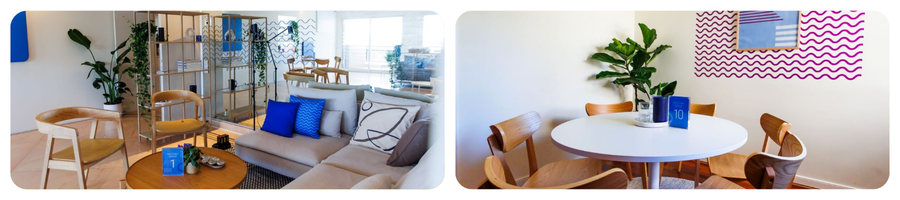
This year, we hosted a kick-off happy hour, content studio, and members of our team joined various panels across the Croisette. Here’s a recap of our week at Cannes.
Experian’s kick-off event with Audigent and LG Ad Solutions
To kick off the week, we co-hosted a happy hour with Audigent and LG Ad Solutions. At our sold-out event, attendees enjoyed a live performance from St. Lucia.

Content studio
We interviewed 27 thought leaders across the industry in our content studio. Our interviews covered topics like:
• Signal loss
• Connected and linear TV
• Data collaboration
• Future of addressability and personalization
• Retail media networks
• And more
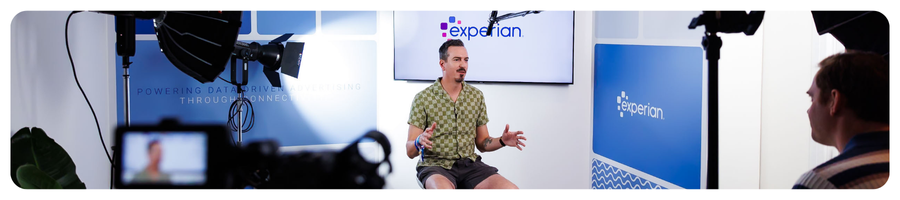
We’ll be sharing more from our content studio over the coming months. Follow us on LinkedIn or sign up for our email newsletter for the latest updates.
Panel participation
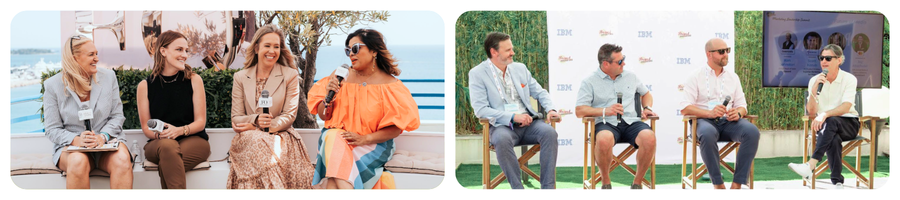
The Experian team participated in four panels throughout the week across the Croisette:
- Scott Kozub, VP, Product Management, joined the Brand Innovators panel, “Future of media,” where he discussed how media companies can adapt their content and distribution strategies to cater to changing consumption habits as media becomes more fragmented across devices and platforms.
- Kimberly Gilberti, Chief Product Officer, joined OpenX’s panel, “Unlocking addressability: Navigating the post-cookie era,” to discuss the prevailing strategies for achieving addressability in a cookieless world.
- Budi Tanzi, VP, Product, participated in Audigent’s panel, “Curation in regulated industries,” where they talked about why curation is effective in regulated markets like finance and health.
- Rachael Donnelly, Chief Marketing Officer, joined The Female Quotient in the Equality Lounge for their panel “Emotional agility: Leading beyond the double standard,” where they explored the power of diverse storytelling and its impact on audience engagement, brand building, and the bottom line.
Let’s keep the momentum going
As we wrap up another exciting week at Cannes Lions, the discussions have shown us the potential for innovation in signal loss, TV fragmentation, AI, measurement, and retail media networks. These topics pave the way for a more connected future in advertising. Which trends are you most excited about? Let’s continue the conversation! Reach out to us, and let’s dive deeper into these topics together.
We understand that customers may be experiencing uncertainty with their marketing strategies with Oracle’s exit from advertising. Experian is one of Oracle’s primary data providers powering their audiences. We can help marketers easily make the switch from Oracle audiences to Experian audiences without changes in advertising effectiveness or efficiency.
We have mapped Oracle audiences to Experian audiences to make it easy for you to switch your campaign targeting to Experian. Reach out to your account representative or our audiences team for information about audience mapping and finding the most relevant Experian audience for your campaigns.
Latest posts

Same-sex marriage is a hot button topic no matter on which side of the issue you stand. But there can be no denying that same-sex couples are finding an expanding number of options in the U.S. and abroad should they decide to legally wed. The 2010 LGBT Consumer Report explores the household arrangements and behaviors of America's LGBT consumers—in particular, those associated with marriage—compared to America's heterosexual population. You will learn that despite being less than half as likely to be married, lesbian, gay and bisexual adults are 22% more likely than their "straight" counterparts to have recently wed or to be planning nuptials for the next year. Looking for that perfect gift for the newly wed couple? You will also get some shopping tips for identifying favored retailers of lesbian, gay and bisexual shoppers. We'll start by sizing the LGBT market. An estimated 3.7% of the non-Hispanic adult population (7.1 million adults) self-identifies as LGBT, which can be broken down as follows: The average heterosexual adult lives in a household with 1.9 other individuals, including adults and kids. By comparison, the average lesbian shares her home with only 1.6 other people. Gay men live in the smallest households, sharing their home with only one other person, on average. Over a third of gay or bisexual men (38%) share their home with at least one other adult male, compared with only 24% of heterosexual men who live under the same roof as another adult male. Thirty-five percent of gay or bisexual men say they live with one (and only one) other adult male, a living arrangement that has a higher chance of consisting of a same-sex, co-habiting couple. Over half of lesbians or bisexual women (53%) share their home with at least one other adult female, compared with only 23% of heterosexual women who live under the same roof as another adult female. Forty-three percent of lesbian or bisexual women say they live with one (and only one) other adult female, a living arrangement that has a higher chance of consisting of a same-sex, co-habiting couple. Lesbian, Gay and Bisexual adults (LGB) as a group are less than half as likely as heterosexuals to be married. Only 26% of LGB adults are wed, compared with 57% of “straight” adults. Of all LGB adults, bisexuals are the most likely group to be married, with over 4 in 10 reporting they are presently wed. Lesbians are more than four and a half times more likely than gay men to be married, with 23% of lesbians having tied the knot versus only 5% of gay men. Lesbian, gay and bisexual adults as a group are 22% more likely than heterosexual adults to have either tied the knot in the last 12 months or have plans to wed in the coming year. 5.7% of lesbian, gay or bisexual adults are newly weds or “soonly” weds vs. 4.6% of heterosexual adults. Lesbian, gay and bisexual adults are twice as likely to shop at Neiman Marcus, making the department store the number one retailer with a wedding registry program among LGB shoppers. With many retailers ending their registry programs in favor of gift cards, we looked at how stores without registry programs stack up among lesbian, gay and bisexual shoppers. LGB adults are almost twice as likely to shop at J. Crew, making the store the number one retailer without a wedding registry program among LGB shoppers.
With the 82nd Academy Awards® just around the corner and only days before final voting ballots are due back to accounting firm PricewaterhouseCoopers, Experian Simmons is taking a close look at the American movie-going population. In any given month, over 56 million adults (26% of the adult population) make a trip to the cinema to take in a film. Movie-going typically reaches its peak in mid-summer, and 2009 was no exception. Experian Simmons DataStreamSM reports that in July of last year, 32% of adults went to movies, the highest level observed at any point in the year. In October of the same year, the percentage of past-month adult cinema-goers had dropped to just 19%, the lowest point observed in all of 2009. In this month’s Consumer Insights report, Experian Simmons sizes the movie-going audience, examines their receptivity to cinema ads—including pre-show commercials and product placement within films—online movie searches as well as Americans’ penchant for tuning into the Academy Awards. All data comes from the Simmons Summer 2009 National Consumer Study. Two-thirds of the adult population have gone to the movies at least once in the last 6 months. Nearly half (46%) have been in the last 90 days and a quarter (26%) have been in the last month. Young adults are, as expected, more likely to go to the movies than older adults, but adults over 50 outnumber young adults when it comes to raw number of movie-goers as you will see in the following chart. Over 147 million individuals have gone to the movies at least once in the last 6 months. With 20.8 million adults ages 18 to 24 going to the movies in the last 6 months, this age group accounts for only 14% of the movie-going population. Adults ages 50 and over, on the other hand, account for 37% of the movie-going population with over 55 million adults in this age group going to the theater at least once in the last 6 months. Among all adults who had been to the movies at least once in the last 6 months, 68% have been at least once in the last 30 days. Many movie-goers (39%) have been only once in the last month and only 7% have been four or more times. Young adults ages 18 to 24 are much more likely than the average movie-goer to have been to the theater in the last month with 75% reporting having been at least once and 10% having been 4 times or more. Experian Simmons DataStreamSM reports similar trends in past 30 day movie-going for 2008 and 2009 with the peak for this behavior occurring in both years on almost the exact same date. During the week of July 22, 2009 32% of adults reported having been to the theater during the last 30 days and during the week of July 21, 2008, 29% reported going. Cinema Blockbusters that month in ’09 included Bruno and Harry Potter and the Half-Blood Prince. In July of ’08, Mama Mia and The Dark Knight were released. When it comes to product placement in movies, frequent cinema-goers are most likely to respond. In fact, 41% of adults who went to the movies 4 or more times in the last 90 days are classified by the Simmons Movie Product Placement segmentation system as “Emulators,” those consumers who notice, remember and are driven to buy products placed into the context of a film. By comparison, only 28% of consumers who went to a movie only once in the last 90 days are Emulators. Forty-eight percent of Horror film fans say they often pay attention to commercials that show along with movie previews in movie theaters making them the most receptive to cinema advertisements followed by Romantic Comedy fans and Family movie fans. Only 39% of Foreign Language or Independent film fans say they pay attention to such ads. Nearly a quarter of all movie-goers get movie information, reviews or show times online in any given month. Aside from the obvious movie sites, you are likely to find movie information seekers on these sites: Californians like foreign language and independent films, whereas New Englanders have more of a penchant for Comedies and Southerners are among the most likely to see Horror films. Below are the top 5 metro areas for finding adults who say they usually see the three selected movie genres when they go to the theater. One-in-seven American adults tuned into the last Academy Awards® ceremony on ABC, including many non-movie-goers. Nine percent of adults who had not been to the movies even once in the past six months tuned into the last awards show and ultimately comprised 19% of all 2009 Oscar® viewers. Still, the more frequently a consumer goes to the movies, the more likely he or she is to watch the annual Academy Awards® ceremony.