
As the vibrant colors of spring emerge, so do opportunities for marketers to engage with their audience in fresh and meaningful ways. Crafting effective spring advertising campaigns requires a deep understanding of your target audience. In this blog post, we’ll explore five key audience categories, each presenting unique opportunities for impactful spring advertising campaigns.
Spring cleaning and home improvement
Embrace the energy of renewal associated with spring cleaning. Target audiences interested in home improvement and organization with Experian syndicated audiences like “Gardening Mothers” or “Home Improvement & DIY Frequent Spenders.” Share tips, hacks, and products that align with the desire for a fresh start, turning mundane chores into exciting opportunities for your brand to shine.
Here are 6 audience segments that you can activate to target consumers focused on spring cleaning and home improvements:
- Purchase Transactions > Household Goods > Frequent Spenders
- Purchase Predictors > Shoppers All Channels > Home Maintenance and Improvement
- Purchase Transactions > DIY and Advice Seekers > High Spenders
- Purchase Transactions > Home Improvement/DIY > High Spenders
- Retail Shoppers: Purchase Based > Home Improvement & DIY > Hardware & Home Improvement
- Retail Shoppers: Purchase Based > Shopping Behavior > Big Box and Club Stores: Walmart Frequent Spenders
Gardening
Spring is the time when consumers are investing in gardening equipment for lawn care. Here are a few audience segments you can activate to target consumers focused on gardening:
- Retail Shoppers: Purchase Based > Home Improvement & DIY > Garden & Landscaping Stores: Frequent Spenders
- Lifestyle and Interests (Affinity) > Hobbies > Gardening
- Lifestyle and Interests (Affinity) > Moms, Parents, Families > Gardening Mothers
- Purchase Predictors > Shoppers All Channels > Lawn and Garden
Movers and new homeowners
Did you know?
44% of new homeowners are between the ages of 25-39*.
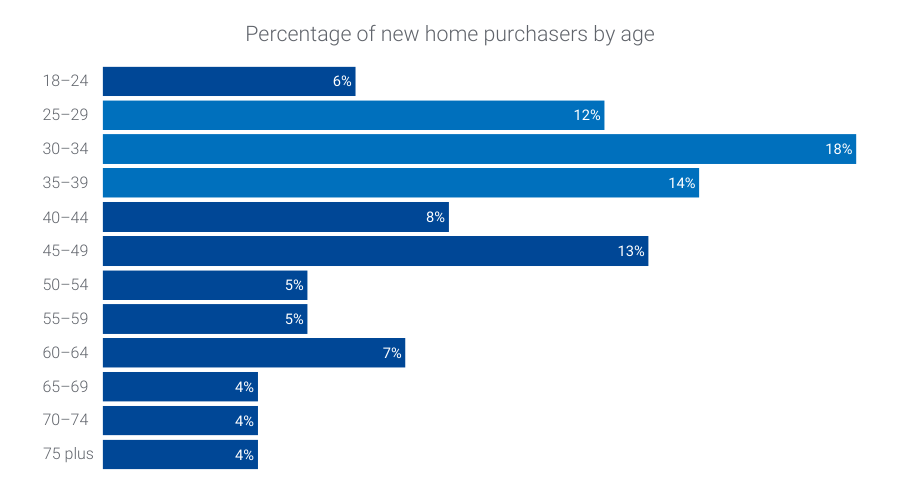
Improve engagement for your spring targeting by pairing our new homeowner audiences with our Demographics > Ages > 25-29, 30-34, and 35-39 syndicated audiences. Here are a few you can activate now:
- Life Events > New Homeowners > Last 6 Months
- Life Events > New Movers > Last 12 Months

Mother’s Day: Unveil the perfect gift
Appealing to the emotion of gratitude and love, Mother’s Day is a significant occasion for marketers. Activate Experian syndicated audiences such as “Mother’s Day Shoppers” and “Florists & Flower Gifts High Spenders” to tailor your spring advertising campaign toward those likely to purchase heartfelt gifts. Share ideas and promotions that resonate with the nurturing and caring spirit of this celebration.
Here are 6 audience segments that you can activate to target consumers getting ready to celebrate Mother’s Day:
- Retail Shoppers: Purchase Based > Seasonal > Mothers Day Shoppers Spenders
- Lifestyle and Interests (Affinity) > Moms, Parents, Families > Mothers with 2+ children
- Mobile Location Models > Visits > Mothers Day Shoppers
- Lifestyle and Interests (Affinity) > Moms, Parents, Families > Moms Age 25-54
- Mobile Location Models > Visits > Jewelry Retail Stores
- Retail Shoppers: Purchase Based > Shopping Behavior > Florists & Flower Gifts: High Spenders

Father’s Day: Celebrate Dads in style
Highlighting the significance of paternal bonds, Father’s Day is an excellent opportunity to showcase thoughtful gifts and experiences. Engage the “Father’s Day Shoppers” or “Growing and Expanding families” with content and products aligned with their interests. Craft a campaign that acknowledges the varied roles fathers play and the unique gifts they would appreciate.
Here are 6 audience segments that you can activate to target consumers getting ready to celebrate Father’s Day:
- Retail Shoppers: Purchase Based > Seasonal > Fathers Day Shoppers Spenders
- Mobile Location Models > Visits > Fathers Day Shoppers
- Mosaic – Personas – Lifestyle and Interests > Group M: Families in Motion > M45 – Growing and Expanding (Young, working-class families and single parent households that live in small city residences)
- Geo-Indexed > Demographics > Presence of Children: Ages: 7-9
- Lifestyle and Interests (Affinity) > Activities and Entertainment > Home Improvement Spenders
- Life Events > New Parents > Child Age 0-36 Months

Plan for the 2024 TV Upfronts
When gearing up for the 2024 upfronts, you can expand your TV planning by incorporating diverse audience categories into your spring advertising campaigns. It’s not just about targeting a demographic; it’s about captivating your unique audience. Whether it’s cord cutters, ad avoiders, avid streamers, or households that watch TV together, understanding and engaging with these distinct segments is paramount. To maximize impact, use comprehensive TV data that goes beyond broad demographics.
Here are 6 audience segments that you can activate as part of your TV planning strategy:
- Retail Shoppers: Purchase Based > Entertainment > Streaming/Video/Audio/CTV/Cable TV: Cable/Broadcast TV: Cord Cutters: Recent
- Retail Shoppers: Purchase Based > Entertainment > Streaming/Video/Audio/CTV/Cable TV: Streaming Video: High Spenders
- Television (TV) > Ad Avoiders/Ad Acceptors > Ad Avoiders
- Television (TV) > TV Enthusiasts > Paid TV High Spenders
- Television (TV) > Ad Avoiders/Ad Acceptors > Ad Acceptors
- Television (TV) > Household/Family Viewing > Pay TV/vMVPD Subscribers Households
To find consumers who are most likely to engage with your TV ads, you can layer in our TrueTouchTM engagement channel audiences:
- TrueTouch: Communication Preferences > Engagement Channel Preference > Digital Video
- TrueTouch: Communication Preferences > Engagement Channel Preference > Streaming TV

Summer preparation: Anticipate the fun ahead
As spring transitions to summer, help your audience gear up for the upcoming season. Target “Summer break travelers” or “Memorial Day Shoppers” with offerings that align with their summer plans. Whether it’s fashion, travel essentials, or outdoor gear, position your brand as an essential companion for their summer adventures.
Here are 6 audience segments that you can activate to target consumers getting ready for summer:
- Mobile Location Models > Visits > Summer Break Travelers
- Retail Shoppers: Purchase Based > Seasonal > Summer Sales Event Shoppers: Independence Day Shoppers
- Retail Shoppers: Purchase Based > Travel > Vacation/Leisure Travelers: Summer Trips
- Mosaic – Personas – Lifestyle and Interests > Group B: Flourishing Families > B09 – Family Fun-tastic (Upscale, middle-aged families with older children that live in suburban areas and lead busy lives focused on their children)
- Mobile Location Models > Visits > Memorial Day Shoppers
- Retail Shoppers: Purchase Based > Seasonal > Summer Sales Event Shoppers: High Spenders: Memorial Day Shoppers
Did you know?
Consumers between the age of 45-49 make up the largest percentage of top apparel shoppers*.
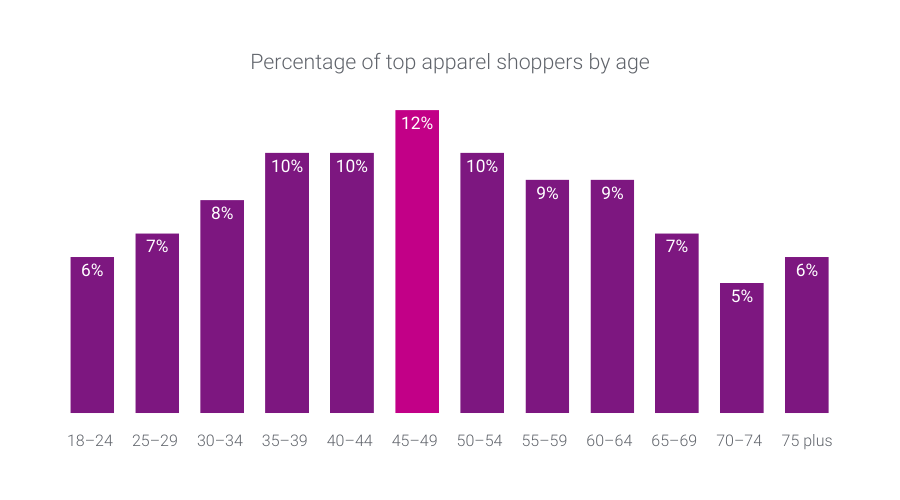
Improve engagement for summer apparel shopping targeting by refining your audience with our Demographics > Ages > 45-49 syndicated audience.
Spring into effective advertising with Experian’s syndicated audiences
For spring advertising campaigns, understanding your audience is the key to success. By activating Experian’s syndicated audiences, you can refine your approach and resonate by activating specific segments. Embrace our syndicated audiences so you deliver campaigns that not only capture attention but also build lasting connections with your audience. As you embark on this spring marketing journey, remember – the possibilities are as endless as the blossoming flowers.
You can activate our syndicated audiences on-the-shelf of most major platforms. For a full list of Experian’s syndicated audiences and activation destinations, download our syndicated audiences guide below.
Check out other seasonal audiences you can activate today.
Footnote
*Experian looked at our demographic and purchase-based data to understand retail trends over the past year. Our demographic and purchase-based data covers credit and debit card usage across 500 top merchants.
Latest posts

Cross-screen marketing tech firm, Tapad, drove unified campaign; partnered with Statiq to measure cross-screen impact on in-store visits LONDON, March 8, 2016 /PRNewswire/ — Carat North completed the UK's most comprehensive digital campaign with Tapad, the leader in cross-device marketing technology and now a part of Experian. Coupled with location-based audience data from Statiq, this marks the first time a UK-company has measured the impact of unified, cross-screen campaign on in-store visits. Carat North served display and video ads to grocery shoppers for the leading retailer ASDA from August through October. During the campaign, Tapad utilized Statiq's audience data to measure which users visited a store after being exposed* to the campaign's ad on multiple devices. The digital campaign demonstrated a lift of 59% for in-store visits when users were exposed to ads on three devices over people who were shown an ad only on onescreen. Those who engaged with the ad were also 411% more likely to visit an ASDA store. Of those who were exposed to an ad, 248% were more likely to visit a store. Impressions served to mobile devices saw the highest success rate with an in-store visit lift of 67%. The campaign leveraged Tapad's proprietary technology, The Device Graph™, which Nielsen confirmed Tapad's cross device accuracy to be 91.2%, to serve ads sequentially on connected devices belonging to the same user. CARAT NORTH: "The ability to know which devices belong to our customer, coupled with the ability to deliver the right ad, and right message, wherever they are and on whatever device they're using, has been something this industry has long needed," said Steve Thornton, Digital Account Manager, Carat North. "We're impressed with the results that have come from the work with Tapad and Statiq for this media-first, and look forward to continuing to offer these solutions to clients like ASDA. Matching unified cross-device capabilities with real insights on campaign performance is an invaluable advantage in the marketing world." TAPAD: "This campaign is a perfect example of the capabilities of cross-device advertising," said Are Traasdahl, Founder and CEO, Tapad. "In addition to reaching users across devices, we're able to analyze campaign results and determine how different combinations of ad exposure, creative type or view frequency affected their decision to visit a location." STATIQ: "As a location data specialist, Tapad is our ideal partner – they are an industry leader and by working with them we are able to determine the impact unified messaging has on real world consumer behaviours," said Dean Cussell, Co-Founder of Statiq. "We believe this type of analysis will significantly aid brands in optimising future ad spend." About Carat North Carat North is a leading independent media planning & buying specialist in digital and non-traditional media solutions. Owned by global media group Dentsu Aegis Network, the Carat network is more than 6,700 people in 130 countries worldwide across 170 cities. Carat defined the sector when established as the world's first media independent in 1968 and is now Europe's largest media network, a position held for more than 15 years. For more information visit www.carat.co.uk About Tapad Tapad Inc. is a marketing technology firm renowned for its breakthrough, unified, cross-device solutions. With 91.2% data accuracy confirmed by Nielsen, the company offers the largest in-market opportunity for marketers and technologies to address the ever-evolving reality of media consumption on smartphones, tablets, home computers and smart TVs. Deployed by agency trading desks, publishers and numerous Fortune 500 brands, Tapad provides an accurate, unified approach to connecting with consumers across screens. In 2015, Tapad began aggressively licensing its identity management solution, the Tapad Device Graph™, and swiftly became the established gold-standard throughout the ad tech ecosystem. Tapad is based in New York and has offices in Atlanta, Boston, Chicago, Dallas, Detroit,Frankfurt, London, Los Angeles, Miami, Minneapolis, San Francisco and Toronto. TechCrunch called the powerhouse Tapad team "a hell of a list of entrepreneurs who created some of the most valuable online advertising companies of the last decade." Among Tapad's numerous awards: EY Entrepreneur of The Year (East Coast) 2014, among Forbes' Most Promising Companies two year's running, Deloitte's Technology Fast 500, Crain's Fast 50, Entrepreneur 360, Digiday Signal Award, iMedia ASPY Award, and a MarCom Gold Award. Read the full release here. *Tapad utilized Statiq's audience data to measure which users visited a store during, or within one month of, being exposed to the campaign's ad on multiple devices. Contact us today!
Dive into Thanksgiving weekend’s email subject lines and how “percent off” deals affected email open rates.

Gift guide insights highlight interests, preferences of key consumer segments to more effectively tailor campaigns.