Advertisers are always looking for ways to improve the targeting and effectiveness of their campaigns. One strategy that’s gaining popularity lately is using curated private marketplace (PMP) deals, allowing advertisers to buy premium ad inventory in a private auction environment. But how do data providers and PMPs work together to make PMP advertising more successful?
What is a private marketplace (PMP)?
Advertising PMPs, or private marketplace deals, are a type of programmatic advertising where advertisers and publishers negotiate and set up a direct deal between themselves to buy or sell advertising inventory in a private auction environment. In PMP deals, publishers can make their premium inventory available to a select group of advertisers, who can bid on it in a private auction using demand-side platforms (DSPs). These private auctions typically offer higher-quality inventory and a more targeted audience than open exchange auctions, which are accessible to all advertisers. However, traditional PMPs had their limitations, including often being limited to accessing inventory from a single publisher group.
Audigent takes PMP advertising to the next level with SmartPMPs
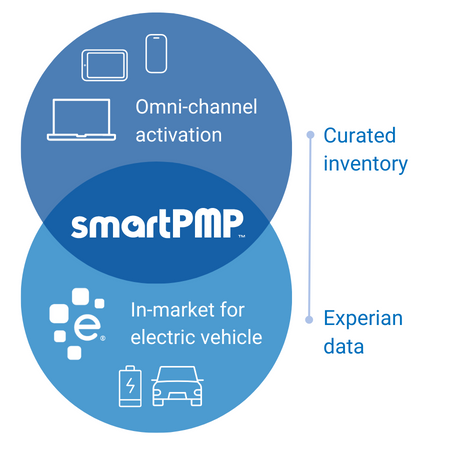
Audigent’s key differentiator is that instead of activating audience data from the DSP, which is the industry standard, they integrate directly with supply-side platforms (SSPs). By taking this route, audience data and inventory from hundreds or even thousands of publishers can now be packaged together into a single deal ID / SmartPMP. SmartPMPs empower media buyers with the ability to access and buy against unique, customizable data segments on premium curated publisher inventory in combinations that otherwise would not have been available.
Activating data via the supply-side also enables supply-side optimizations. This means that instead of simply being a data provider, Audigent plays an active role in the success of media buyers’ programmatic campaigns by optimizing toward performance goals in coordination with demand-side buyers. The result is the full alignment of demand- and supply-side technologies for the first time in programmatic.
SmartPMPs drive campaign performance
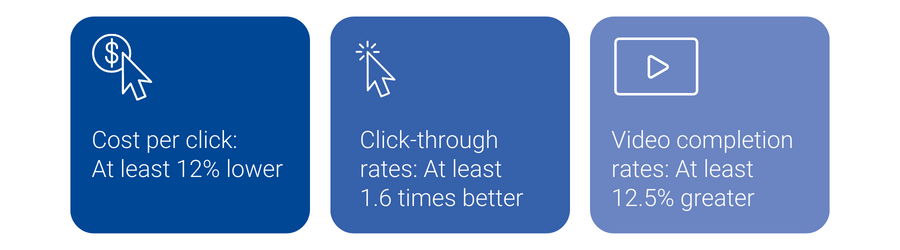
Audigent performance data compared to the programmatic open exchange:
How Experian and Audigent partner in PMP advertising
Experian and Audigent collaborate using Consumer View audience data. By supplying valuable insights into users’ interests, behaviors, and demographics, we help advertisers create more targeted and personalized ad campaigns with Audigent. This can lead to higher engagement rates, greater brand awareness, and increased conversions for Audigent and Experian clients.
By activating Experian data via Audigent SmartPMPs, advertisers unlock the ability to reach highly engaged users across premium, curated inventory sources on key channels like connected TV (CTV), display, video, and more.
Unlock the potential of programmatic advertising with us
Our strategic collaboration with Audigent is transforming the programmatic advertising space. Our partnership enables our customers to tailor their ads directly to their desired audience. This elevated personalization results in higher conversion rates and optimized campaigns for superior ROI performance.
Contact us for more information about our digital audience segments on the Audigent platform. To learn more about our partner Audigent, visit www.audigent.com.
Latest posts
Overview Chartable leverages The Tapad Graph to improve cross-device attribution rates and remove non-addressable IPs for clients. Challenge Chartable needs to differentiate between consumer and potential business IP addresses to provide accurate household modeling and reduce excess data for their customers. Podcasting generally only has access to IP addresses as a form of digital ID which limits its ability to connect activity to individuals and extend it across all devices. The Tapad + Experian solution Using Tapad, now a part of Experian, Chartable is able to cut through the noise of IP data and discard any addresses deemed a shared IP or business. Then, Tapad + Experian connects individual users to their other digital IDs and users in their household; creating a richer attribution model for Chartable customers. Increase in podcast attribution rates Get started with The Tapad Graph For personalized consultation on the value and benefits of The Tapad Graph for your business, email Sales@tapad.com today!

With the growth of digital marketing and the targeting capabilities associated with online outreach, many predicted that this would mark the end of direct mail advertising. But if Millennials have anything to say about it, that’s not going to happen anytime soon. Yes, believe it or not, Millennials are driving the resurgence of direct mail advertising, and many leading brands are now pivoting their omnichannel marketing plans to include direct mail. And with the USPS reporting more than 75.7 billion in marketing mail volume in 2019, this trend shows no sign of slowing down. Including direct mail in your plans may give your brand a better chance of reaching your audience. Why? 1. Millennials actually like getting mail.While most of us have decried “junk mail” as being environmentally unfriendly or just a pain to deal with, Millennials actually enjoy physical mail. Valassis recently cited research from USPS Customer & Market Insights stating that Millennials spend the most time sorting mail (about six minutes compared to the average, which is four minutes), plus they’re opening mail and reading it (at eight minutes versus the average of seven minutes). Valassis also conducted a study that showed that 68% of Millennials read print ads or inserts from retailers, and 64% prefer getting them through the mail. So, while digital outreach may be convenient, it hasn’t completely decimated the desire for that old-school, hands-on experience of opening and reading something that’s addressed to you. 2. Millennials respond to a multi-channel approach.Oftentimes, marketers think of omnichannel as being a combination of digital and TV, but when you add print into the mix, it can make an even bigger impact on Millennial audiences. Valassis found that 60% of consumers are more likely to make a purchase after seeing an ad when it’s presented across both offline and online channels, while 72% of Millennial parents say print ads encourage them to go online and make a purchase from that retailer. 3. Millennials think physical mail makes for a more personal approach.You’d think that e-mail would feel more personal, but with the influx of spam most people get, that’s just not the case. In fact, 67% of people see physical mail as being more personal than an e-mail, with seven out of 10 saying they prefer receiving actual mail over digital mail. And for marketers looking to make a one-to-one connection, this is music to their ears. With changing marketing plans, the mailbox has less competition than the inbox. Getting a catalog at their door with the perfect offer at the perfect time helps the marketer make the direct connection. 4. Direct mail lasts longer than digital mail.That may seem like an obvious statement, but there’s more to it than you think. When an e-mail arrives in someone’s inbox, it’s easy to ignore it, read the subject line and forget about it, or even just randomly delete it, if spam filters don’t take care of that on their own. But the average lifespan of a piece of direct mail is 17 days, which may account for how direct mail generates purchases five times larger than e-mail campaigns. It’s harder to ignore when it’s in your house and you have to physically handle it as opposed to just clicking a mouse to get rid of it. 5. Millennials trust direct mail.It’s true—research shows that 90% of Millennials think direct mail advertising is reliable. Plus, Millennials are 24% more likely to show mail to others, compared to 19% of non-Millennials… which means if they find a deal they like in the mail, they’re probably going to spread the word. Visit our Retail Marketing Solutions page to learn more about how we can help you find new customers and have more meaningful engagements with existing ones.

As the nation slowly works its way up to full speed, it’s undeniable that the landscape has changed dramatically for every brand—especially when it comes to marketing and advertising. Many are looking for new ways to better connect with customers to meet their needs and encourage their continued patronage and loyalty, while others are attempting to reach out to a whole new audience who may not have known about them pre-pandemic. But even as brands are eager to get back to normal—whatever the new normal is—much like consumers, they’re faced with an uncertain future that may be affected by new financial restraints. For marketers looking to make a big impact on their bottom line, now is the time to consider pivoting advertising efforts to advanced TV (Connected TV/OTT and addressable TV). While traditionally cost prohibitive for many brands, the pandemic has greatly changed the availability of TV advertising. TV advertising is now more affordable than ever, opening up opportunities to brands who may not have had the ability to include it in their previous marketing plans. Whether it was due to the cancellation of live events or the delay of basketball season, or just general skittishness that’s keeping other brands from spending money on TV advertising, their pivot is to your benefit. There’s no question that consumers’ attitudes toward brands will have changed during the pandemic, which means they might need to be reminded of your brand and what it has to offer. There may be some who are seeing your brand for the first time, or for the first time in a long time. The good news is, people are watching TV now more than ever before. According to Experian’s Consumer Sentiment Index, television consumption is up 41% from mid-May to mid-June. Cable TV viewership has seen a 22% increase over the same period of time, showing that consumers are still connected to traditional TV viewership. Another reason why now is a great time to make advanced TV part of your marketing plan. While many states are still rolling out their re-opening plans, many consumers are still working from home, and the job landscape is still firming up. That means your customers will still be passing the time at home as the landscape continues to shift and change, and their attention will likely be directed toward their TVs. Plus, with consumer spending starting to rebound, you can benefit from this directed attention in a new medium. And consumers aren’t just watching TV on their televisions. Smartphone use is up 41% over last month, as is desktop/laptop use at 38%, and tablet use at 21%. And, when they’re not watching their favorite show on their phones, computers or tablets, they’re visiting advertiser websites and using apps more heavily. This means that brands can supplement their TV advertising with an omnichannel approach to ensure their consumer can connect with them through any device they’re using. All of this may sound intimidating to brands who haven’t previously advertised on TV or executed an omnichannel campaign, but rest assured that the power of data can help make the experience fairly seamless. A data-driven marketing strategy can help brands better understand their audience, including demographics, lifestyle, behavior and attitudes—as well as their preferred engagement channels. This helps ensure that your message resonates and is seen on the devices and channels your audience frequents most. With Experian’s 50+ years of experience with consumer data, you can rely on us to help you execute a data-driven advanced TV campaign that targets the right audience with your message. And we collaborate with all TV operators and have connections with many industry media partners, so you can choose exactly where you want your outreach to go. Find out more about how Experian’s Advanced TV capabilities can help you have more meaningful interactions with people: https://www.experian.com/marketing-services/television-advertising.