Loading...

How Experian and Audigent are working together to boost PMP advertising

Published: April 11, 2023 by Experian Marketing Services

Advertisers are always looking for ways to improve the targeting and effectiveness of their campaigns. One strategy that’s gaining popularity lately is using curated private marketplace (PMP) deals, allowing advertisers to buy premium ad inventory in a private auction environment. But how do data providers and PMPs work together to make PMP advertising more successful?

What is a private marketplace (PMP)?

Advertising PMPs, or private marketplace deals, are a type of programmatic advertising where advertisers and publishers negotiate and set up a direct deal between themselves to buy or sell advertising inventory in a private auction environment. In PMP deals, publishers can make their premium inventory available to a select group of advertisers, who can bid on it in a private auction using demand-side platforms (DSPs). These private auctions typically offer higher-quality inventory and a more targeted audience than open exchange auctions, which are accessible to all advertisers. However, traditional PMPs had their limitations, including often being limited to accessing inventory from a single publisher group.

Audigent takes PMP advertising to the next level with SmartPMPs
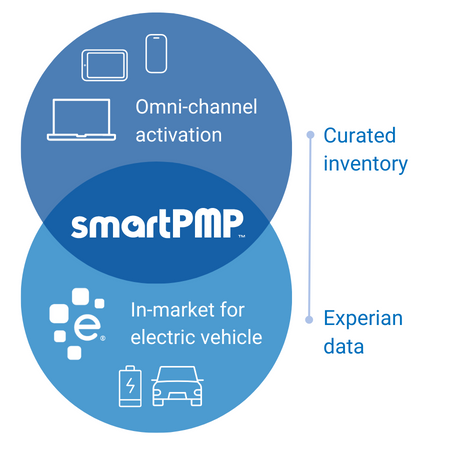
How Experian and Audigent partner in PMP advertising.

Audigent’s key differentiator is that instead of activating audience data from the DSP, which is the industry standard, they integrate directly with supply-side platforms (SSPs). By taking this route, audience data and inventory from hundreds or even thousands of publishers can now be packaged together into a single deal ID / SmartPMP. SmartPMPs empower media buyers with the ability to access and buy against unique, customizable data segments on premium curated publisher inventory in combinations that otherwise would not have been available.

Activating data via the supply-side also enables supply-side optimizations. This means that instead of simply being a data provider, Audigent plays an active role in the success of media buyers’ programmatic campaigns by optimizing toward performance goals in coordination with demand-side buyers. The result is the full alignment of demand- and supply-side technologies for the first time in programmatic.

SmartPMPs drive campaign performance

Audigent performance data compared to the programmatic open exchange:
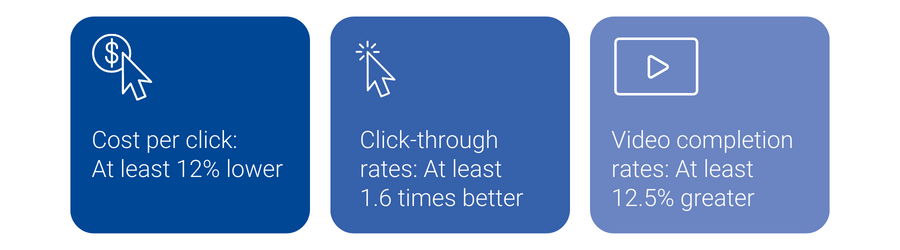
Audigent performance data compared to the programmatic open exchange.

How Experian and Audigent partner in PMP advertising

Experian and Audigent collaborate using Consumer View audience data. By supplying valuable insights into users’ interests, behaviors, and demographics, we help advertisers create more targeted and personalized ad campaigns with Audigent. This can lead to higher engagement rates, greater brand awareness, and increased conversions for Audigent and Experian clients.

By activating Experian data via Audigent SmartPMPs, advertisers unlock the ability to reach highly engaged users across premium, curated inventory sources on key channels like connected TV (CTV), display, video, and more.

Unlock the potential of programmatic advertising with us

Our strategic collaboration with Audigent is transforming the programmatic advertising space. Our partnership enables our customers to tailor their ads directly to their desired audience. This elevated personalization results in higher conversion rates and optimized campaigns for superior ROI performance.

Contact us for more information about our digital audience segments on the Audigent platform. To learn more about our partner Audigent, visit www.audigent.com.


Latest posts

Loading…
Movember: Changing the face of men’s health

Adam Garone is the CEO & co-founder of Movember, the annual world-wide charity movement dedicated to changing the face of men's health – all through the power of the moustache. To date, over 3 million moustaches have been grown and supported for Movember, raising more than $440 million to change the face of men's health. Adam kicked off day two of the EMS Client Summit by saying he’s a lucky guy because he gets “to wear a 1993 porn stash year-round.” That line got a laugh, but Adam’s storytelling around Movember really caught the attention of Summit attendees. Adam had learned that prostate cancer affects as many men as breast cancer does women, and while discussing this fact over beers with his brother in Australia, the idea for Movember was born. They took the Aussie slang for moustache (“mo”) and combined it with “November” (a good month for men to grow them) to create the name. That was in 2003 and over the last decade, Movember has become a global movement around prostate and testicular cancer awareness, as well as men’s mental health issues. Watch his full presentation below: [Watch video on YouTube] Here are some cool facts cited by Adam: Everyone who grows a moustache for Movember is a “celebrity ambassador.” Last year, 2.7 billion conversations about Movember and men’s health issues were generated during the month of November. Most foundations go out with a “fear-based message” (x number of men die from cancer each year, for example). Movember has never done that. They encourage nicknames (i.e., participants are called “mo-bros”) and want people to have fun with it. Adam’s message:  don’t be part of it because you’re scared, but because you will be fine and you get to help others. Each year they totally revamp their brand, changing the look, feel and tone. A few years ago their theme was “The Modern Gentleman” and last year it was “Movember and Sons,” and played off the relationship between father and son. Movember raised $145 million last year. They put 10% of the funds into a pool that goes towards research around other diseases. Adam says this kind of collaboration is to help reduce the heaving competition amongst charities that typically compete for donations. Key takeaways when it comes to growing a foundation (or business) from the ground up: Start with a great idea – naivety is good Rely on strong leadership –have a clear vision and detailed plan and work really, really hard Recruit amazing people – preserve culture and values During rapid growth, keep it simple—stay true to your core Brand management is key – sometimes you have to say no to potential partners  because they don’t fit with your brand (in a humble way, of course) Know your customers – inspire them to become your ambassadors Partnerships are key Never underestimate a room full of people  

Jul 15,2013 by

The popularity (and challenges) of Big Data

These days, there are a number of buzzwords being thrown around the marketing industry and the data management space. One of the biggest? Say it with me: Big Data. NPR argued last December that ‘big data’ should’ve been the “word of the year,” in part due to the re-election of President Barack Obama. Obama’s campaign managers didn’t let the Republicans’ monetary advantage discourage them. Instead, they gathered information on their voters and compiled important analytics based on that information. By handling this mass of data in an organized and well thought out process, they were able to more effectively appeal to voters and ultimately win the re-election. Marketers and corporations across the country were inspired by the campaign’s success, and have turned to big data to solve their problems as well. Anyone who catches the news on a regular basis, shops online, or owns a smartphone can see this evolution firsthand. However, it’s worth mentioning that this progression doesn’t necessarily mean “big understanding” or “big information.” Many companies are faltering in their efforts to harness big data and make real use of it. The pool of information is constantly changing, and as so many businesses rush to gather the data in real-time, it becomes even more challenging to keep pace and actively comprehend information as it becomes available. And the challenges go beyond the initial harnessing of the data. As big data continues to grow, companies are running into issues of incorrect and duplicate data in their systems. This erroneous data is a result of poor processes that companies have in place, and oftentimes begins at the point of data input. For a number of companies, data input is performed on a daily basis via their call centers. When incorrect data is recorded, it prevents sales representatives from getting leads in a timely manner, and hampers them further when they try to contact the correct individuals seeking assistance. The resulting slower response time then goes on to impact a company’s SLA and credibility to the population they serve. There is no doubt that when processed correctly, big data can be integral to a company looking to improve their understanding of the customer’s needs and wants. But data quality is an important consideration during the transition, and one that must be confronted before big data can reveal all it has to offer. To learn more about big data and how it relates to the data quality initiatives that may be taking place within your organization, watch Experian QAS’ webinar, “Ensuring Data Quality in your Big Data Initiative.” Learn more about the author, Erin Haselkorn

Jul 02,2013 by

LGBT 101: What marketers need to know about gay consumers

2013 has been a milestone year for those lobbying on behalf of expanded rights of Lesbian, Gay, Bisexual and Transgendered (LGBT) Americans. With 12 states and the District of Columbia now formally recognizing same sex marriages and two highly anticipated rulings from the U.S. Supreme Court expected shortly, the momentum is currently on the side of those seeking greater recognition and support of LGBT-related issues. The speed with which public attitudes have shifted towards greater acceptance of LGBT individuals and their causes has left many marketers scrambling to devise plans that are not only inclusive of LGBT consumers, but in many instances, designed to overtly and publically court this influential and growing consumer segment. The 2013 LGBT consumer report out from Experian Marketing Services delivers insights marketers need to better understand the market that is on everyone’s radar. In this first of a series of blog posts, we’ll highlight key data from the report. Readers can download the full report at any time here. Living out Loud In 2006, when Experian Marketing Services first began measuring sexual orientation among respondents to our Simmons® National Consumer Study, we found that 3.4% of all non-Hispanic adults self-identified as either lesbian, gay, bisexual or transgendered (LGBT), a figure consistent with what leading LGBT researchers predicted at the time. However today, 4.3% of the non-Hispanic adult population self-identifies as LGBT, a figure that has risen slowly but steadily year-after-year. Younger adults have consistently been more likely to identify as LGBT, and in fact today, 5.8 percent of 18 to 34 year olds say they are lesbian, gay, bisexual or transgendered. As a result, the adult LGBT population predictably skews towards the younger age cohorts. Specifically, 36% of LGBT adults today are aged 18 to 34 versus 26% of the heterosexual population in that age range. Likewise, while 20% of heterosexual adults are age 65 and older, just 16% of LGBT adults are in this age range, though our data shows that the share of adults age 65 and older identifying as LGBT has also risen. Home and Family As a growing number of U.S. states pass laws recognizing same-sex marriages and civil unions, we see an increasing percentage of gay and lesbian Americans reporting that they are married. In 2007, for example, when only Massachusetts allowed same-sex marriage, 8% of gay men and 14% of lesbian women said they were married. Today, 17% of gay men and 16% of lesbian women are married. Marriage rates among lesbian and gay adults still lag well behind those of heterosexuals, but the gap is closing from both sides. In fact, while marriage rates are rising among lesbians and gays, they’re falling among heterosexuals. Today, 58% of heterosexual men and 53% of heterosexual women are married, compared to 60% of heterosexual men and 55% of heterosexual women who were married in 2007. The Pink Dollar Income levels are important to consider when targeting consumers, but more important is determining the amount of money left over for non-essentials after the other bills are paid. Despite earning nearly identical salaries, gay men have lower annual household discretionary expenditures than heterosexual men. Likewise, lesbian households have fewer dollars than those of heterosexual women to spend on non-essentials. This is mostly likely due to the fact that both lesbian and gay adults tend to reside in larger cities where the cost of living can be considerably higher than average. Interestingly, when household size is brought into the equation, we see that gay males actually have higher discretionary spending per capita than heterosexual men. In fact, gay men live in households that devote $6,794 per capita annually to non-essentials, which is $753 more than what heterosexual men spend. Forthcoming posts from this series will include insights into the automotive and food vertical markets; the mobile habits of LGBT consumers; and an examination of online visitors to LGBT content sites. Don’t want to wait? Download the full report now. Also, learn more about the Simmons LGBT Consumer Study, the only syndicated, national probability sample survey that measures the lifestyles, attitudes, media habits and brand preferences of the LGBT population giving marketers actionable insights into this powerful consumer segment that can be directly compared with those of heterosexuals.

Jun 17,2013 by

Subscribe to our newsletter

Enter your name and email for the latest updates

This site is protected by reCAPTCHA and the Google Privacy Policy and Terms of Service apply.

About Experian Marketing Services

At Experian Marketing Services, we use data and insights to help brands have more meaningful interactions with people. As leaders in the evolution of the advertising landscape, Experian Marketing Services can help you identify your customers and the right potential customers, uncover the most appropriate communication channels, develop messages that resonate, and measure the effectiveness of marketing activities and campaigns.

Visit our website

Subscribe to our newsletter

Stay up to date on the latest industry news and receive expert tips from our marketing experts.
Subscribe now!