There are many variations of passages of Lorem Ipsum available, but the majority have suffered alteration in some form, by injected humour, or randomised words which don’t look even slightly believable.

Paragraph block
Heading block
Pull Quote cloud news blog
There are many variations of passages of Lorem Ipsum available, but the majority have suffered alteration in some form, by injected humour, or randomised words which don’t look even slightly believable.
There are many variations of passages of Lorem Ipsum available, but the majority have suffered alteration in some form, by injected humour, or randomised words which don’t look even slightly believable.
- There are many variations of passages of Lorem Ipsum available,
- but the majority have suffered alteration in some form, by injected humour, or randomised words which don’t look even slightly believable.


Lorem Ipsum has been the industry’s standard dummy text ever since the 1500s, when an unknown printer took a galley of type and scrambled it to make a type specimen book. It has survived not only five centuries, but also the leap into electronic typesetting, remaining essentially unchanged. It was popularised in the 1960s with the release of Letraset sheets containing Lorem Ipsum passages, and more recently with desktop publishing software like Aldus PageMaker including versions of Lorem Ipsum.

At Experian we’re committed to creating a culture of continuous innovation, from the way we work to the solutions we create. This commitment has helped us create a workplace where our teams across the world have a desire to help change the lives of millions for the better. Justin Hastings, former Chief Human Resources Officer for Experian North America, recently wrote an article for the Forbes Human Resources Council which highlights the importance of creating an inclusive environment in the workplace — and demonstrates how innovation, developing new products and services, and providing value are all crucial to a companies’ success. The article, “Deliver Innovation By Embracing Inclusion,” explores what it means to build a culture of innovation, and how to ensure employees feel comfortable bringing their different backgrounds and ideas to their role every day. This is the type of innovative culture we’re building at Experian, which celebrates these differences and works to make employees feel valued and empowered to be innovative and productive. Another concept Justin discusses in this article is “innovating to grow.” It’s important to make employees feel connected to their organization and involved in the creation of new products and services. This has a tremendous positive impact with employees providing valuable feedback, and also creating advocacy among team members. For example when developing Experian Boost, which has helped millions of people raise their credit scores, we first beta-tested and shared the innovation internally and were able to garner valuable feedback and support from employees. As a result, we’ve seen tremendous success since the launch of Experian Boost earlier this year. At Experian we truly believe that inclusion is the key to creating a culture of innovation. You can read the full article here.

For the second year in a row, Experian Costa Rica has achieved recertification from Great Places to Work in the Central America region. The honor recognizes the inclusive workplace culture that Experian Costa Rica employees and leaders have created, making it a dynamic environment for innovation and high productivity. “Getting re-certified as a Great Place to Work provides and enormous sense of pride. As an organization it validates all the efforts we make to ensure a strong healthy employee culture and as a leader it allows us to come to work knowing that we have a culture that employees enjoy working in,” said Adrian Sibaja, Director of Service Delivery for Experian Costa Rica and Chile. Experian Costa Rica is one of four Global Delivery Centers, strategically located centers of operational excellence that support Experian’s regions. The office is home to nearly 1,000 employees across different business units. This honor reinforces the workplace culture we’re fostering, which our employees are happy to brag about in confidential surveys. Costa Rica leadership is always looking for ways to make the employee culture even better. That’s why recognizing employee accomplishments and encouraging partnership between business units are among their top priorities. Congratulations to our Costa Rica colleagues!

At Experian, we know a credit score is the gatekeeper to better financial opportunities, which is why we are committed to developing products and services that support consumers in their financial journey. Six months ago, we hit a major milestone in bringing this commitment to life with the launch of Experian Boost. This innovative tool gave consumers the ability to add positive telecom and utility payment history directly to their credit file for an opportunity to instantly increase their credit scores for the first time. When we launched Experian Boost, we knew there were more than 100 million Americans who didn’t have fair access to credit because of a limited credit history or a subprime score. We also knew these consumers were often forced to pay higher interest rates and fees for financial services. Today, as we look at our Experian Boost results, we know we’re helping to change that. To date, for consumers who’ve used Experian Boost, we’ve seen: More than 11 million cumulative FICO Score points boosted FICO Scores increased for 2 out of 3 users with an average increase of more than 10 points Of those who boosted their credit scores, an average of 13% moved up a credit tier and of those in the “poor” credit tier, 24% moved to a “fair” tier Approximately 90% of “thin” file consumers who improve their credit scores saw an average increase of 19 points California, Texas and Florida rank 1-2-3 in number of consumers who have boosted their scores and total points boosted To say we’re pleased with the positive feedback we’ve received about Experian Boost to date would be an understatement, but we’re not surprised. For years, lenders have been seeking new means to identify creditworthy consumers. At the same time, consumers have been asking for more control of their data and credit where credit is due. This is exactly what we’re providing with Experian Boost. We’re helping to level the playing field and reward positive behavior and it’s not going unnoticed. Members of the credit counseling and advocacy community have reached out with excitement about Experian Boost. This solution is giving many of their clients a tangible way to impact their credit scores and improve their financial lives. Improving consumer financial health is a core part of our sense of purpose and we’re just getting started. We’ll continue to enhance Experian Boost and develop new products and solutions to improve financial access to for more consumers. To find out more about the Experian Boost, please visit www.experian.com/boost.
Related Posts
Read Moreio55 Button 2- Learn more Primary button Secondary button Related Posts image1 image2 media text block
Patients use self-service tools to easily connect with providers online and manage administrative tasks 24/7. Common patient self-service tools include patient portals, online scheduling and mobile registration. Self-service solutions also include robust financial tools that help patients update insurance information, get accurate estimates, apply for charity care, set up payment plans, combine payments to multiple providers or set up a fundraising page. Lorem Ipsum comes from sections 1.10.32 and 1.10.33 of “de Finibus Bonorum et Malorum” (The Extremes of Good and Evil) by Cicero, written in 45 BC. This book is a treatise on the theory of ethics, very popular during the Renaissance. The first line of Lorem Ipsum, “Lorem ipsum dolor sit amet..”, comes from a line in section 1.10.32. Heading 2 Related Posts
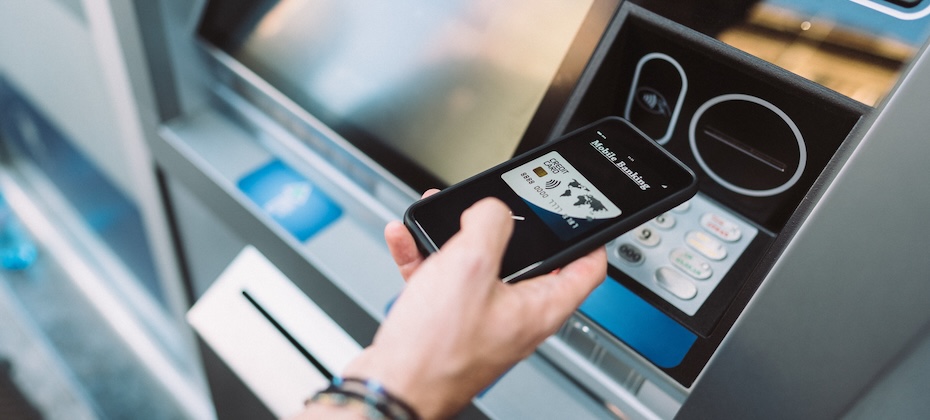
Amid some of the financial challenges that underserved communities experience, members across the financial services community remain committed to championing initiatives and programs that drive greater financial inclusion. In fact, collaboration has led to the inclusion of non-debt related payment information on consumers’ credit profiles, as well as digital services that make it easier to manage money. These efforts have helped to broaden access to fair and affordable financial resources for more individuals. While significant progress has been made, there is still more work to do. However, some of the misconceptions and myths about the financial services community are hindering further advancement. Debunking these myths will accelerate progress by building trust between the financial services community and consumers. Person withdrawing money from ATM contactless Myth #1: “Financial institutions have no interest in underserved consumers or credit invisibles.” The truth is, banks and credit unions want to say “yes” to more prospective borrowers, including individuals and families from underserved communities. Beyond being the right thing to do, it’s an opportunity to potentially build lifelong relationships with a relatively untapped market. A show of good faith to communities who have largely been ignored by the financial system could lead to customer loyalty that may extend to their family and friends. That’s why participants across the financial ecosystem have been proponents of including expanded data sources—such as on-time telecom, utility and video streaming service payments—on to consumer credit reports, as well as exploring other Fair Credit Reporting Act (FCRA)-regulated data sources, including payment data on short-term small dollar loans and expanded public records data. Making this data more accessible to lenders provides a more comprehensive view of a consumer’s ability and willingness to repay outstanding debt—an actionable solution to extending credit to consumers without lenders taking on additional risk. Myth #2: “There is a lack of trustworthy financial education resources.” The financial services community and affiliated organizations recognize that empowering people with financial knowledge and skillset are critical to consumers’ financial success. In fact, banks and credit unions are partnering with nonprofits and non-governmental organizations to better understand the unique challenges and opportunities within specific communities and provide relevant tools and resources. For example, Experian’s B.A.L.L. for Life (Be A Legacy Leader) program, launched in partnership with the National Urban League, serves as a catalyst for engaging with Black communities and low-income youth through live events and digital financial education. Subject matter experts, professional athletes, celebrities, and other influencers share their experiences and expertise, covering topics such as banking, credit, financial management and investing. In addition, to help people improve their financial management, Experian partners with the National Foundation for Credit Counseling (NFCC). The NFCC connects consumers with certified financial counselors to help them address various pain points, including debt management, homeownership, student loans or small business cash flow issues. Myth #3: “Underserved communities have few opportunities to build credit and enter the mainstream financial system.” People from underserved communities, as well as younger consumers and recent immigrants are often excluded from the mainstream financial system because they lack an extensive credit history. Historically, it’s created a vicious cycle; in order to get credit, you have to have credit. Fortunately, there has been a sea change in innovative solutions to address the specific needs of these populations. These include new credit scoring models and microfinancing which provide financial services to individuals who may have been excluded from traditional banking systems. In addition, by incorporating expanded data sources, such as telecom, utility and residential rental payments onto credit reports, lenders have more visibility into consumers who may have been excluded by traditional credit scoring methods.These programs help individuals and families from underserved communities establish and build a credit history that could enable loans, or the ability to rent an apartment or open their dream business. An example is Experian Boost®, a free feature that allows Experian members to contribute their history of making utility, cellphone, insurance, residential rent and video streaming service payments directly into their Experian credit profile. By incorporating nontraditional credit data like paying utility bills on time, online banking transactions, rental payments and verified income data, more people can establish a credit profile that can potentially qualify them for a loan. More Inclusion, Fewer Myths It’s encouraging that community organizations and banks are beginning to see the economic and social benefits of aligning on financial literacy and inclusion. As more initiatives come online, underserved populations will be able to establish a better financial foundation. Then, we can declare the myths to be history.
In this article…
First Heading
Lorem Ipsumis simply dummy text of the printing and typesetting industry. Lorem Ipsum has been the industry’s standard dummy text ever since the 1500s, when an unknown printer took a galley of type and scrambled it to make a type specimen book. It has survived not only five centuries, but also the leap into electronic typesetting, remaining essentially unchanged.
It was popularised in the 1960s with the release of Letraset sheets containing Lorem Ipsum passages, and more recently with desktop publishing software like Aldus PageMaker including versions of Lorem Ipsum
- test1
- test1
Second Heading
It is a long established fact that a reader will be distracted by the readable content of a page when looking at its layout. The point of using Lorem Ipsum is that it has a more-or-less normal distribution of letters, as opposed to using ‘Content here, content here’, making it look like readable English.
Many desktop publishing packages and web page editors now use Lorem Ipsum as their default model text, and a search for ‘lorem ipsum’ will uncover many web sites still in their infancy. Various versions have evolved over the years, sometimes by accident,
How Experian can help with card fraud prevention and detection
Contrary to popular belief, Lorem Ipsum is not simply random text. It has roots in a piece of classical Latin literature from 45 BC, making it over 2000 years old. Richard McClintock, a Latin professor at Hampden-Sydney College in Virginia, looked up one of the more obscure Latin words, consectetur, from a Lorem Ipsum passage, and going through the cites of the word in classical literature, discovered the undoubtable source.
Lorem Ipsum comes from sections 1.10.32 and 1.10.33 of “de Finibus Bonorum et Malorum” (The Extremes of Good and Evil) by Cicero, written in 45 BC. This book is a treatise on the theory of ethics,
very popular during the Renaissance. The first line of Lorem Ipsum, “Lorem ipsum dolor sit amet..”, comes from a line in section 1.10.32.
Fourth Heading
Lorem Ipsum has been the industry’s standard dummy text ever since the 1500s, when an unknown printer took a galley of type and scrambled it to make a type specimen book. It has survived not only five centuries, but also the leap into electronic typesetting, remaining essentially unchanged. It was popularised in the 1960s with the release of Letraset sheets containing Lorem Ipsum passages, and more recently with desktop publishing software like Aldus PageMaker including versions of Lorem Ipsum.