There are many variations of passages of Lorem Ipsum available, but the majority have suffered alteration in some form, by injected humour, or randomised words which don’t look even slightly believable.

Paragraph block
Heading block
Pull Quote cloud news blog
There are many variations of passages of Lorem Ipsum available, but the majority have suffered alteration in some form, by injected humour, or randomised words which don’t look even slightly believable.
There are many variations of passages of Lorem Ipsum available, but the majority have suffered alteration in some form, by injected humour, or randomised words which don’t look even slightly believable.
- There are many variations of passages of Lorem Ipsum available,
- but the majority have suffered alteration in some form, by injected humour, or randomised words which don’t look even slightly believable.


Lorem Ipsum has been the industry’s standard dummy text ever since the 1500s, when an unknown printer took a galley of type and scrambled it to make a type specimen book. It has survived not only five centuries, but also the leap into electronic typesetting, remaining essentially unchanged. It was popularised in the 1960s with the release of Letraset sheets containing Lorem Ipsum passages, and more recently with desktop publishing software like Aldus PageMaker including versions of Lorem Ipsum.
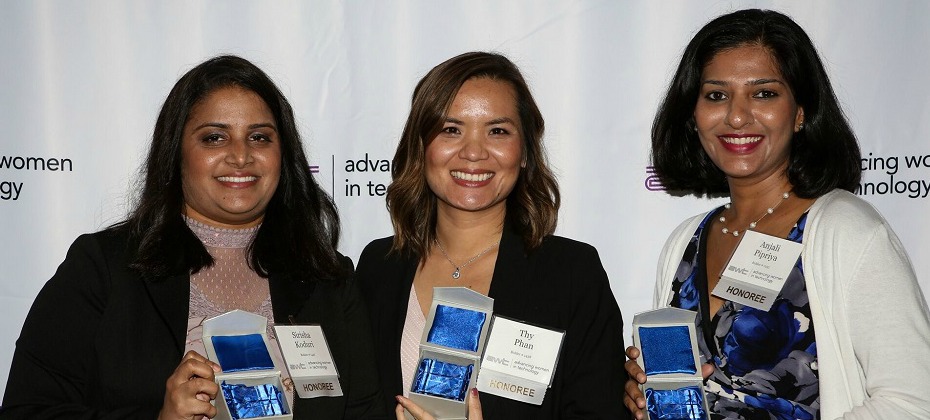
Amid a shortage of women pursuing STEM careers, organizations must be committed to helping women who have chosen to enter the tech industry and are poised for success in key areas such as collaboration, creativity, innovation, leadership, and transformation. At Experian, we are an advocate for diversity, inclusion, and gender equality in technology functions and beyond. Showcasing the impact women have in the tech community, the Advancing Women in Technology (AWT) organization recently honored several Experian women at its 16th Annual Scholarship event. Keynote Presentation Experian’s president of partner solutions, Jennifer Leuer, was the featured keynote speaker. As part of her presentation, Leuer encouraged the audience to create a culture of confidence to advance women. “This year’s headlines marked a watershed year for women in the workplace. We need to keep that momentum going by creating a culture of confidence in the workplace, with our families and in our communities,” said Leuer. “One of the many ways we can do this is through mentoring. By providing more women with support and varied perspectives, we assist them with navigating new challenges with confidence.” AWT 2017 Outstanding Executives in Technology Award The Outstanding Executives in Technology award was given to Faith Gaudino, Experian’s senior vice president of corporate project management, for her successful career in technology. For nearly 40 years, Gaudino has worked on Experian’s strategic technology portfolios. Her work is key to maximizing Experian’s investments in technology, business expansion, security and business transformation. “What I enjoy most about my position is the diversity of projects that I work on,” said Gaudino. “My team gets involved in everything from acquisitions to rolling out the latest technology changes throughout the organization. This diversity allows me to constantly learn new things. I am proud to be recognized by the AWT and I hope to inspire other women to pursue and continue careers in technology.” AWT 2017 Rising Women in Technology Award The Rising Women in Technology award recognizes women who have successfully established careers in a variety of technical positions such as engineering, software development, business analytics and management. Five women from Experian were given this award: Becky Clay, marketing automation campaign manager – Clay is responsible for increasing response and conversion rates for the company’s enterprise marketing and internal communications campaigns. Sirisha Koduri, web development lead – Koduri leads the development of Experian’s global content management system. Thy Phan, senior marketing analyst – Phan works on email marketing for the B2B businesses across the Experian enterprise. Anjali Pipriya, software development expert – Pipriya helps develop and maintain the Experian lead capturing platform. Amber Garcia, expert project manager – Garcia manages technology projects for Experian’s online and mobile credit products. “In the technology industry, women have a lot of opportunity to have a voice and be successful,” said Garcia. “At Experian, I have gained confidence in my work, grown and found my voice. I feel this award is a milestone in my career that shows how far that I have come.” Experian puts significant effort in attracting a diverse workforce. We are one of 28 companies named to the Leadership Index of companies whose representation and development of women technologists is above the mean. We also participated in the 2017 Wonder Women Tech Diversity & Inclusion Conference and the Grace Hopper Celebration of Women in Technology Conference.

I work at SEGA, a global games company. I first met Nakamura-san, my contact at Experian, about eight or nine years ago. I remember telling him at the time that I was a little sceptical of credit report and analytic companies – I thought they were either too expensive or their reports weren’t detailed enough. However, a year later I needed help from a company like Experian, and I thought I’d put them to the test. My team and I were starting to communicate with overseas markets, to work with companies around the world. So, I phoned Nakamura-san. It was a business negotiation, so I had my poker face on – I played the usual mind games you have to, insinuating that if Experian did this job well then our company might be able to offer them even more business in the future. Safe to say, they passed the test. We’ve been building a really positive relationship with Experian for the last eight years. We’re working with companies in Hong Kong, Taiwan and London at the moment. To work with them, we need information – for instance, we need to know if they’re actually located where they say they are. Even if a company gives us an address, it’s always possible that it operates from a different country – we’ve all heard about companies and their tax havens. When we have these questions, Nakamura-san and his team at Experian collect and analyse data on these companies, and give us very thorough information – breaking it all down and explaining everything to us really clearly. It’s really difficult to get the rich, detailed analysis of data you need, but Experian provides us much better data than any of our previous credit research companies managed to. They consult with us, and help us use this data to get our business to a better place. I’m very grateful for it – they’ve added great value to our business. Mr. Shinji Mutazono, Team Manager, SEGA Group Companies Finance Department, SEGA Holdings CO., Ltd.

“I’ve been working with Turkcell for about six years now. I was on my way to have lunch with my main contact there, Elif, and I bumped into so many familiar faces. We agreed that you don’t often get that kind of long, trusted relationship in business. About two years ago, Elif explained to me that Turkcell needed help keeping customer communications fresh and relevant. Turkcell had a fixed weekly marketing plan, but a week is a long time in marketing. Customers were interacting with them all the time, across lots of different channels. These different types of customer communication cancelled out Turkcell’s planned weekly messages. They had to cancel more than half of their planned contacts. The marketing team were really frustrated – this was a complex challenge to fix. We wanted to create a marketing tool that meant Turkcell could speak to their customers every day instead of once a week. And so the right messages got to the right people at the right time. The team we got together on this project were based all over the world: Turkcell and an Experian team in Turkey, me and my team in Nottingham, our software development team in Bulgaria, our product development over in Washington, and Vusal in Monaco who helped us completely automate the process. Vusal’s fluent Turkish certainly came in useful. I flew over to Turkey a few times during the project. Being onsite made a big difference – it meant we could understand and fix issues in hours, rather than days. There’s one particular time that stands out. It was five weeks before the launch, so we had loads to get through. We worked non-stop for two weeks straight, right through the weekends, making sure nothing would stop us getting the daily marketing tool up and running. We’d each bring in different food and fruits for our ‘table picnic’ to keep us going. There was a lot of attention focussed on this project. When it finally went live, we had a ‘phew’ and a ‘wow’ moment. And then we saw the difference it made. It’s done exactly what we wanted it to do and Turkcell’s take-up rates have improved. And now we’ve won a Global Telecoms Business Innovation award for it. It’s a joint award, for both Turkcell and Experian – which feels right. It was hard work, but worth it.”
Related Posts

Read Moreio55 Button 2- Learn more Primary button Secondary button Related Posts image1 image2 media text block
Patients use self-service tools to easily connect with providers online and manage administrative tasks 24/7. Common patient self-service tools include patient portals, online scheduling and mobile registration. Self-service solutions also include robust financial tools that help patients update insurance information, get accurate estimates, apply for charity care, set up payment plans, combine payments to multiple providers or set up a fundraising page. Lorem Ipsum comes from sections 1.10.32 and 1.10.33 of “de Finibus Bonorum et Malorum” (The Extremes of Good and Evil) by Cicero, written in 45 BC. This book is a treatise on the theory of ethics, very popular during the Renaissance. The first line of Lorem Ipsum, “Lorem ipsum dolor sit amet..”, comes from a line in section 1.10.32. Heading 2 Related Posts
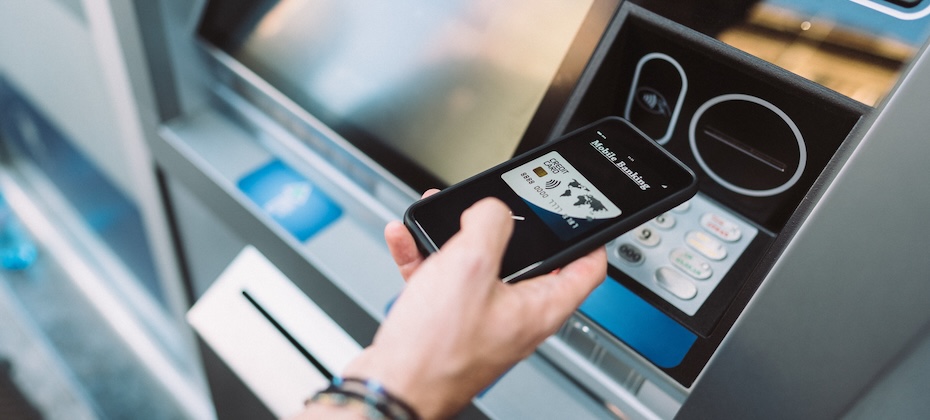
Amid some of the financial challenges that underserved communities experience, members across the financial services community remain committed to championing initiatives and programs that drive greater financial inclusion. In fact, collaboration has led to the inclusion of non-debt related payment information on consumers’ credit profiles, as well as digital services that make it easier to manage money. These efforts have helped to broaden access to fair and affordable financial resources for more individuals. While significant progress has been made, there is still more work to do. However, some of the misconceptions and myths about the financial services community are hindering further advancement. Debunking these myths will accelerate progress by building trust between the financial services community and consumers. Person withdrawing money from ATM contactless Myth #1: “Financial institutions have no interest in underserved consumers or credit invisibles.” The truth is, banks and credit unions want to say “yes” to more prospective borrowers, including individuals and families from underserved communities. Beyond being the right thing to do, it’s an opportunity to potentially build lifelong relationships with a relatively untapped market. A show of good faith to communities who have largely been ignored by the financial system could lead to customer loyalty that may extend to their family and friends. That’s why participants across the financial ecosystem have been proponents of including expanded data sources—such as on-time telecom, utility and video streaming service payments—on to consumer credit reports, as well as exploring other Fair Credit Reporting Act (FCRA)-regulated data sources, including payment data on short-term small dollar loans and expanded public records data. Making this data more accessible to lenders provides a more comprehensive view of a consumer’s ability and willingness to repay outstanding debt—an actionable solution to extending credit to consumers without lenders taking on additional risk. Myth #2: “There is a lack of trustworthy financial education resources.” The financial services community and affiliated organizations recognize that empowering people with financial knowledge and skillset are critical to consumers’ financial success. In fact, banks and credit unions are partnering with nonprofits and non-governmental organizations to better understand the unique challenges and opportunities within specific communities and provide relevant tools and resources. For example, Experian’s B.A.L.L. for Life (Be A Legacy Leader) program, launched in partnership with the National Urban League, serves as a catalyst for engaging with Black communities and low-income youth through live events and digital financial education. Subject matter experts, professional athletes, celebrities, and other influencers share their experiences and expertise, covering topics such as banking, credit, financial management and investing. In addition, to help people improve their financial management, Experian partners with the National Foundation for Credit Counseling (NFCC). The NFCC connects consumers with certified financial counselors to help them address various pain points, including debt management, homeownership, student loans or small business cash flow issues. Myth #3: “Underserved communities have few opportunities to build credit and enter the mainstream financial system.” People from underserved communities, as well as younger consumers and recent immigrants are often excluded from the mainstream financial system because they lack an extensive credit history. Historically, it’s created a vicious cycle; in order to get credit, you have to have credit. Fortunately, there has been a sea change in innovative solutions to address the specific needs of these populations. These include new credit scoring models and microfinancing which provide financial services to individuals who may have been excluded from traditional banking systems. In addition, by incorporating expanded data sources, such as telecom, utility and residential rental payments onto credit reports, lenders have more visibility into consumers who may have been excluded by traditional credit scoring methods.These programs help individuals and families from underserved communities establish and build a credit history that could enable loans, or the ability to rent an apartment or open their dream business. An example is Experian Boost®, a free feature that allows Experian members to contribute their history of making utility, cellphone, insurance, residential rent and video streaming service payments directly into their Experian credit profile. By incorporating nontraditional credit data like paying utility bills on time, online banking transactions, rental payments and verified income data, more people can establish a credit profile that can potentially qualify them for a loan. More Inclusion, Fewer Myths It’s encouraging that community organizations and banks are beginning to see the economic and social benefits of aligning on financial literacy and inclusion. As more initiatives come online, underserved populations will be able to establish a better financial foundation. Then, we can declare the myths to be history.
In this article…
First Heading
Lorem Ipsumis simply dummy text of the printing and typesetting industry. Lorem Ipsum has been the industry’s standard dummy text ever since the 1500s, when an unknown printer took a galley of type and scrambled it to make a type specimen book. It has survived not only five centuries, but also the leap into electronic typesetting, remaining essentially unchanged.
It was popularised in the 1960s with the release of Letraset sheets containing Lorem Ipsum passages, and more recently with desktop publishing software like Aldus PageMaker including versions of Lorem Ipsum
- test1
- test1
Second Heading
It is a long established fact that a reader will be distracted by the readable content of a page when looking at its layout. The point of using Lorem Ipsum is that it has a more-or-less normal distribution of letters, as opposed to using ‘Content here, content here’, making it look like readable English.
Many desktop publishing packages and web page editors now use Lorem Ipsum as their default model text, and a search for ‘lorem ipsum’ will uncover many web sites still in their infancy. Various versions have evolved over the years, sometimes by accident,
How Experian can help with card fraud prevention and detection
Contrary to popular belief, Lorem Ipsum is not simply random text. It has roots in a piece of classical Latin literature from 45 BC, making it over 2000 years old. Richard McClintock, a Latin professor at Hampden-Sydney College in Virginia, looked up one of the more obscure Latin words, consectetur, from a Lorem Ipsum passage, and going through the cites of the word in classical literature, discovered the undoubtable source.
Lorem Ipsum comes from sections 1.10.32 and 1.10.33 of “de Finibus Bonorum et Malorum” (The Extremes of Good and Evil) by Cicero, written in 45 BC. This book is a treatise on the theory of ethics,
very popular during the Renaissance. The first line of Lorem Ipsum, “Lorem ipsum dolor sit amet..”, comes from a line in section 1.10.32.
Fourth Heading
Lorem Ipsum has been the industry’s standard dummy text ever since the 1500s, when an unknown printer took a galley of type and scrambled it to make a type specimen book. It has survived not only five centuries, but also the leap into electronic typesetting, remaining essentially unchanged. It was popularised in the 1960s with the release of Letraset sheets containing Lorem Ipsum passages, and more recently with desktop publishing software like Aldus PageMaker including versions of Lorem Ipsum.