There are many variations of passages of Lorem Ipsum available, but the majority have suffered alteration in some form, by injected humour, or randomised words which don’t look even slightly believable.

Paragraph block
Heading block
Pull Quote cloud news blog
There are many variations of passages of Lorem Ipsum available, but the majority have suffered alteration in some form, by injected humour, or randomised words which don’t look even slightly believable.
There are many variations of passages of Lorem Ipsum available, but the majority have suffered alteration in some form, by injected humour, or randomised words which don’t look even slightly believable.
- There are many variations of passages of Lorem Ipsum available,
- but the majority have suffered alteration in some form, by injected humour, or randomised words which don’t look even slightly believable.


Lorem Ipsum has been the industry’s standard dummy text ever since the 1500s, when an unknown printer took a galley of type and scrambled it to make a type specimen book. It has survived not only five centuries, but also the leap into electronic typesetting, remaining essentially unchanged. It was popularised in the 1960s with the release of Letraset sheets containing Lorem Ipsum passages, and more recently with desktop publishing software like Aldus PageMaker including versions of Lorem Ipsum.

Early in my career, I gained a lot of knowledge about credit. But when I moved to the United States from Brazil, establishing credit was a challenge. I worked part-time in a credit card company call center during college. I come from a humble family, and through helping customers, I learned the ins and outs about credit and money management. But all the solid credit history I built up in my home country didn’t transfer to the U.S. When I immigrated, I had to pay upfront for everything from utilities to a cellphone and it made me feel at a disadvantage. Thanks to Experian Boost®i, our feature that allows you to build credit without debt, and responsible management of debt, my FICO® Scoreii quickly rose to reflect my true creditworthiness. But I’ll never forget how it felt to be invisible when it came to the credit system. Being seen is the first step to equitable access to financial tools. Now that Experian conveniently offers Experian credit reports in Spanish onlineiii, consumers who prefer to access information in Spanish will be able to directly comprehend their credit profile so they can feel empowered. Understanding your credit report is a critical component for your ability to make informed decisions about your finances. As the executive sponsor of our Juntos Employee Resource Group (ERG) and someone who was new to credit in the U.S., I know first-hand that being seen is the first step in a journey towards financial wellness. To help you be informed, Experian also has a Spanish-language credit e-book and articles at the Ask Experian blog. Learn more about my financial health journey and my colleague’s through #ExperianStories. i Results will vary. Not all payments are boost-eligible. Some users may not receive an improved score or approval odds. Not all lenders use Experian credit files, and not all lenders use scores impacted by Experian Boost®. Learn more. ii Credit score calculated based on FICO® Score 8 model. Your lender or insurer may use a different FICO® Score than FICO® Score 8, or another type of credit score altogether. Learn more. iii Only Experian credit reports are available in Spanish. All other services associated with an Experian membership are available in English only. English fluency is required for full access to Experian’s products.
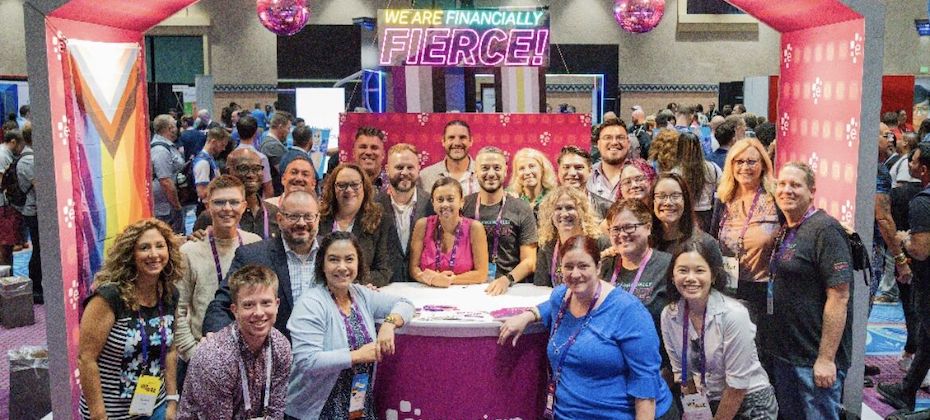
Ball pits, a video game and a neon-pink house might not be what typically comes to mind when you think of our mission of financial inclusion. But that’s some of the ways Experian spent its summer sharing resources and information to empower underserved communities. FINANCIAL INCLUSION AND INNOVATION The mild weather ushered-in summer early in the City of Brotherly Love, where we joined the Allen Iverson Roundball Classic to launch B.A.L.L. (Be A Legacy Leader) for Life. It was our second year as the exclusive financial literacy partner. In partnership with the National Urban League, we introduced this program to the athletes and their families participating in the all-star weekend. We also created a gamified app that enables users to shoot hoops using gesture controls as they learn about credit and financial tools. Experian’s partnership with UnidosUS includes support for its Financial Empowerment Network (FEN), a program, which offers free, individualized, culturally-relevant support to Latino families. Our colleagues shared credit education resources and their journeys to financial health at the national conference. We are… financially fierce! As a proud sustaining Titanium partner of Out & Equal, we brought The House of Experian to this year’s Workplace Summit. Hundreds visited the eye-catching attraction to learn about financial and credit tools. We also led engaging conversations about money matters for the trans community and dove deep into the financial wellness of LGBTQ+ consumers and entrepreneurs. To learn more about the gaps and needs of the community, we’ve launched a financial wellness survey in partnership with Out & Equal. COMMUNITY ADVOCACY The mental health and wellness of our teammates is a priority for Experian, and it was a big topic of panel discussions at the Disability:IN Annual Conference. Empowering Asian American and Pacific Islander (AAPI) professionals is the focus of the annual Ascend Leadership Convention. This year’s theme was “I Ascend,” encouraging participants to share how they navigate and succeed in their careers. At Essence Fest’s National Urban League Women’s Empowerment Luncheon, Victoria Crain, Experian’s vice president of global compliance and governance and co-executive sponsor of our Black Professionals Employee Resource Group, shared keynote remarks about courage and legacy. EMPOWERING THE NEXT GENERATION Building paths towards generational wealth took center stage at the National Urban League Annual Conference. We led a conversation with multigenerational influencers and financial experts on money matters from personal and entrepreneurial lenses, and brought the B.A.L.L. for Life experience to the community. Our support for entrepreneurship extends to the Women of Color and Capital, where we were a returning sponsor and joined a discussion about financial solutions for small business owners. HomeFree-USA closed out our summer by honoring Experian with the 2023 Trailblazer Award and the 2023 CFA Partner of the Year Award. Our innovative program, launched in 2022 in partnership with the Center for Advancement (CFA), trained 250 scholars from Historically Black Colleges and Universities to become knowledge ambassadors about credit, and share what they’ve learned in the program with peers and family. Through events like these, we aim to normalize conversations about credit and make it easier for consumers to access the tools they need for their financial wellness. We are already looking forward to Summer 2024. To learn more about how Experian supports diverse communities, check out www.experian.com/deievents.

In a world where financial stress affects the majority of adults, it’s easy to feel overwhelmed and isolated. The good news? You’re not alone, and there’s a way out. Why it matters: Our recent research sheds light on the prevalence of financial stress among U.S. adults. Nearly 70% of adults feel they have suffered or are currently suffering from financial trauma. This research highlights the urgent need for increased financial education and planning. In addition to job loss, financial fallout from the pandemic, or other economic challenges, a lack of discussion about money growing up and limited access to trustworthy information about finances may be two factors contributing to financial stress: More than half (51%) stated their family rarely or never spoke about finances. This lack of discussion left 43% of those who rarely or never spoke about finances growing up feeling like they never learned about financial planning and 42% stating they never learned to use credit or build their credit scores. 37% of adults are unaware of where to access trustworthy information about financial literacy. So, how can we alleviate financial stress? While reducing financial stress will take a multi-faceted approach and will, in many ways, depend on a consumer’s unique financial situation, our survey revealed a common theme: more education would help consumers feel better about their financial situation. A majority (55%) said access to more financial education would help alleviate their financial stressors. In addition, 45% believe establishing a more concrete financial plan for their future would reduce their financial anxieties. Experian’s free tools and resources Education is central to our mission and we are committed to connecting consumers with tools and financial resources to live more financially empowered lives. If you’re battling financial stress, seeking financial education or working on building a financial plan for your future, here are a few ways we can help: Experian Boost®: Consumers can add positive telecom, utility, video streaming service and qualifying rent payments to their Experian credit file for an opportunity to improve their credit scores by visiting experian.com/boost.[1] Experian Go: Consumers without an established credit history can download Experian’s mobile app and enroll in a free Experian membership to establish, use and build credit responsibly with Experian Go. Experian Smart Money: Earlier this month, Experian released the Experian Smart Money™ Digital Checking Account & Debit Card[2] that embeds Experian Boost. Now it is even more convenient for consumers to use Experian’s feature and improve their credit profile, while also benefiting from an industry-leading suite of financial tools all in one place. Experian’s official credit advice blog, Ask Experian, has answers to common questions, advice and education about credit. Consumers can find additional credit education resources at http://www.experian.com/consumereducation. Free credit monitoring and alerts: consumers can sign up for credit monitoring and receive a free copy of their Experian credit report and FICO Score®[1] monthly at experian.com or via Experian’s mobile app. Experian’s mobile app also offers access to personal finance and credit building tools such as: Industry collaboration is key The onus to overcome financial challenges and stress does not fall solely on consumers. As a financial services community, we have a responsibility to make financial education materials available to consumers. Each of us holds a different piece of the puzzle. For instance, we’ve long partnered with organizations dedicated to helping consumers navigate and overcome financial challenges, including the National Foundation for Credit Counseling (NFCC). The NFCC has personalized resources available to help consumers, including 1:1 credit counseling. Consumers can receive one-on-one support from one of over 1,200 certified financial counselors at 250 locations across the U.S. to establish debt relief plans through the NFCC by visiting: https://www.nfcc.org/ By fostering collaboration among various stakeholders, including nonprofits, community leaders, credit bureaus, and other financial institutions, consumers can gain a comprehensive understanding of the different components of the financial system. Additional key findings include: Methodology Experian commissioned Atomik Research to conduct an online survey of 2,001 adults throughout the United States. Researchers controlled for demographic variables such as gender, age, geographic region, race and ethnicity in order to achieve similar demographic characteristics reported in the U.S. census. The margin of error of the overall sample is +/-2 percentage points with a confidence level of 95 percent. Fieldwork took place between August 22 and August 28, 2023. Atomik Research is a creative market research agency. 1 Credit score is calculated based on FICO® Score 8 model, unless otherwise noted. In addition to the FICO® Score 8, we may offer and provide other base or industry-specific FICO® Scores (such as FICO® Auto Scores and FICO® Bankcard Scores). Your lender or insurer may use a different FICO® Score than FICO® Score 8 or such other base or industry-specific FICO® Score (if available), or another type of credit score altogether. Learn more. 2 Results will vary. Not all payments are boost-eligible. Some users may not receive an improved score or approval odds. Not all lenders use Experian credit files, and not all lenders use scores impacted by Experian Boost®. Learn more. 3 The Experian Smart Money Debit Card™ is issued by Community Federal Savings Bank (CFSB), pursuant to a license from Mastercard International. Banking services provided by CFSB, Member FDIC. Experian is a Program Manager, not a bank.
Related Posts

Read Moreio55 Button 2- Learn more Primary button Secondary button Related Posts image1 image2 media text block
Patients use self-service tools to easily connect with providers online and manage administrative tasks 24/7. Common patient self-service tools include patient portals, online scheduling and mobile registration. Self-service solutions also include robust financial tools that help patients update insurance information, get accurate estimates, apply for charity care, set up payment plans, combine payments to multiple providers or set up a fundraising page. Lorem Ipsum comes from sections 1.10.32 and 1.10.33 of “de Finibus Bonorum et Malorum” (The Extremes of Good and Evil) by Cicero, written in 45 BC. This book is a treatise on the theory of ethics, very popular during the Renaissance. The first line of Lorem Ipsum, “Lorem ipsum dolor sit amet..”, comes from a line in section 1.10.32. Heading 2 Related Posts
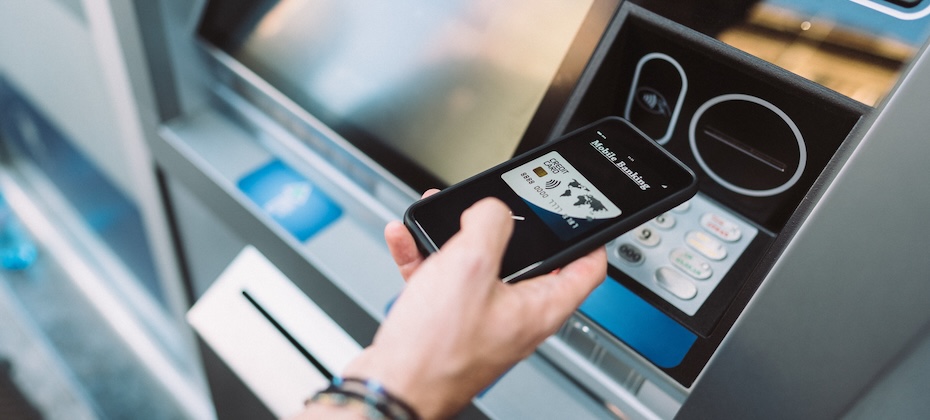
Amid some of the financial challenges that underserved communities experience, members across the financial services community remain committed to championing initiatives and programs that drive greater financial inclusion. In fact, collaboration has led to the inclusion of non-debt related payment information on consumers’ credit profiles, as well as digital services that make it easier to manage money. These efforts have helped to broaden access to fair and affordable financial resources for more individuals. While significant progress has been made, there is still more work to do. However, some of the misconceptions and myths about the financial services community are hindering further advancement. Debunking these myths will accelerate progress by building trust between the financial services community and consumers. Person withdrawing money from ATM contactless Myth #1: “Financial institutions have no interest in underserved consumers or credit invisibles.” The truth is, banks and credit unions want to say “yes” to more prospective borrowers, including individuals and families from underserved communities. Beyond being the right thing to do, it’s an opportunity to potentially build lifelong relationships with a relatively untapped market. A show of good faith to communities who have largely been ignored by the financial system could lead to customer loyalty that may extend to their family and friends. That’s why participants across the financial ecosystem have been proponents of including expanded data sources—such as on-time telecom, utility and video streaming service payments—on to consumer credit reports, as well as exploring other Fair Credit Reporting Act (FCRA)-regulated data sources, including payment data on short-term small dollar loans and expanded public records data. Making this data more accessible to lenders provides a more comprehensive view of a consumer’s ability and willingness to repay outstanding debt—an actionable solution to extending credit to consumers without lenders taking on additional risk. Myth #2: “There is a lack of trustworthy financial education resources.” The financial services community and affiliated organizations recognize that empowering people with financial knowledge and skillset are critical to consumers’ financial success. In fact, banks and credit unions are partnering with nonprofits and non-governmental organizations to better understand the unique challenges and opportunities within specific communities and provide relevant tools and resources. For example, Experian’s B.A.L.L. for Life (Be A Legacy Leader) program, launched in partnership with the National Urban League, serves as a catalyst for engaging with Black communities and low-income youth through live events and digital financial education. Subject matter experts, professional athletes, celebrities, and other influencers share their experiences and expertise, covering topics such as banking, credit, financial management and investing. In addition, to help people improve their financial management, Experian partners with the National Foundation for Credit Counseling (NFCC). The NFCC connects consumers with certified financial counselors to help them address various pain points, including debt management, homeownership, student loans or small business cash flow issues. Myth #3: “Underserved communities have few opportunities to build credit and enter the mainstream financial system.” People from underserved communities, as well as younger consumers and recent immigrants are often excluded from the mainstream financial system because they lack an extensive credit history. Historically, it’s created a vicious cycle; in order to get credit, you have to have credit. Fortunately, there has been a sea change in innovative solutions to address the specific needs of these populations. These include new credit scoring models and microfinancing which provide financial services to individuals who may have been excluded from traditional banking systems. In addition, by incorporating expanded data sources, such as telecom, utility and residential rental payments onto credit reports, lenders have more visibility into consumers who may have been excluded by traditional credit scoring methods.These programs help individuals and families from underserved communities establish and build a credit history that could enable loans, or the ability to rent an apartment or open their dream business. An example is Experian Boost®, a free feature that allows Experian members to contribute their history of making utility, cellphone, insurance, residential rent and video streaming service payments directly into their Experian credit profile. By incorporating nontraditional credit data like paying utility bills on time, online banking transactions, rental payments and verified income data, more people can establish a credit profile that can potentially qualify them for a loan. More Inclusion, Fewer Myths It’s encouraging that community organizations and banks are beginning to see the economic and social benefits of aligning on financial literacy and inclusion. As more initiatives come online, underserved populations will be able to establish a better financial foundation. Then, we can declare the myths to be history.
In this article…
First Heading
Lorem Ipsumis simply dummy text of the printing and typesetting industry. Lorem Ipsum has been the industry’s standard dummy text ever since the 1500s, when an unknown printer took a galley of type and scrambled it to make a type specimen book. It has survived not only five centuries, but also the leap into electronic typesetting, remaining essentially unchanged.
It was popularised in the 1960s with the release of Letraset sheets containing Lorem Ipsum passages, and more recently with desktop publishing software like Aldus PageMaker including versions of Lorem Ipsum
- test1
- test1
Second Heading
It is a long established fact that a reader will be distracted by the readable content of a page when looking at its layout. The point of using Lorem Ipsum is that it has a more-or-less normal distribution of letters, as opposed to using ‘Content here, content here’, making it look like readable English.
Many desktop publishing packages and web page editors now use Lorem Ipsum as their default model text, and a search for ‘lorem ipsum’ will uncover many web sites still in their infancy. Various versions have evolved over the years, sometimes by accident,
How Experian can help with card fraud prevention and detection
Contrary to popular belief, Lorem Ipsum is not simply random text. It has roots in a piece of classical Latin literature from 45 BC, making it over 2000 years old. Richard McClintock, a Latin professor at Hampden-Sydney College in Virginia, looked up one of the more obscure Latin words, consectetur, from a Lorem Ipsum passage, and going through the cites of the word in classical literature, discovered the undoubtable source.
Lorem Ipsum comes from sections 1.10.32 and 1.10.33 of “de Finibus Bonorum et Malorum” (The Extremes of Good and Evil) by Cicero, written in 45 BC. This book is a treatise on the theory of ethics,
very popular during the Renaissance. The first line of Lorem Ipsum, “Lorem ipsum dolor sit amet..”, comes from a line in section 1.10.32.
Fourth Heading
Lorem Ipsum has been the industry’s standard dummy text ever since the 1500s, when an unknown printer took a galley of type and scrambled it to make a type specimen book. It has survived not only five centuries, but also the leap into electronic typesetting, remaining essentially unchanged. It was popularised in the 1960s with the release of Letraset sheets containing Lorem Ipsum passages, and more recently with desktop publishing software like Aldus PageMaker including versions of Lorem Ipsum.