There are many variations of passages of Lorem Ipsum available, but the majority have suffered alteration in some form, by injected humour, or randomised words which don’t look even slightly believable.

Paragraph block
Heading block
Pull Quote cloud news blog
There are many variations of passages of Lorem Ipsum available, but the majority have suffered alteration in some form, by injected humour, or randomised words which don’t look even slightly believable.
There are many variations of passages of Lorem Ipsum available, but the majority have suffered alteration in some form, by injected humour, or randomised words which don’t look even slightly believable.
- There are many variations of passages of Lorem Ipsum available,
- but the majority have suffered alteration in some form, by injected humour, or randomised words which don’t look even slightly believable.


Lorem Ipsum has been the industry’s standard dummy text ever since the 1500s, when an unknown printer took a galley of type and scrambled it to make a type specimen book. It has survived not only five centuries, but also the leap into electronic typesetting, remaining essentially unchanged. It was popularised in the 1960s with the release of Letraset sheets containing Lorem Ipsum passages, and more recently with desktop publishing software like Aldus PageMaker including versions of Lorem Ipsum.

In my role as Chief Sustainability Officer at Experian, I often hear from communities that feel that they’re not seen or heard. That they’re marginalized. I’m proud that our United for Financial Health (UFH) program can be a global catalyst towards financial inclusion. This is the kind of work UFH is supporting with two new partners: Born This Way Foundation (BTWF) and True Colors United. Founded by Lady Gaga and her mother Cynthia Germanotta, Born This Way Foundation supports youth mental health and created Channel Kindness, a digital storytelling platform. Experian is proud to support an expansion of Channel Kindness, which will be a safe space for young people to reflect on significant financial days throughout the year such as college graduation, tax day and a #BeKind21 Campaign event focusing on the role kindness plays in a person’s financial wellness. True Colors United was founded by Cyndi Lauper, and aims to end homelessness among LGBTQ+ youth. We will collaborate with them to create financial literacy resources to help this “invisible” community overcome barriers to fair and equitable access to credit and financial tools. These new partnerships are just a couple examples of our support for the LGBTQ+ community. Earlier this year, we achieved a 100% rating on the Corporate Equality Index from the Human Rights Campaign Foundation in the U.S., making Experian a Best Place to Work for LGBTQ Equality for the fourth consecutive year. We also received a Silver Award from Stonewall for our commitment to inclusion of LGBTQ people in the workplace. We provide a process to assist trans and non-binary consumers with name changes to their Experian credit reports. During Pride Month, our weekly Twitter #Creditchat addressed important financial topics such as Financial Tips for Same Sex Couples and the LGBTQ+ Community. We look forward to sharing stories from Channel Kindness and the resources from True Colors United. To learn more about Experian’s commitment to financial empowerment for all, check out The Power of You: 2022 Diversity, Equity and Inclusion Report.
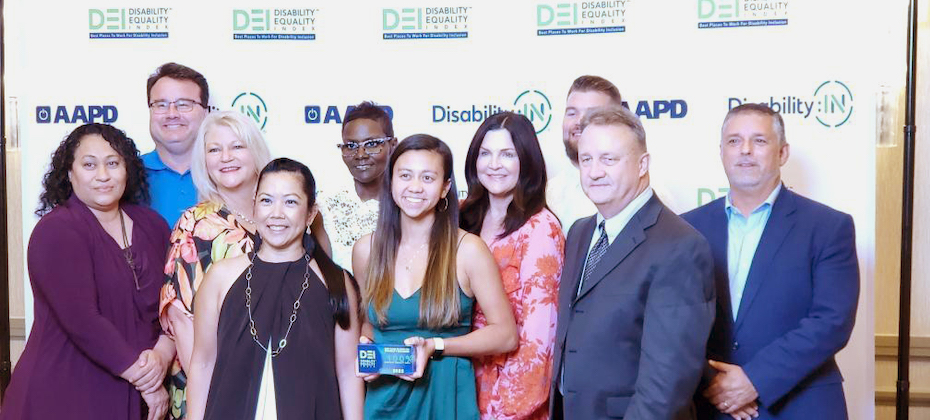
During Disability Pride Month, we are especially proud and hopeful by our most recent honor: Experian earned a score of 100 out of a possible 100 in the Disability Equality Index® (DEI). The DEI is the world’s most comprehensive benchmarking tool for the Fortune 1000 and Am Law 2001 to measure disability workplace inclusion against competitors. Several of our colleagues were on hand at the recent 2022 Disabilty:IN Conference to pick up our award. We improved from our score of 90 last year, and are considered a Best Workplace for Disability Inclusion. We’re honored to partner with two of the community’s leading organizations, Disability:IN and the National Disability Institute towards our commitment to financial empowerment for people with disabilities. We’re hosting conversations like this one to raise awareness of the barriers and explore solutions to financial inclusion. Experian is powering the credit resource page of the Financial Resilience Center so consumers have information at their fingertips. People with disabilities represent over one billion people across the globe. As one of our colleagues who represented Experian on a panel about innovation at the 2022 Disability:IN Conference explains, disability is a natural part of the human experience, and it crosses lines of age, ethnicity, gender, gender identity, race, sexual orientation, socioeconomic status and religion. It’s in that spirit that we held a Global Hackathon, challenging our colleagues to create future products and services that can further the mission of financial inclusion and equity for communities worldwide. As co-executive sponsors of Experian’s ASPIRE employee resource group, which advocates for teammates with disabilities, we’re proud to have our progress acknowledged. And we’re hopeful because while we know the work of inclusion will never be done, the Disability Equality Index indicates we’re evolving in the right direction. Learn more about Experian’s commitment to creating a better tomorrow for the communities in which we live and work in The Power of You: 2022 Diversity, Equity and Inclusion Report. Hear from Experian’s Roselyn M. about our culture of inclusion:

New Experian Link Enables Merchants to Better Verify Customers and Increase Online Sales
Identity & FraudAs any online merchant knows, the past few years have seen a rapid increase in digital transactions but unfortunately, fraudsters have adapted quickly and taken advantage of this. With booming online sales, retailers strive to provide a seamless shopping experience while simultaneously recognizing legitimate customers and keeping an eye out for fraud. It’s a balancing act that becomes more perilous as transaction volumes grow. Perhaps one of the most frustrating challenges for online merchants is false declines. In fact, Aite-Novarica Group’s The E-Commerce Fraud Enigma: The Quest to Maximize Revenue While Minimizing Fraud Report found the average false decline rate is 1.16%. With over $960 billion in U.S. online sales in 2021, lost sales resulting from false declines is substantial, totaling more than $11 billion. False declines occur when a good customer is suspected of fraud and then prevented from completing a purchase. This happens when a company’s fraud prevention solution provides inadequate insight into the identity of the customer, flagging them as a potential bad actor. The result is a missed sale for the business and a frustrating transaction and experience for the customer. Merchants use a variety of tools to prevent fraud while ensuring they minimize friction during the purchase experience, but many legacy fraud solutions fail to provide the confidence needed to sufficiently assess the risk of the identity presented by the customer. As identities become more complex, Experian recognizes that identity is personal. We are committed to creating new and innovative solutions to manage this complexity, and to addressing the constantly evolving opportunities for fraud that come along with it. Our newest offering, Experian Link, is the most recent example. It allows merchants to augment their real-time payment risk decisions with a perspective that links customer identity to the credit card being presented for payment. Aite-Novarica’s report showed that nearly half of the e-commerce merchants surveyed are tolerating fraud rates between 20 and 49 basis points. Experian Link can improve that as it provides a positive match rate of 85% for major credit card brands, and when an identity is verified against a credit card, fraud rates can drop to as low as 10 basis points with no added customer friction. As the digital landscape continues to evolve, online merchants need the right tools to help them meet consumer expectations and support their growth now and in the future. Leveraging a strong identity verification solution like Experian Link in the authorization process will be critical for merchants, providing additional data that paints a more complete picture of their customer and leads to fewer false declines. For more information on how Experian Link helps businesses enhance their identity verification solutions, please visit https://www.experian.com/business/products/experian-link.
Related Posts

Read Moreio55 Button 2- Learn more Primary button Secondary button Related Posts
Patients use self-service tools to easily connect with providers online and manage administrative tasks 24/7. Common patient self-service tools include patient portals, online scheduling and mobile registration. Self-service solutions also include robust financial tools that help patients update insurance information, get accurate estimates, apply for charity care, set up payment plans, combine payments to multiple providers or set up a fundraising page. Lorem Ipsum comes from sections 1.10.32 and 1.10.33 of “de Finibus Bonorum et Malorum” (The Extremes of Good and Evil) by Cicero, written in 45 BC. This book is a treatise on the theory of ethics, very popular during the Renaissance. The first line of Lorem Ipsum, “Lorem ipsum dolor sit amet..”, comes from a line in section 1.10.32. Heading 2 Related Posts
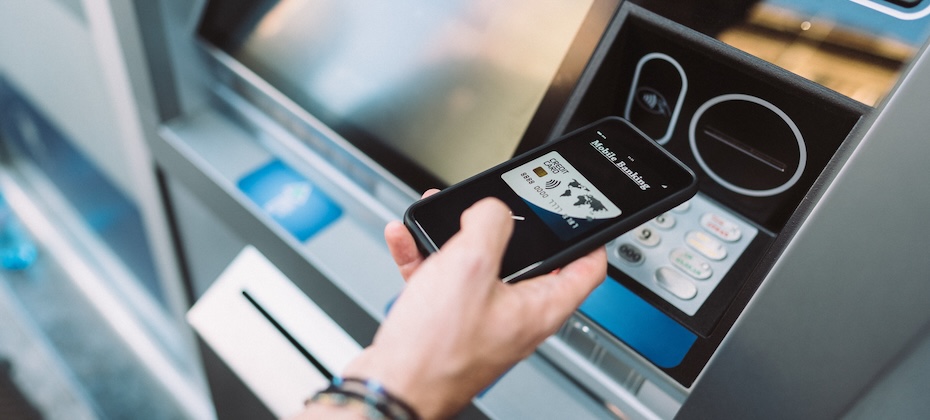
Amid some of the financial challenges that underserved communities experience, members across the financial services community remain committed to championing initiatives and programs that drive greater financial inclusion. In fact, collaboration has led to the inclusion of non-debt related payment information on consumers’ credit profiles, as well as digital services that make it easier to manage money. These efforts have helped to broaden access to fair and affordable financial resources for more individuals. While significant progress has been made, there is still more work to do. However, some of the misconceptions and myths about the financial services community are hindering further advancement. Debunking these myths will accelerate progress by building trust between the financial services community and consumers. Person withdrawing money from ATM contactless Myth #1: “Financial institutions have no interest in underserved consumers or credit invisibles.” The truth is, banks and credit unions want to say “yes” to more prospective borrowers, including individuals and families from underserved communities. Beyond being the right thing to do, it’s an opportunity to potentially build lifelong relationships with a relatively untapped market. A show of good faith to communities who have largely been ignored by the financial system could lead to customer loyalty that may extend to their family and friends. That’s why participants across the financial ecosystem have been proponents of including expanded data sources—such as on-time telecom, utility and video streaming service payments—on to consumer credit reports, as well as exploring other Fair Credit Reporting Act (FCRA)-regulated data sources, including payment data on short-term small dollar loans and expanded public records data. Making this data more accessible to lenders provides a more comprehensive view of a consumer’s ability and willingness to repay outstanding debt—an actionable solution to extending credit to consumers without lenders taking on additional risk. Myth #2: “There is a lack of trustworthy financial education resources.” The financial services community and affiliated organizations recognize that empowering people with financial knowledge and skillset are critical to consumers’ financial success. In fact, banks and credit unions are partnering with nonprofits and non-governmental organizations to better understand the unique challenges and opportunities within specific communities and provide relevant tools and resources. For example, Experian’s B.A.L.L. for Life (Be A Legacy Leader) program, launched in partnership with the National Urban League, serves as a catalyst for engaging with Black communities and low-income youth through live events and digital financial education. Subject matter experts, professional athletes, celebrities, and other influencers share their experiences and expertise, covering topics such as banking, credit, financial management and investing. In addition, to help people improve their financial management, Experian partners with the National Foundation for Credit Counseling (NFCC). The NFCC connects consumers with certified financial counselors to help them address various pain points, including debt management, homeownership, student loans or small business cash flow issues. Myth #3: “Underserved communities have few opportunities to build credit and enter the mainstream financial system.” People from underserved communities, as well as younger consumers and recent immigrants are often excluded from the mainstream financial system because they lack an extensive credit history. Historically, it’s created a vicious cycle; in order to get credit, you have to have credit. Fortunately, there has been a sea change in innovative solutions to address the specific needs of these populations. These include new credit scoring models and microfinancing which provide financial services to individuals who may have been excluded from traditional banking systems. In addition, by incorporating expanded data sources, such as telecom, utility and residential rental payments onto credit reports, lenders have more visibility into consumers who may have been excluded by traditional credit scoring methods.These programs help individuals and families from underserved communities establish and build a credit history that could enable loans, or the ability to rent an apartment or open their dream business. An example is Experian Boost®, a free feature that allows Experian members to contribute their history of making utility, cellphone, insurance, residential rent and video streaming service payments directly into their Experian credit profile. By incorporating nontraditional credit data like paying utility bills on time, online banking transactions, rental payments and verified income data, more people can establish a credit profile that can potentially qualify them for a loan. More Inclusion, Fewer Myths It’s encouraging that community organizations and banks are beginning to see the economic and social benefits of aligning on financial literacy and inclusion. As more initiatives come online, underserved populations will be able to establish a better financial foundation. Then, we can declare the myths to be history.
In this article…
First Heading
Lorem Ipsumis simply dummy text of the printing and typesetting industry. Lorem Ipsum has been the industry’s standard dummy text ever since the 1500s, when an unknown printer took a galley of type and scrambled it to make a type specimen book. It has survived not only five centuries, but also the leap into electronic typesetting, remaining essentially unchanged.
It was popularised in the 1960s with the release of Letraset sheets containing Lorem Ipsum passages, and more recently with desktop publishing software like Aldus PageMaker including versions of Lorem Ipsum
- test1
- test1
Second Heading
It is a long established fact that a reader will be distracted by the readable content of a page when looking at its layout. The point of using Lorem Ipsum is that it has a more-or-less normal distribution of letters, as opposed to using ‘Content here, content here’, making it look like readable English.
Many desktop publishing packages and web page editors now use Lorem Ipsum as their default model text, and a search for ‘lorem ipsum’ will uncover many web sites still in their infancy. Various versions have evolved over the years, sometimes by accident,
How Experian can help with card fraud prevention and detection
Contrary to popular belief, Lorem Ipsum is not simply random text. It has roots in a piece of classical Latin literature from 45 BC, making it over 2000 years old. Richard McClintock, a Latin professor at Hampden-Sydney College in Virginia, looked up one of the more obscure Latin words, consectetur, from a Lorem Ipsum passage, and going through the cites of the word in classical literature, discovered the undoubtable source.
Lorem Ipsum comes from sections 1.10.32 and 1.10.33 of “de Finibus Bonorum et Malorum” (The Extremes of Good and Evil) by Cicero, written in 45 BC. This book is a treatise on the theory of ethics,
very popular during the Renaissance. The first line of Lorem Ipsum, “Lorem ipsum dolor sit amet..”, comes from a line in section 1.10.32.
Fourth Heading
Lorem Ipsum has been the industry’s standard dummy text ever since the 1500s, when an unknown printer took a galley of type and scrambled it to make a type specimen book. It has survived not only five centuries, but also the leap into electronic typesetting, remaining essentially unchanged. It was popularised in the 1960s with the release of Letraset sheets containing Lorem Ipsum passages, and more recently with desktop publishing software like Aldus PageMaker including versions of Lorem Ipsum.