There are many variations of passages of Lorem Ipsum available, but the majority have suffered alteration in some form, by injected humour, or randomised words which don’t look even slightly believable.

Paragraph block
Heading block
Pull Quote cloud news blog
There are many variations of passages of Lorem Ipsum available, but the majority have suffered alteration in some form, by injected humour, or randomised words which don’t look even slightly believable.
There are many variations of passages of Lorem Ipsum available, but the majority have suffered alteration in some form, by injected humour, or randomised words which don’t look even slightly believable.
- There are many variations of passages of Lorem Ipsum available,
- but the majority have suffered alteration in some form, by injected humour, or randomised words which don’t look even slightly believable.


Lorem Ipsum has been the industry’s standard dummy text ever since the 1500s, when an unknown printer took a galley of type and scrambled it to make a type specimen book. It has survived not only five centuries, but also the leap into electronic typesetting, remaining essentially unchanged. It was popularised in the 1960s with the release of Letraset sheets containing Lorem Ipsum passages, and more recently with desktop publishing software like Aldus PageMaker including versions of Lorem Ipsum.
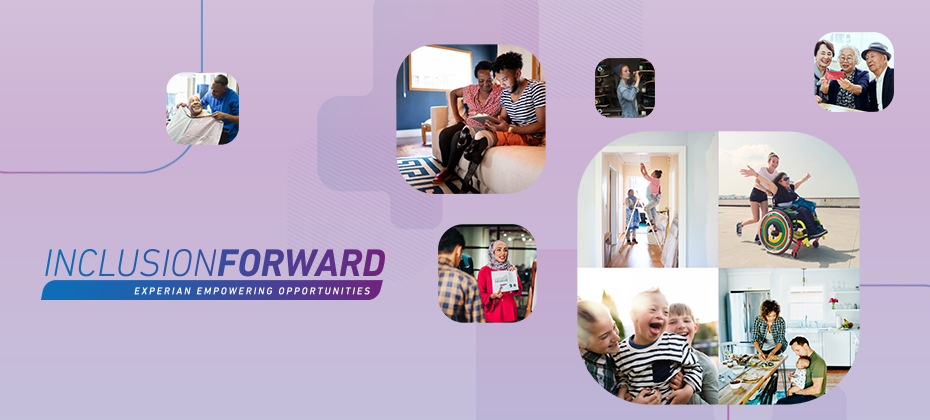
Experian Announces Inclusion Forward™ to Accelerate Financial Inclusion in Underserved Communities
Diversity & InclusionWhen it comes to access to credit, we know that it’s not equal. There are barriers some consumers face, and that negatively affects how they can spend, save and borrow money. We have a responsibility to find and facilitate solutions. Financial inclusion is a core commitment for us. That’s why we are excited to launch a first-of-its-kind program called Inclusion Forward – Experian Empowering Opportunities™. This initiative harnesses Experian’s data, analytics and technology that can help clients create and provide more affordable credit access. Additionally, Inclusion Forward™ will provide ongoing resources to help consumers better understand their credit health, particularly in diverse communities. Inclusion Forward™ will focus on three key areas: homeownership, small business entrepreneurship and financial education. It can help companies achieve their diversity, equity and inclusion goals, but most importantly, it will help consumers achieve their life goals. Closing the wealth gap is key in racial equity efforts. By unlocking the power of Experian data, clients can better understand the financial challenges consumers from diverse backgrounds may face. This can lead to creating solutions and education for all consumers. We look forward to sharing more about Inclusion Forward™ and how this program is making a difference in underserved communities. To learn more about Experian’s commitment to diversity and inclusion, click here.

Experian works hard at having a workplace culture where everyone feels a sense of belonging. We’re constantly evolving and improving, and proud to share several recent acknowledgements that we’re on the right track. We have a robust multi-generational employee base, and know that the diversity of perspectives and experience spark innovations that lead to financial inclusion for all. Millennials make up the largest portion of our workforce and we’re thrilled to be named a Fortune Best Workplace for Millennials. Millennials want to work for organizations that offer fair pay and meaning, inclusive benefits beyond parenthood, gender equity, flexibility and safe spaces, according to Great Place to Work (GPTW). Employee comments to a GPTW survey indicate our team believes we are doing well: “One question you ask is do we hire people who fit in… No, we don’t always – which is why we can innovate and create change – if everyone agrees on every approach, we wouldn’t be nearly as successful as we are. That’s one thing that makes it a great place to work – our diversity of thought and approach to problems.” Gender equity has been a focus of ours, from recruiting to talent development. Almost half of our new hires, current employees and promoted talent identify as women. Further demonstrating our commitment to diversity and inclusion, former Experian North American CEO Craig Boundy is ranked the #12 Best CEO for Women 2021 by Comparably. This ranking is based on 10 million ratings across 60,000 companies, Every CEO on the list is in the Top 5% of all CEOs rated by female employees. Experian also earned several other awards from Comparably: Best HR Teams of 2021 Best Company Outlook of 2021 Best Places to Work in Los Angeles 2021 Top 10 for Career Growth “I’ve worked for a ton of different technology companies and have never seen such a strong leadership team nor seen a company invest so much in their employee’s future!” (quote from GPTW survey) “Opportunity to grow and move around various lines of business through your career within Experian – allows you to continue to challenge yourself and grow without leaving the organization.” (quote from GPTW survey) Comparably’s Annual Best Places to Work Awards rely solely on the input of employees, which makes these honors especially meaningful. We appreciate their feedback and their contributions every day. Check out our 2020 Power of YOU report to learn more about our coworkers, leadership and how we serve our communities.

There are times in most of our lives where we can’t get access to the financial system in a way that we want. Be it for a mortgage, a car, or a business loan. We’ve all experienced the frustration when you feel you’re on the outside of the system and you can’t do the things you want for yourself or your family. At Experian, it’s our job to change that. We want to make sure everybody is included and has access to fair and affordable financial products. Financial inclusion is fundamental to our business. With our focus on increasing access to financial services, improving financial literacy and confidence, and helping people manage their financial lives; we help power people and businesses to create their future. In fact, the United Nations includes access to financial services, such as credit and microfinance, among its Sustainable Development Goals. Access to affordable credit opens the door to opportunities for people to transform their lives – from homes and healthcare to education and entrepreneurship. This has never been more important than it is today. Creating a Campaign to Drive Financial Health Worldwide As the pandemic took hold in 2020, we stepped in with data and analytics to support governments, health services and national emergency response efforts through major initiatives such as COVID Radar in Brazil and Experian CORE (COVID Outlook & Response Evaluator). These are just two examples of how we can use our data and expertise to make the biggest difference to society. It soon became clear that the impact — not just on physical health, but on financial health — would be far-reaching for people around the world. We looked at how we could use our expertise and resources to help vulnerable communities through the crisis and focused on financial education as the best way to strengthen their resilience and support their road to recovery. We launched our United for Financial Health programme. We rapidly established 11 NGO partnerships across our biggest consumer markets to deliver targeted financial education for some of the communities hit hardest by COVID-19. By the end of the year, we had reached nearly 35 million people, more than double our original goal of 15 million, and we’re not stopping there. We aim to reach 100 million people by 2024. Part of our efforts include our member relationships around the world. This year, we surpassed the milestone of 100 million direct relationships with consumers globally and delivered further innovations to support people through our business, with the launch of products like Experian Boost in the UK and Serasa Score Turbo in Brazil. This, of course, is on top of our ground-breaking Experian Boost launch in the United States in 2019. Our goal is to have a direct relationship with as many people as possible; to truly become the Consumers’ Credit Bureau and power financial opportunities for all. Driving Innovation with Social Purpose Our culture of innovation helps us harness opportunities to drive business growth. We are continually investing in product innovation and new sources of data to address emerging market opportunities that can make a real difference to global communities. In 2020, around 1,000 “innovators” from across Experian joined our annual Future of Information Conference, which was held virtually because of the pandemic, to encourage them to think differently in their work. Topics included fairness in artificial intelligence, transforming agribusiness and enhancing the consumer healthcare experience. Teams at our DataLabs in Brazil, Singapore, the UK and the USA tap into our culture of innovation to continually create new solutions to global challenges. The result of all this is that our Social Innovation products have now reached 61 million people since 2013. We aim to reach 100 million by 2025. As John Hope Bryant, CEO of one of our NGO partners Operation HOPE, says, “Experian’s commitment to unlocking the power of data to create opportunity means more people will be set up not just to survive, but to thrive in the months and years to come.” In this year’s Sustainable Business Report our commitments come through stronger than ever. We are raising our ambition and aiming to reach 100 million people through our social innovation products by 2025. Our goal is to reach 100 million people through our United for Financial Health campaign by 2024. We have also pledged to protect our planet by becoming carbon neutral in our own operations by 2030. We know we’ve got more work to do and we remain focused on using our business to make real and sustainable change. With social innovation running so deeply through the core of our culture, and our commitment to improving global financial health front and centre of our thinking, we will continue to push to find new solutions to help people, serve communities and protect the environment, helping to create a better future for all. All of this is very personal to me. I passionately believe we can and should drive to make a difference in society. I serve as executive sponsor of our ESG programs and this isn’t just another corporate program, it’s at the heart of what we do as a company to power financial opportunities. My personal pledge is to continue to keep you updated, as we progress our agenda to sustainable environmental and societal change. Read the full SBR report here.
Related Posts
Read Moreio55 Button 2- Learn more Primary button Secondary button Related Posts
Patients use self-service tools to easily connect with providers online and manage administrative tasks 24/7. Common patient self-service tools include patient portals, online scheduling and mobile registration. Self-service solutions also include robust financial tools that help patients update insurance information, get accurate estimates, apply for charity care, set up payment plans, combine payments to multiple providers or set up a fundraising page. Lorem Ipsum comes from sections 1.10.32 and 1.10.33 of “de Finibus Bonorum et Malorum” (The Extremes of Good and Evil) by Cicero, written in 45 BC. This book is a treatise on the theory of ethics, very popular during the Renaissance. The first line of Lorem Ipsum, “Lorem ipsum dolor sit amet..”, comes from a line in section 1.10.32. Heading 2 Related Posts

Amid some of the financial challenges that underserved communities experience, members across the financial services community remain committed to championing initiatives and programs that drive greater financial inclusion. In fact, collaboration has led to the inclusion of non-debt related payment information on consumers’ credit profiles, as well as digital services that make it easier to manage money. These efforts have helped to broaden access to fair and affordable financial resources for more individuals. While significant progress has been made, there is still more work to do. However, some of the misconceptions and myths about the financial services community are hindering further advancement. Debunking these myths will accelerate progress by building trust between the financial services community and consumers. Person withdrawing money from ATM contactless Myth #1: “Financial institutions have no interest in underserved consumers or credit invisibles.” The truth is, banks and credit unions want to say “yes” to more prospective borrowers, including individuals and families from underserved communities. Beyond being the right thing to do, it’s an opportunity to potentially build lifelong relationships with a relatively untapped market. A show of good faith to communities who have largely been ignored by the financial system could lead to customer loyalty that may extend to their family and friends. That’s why participants across the financial ecosystem have been proponents of including expanded data sources—such as on-time telecom, utility and video streaming service payments—on to consumer credit reports, as well as exploring other Fair Credit Reporting Act (FCRA)-regulated data sources, including payment data on short-term small dollar loans and expanded public records data. Making this data more accessible to lenders provides a more comprehensive view of a consumer’s ability and willingness to repay outstanding debt—an actionable solution to extending credit to consumers without lenders taking on additional risk. Myth #2: “There is a lack of trustworthy financial education resources.” The financial services community and affiliated organizations recognize that empowering people with financial knowledge and skillset are critical to consumers’ financial success. In fact, banks and credit unions are partnering with nonprofits and non-governmental organizations to better understand the unique challenges and opportunities within specific communities and provide relevant tools and resources. For example, Experian’s B.A.L.L. for Life (Be A Legacy Leader) program, launched in partnership with the National Urban League, serves as a catalyst for engaging with Black communities and low-income youth through live events and digital financial education. Subject matter experts, professional athletes, celebrities, and other influencers share their experiences and expertise, covering topics such as banking, credit, financial management and investing. In addition, to help people improve their financial management, Experian partners with the National Foundation for Credit Counseling (NFCC). The NFCC connects consumers with certified financial counselors to help them address various pain points, including debt management, homeownership, student loans or small business cash flow issues. Myth #3: “Underserved communities have few opportunities to build credit and enter the mainstream financial system.” People from underserved communities, as well as younger consumers and recent immigrants are often excluded from the mainstream financial system because they lack an extensive credit history. Historically, it’s created a vicious cycle; in order to get credit, you have to have credit. Fortunately, there has been a sea change in innovative solutions to address the specific needs of these populations. These include new credit scoring models and microfinancing which provide financial services to individuals who may have been excluded from traditional banking systems. In addition, by incorporating expanded data sources, such as telecom, utility and residential rental payments onto credit reports, lenders have more visibility into consumers who may have been excluded by traditional credit scoring methods.These programs help individuals and families from underserved communities establish and build a credit history that could enable loans, or the ability to rent an apartment or open their dream business. An example is Experian Boost®, a free feature that allows Experian members to contribute their history of making utility, cellphone, insurance, residential rent and video streaming service payments directly into their Experian credit profile. By incorporating nontraditional credit data like paying utility bills on time, online banking transactions, rental payments and verified income data, more people can establish a credit profile that can potentially qualify them for a loan. More Inclusion, Fewer Myths It’s encouraging that community organizations and banks are beginning to see the economic and social benefits of aligning on financial literacy and inclusion. As more initiatives come online, underserved populations will be able to establish a better financial foundation. Then, we can declare the myths to be history.
In this article…
First Heading
Lorem Ipsumis simply dummy text of the printing and typesetting industry. Lorem Ipsum has been the industry’s standard dummy text ever since the 1500s, when an unknown printer took a galley of type and scrambled it to make a type specimen book. It has survived not only five centuries, but also the leap into electronic typesetting, remaining essentially unchanged.
It was popularised in the 1960s with the release of Letraset sheets containing Lorem Ipsum passages, and more recently with desktop publishing software like Aldus PageMaker including versions of Lorem Ipsum
- test1
- test1
Second Heading
It is a long established fact that a reader will be distracted by the readable content of a page when looking at its layout. The point of using Lorem Ipsum is that it has a more-or-less normal distribution of letters, as opposed to using ‘Content here, content here’, making it look like readable English.
Many desktop publishing packages and web page editors now use Lorem Ipsum as their default model text, and a search for ‘lorem ipsum’ will uncover many web sites still in their infancy. Various versions have evolved over the years, sometimes by accident,
How Experian can help with card fraud prevention and detection
Contrary to popular belief, Lorem Ipsum is not simply random text. It has roots in a piece of classical Latin literature from 45 BC, making it over 2000 years old. Richard McClintock, a Latin professor at Hampden-Sydney College in Virginia, looked up one of the more obscure Latin words, consectetur, from a Lorem Ipsum passage, and going through the cites of the word in classical literature, discovered the undoubtable source.
Lorem Ipsum comes from sections 1.10.32 and 1.10.33 of “de Finibus Bonorum et Malorum” (The Extremes of Good and Evil) by Cicero, written in 45 BC. This book is a treatise on the theory of ethics,
very popular during the Renaissance. The first line of Lorem Ipsum, “Lorem ipsum dolor sit amet..”, comes from a line in section 1.10.32.
Fourth Heading
Lorem Ipsum has been the industry’s standard dummy text ever since the 1500s, when an unknown printer took a galley of type and scrambled it to make a type specimen book. It has survived not only five centuries, but also the leap into electronic typesetting, remaining essentially unchanged. It was popularised in the 1960s with the release of Letraset sheets containing Lorem Ipsum passages, and more recently with desktop publishing software like Aldus PageMaker including versions of Lorem Ipsum.