There are many variations of passages of Lorem Ipsum available, but the majority have suffered alteration in some form, by injected humour, or randomised words which don’t look even slightly believable.

Paragraph block
Heading block
Pull Quote cloud news blog
There are many variations of passages of Lorem Ipsum available, but the majority have suffered alteration in some form, by injected humour, or randomised words which don’t look even slightly believable.
There are many variations of passages of Lorem Ipsum available, but the majority have suffered alteration in some form, by injected humour, or randomised words which don’t look even slightly believable.
- There are many variations of passages of Lorem Ipsum available,
- but the majority have suffered alteration in some form, by injected humour, or randomised words which don’t look even slightly believable.


Lorem Ipsum has been the industry’s standard dummy text ever since the 1500s, when an unknown printer took a galley of type and scrambled it to make a type specimen book. It has survived not only five centuries, but also the leap into electronic typesetting, remaining essentially unchanged. It was popularised in the 1960s with the release of Letraset sheets containing Lorem Ipsum passages, and more recently with desktop publishing software like Aldus PageMaker including versions of Lorem Ipsum.
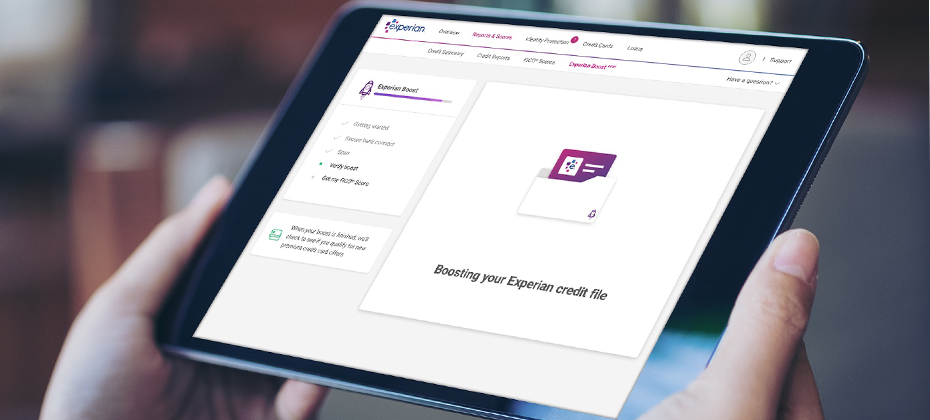
Many of us have turned to streaming services to help us cope during this time of COVID-19. Being able to escape with some good entertainment while still maintaining our social distance is invaluable right now. Television streaming has skyrocketed 85% since March; I’ve certainly contributed to that increase. Now, subscribing to that streaming service can do more than entertain, it can improve a consumer’s financial health. Starting today, Netflix® customers can possibly improve their FICO® Score by adding their positive payment history through Experian Boost. Experian Boost™† is the innovation we launched in 2019 that can help consumers improve their credit score instantly. So far, approximately four million consumers have connected their utility and telecom bills to Experian Boost, leading to more than 29 million points added to FICO® Scores nationwide. This addition makes sense. Experian Boost already allows consumers to receive credit for paying their cable bills, so paying for a video streaming service on time should also help prove creditworthiness. It’s critical that we meet consumers where they are and adapt to help them in their current position, especially during a pandemic. Anticipating and prioritizing consumer needs is our focus and drives our innovation. After all, we’re consumers too. I’m proud of how our team uses their personal experience and their roles at Experian to create opportunity for millions of people to improve their financial health, especially during these uncertain times. Our job is to help consumers, and that doesn’t stop with their credit score. That’s why we’re also launching new free features available to everyone within the CreditWorks Basic and Premium products. The free tools provide personal insights and resources that can help consumers better save money and manage their financial profile. For more information about Experian Boost go to: www.experian.com/Boost. Experian and the Experian trademarks used herein are trademarks or registered trademarks of Experian and its affiliates. The use of any other trade name, copyright, or trademark is for identification and reference purposes only and does not imply any association with the copyright or trademark holder of their product or brand. Other product and company names mentioned herein are the property of their respective owners. †Results may vary. Some may not see improved scores or approval odds. Not all lenders use Experian credit files, and not all lenders use scores impacted by Experian Boost. Credit score calculated based on FICO® Score 8 model. Your lender or insurer may use a different FICO® Score than FICO® Score 8, or another type of credit score altogether. Learn more.

We sit in a pivotal position in the societies where we work. For us at Experian, using our data and expertise to create a better tomorrow is more than an opportunity. It’s a responsibility. We are pleased to announce we have published our annual Sustainable Business Report 2020, which outlines Experian’s dedication to social and environmental issues and details our corporate responsibility performance. In the report, we also highlight Experian’s target to reach 100 million additional people globally by 2025 with social innovation products and services. Additionally, the Sustainable Business Report focuses on our ambition to become carbon neutral by 2030. By utilizing renewable energy, reducing the carbon impact of business travel, and investing in high-quality carbon offsets, we reduced our carbon footprint by 8% last year and cut the carbon intensity of our business by 14% per $1,000 of revenue compared with the previous year. Additionally, 29% of Experian’s worldwide energy was also renewable. We are excited to share a few key takeaways from this year’s Sustainable Business Report: Experian employees volunteered 54,500 hours in and outside of work time to support their communities. This included over 3,500 hours in March 2020 to support communities as the COVID-19 crisis took hold. In Brazil, we have supported the introduction of new legislation enabling millions of consumers to benefit from the use of ‘positive’ data about the credit and other bills they pay on time. Experian Boost helped over 1.5 million Americans improve their credit scores, collectively boosting their FICO® scores by more than 17 million points. Prove ID-Link helped 7.5 million people in India prove their identity. As a result, more people are able to open a bank account and access credit for the first time. Learn more by viewing or downloading our full Sustainable Business Report here.
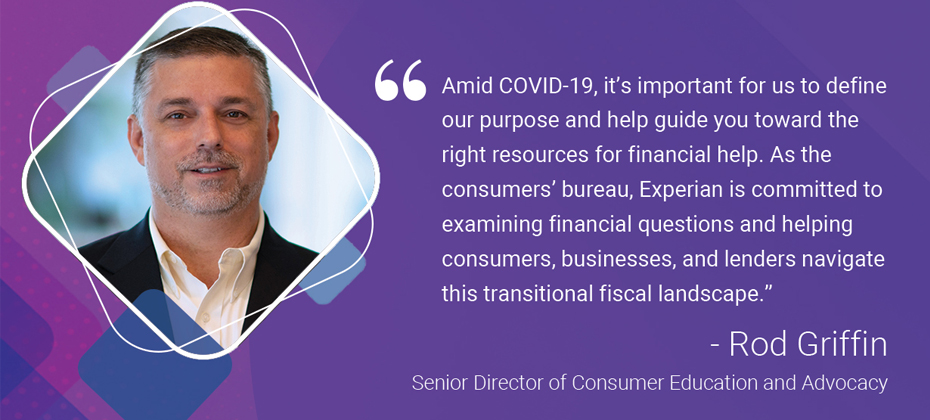
“What does a credit bureau do?” is one of the most common questions I’ve answered throughout the years – both at conferences and cookouts. Admittedly, it can be difficult understanding the different roles of credit bureaus, credit score companies, and lenders. Amid COVID-19, it’s important for us to define our purpose and help guide you toward the right resources for financial help. As the consumers’ bureau, Experian is committed to examining financial questions and helping consumers, businesses, and lenders navigate this transitional fiscal landscape. It’s important for you to know your financial options and how to separate fact from fiction, especially during times of crisis. Here are answers to some of the most common questions about credit. Do credit bureaus make lending decisions? This is one of the rare instances in credit reporting for which there is a simple answer. No, credit bureaus do not make lending decisions. Lenders – such as banks, mortgage companies, credit unions, and credit card issuers – help consumers borrow money and they make the lending decisions. The credit bureaus are responsible for working closely with lenders to provide information that helps them make informed and responsible lending decisions. At Experian, we equip lenders with accurate and complete data about consumers’ and small businesses’ credit activity and payment history, which enables lenders to develop a full picture of a borrower’s financial health. During COVID-19, it is important for there to be open lines of communication between consumers and lenders about upcoming payments and payment plans. Some lenders are offering deferments and other workable accommodations to ensure consumers do not fall behind on their payments. It is important for consumers to contact their lenders to understand what options are available to them. Do credit bureaus control my credit score (and whether it goes up or down)? Credit bureaus, like Experian, do not determine your credit score. Credit scores are calculated based on third-party credit-scoring models, like those developed by FICO or VantageScore Solutions. These models use information from your credit reports, including credit activity sourced from credit bureaus, to calculate a credit score. The scoring models are proprietary to the companies that develop them. In the most fundamental terms, the credit bureaus are responsible for compiling the credit reports. The scoring companies create algorithms that calculate the score. Credit scores reflect the information in your credit report at the moment the credit score is calculated. The scores will change to reflect changes in your credit report. You control how you use credit, so you play an important role in determining whether your scores trend upward or slip downward. If you consistently make good credit decisions, your scores will trend upward over time. Reviewing your credit report helps you manage your credit and gives you a full picture of what lenders see. Monitoring your credit report is as important as reviewing bills and bank statements, as your credit is an integral part of your overall financial health. Additionally, with an increase in phishing and cyberscams as a result of COVID-19, it’s especially important to stay informed about your credit report, so that you can dispute anything you believe may be inaccurate and ensure that there is no evidence of fraud that could impact your score. Are lending decisions based solely on my credit score? No, credit scores are just one factor in lenders’ decision-making process. Lenders consider additional information when making a decision, such as employment status, income and information about a consumer’s assets and liabilities. In the wake of COVID-19, lenders may start to tighten their credit standards – meaning consumers may need a higher score to receive a loan. Because of this, it is important to be proactive and take action to mitigate any potential negative impact on your credit score. If you’re worried you may miss a payment, contact your lender to discuss your options. Through April 2021, Experian has partnered with our peer credit bureaus to offer a weekly free credit score at https://www.annualcreditreport.com/. This additional measure will allow consumers to access their credit reports frequently and talk to their lenders with the most updated information possible. How are credit bureaus working with the government during COVID-19? At Experian, we fully supported the signing of the Coronavirus Aid, Relief, and Economic Security Act (CARES Act), which provides relief to Americans through expanded unemployment coverage and by providing grants and loans to small businesses. The CARES Act also provided important guidance to lenders about how to work with consumers affected by COVID-19. Experian is working with lenders to ensure appropriate accommodations are made to protect consumers. Additionally, the credit reporting industry has developed reporting standards for lenders to use during emergency periods, such as COVID-19. These reporting standards allow lenders flexibility when reporting accommodations made to consumers who are experiencing hardships due to the pandemic. For additional questions regarding COVID-19 debt and credit relief options, view Experian’s full list of financial and non-financial institutions’ websites where you can find information on relief measures: COVID-19 (Coronavirus) Credit Card and Debt Relief.

At Experian, we are committed to finding new, innovative ways to deliver better outcomes for our clients and their customers. With this in mind, we are delighted to announce that we have now been granted approval to supply Open Banking and PSD2 services by the FCA. The accreditation allows Experian to help people benefit from the Open Banking initiative through a new suite of products so that consumers can share data in a secure and compliant way. This will complement Experian’s existing credit bureau services. The overarching aspiration of Open Banking is to level the playing field by offering greater choice through new products – promoting greater transparency about the benefit and value of these products in the process. This accreditation from the FCA underlines our commitment to support Open Banking for the benefit of both people and organisations. One bank has already signed-up to use our Open Banking platform and we’re running several proof-of-concepts with other clients, so they can explore a range of innovative new services. Open Banking will help people to prove they can afford products, even if they have a limited credit history. The development of insightful mechanisms to manage finances and simplify applications, for everything from financial products to rented accommodation, will also reduce the time and effort required. When people choose to share bank account information with financial service providers they can receive the most appropriate products, improved services and better deals. It will be a useful tool for organisations to ensure they only lend people and small businesses what they can afford to repay. And it will be invaluable to price comparison websites, brokers and background checking providers. Open Banking will also help lenders to meet FCA regulatory obligations in affordability and reduce costs when processing applications. Adopting new data assets will be easier from both a technical and consumer support perspective. The UK is at the vanguard of a global shift in data sharing. Having a dynamic economy and particularly a dynamic financial services sector, is going to be a crucial asset as we navigate our way through social and economic changes anticipated in the years ahead.
In this article…
First Heading
Lorem Ipsumis simply dummy text of the printing and typesetting industry. Lorem Ipsum has been the industry’s standard dummy text ever since the 1500s, when an unknown printer took a galley of type and scrambled it to make a type specimen book. It has survived not only five centuries, but also the leap into electronic typesetting, remaining essentially unchanged.
It was popularised in the 1960s with the release of Letraset sheets containing Lorem Ipsum passages, and more recently with desktop publishing software like Aldus PageMaker including versions of Lorem Ipsum
- test1
- test1
Second Heading
It is a long established fact that a reader will be distracted by the readable content of a page when looking at its layout. The point of using Lorem Ipsum is that it has a more-or-less normal distribution of letters, as opposed to using ‘Content here, content here’, making it look like readable English.
Many desktop publishing packages and web page editors now use Lorem Ipsum as their default model text, and a search for ‘lorem ipsum’ will uncover many web sites still in their infancy. Various versions have evolved over the years, sometimes by accident,
How Experian can help with card fraud prevention and detection
Contrary to popular belief, Lorem Ipsum is not simply random text. It has roots in a piece of classical Latin literature from 45 BC, making it over 2000 years old. Richard McClintock, a Latin professor at Hampden-Sydney College in Virginia, looked up one of the more obscure Latin words, consectetur, from a Lorem Ipsum passage, and going through the cites of the word in classical literature, discovered the undoubtable source.
Lorem Ipsum comes from sections 1.10.32 and 1.10.33 of “de Finibus Bonorum et Malorum” (The Extremes of Good and Evil) by Cicero, written in 45 BC. This book is a treatise on the theory of ethics,
very popular during the Renaissance. The first line of Lorem Ipsum, “Lorem ipsum dolor sit amet..”, comes from a line in section 1.10.32.
Fourth Heading
Lorem Ipsum has been the industry’s standard dummy text ever since the 1500s, when an unknown printer took a galley of type and scrambled it to make a type specimen book. It has survived not only five centuries, but also the leap into electronic typesetting, remaining essentially unchanged. It was popularised in the 1960s with the release of Letraset sheets containing Lorem Ipsum passages, and more recently with desktop publishing software like Aldus PageMaker including versions of Lorem Ipsum.