There are many variations of passages of Lorem Ipsum available, but the majority have suffered alteration in some form, by injected humour, or randomised words which don’t look even slightly believable.

Paragraph block
Heading block
Pull Quote cloud news blog
There are many variations of passages of Lorem Ipsum available, but the majority have suffered alteration in some form, by injected humour, or randomised words which don’t look even slightly believable.
There are many variations of passages of Lorem Ipsum available, but the majority have suffered alteration in some form, by injected humour, or randomised words which don’t look even slightly believable.
- There are many variations of passages of Lorem Ipsum available,
- but the majority have suffered alteration in some form, by injected humour, or randomised words which don’t look even slightly believable.


Lorem Ipsum has been the industry’s standard dummy text ever since the 1500s, when an unknown printer took a galley of type and scrambled it to make a type specimen book. It has survived not only five centuries, but also the leap into electronic typesetting, remaining essentially unchanged. It was popularised in the 1960s with the release of Letraset sheets containing Lorem Ipsum passages, and more recently with desktop publishing software like Aldus PageMaker including versions of Lorem Ipsum.

Juniper Research released their Online Payment Fraud 2020-2024 report in May highlighting key trends in digital fraud, it’s implications on businesses and consumers as well as a competitive analysis for advanced solutions available to secure digital payments. Experian is proud to have contributed to the research and its CrossCore solution considered on their Fraud Detection & Prevention Leaderboard. Key takeaways: We’re in the middle of a payment revolution with mobile payments on the rise. Nearly half the world will be using digital wallets by 2024, with transaction values to increase by almost 60% to over $9 trillion in 2024. Omnichannel expectations are creating new challenges for online payments as new technologies for creating convenience are being exploited by cybercriminals, but it’s preventable. Juniper Research forecasts a $25.5 billion eCommerce transaction fraud loss in 2019, a 17% increase in 2018. By 2024, this will double to almost $50.5 billion. The Fraud Detection & Prevention Leaderboard is an assessment based on a combination of quantitative and qualitative measures but not considered a ranking or exhaustive list of solutions on the market. Experian’s flagship solution, CrossCore, just released its latest advanced features and offers unique functionality that lives up to its layered approach for mitigating fraud and authenticating customers. CrossCore is an integrated digital identity and fraud risk platform that combines rich data assets from Experian with identity insights and capabilities from its curated partner ecosystem. Through sophisticated orchestration, it applies advanced analytics to give businesses confidence in every transaction. CrossCore combines risk-based authentication, identity proofing, and fraud detection into a single cloud platform to make real-time risk decisions throughout the customer lifecycle. The platform is designed to help clients differentiate between their good and bad customers, without disrupting good customers, or increasing customer friction in their attempts to stop fraud. Key profile features: Our partner network, some of which we don’t publicly disclose, cover a variety of categories including, behavioural biometrics (Biocatch), traditional biometrics (Daon), document verification (Mitek, Acuant, Onfido), call centre risk assessments (TrustID, NextCaller), email verification (Emailage), Alternative Data (Ekata, Global Data Consortium, HelloSoda, Pipl), Mobile Phone Verification (Boku/Danal) and Chargeback Management (Chargebacks911). Customers include banks, eCommerce merchants and retail companies, telecommunications providers, travel providers, health providers, insurance companies, and public sector organizations. Advanced Decisioning: CrossCore is designed to leverage the complete raw output in our partner network to perform advanced analytics via Experian’s native machine learning infrastructure. This approach includes a hybrid of Unsupervised models (to generate features), Supervised generic or custom models per use case, and a business rules infrastructure. This provides high levels of accuracy to the client, leading to significantly reduced friction and operational costs. Find out how Experian’s capabilities compare and hear from our experts on how to balance security with convenient customer experiences.

Experian, the global information services company, has agreed to join FDATA in support of its Open Banking initiatives around the world. The commitment includes membership in the UK, US, and EMEA. It reflects Experian’s strategy for rolling out Open Banking services across its global footprint that includes South America, South East Asia including Australia and South Africa. Access to Open Banking will complement the organisation’s network of credit bureaux, identity verification, and automated decision services that it already provides to consumers and businesses. Open Banking enables Experian to provide additional insight into consumers’ and businesses’ financial wellbeing. Lisa Fretwell, Managing Director of Data Services at Experian, said: “Joining FDATA helps us to exchange knowledge, thought leadership, and drive innovation at a time when we are increasing our strategic commitment and investment plans for Open Banking. This will also include the UK’s Open Finance initiative.” Experian helps consumers and businesses to engage with and understand their finance through combining its bureau data with insights generated from Open Banking. Its consumer services business engages with more than 7 million consumers in the UK and more than 30 million in the U.S, empowering people to manage their money and access services at the best available rates. Meanwhile, Experian also works with a range of businesses – from financial services to utilities, and insurance to the public sector – so is well placed to drive successful Open Banking initiatives. Working with FDATA and its members will further improve Experian’s prospects of encouraging governments and regulators to commit to delivering the highest possible standards in Open Banking. “Our membership will help us gain insights into policy issues that affect Open Banking and drive initiatives so consumers and businesses can gain greater access to fair and affordable credit,” said Paul Haddon, Vice President of Governance & Strategic Initiatives. ”Our launch of adding consumer-permissioned data to Experian credit reports called Experian Boost is a great example of how we are innovating and improving financial access for millions of people.” Launched in 2019, Experian Boost allows consumers to add positive payment history for telecommunications and utility bills to their Experian credit reports, which can possibly increase their credit scores instantly. Gavin Littlejohn, FDATA Global Chair, added, “FDATA is delighted at Experian’s decision to broaden the scope of their membership, a strategy that aligns a significant global footprint with FDATA’s ongoing expansion and engagement in multiple markets. A first step in the journey towards Open Finance, Open Banking is undergoing international proliferation. FDATA shapes and influences this dialogue at the earliest possible stages for the good of the consumer and the health of the ecosystem, providing invaluable insights from across market landscapes with regard to delivery and holding markets accountable for ongoing performance. These efforts rest on the pillars of rich, living repositories of comprehensive research, white papers and opinion pieces and, a proven history of successful lobbying and intervention on behalf of the membership. The addition of Experian’s voice to the FDATA membership extends the collaborative capability of the combined membership, enhancing the synergy between the members themselves. The unprecedented economic crisis brought about by the COVID-19 pandemic has seen a surge of innovative responses from the Fintech community throughout the global ecosystem. FDATA is uniquely placed to facilitate these conversations between industry, governments, and regulators, encouraging the potential of products and services to yield the best possible outcomes for SMEs and populations as a whole.”

At Experian, we’re dedicated to innovation and the COVID-19 pandemic has been an impetus for further innovation. Our driving force of successful innovation is our employees. We foster a culture of continuous innovation, from the way we work to the solutions we create. Global Hackathon As part of our effort to mitigate the impact of the pandemic, we’re launching Experian’s first-ever Global Hackathon. Taking place between June 1 and 5, we’ve invited all our employees to get involved and connect, share knowledge and find new ways to help our clients and consumers on the road to recovery from the COVID-19 pandemic. Mitigating COVID-19 Crisis Through Our Innovations In addition to the Global Hackathon, we’ve committed vast resources to develop innovative technologies and new sources of data and analytics to drive solutions that help people, businesses and society at large. For example, to aid in the United States re-opening efforts, Experian has made available a free interactive U.S. map showing populations at-risk of being most susceptible to developing severe cases of COVID-19. The Experian COVID-19 Outlook and Response Evaluator (CORE) tool is intended to help guide healthcare organizations and government agencies as they plan for COVID-19 recovery in the months ahead. The map leverages de-identified data such as pre-existing conditions and social determinants of health to form a comprehensive picture that predicts possible pandemic impact on communities. To help essential organizations during the pandemic, Experian also created At-Risk Audiences, which leverage our data assets to identify groups of individuals that are most likely to be impacted. These new privacy-compliant segments, offered free of charge, are designed to help these organizations find and communicate with at-risk populations, enabling them to deliver essential services as quickly as possible. In the UK, we’re working side-by-side with the government. As part of this, we’re building models to help predict how this disease will spread in local populations and predict the effectiveness of various treatment therapies. In Brazil, we’ve organized a coalition of universities, data companies and technology leaders to launch Covid Radar with the purpose of working together to minimize the impacts generated by the COVID-19 pandemic and contribute to the recovery of Brazil’s economy. The Covid Radar integrates companies to the hospitals and communities that need donations of ventilators, personal protection equipment, or other supplies. In addition to providing case monitoring and disease forecasting. The COVID-19 crisis has forced innovation and change on a scale and pace we wouldn’t normally see. We remain relentlessly focused on helping vulnerable communities, strengthening the resilience of businesses, and playing an important role in helping consumers and the world economy get back to strength. As part of our global innovation program, we’re hosting a global hackathon to help our employees create new ways to help our clients and consumers on the road to recovery from the COVID-19 pandemic. As one of the world’s most innovative companies, we’re doing everything at Experian we can to provide our unique insights back to key stakeholders so they can prioritize help those who need it most urgently.
Related Posts

Read Moreio55 Button 2- Learn more Primary button Secondary button Related Posts image1 image2 media text block
Patients use self-service tools to easily connect with providers online and manage administrative tasks 24/7. Common patient self-service tools include patient portals, online scheduling and mobile registration. Self-service solutions also include robust financial tools that help patients update insurance information, get accurate estimates, apply for charity care, set up payment plans, combine payments to multiple providers or set up a fundraising page. Lorem Ipsum comes from sections 1.10.32 and 1.10.33 of “de Finibus Bonorum et Malorum” (The Extremes of Good and Evil) by Cicero, written in 45 BC. This book is a treatise on the theory of ethics, very popular during the Renaissance. The first line of Lorem Ipsum, “Lorem ipsum dolor sit amet..”, comes from a line in section 1.10.32. Heading 2 Related Posts
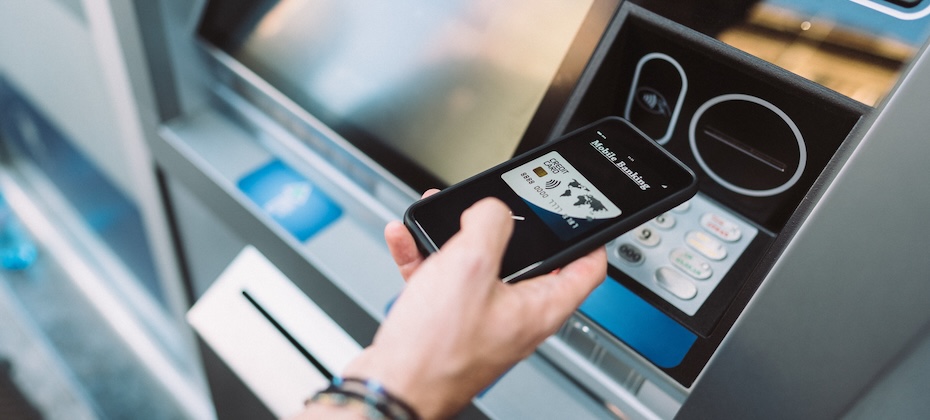
Amid some of the financial challenges that underserved communities experience, members across the financial services community remain committed to championing initiatives and programs that drive greater financial inclusion. In fact, collaboration has led to the inclusion of non-debt related payment information on consumers’ credit profiles, as well as digital services that make it easier to manage money. These efforts have helped to broaden access to fair and affordable financial resources for more individuals. While significant progress has been made, there is still more work to do. However, some of the misconceptions and myths about the financial services community are hindering further advancement. Debunking these myths will accelerate progress by building trust between the financial services community and consumers. Person withdrawing money from ATM contactless Myth #1: “Financial institutions have no interest in underserved consumers or credit invisibles.” The truth is, banks and credit unions want to say “yes” to more prospective borrowers, including individuals and families from underserved communities. Beyond being the right thing to do, it’s an opportunity to potentially build lifelong relationships with a relatively untapped market. A show of good faith to communities who have largely been ignored by the financial system could lead to customer loyalty that may extend to their family and friends. That’s why participants across the financial ecosystem have been proponents of including expanded data sources—such as on-time telecom, utility and video streaming service payments—on to consumer credit reports, as well as exploring other Fair Credit Reporting Act (FCRA)-regulated data sources, including payment data on short-term small dollar loans and expanded public records data. Making this data more accessible to lenders provides a more comprehensive view of a consumer’s ability and willingness to repay outstanding debt—an actionable solution to extending credit to consumers without lenders taking on additional risk. Myth #2: “There is a lack of trustworthy financial education resources.” The financial services community and affiliated organizations recognize that empowering people with financial knowledge and skillset are critical to consumers’ financial success. In fact, banks and credit unions are partnering with nonprofits and non-governmental organizations to better understand the unique challenges and opportunities within specific communities and provide relevant tools and resources. For example, Experian’s B.A.L.L. for Life (Be A Legacy Leader) program, launched in partnership with the National Urban League, serves as a catalyst for engaging with Black communities and low-income youth through live events and digital financial education. Subject matter experts, professional athletes, celebrities, and other influencers share their experiences and expertise, covering topics such as banking, credit, financial management and investing. In addition, to help people improve their financial management, Experian partners with the National Foundation for Credit Counseling (NFCC). The NFCC connects consumers with certified financial counselors to help them address various pain points, including debt management, homeownership, student loans or small business cash flow issues. Myth #3: “Underserved communities have few opportunities to build credit and enter the mainstream financial system.” People from underserved communities, as well as younger consumers and recent immigrants are often excluded from the mainstream financial system because they lack an extensive credit history. Historically, it’s created a vicious cycle; in order to get credit, you have to have credit. Fortunately, there has been a sea change in innovative solutions to address the specific needs of these populations. These include new credit scoring models and microfinancing which provide financial services to individuals who may have been excluded from traditional banking systems. In addition, by incorporating expanded data sources, such as telecom, utility and residential rental payments onto credit reports, lenders have more visibility into consumers who may have been excluded by traditional credit scoring methods.These programs help individuals and families from underserved communities establish and build a credit history that could enable loans, or the ability to rent an apartment or open their dream business. An example is Experian Boost®, a free feature that allows Experian members to contribute their history of making utility, cellphone, insurance, residential rent and video streaming service payments directly into their Experian credit profile. By incorporating nontraditional credit data like paying utility bills on time, online banking transactions, rental payments and verified income data, more people can establish a credit profile that can potentially qualify them for a loan. More Inclusion, Fewer Myths It’s encouraging that community organizations and banks are beginning to see the economic and social benefits of aligning on financial literacy and inclusion. As more initiatives come online, underserved populations will be able to establish a better financial foundation. Then, we can declare the myths to be history.
In this article…
First Heading
Lorem Ipsumis simply dummy text of the printing and typesetting industry. Lorem Ipsum has been the industry’s standard dummy text ever since the 1500s, when an unknown printer took a galley of type and scrambled it to make a type specimen book. It has survived not only five centuries, but also the leap into electronic typesetting, remaining essentially unchanged.
It was popularised in the 1960s with the release of Letraset sheets containing Lorem Ipsum passages, and more recently with desktop publishing software like Aldus PageMaker including versions of Lorem Ipsum
- test1
- test1
Second Heading
It is a long established fact that a reader will be distracted by the readable content of a page when looking at its layout. The point of using Lorem Ipsum is that it has a more-or-less normal distribution of letters, as opposed to using ‘Content here, content here’, making it look like readable English.
Many desktop publishing packages and web page editors now use Lorem Ipsum as their default model text, and a search for ‘lorem ipsum’ will uncover many web sites still in their infancy. Various versions have evolved over the years, sometimes by accident,
How Experian can help with card fraud prevention and detection
Contrary to popular belief, Lorem Ipsum is not simply random text. It has roots in a piece of classical Latin literature from 45 BC, making it over 2000 years old. Richard McClintock, a Latin professor at Hampden-Sydney College in Virginia, looked up one of the more obscure Latin words, consectetur, from a Lorem Ipsum passage, and going through the cites of the word in classical literature, discovered the undoubtable source.
Lorem Ipsum comes from sections 1.10.32 and 1.10.33 of “de Finibus Bonorum et Malorum” (The Extremes of Good and Evil) by Cicero, written in 45 BC. This book is a treatise on the theory of ethics,
very popular during the Renaissance. The first line of Lorem Ipsum, “Lorem ipsum dolor sit amet..”, comes from a line in section 1.10.32.
Fourth Heading
Lorem Ipsum has been the industry’s standard dummy text ever since the 1500s, when an unknown printer took a galley of type and scrambled it to make a type specimen book. It has survived not only five centuries, but also the leap into electronic typesetting, remaining essentially unchanged. It was popularised in the 1960s with the release of Letraset sheets containing Lorem Ipsum passages, and more recently with desktop publishing software like Aldus PageMaker including versions of Lorem Ipsum.