
This year is the first time we are observing International Day of Persons with Disabilities (IDPD), but Experian has been working to support those who identify as part of this community long before now. I share the story of my colleague, software engineer Andy Willard. While Andy has been with Experian for 25 years, he didn’t share his deteriorating eyesight condition with managers at first. “Truthfully, I didn’t ask for a lot. I had the position and I don’t want to rock the boat or put a spotlight on myself. But in 2000, I stopped driving and rode the bus to work a lot. That would take an hour and a half each way. I finally went to my manger and requested telecommuting days, and at the time no one was getting those,” Andy said. His managers immediately agreed and he works 100 percent remotely, long before the pandemic. Experian provided tools like larger monitors and accessibility software to assist with on-screen reading. He appreciates the technology and the time the company allows him for classes to learn about new ways to adjust to working with his visual impairment. But, there can still be some challenges, like when a company-wide software update doesn’t automatically reconnect his system with the screen reader or screen magnifying tools. We know we still have work to do. Being named a Best Place to Work for Disability Inclusion earlier this year let us know we’re on the right track; and we’re excited to continue developing our partnerships with Disability:IN and the National Disability Institute, for which our Chief Diversity, Equity and Inclusion Officer Wil Lewis is a board member of both. As the co-executive sponsor of the ASPIRE employee resource group, which focuses on mental health, caregiving and disabilities, we want our coworkers to know they are supported and we will do all we can to ensure they continue to grow and develop their careers, as Andy did. His first job at Experian was as an analyst, then moved on to software development and then into a software engineering role. I’m proud of the work we are doing at Experian. We’ve made great strides forward to support an inclusive work environment for everyone, and there’s more to be done. I encourage my coworkers to share their stories as Andy did so we know where we should focus our efforts and support our colleagues in making Experian an employer of choice for people who live with disabilities.

Last week, Experian’s Nottingham office hosted the National Data Strategy Forum as it kicked off its series of regional events showcasing the power of data. The day brought together a wide range of stakeholders, including National Numeracy, the National Literacy Trust and the University of Nottingham, alongside representatives from the Department of Culture, Media & Sport, to talk about the ways data can benefit Midlands business, societies and communities. From financial inclusion, digital literacy, and the role of data in protecting the most vulnerable in our society, to the ways data can create business opportunities for the future, and how we can work together to support grassroots innovation across the region, the discussion focused on how Government and industry can work together to accelerate regional success. This is an early and important step in helping realise the potential of data to create a better tomorrow for people in the Midlands and across the UK. We look forward to continuing to engage with the NDS Forum to bring that potential to life.

It’s hard to believe that Christmas is just around the corner. Many of us will be starting to think about (or if you’re very organised, have already finished) their Christmas shopping. Black Friday sales will kick-off this week’s online bonanza, as bargain hunters pursue the best deals online. However, while we are all busy getting into the spirit of things, it has never been more vital that we do what we can to protect ourselves from identity fraud. As the popularity of the Black Friday sales season has grown, we’ve also seen a marked increase in the volume of fraudulent activity, as criminals use stolen or illegally obtained personal details to apply for credit in someone else’s name. According to our latest analysis of National Hunter Fraud Prevention Service data, the fraud rate for credit card applications has increased by 43% in the last three months to 69 confirmed fraudulent applications per 10,000 applications. It’s expected the rate will rise even more in December, as criminals look to take advantage. It’s naturally worrying if you are a victim of ID fraud. The fraudster will likely have tried to obtain credit in your name – perhaps on multiple occasions – and you’ll be concerned about how and from where they got hold of your information in the first place. Fortunately, there’s a host of things you can do to protect yourself. Checking your credit report on a regular basis is one of the best ways to spot if fraudsters have used your personal information to attempt to access credit, and our dedicated teams can help guide you through the steps if the worst happens and your identity has been stolen. New services and solutions are also helping companies identify and prevent more fraud. In part, the rise in rates can be attributed to better detection, helping fraud teams focus their energy on fraudulent applications, rather than genuine ones. So, while you’re browsing for gifts this festive season, make sure you are mindful of those looking to spoil your Christmas spirit. Help is available and you can read more on how to guard yourself against identity fraud on our website.
Related Posts
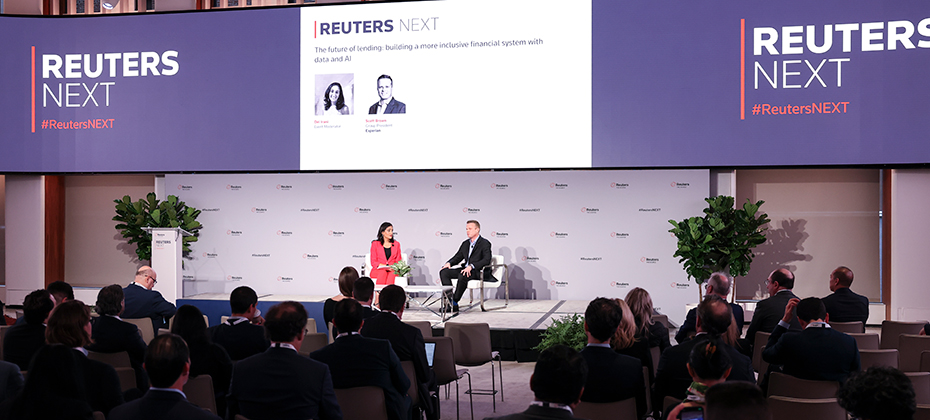
Insights from Reuters Next: Building a More Inclusive Financial System with Data and AI
Data & AnalyticsToday, we stand at the forefront of a digital revolution that is reshaping the financial services industry. And, against this backdrop, financial institutions are at vastly different levels of maturity; the world’s biggest banks are managing large-scale infrastructure migrations and making significant investments in AI while regional banks and credit unions are putting plans in place for modernization strategies, and fintechs are purpose-built and cloud native. To explore this more, I recently had the privilege of attending the annual Reuters NEXT live event in New York City. The event gathers globally recognized leaders across business, finance, technology, and government to tackle some of today’s most pressing issues. On the World Stage, I joined Del Irani, a talented anchor and broadcast journalist, to discuss the future of lending and the pivotal role of data and AI in building a more inclusive financial system. Improving financial access Our discussion highlighted the lack of access to traditional financial systems, and the impact it has on nearly 100 million people in North America alone. Globally, the problem affects over one billion people. These people, who are credit invisible, unscoreable, or have subprime credit scores, are unable to secure everyday financial products that many of us take for granted. What many don’t realize is, this is not a fringe subset of the population. Most of us, myself included, know someone who has faced the challenges of financial exclusion. Everyday Americans, including young people who are just starting out, new immigrants and people from diverse communities, often lack access to mainstream financial products. We discussed how traditional lending has a limited view of a consumer. Like looking through a keyhole, the lender’s understanding of the person in view is often incomplete and obstructed. However, with expanded data, technology, and advanced analytics, there is an opportunity to better understand the whole person, and as a result have a more inclusive financial system. At Experian, we have a unique ability to connect the power of traditional credit with alternative data, bringing a more holistic understanding of consumers and their behaviors. We are dedicated to leveraging our rich history in data and our expertise in technology to create the future of credit and ultimately bring financial power to everyone. The future of lending After spending two days with over 700 industry leaders from around the world, one thing is abundantly clear: much like the early days of the internet, today, we are at the cutting-edge of a technical revolution. Reflecting on my time at Reuters NEXT, I am particularly excited by the collective commitment to drive innovative, and smarter ways of working. We are only beginning to scratch the surface of how data and technology can transform financial services, and Experian is positioned to play a significant role. As we look to the future, I am excited about the ways we will create new opportunities for businesses and consumers alike.
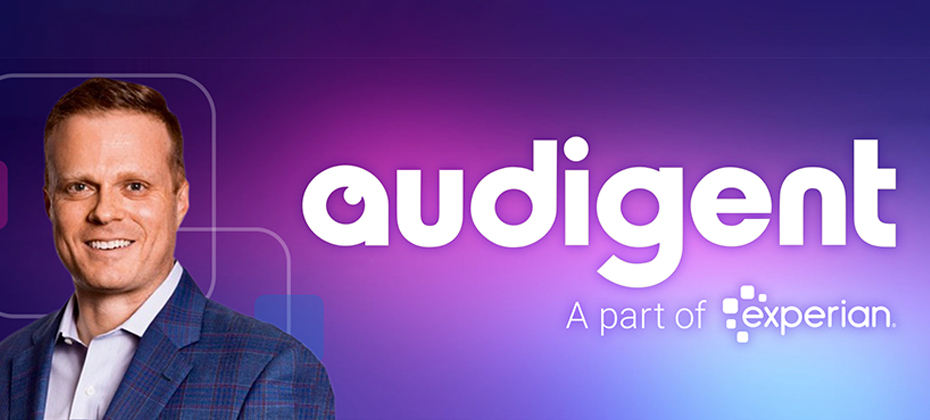
The advertising ecosystem has seen significant transformation over the past few years, with increased privacy regulation, changes in available signals, and the rise of channels like connected TV and retail media. These changes are impacting the way that consumers interact with brands and how brands understand and continue to deliver relevant messages to consumers with precision. Experian has been helping marketers navigate these changes, and as a result, our marketing data and identity solutions underpin much of today’s advertising industry. We’re committed to empowering marketers and agencies to understand and reach their target audiences, across all channels. Today, we are excited to announce our acquisition of Audigent—a leading data and activation platform in the advertising industry. With Audigent’s combination of first-party publisher data, inventory and deep supply-side distribution relationships, publishers, big and small, can empower marketers to better understand their customers, expand the reach of their target audiences and activate those audiences across the most impactful inventory. I am excited to bring together Audigent’s supply-side network as a natural extension to our existing demand-side capabilities. Audigent’s ability to combine inventory with targeted audiences using first-party, third-party and contextual signals provides the best of all worlds, allowing marketers to deliver campaigns centered on consumer choices, preferences, and behaviors. The addition of Audigent further strengthens our strategy to be the premier independent provider of marketing data and identity, ultimately creating more relevant experiences for consumers. To learn more about Experian and Audigent, visit https://www.experian.com/marketing/ and https://audigent.com/.
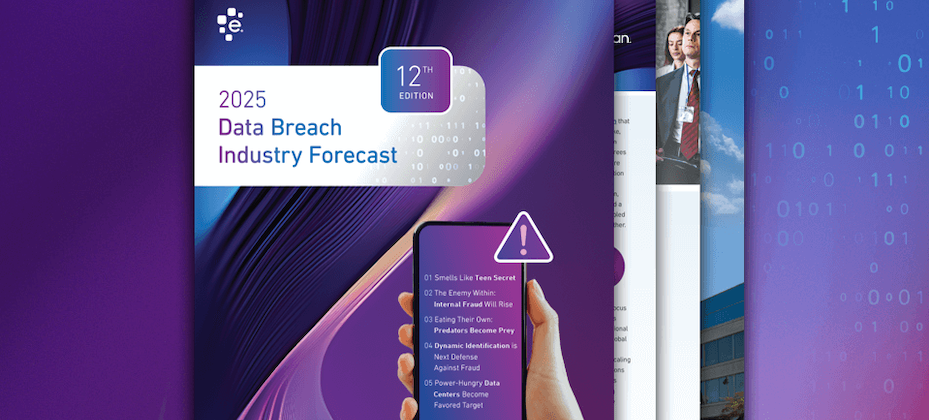
Experian Releases its 12th Annual Data Breach Industry Forecast Highlighting Five Predictions for 2025
Data & AnalyticsWhen it comes to cybercriminals and threat vectors, we need to expect the unexpected. Experian’s 12th annual Data Breach Industry Forecast highlights several potential trends for 2025, with AI playing a central role. This year has already seen more data breaches and impacted consumers than 2023, indicating that global data breaches are not slowing down. Some things to watch out for next year includes the potential for more internal fraud. As companies train employees on AI, there is a growing risk that some will misuse their knowledge for internal theft and sourcing sensitive information. Another trend may be cyberattackers targeting large data centers, with the growth of generative AI introducing power as a new attack vector. It’s reported that a single ChatGPT query uses significantly more electricity than a standard Google search, making data centers and cloud infrastructure vulnerable, especially in countries with varying security standards. We expect AI-related attacks to dominate the headlines next year and investments in cybersecurity will increase to tackle this emerging threat, as hackers leverage AI for phishing, password cracking, malware, and deepfakes. Jim Steven, Head of Crisis and Data Response Services at Experian Global Data Breach Resolution in the UK, anticipates that global data breaches will persist at their current rate next year. He notes that ransomware attacks are likely to become even more sophisticated with the integration of AI. Additionally, Steven predicts that threat actors will escalate their tactics to achieve greater rewards, and the misuse of consumer data to damage reputations will increase in 2025. To access the complimentary report, click here.