
Experian is a passionate believer in the role of data as a force for good in the world. Now more than ever, data has a role to play in helping people and businesses across the UK as they recover from the pandemic and look to the future. The National Data Strategy sets a direction for a dynamic and successful Britain, building on a foundation of data insight and analysis. We’re pleased to be able to host the NDS Forum’s Midlands launch today, and to work with organisations from across the region to support its future success. Working together, we can harness the opportunities ahead to deliver positive outcomes for people, businesses and the economy – both in the Midlands and across the wider United Kingdom. Minister for Media, Data and Digital Infrastructure, Julia Lopez, said: “Data is transforming our economy and society by powering better public services and creating new jobs. We want to unlock the power of data through our National Data Strategy and this event will see us work with local communities in the Midlands to see how we can use data to improve people’s lives and build back better from the pandemic.”

Over the past 18 months, we’ve monitored insights related to consumer and business economic outlooks, financial well-being, online behavior and more. One of the most significant insights was the accelerated shift toward e-commerce and digital financial services. In fact, there has been a 25% increase in digital transaction across the globe since the start of the pandemic including shopping, banking, and transacting online. Our latest 2021 Global Insights Report found that the increase in online activity held steady, even with the return of physical shopping and banking. The study also found that consumers are spending again. Nearly 10% of consumers are spending more and putting less away in retirement or emergency savings than from one year ago. However, even though customers are spending more, loyalty to online businesses is declining. We found that 61% of consumers say they are staying with the same online service provider they used prior to COVID-19. This a decrease of 8% from one year ago. The continued increase in online activity, coupled with heightened consumer expectations, dwindling customer loyalty, and increased competition, could lead to potential revenue loss or gain. Businesses must find solutions to improve digital engagement and customer acquisition. Fortunately, improving digital engagement and customer acquisition are companies’ top priorities as they maneuver the pandemic-accelerated boost in digital transactions. They are leveraging advanced technologies like digital credit risk decisioning, passive authentication, and artificial intelligence to improve the digital customer experience and grow their business. According to Experian’s report, 90 percent of companies are investing in business automation, 76 percent are improving or rebuilding their analytics models and 65% intend to increase fraud budgets. Adoption of AI has risen from 69% to 74% and machine learning from 68% to 73% in one year. We also found that 50% of companies are exploring the use of expanded data sources. To develop the study, Experian surveyed 3,000 consumers and 900 businesses across 10 countries around the world including Australia, Brazil, Germany, India, Italy, Japan, Singapore, Spain, United Kingdom and United States. This report is part of a longitudinal study and published series that started in June 2020 through October 2021 exploring the major shifts in consumer behavior and business strategy throughout COVID. Access all global research reports here. To learn about more findings, download the Global Insights Report and visit the Global Insights blog.

Experian and Lecrae Present “Protect The Bag” to Help Young Adults Build Financial Legacies
Corporate ResponsibilityGrowing up, my family rarely talked about money. So, in college, when I had the opportunity to get my first credit card, I also found myself in a little trouble when the first bill came. Most of us simply don’t learn about money matters until we find ourselves in these difficult situations. That’s one of the reasons why we’re excited to launch a creative and new program to teach young adults about the basics to building a financial legacy. “Protect The Bag” debuts today. It’s a six-part web series produced in partnership with Grammy-award winning artist, entrepreneur, author and community advocate, Lecrae. We first met Lecrae when he supported a United for Financial Health initiative in his hometown last year. “Protect The Bag” is a hip master class with finance and credit basics presented in an authentic way. Lecrae describes it as “edutainment” that includes scripted skits and interviews with everyday people. His friends Tyler Lockett, Coco Jones and WHATUPRG, among others, join him and share their financial health journeys as part of the shows as well. “Protect The Bag” is not just about credit. It’s about all aspects of personal finance. We’re proud of this innovative way to help consumers understand topics like saving, investing, budgeting and identity protection through someone they admire and trust. We hope you tune in every Tuesday, starting today, for the next six weeks. Episodes will appear on Lecrae’s YouTube channel starting at 7:00 p.m.EST/4 p.m.PST.
Related Posts

Insights from Reuters Next: Building a More Inclusive Financial System with Data and AI
Data & AnalyticsToday, we stand at the forefront of a digital revolution that is reshaping the financial services industry. And, against this backdrop, financial institutions are at vastly different levels of maturity; the world’s biggest banks are managing large-scale infrastructure migrations and making significant investments in AI while regional banks and credit unions are putting plans in place for modernization strategies, and fintechs are purpose-built and cloud native. To explore this more, I recently had the privilege of attending the annual Reuters NEXT live event in New York City. The event gathers globally recognized leaders across business, finance, technology, and government to tackle some of today’s most pressing issues. On the World Stage, I joined Del Irani, a talented anchor and broadcast journalist, to discuss the future of lending and the pivotal role of data and AI in building a more inclusive financial system. Improving financial access Our discussion highlighted the lack of access to traditional financial systems, and the impact it has on nearly 100 million people in North America alone. Globally, the problem affects over one billion people. These people, who are credit invisible, unscoreable, or have subprime credit scores, are unable to secure everyday financial products that many of us take for granted. What many don’t realize is, this is not a fringe subset of the population. Most of us, myself included, know someone who has faced the challenges of financial exclusion. Everyday Americans, including young people who are just starting out, new immigrants and people from diverse communities, often lack access to mainstream financial products. We discussed how traditional lending has a limited view of a consumer. Like looking through a keyhole, the lender’s understanding of the person in view is often incomplete and obstructed. However, with expanded data, technology, and advanced analytics, there is an opportunity to better understand the whole person, and as a result have a more inclusive financial system. At Experian, we have a unique ability to connect the power of traditional credit with alternative data, bringing a more holistic understanding of consumers and their behaviors. We are dedicated to leveraging our rich history in data and our expertise in technology to create the future of credit and ultimately bring financial power to everyone. The future of lending After spending two days with over 700 industry leaders from around the world, one thing is abundantly clear: much like the early days of the internet, today, we are at the cutting-edge of a technical revolution. Reflecting on my time at Reuters NEXT, I am particularly excited by the collective commitment to drive innovative, and smarter ways of working. We are only beginning to scratch the surface of how data and technology can transform financial services, and Experian is positioned to play a significant role. As we look to the future, I am excited about the ways we will create new opportunities for businesses and consumers alike.
The advertising ecosystem has seen significant transformation over the past few years, with increased privacy regulation, changes in available signals, and the rise of channels like connected TV and retail media. These changes are impacting the way that consumers interact with brands and how brands understand and continue to deliver relevant messages to consumers with precision. Experian has been helping marketers navigate these changes, and as a result, our marketing data and identity solutions underpin much of today’s advertising industry. We’re committed to empowering marketers and agencies to understand and reach their target audiences, across all channels. Today, we are excited to announce our acquisition of Audigent—a leading data and activation platform in the advertising industry. With Audigent’s combination of first-party publisher data, inventory and deep supply-side distribution relationships, publishers, big and small, can empower marketers to better understand their customers, expand the reach of their target audiences and activate those audiences across the most impactful inventory. I am excited to bring together Audigent’s supply-side network as a natural extension to our existing demand-side capabilities. Audigent’s ability to combine inventory with targeted audiences using first-party, third-party and contextual signals provides the best of all worlds, allowing marketers to deliver campaigns centered on consumer choices, preferences, and behaviors. The addition of Audigent further strengthens our strategy to be the premier independent provider of marketing data and identity, ultimately creating more relevant experiences for consumers. To learn more about Experian and Audigent, visit https://www.experian.com/marketing/ and https://audigent.com/.
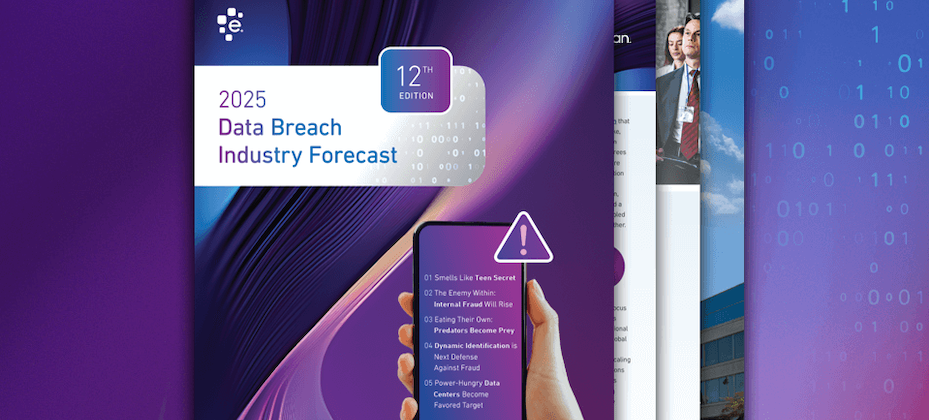
Experian Releases its 12th Annual Data Breach Industry Forecast Highlighting Five Predictions for 2025
Data & AnalyticsWhen it comes to cybercriminals and threat vectors, we need to expect the unexpected. Experian’s 12th annual Data Breach Industry Forecast highlights several potential trends for 2025, with AI playing a central role. This year has already seen more data breaches and impacted consumers than 2023, indicating that global data breaches are not slowing down. Some things to watch out for next year includes the potential for more internal fraud. As companies train employees on AI, there is a growing risk that some will misuse their knowledge for internal theft and sourcing sensitive information. Another trend may be cyberattackers targeting large data centers, with the growth of generative AI introducing power as a new attack vector. It’s reported that a single ChatGPT query uses significantly more electricity than a standard Google search, making data centers and cloud infrastructure vulnerable, especially in countries with varying security standards. We expect AI-related attacks to dominate the headlines next year and investments in cybersecurity will increase to tackle this emerging threat, as hackers leverage AI for phishing, password cracking, malware, and deepfakes. Jim Steven, Head of Crisis and Data Response Services at Experian Global Data Breach Resolution in the UK, anticipates that global data breaches will persist at their current rate next year. He notes that ransomware attacks are likely to become even more sophisticated with the integration of AI. Additionally, Steven predicts that threat actors will escalate their tactics to achieve greater rewards, and the misuse of consumer data to damage reputations will increase in 2025. To access the complimentary report, click here.