
Whether due to job loss, shortened working hours, or the need to take off time from work to care for ill family members, the current COVID-19 outbreak will undoubtedly cause financial hardship for millions of Americans. Understandably, the current situation is causing some consumers to fear losing something they’ve worked incredibly hard for – their home. For many, a home is the largest purchase they’ll ever make. We spend many years of our lives working to purchase a home and then many years after working to fill it with memories. We understand how important it is for you to protect your home. Thankfully, we’re seeing mortgage lenders, federal associations and the financial industry working together in truly unprecedented ways to help consumers cope with new financial challenges brought on by COVID-19. Last week, the Department of Housing and Urban Development, Fannie Mae and Freddie Mac — two of the largest mortgage services in the county — announced they are suspending foreclosures and evictions for at least 60 days. You can read more about this announcement here. This was followed by New York, an area hit particularly hard by COVID-19, urging mortgage servicers to refrain from reporting late payments for 90 days. The order outlines ways lenders can provide support to consumers who are unable to make timely mortgage payments, including forbearing mortgage payments for 90 days from their due dates. As part of this, late payments would not be reported to credit reporting agencies like Experian for 90 days and consumers would not have to pay late or online payment fees. The order also postpones foreclosures and evictions for 90 days and requires lenders to proactively outreach to consumers, through text, email or other means to ensure they’re aware of the assistance that’s being offered. Los Angeles, Miami and other cities across the U.S. are now also halting evictions. This news was shared in conjunction with Bank of America announcing additional support to borrowers, including the option to defer, or essentially pause, mortgage payments during the current outbreak. Many of the largest mortgage lenders in the country are offering the same support to consumers. Please note, the Department of Housing and Urban Development, Fannie Mae and Freddie Mac acted fast, and these are the guidelines as of the time when this article was written. As things are still early, our Experian mortgage team will stay abreast with potential new developments and update this information if or as things will change. These are unprecedented times and we are starting to see lenders and consumers engage in equally unprecedented ways as we work to overcome the new reality we’re all facing. At the same time, we are seeing interesting trends unfold in terms of mortgage lending activity. According to the Mortgage Bankers Association, as of March 25, 2020, these include: Refinancing existing mortgages, which has been booming with interest rates at historically low levels, declined almost 35% compared to the previous week, but is still twice as high as it was the previous year. Not surprisingly, the states with the biggest declines are the states hardest hit by the COVID-19 outbreak (i.e. New York, Washington, and California) In addition, with the economy under pressure, there was a nearly 30% decline in weekly new mortgage applications. If you or someone you know is a homeowner, I hope you found this information useful. Remember, if you are concerned you may miss a mortgage payment, the first and best move you can make, to protect your home and your financial health, is to contact your mortgage lender as soon as possible. Lenders do not want you to miss a payment any more than you do. They can discuss options for navigating these unusual circumstances. Keep in mind, these programs are available to you if you are facing financial hardship due to the COVID-19 crisis, for example, if you lost your job or had to be hospitalized. Of course, we’re all hoping not to be in either of these categories. If you haven’t been financially impacted by the current COVID-19 crisis, you are expected to continue to make your mortgage payments (and meet all your other financial obligations). You should feel good about being able to do that as it will make you part of the important group of individuals who can keep contributing to sustaining the American economy.

Last year we revealed that there were around 5.8 million people in the UK who were virtually invisible to the financial system. These ‘credit invisibles’ might have limited financial data because they just turned 18 and are new to credit, or they may have recently moved to the UK. Alternatively, perhaps they conduct most of their transactions in cash or simply haven’t used credit for a long time. Either way, we wanted to spotlight the issue, to explain how we can help people regain control of their financial footprints and ensure more people get access to affordable financial products and services. So, as our support for Credit Awareness Week moves into its fourth year, we decided to check in on our progress. The positive news is that we have managed to reduce this financially excluded population by nearly half a million in the last 12 months, to just over 5.3 million – as the map below shows. Credit Awareness Week 2020 offers us all the chance to reflect on all the hard work that so many of us have put into tackling financial exclusion. As a result of this work, more people can access the mainstream services they need, and many are paying less than they otherwise would have. Yet there is much more which needs to be done. We need to continue to innovate and find new solutions to help widen affordable financial access for all. Promoting a better understanding of the things that people can do to help improve their financial track record. Together we can continue our mission to bring more people into the mainstream financial system and deliver better, more affordable products and services for everyone.

Experian’s “2019 The Power of You” Report Showcases Our Diverse and Inclusive Culture, Innovative Brand
Diversity & InclusionWe are proud of our workplace culture at Experian North America. Today, we released our third annual inclusion and diversity “2019 The Power of You” report. We encourage our employees to bring their whole selves to work and have created a culture of inclusion that helps to fuel our continued product innovation. Our Power of You movement began in 2017 to raise awareness about our efforts around inclusion and to provide employees with greater transparency of the initiatives that are part of this program. Progressive policies across a wide range of initiatives such as pay equity, paternal leave, flexible working arrangements and corporate social responsibility help to make our employees feel proud, committed and empowered to work at Experian. “Diversity of background, of experience and of thought bring new ideas to our organization which foster the innovation that helps to improve the lives of consumers every day. Our culture of inclusion and diversity underpins our business success which, underpins what our brand stands for,” said Craig Boundy, former CEO of Experian North America. “With the launch of our ‘2019 The Power of You’ report, we are excited to share how our inclusive workplace is helping to drive our culture of innovation.” Some highlights of our 2019 report include: We have 1,200 women in STEM positions 47% of new hires are women and 44% are non-white Women and men are promoted equally We created our newest ERG, Aspire, which focuses on mental health and physical disability awareness and caregiving We have a total of eight ERGs with 1,200 active participates Employees participate in events including charity walks, fundraising events, and toy and food drives, among others Events recognize International Women’s Day, Veteran’s Day, the Lunar New Year, National Coming Out Day, Cinco de Mayo, Asian Pacific American Heritage Month, Black History Month, Ramadan, Kwanzaa, Hispanic Heritage Month and Diwali, among others Employees spent more than 12,000 hours volunteering With the support of our employees, we donated more than $10,000 for California wildfire relief to the Red Cross Employees packed a total of 65,880 meals volunteering with Rise Against Hunger locations in Costa Mesa, Allen and Franklin, California We currently have 38 clubs with 800 members We rolled out a new Paid Family Care Leave Program, expanding on our existing Paid Parental Leave Program Additional programs include the launch of a new, enhanced Employee Assistance Program, which offers a greater level of resources and benefits for mental and behavioral health for employees and families and the Experian Hardship Fund, launched in 2018 to help employees who are facing financial hardship. We continued our Humans of Experian video series, which highlights the stories of employees who have unique backgrounds that enhance the diversity of our company. We also had hundreds of our employees from throughout the organization volunteer to personally evaluate Experian Boost™. Employees participated in this program because they believed in the product’s potential to help millions of Americans. At Experian, we continuously foster a culture of development and growth and we have various forms of mentorship, career paths and leadership programs to support our employees. Our commitment to creating an inclusive workplace has also received numerous accolades. We were named one the 100 Best Companies to Work For in 2020 and one of the Best Workplaces for Diversity in 2020 by Fortune and Great Place to Work. Additionally, for the second consecutive year, we were awarded a perfect score in the Human Rights Campaign Foundation’s 2020 Corporate Equality Index. Experian was also named a Top Workplace in 2020 in Orange County, Calif., by the Orange County Register for the seventh consecutive year, and one of the world’s most innovative companies by Forbes magazine for five years. A copy of this year’s report can be found here.
Related Posts

Insights from Reuters Next: Building a More Inclusive Financial System with Data and AI
Data & AnalyticsToday, we stand at the forefront of a digital revolution that is reshaping the financial services industry. And, against this backdrop, financial institutions are at vastly different levels of maturity; the world’s biggest banks are managing large-scale infrastructure migrations and making significant investments in AI while regional banks and credit unions are putting plans in place for modernization strategies, and fintechs are purpose-built and cloud native. To explore this more, I recently had the privilege of attending the annual Reuters NEXT live event in New York City. The event gathers globally recognized leaders across business, finance, technology, and government to tackle some of today’s most pressing issues. On the World Stage, I joined Del Irani, a talented anchor and broadcast journalist, to discuss the future of lending and the pivotal role of data and AI in building a more inclusive financial system. Improving financial access Our discussion highlighted the lack of access to traditional financial systems, and the impact it has on nearly 100 million people in North America alone. Globally, the problem affects over one billion people. These people, who are credit invisible, unscoreable, or have subprime credit scores, are unable to secure everyday financial products that many of us take for granted. What many don’t realize is, this is not a fringe subset of the population. Most of us, myself included, know someone who has faced the challenges of financial exclusion. Everyday Americans, including young people who are just starting out, new immigrants and people from diverse communities, often lack access to mainstream financial products. We discussed how traditional lending has a limited view of a consumer. Like looking through a keyhole, the lender’s understanding of the person in view is often incomplete and obstructed. However, with expanded data, technology, and advanced analytics, there is an opportunity to better understand the whole person, and as a result have a more inclusive financial system. At Experian, we have a unique ability to connect the power of traditional credit with alternative data, bringing a more holistic understanding of consumers and their behaviors. We are dedicated to leveraging our rich history in data and our expertise in technology to create the future of credit and ultimately bring financial power to everyone. The future of lending After spending two days with over 700 industry leaders from around the world, one thing is abundantly clear: much like the early days of the internet, today, we are at the cutting-edge of a technical revolution. Reflecting on my time at Reuters NEXT, I am particularly excited by the collective commitment to drive innovative, and smarter ways of working. We are only beginning to scratch the surface of how data and technology can transform financial services, and Experian is positioned to play a significant role. As we look to the future, I am excited about the ways we will create new opportunities for businesses and consumers alike.
The advertising ecosystem has seen significant transformation over the past few years, with increased privacy regulation, changes in available signals, and the rise of channels like connected TV and retail media. These changes are impacting the way that consumers interact with brands and how brands understand and continue to deliver relevant messages to consumers with precision. Experian has been helping marketers navigate these changes, and as a result, our marketing data and identity solutions underpin much of today’s advertising industry. We’re committed to empowering marketers and agencies to understand and reach their target audiences, across all channels. Today, we are excited to announce our acquisition of Audigent—a leading data and activation platform in the advertising industry. With Audigent’s combination of first-party publisher data, inventory and deep supply-side distribution relationships, publishers, big and small, can empower marketers to better understand their customers, expand the reach of their target audiences and activate those audiences across the most impactful inventory. I am excited to bring together Audigent’s supply-side network as a natural extension to our existing demand-side capabilities. Audigent’s ability to combine inventory with targeted audiences using first-party, third-party and contextual signals provides the best of all worlds, allowing marketers to deliver campaigns centered on consumer choices, preferences, and behaviors. The addition of Audigent further strengthens our strategy to be the premier independent provider of marketing data and identity, ultimately creating more relevant experiences for consumers. To learn more about Experian and Audigent, visit https://www.experian.com/marketing/ and https://audigent.com/.
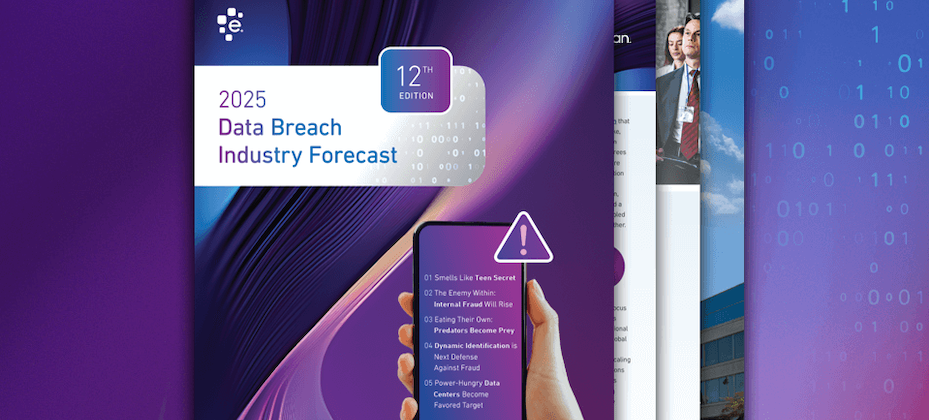
Experian Releases its 12th Annual Data Breach Industry Forecast Highlighting Five Predictions for 2025
Data & AnalyticsWhen it comes to cybercriminals and threat vectors, we need to expect the unexpected. Experian’s 12th annual Data Breach Industry Forecast highlights several potential trends for 2025, with AI playing a central role. This year has already seen more data breaches and impacted consumers than 2023, indicating that global data breaches are not slowing down. Some things to watch out for next year includes the potential for more internal fraud. As companies train employees on AI, there is a growing risk that some will misuse their knowledge for internal theft and sourcing sensitive information. Another trend may be cyberattackers targeting large data centers, with the growth of generative AI introducing power as a new attack vector. It’s reported that a single ChatGPT query uses significantly more electricity than a standard Google search, making data centers and cloud infrastructure vulnerable, especially in countries with varying security standards. We expect AI-related attacks to dominate the headlines next year and investments in cybersecurity will increase to tackle this emerging threat, as hackers leverage AI for phishing, password cracking, malware, and deepfakes. Jim Steven, Head of Crisis and Data Response Services at Experian Global Data Breach Resolution in the UK, anticipates that global data breaches will persist at their current rate next year. He notes that ransomware attacks are likely to become even more sophisticated with the integration of AI. Additionally, Steven predicts that threat actors will escalate their tactics to achieve greater rewards, and the misuse of consumer data to damage reputations will increase in 2025. To access the complimentary report, click here.