Lorem Ipsumis simply dummy text of the printing and typesetting industry. Lorem Ipsum has been the industry’s standard dummy text ever since the 1500s, when an unknown printer took a galley of type and scrambled it to make a type specimen book. It has survived not only five centuries, but also the leap into electronic typesetting, remaining essentially unchanged
Author One

Today (Nov. 11) Americans celebrate Veterans Day to honor all of the men and women who have served our country in uniform and to thank those who are currently serving around the world. We also take time to welcome a new generation of veterans home from war. We remember our Gold Star families who have endured the loss of a family member making the ultimate sacrifice in service to their country. More than 25 million veterans are now home in America. They are our friends, our families, and our loved ones. Far too many have endured the shock and pain of a combat deployment, some have become disabled, and many have made the ultimate sacrifice. All who have served have given up some of themselves as well as some of the best years of their lives. Experian is proud to embrace our veteran community and allow the flexibility for our coworkers who continue to serve. Our Military, Veterans And Patriots Employee Resource Group continues to be involved in many opportunities across our local communities from building wheelchair ramps for disabled veterans to participating in endurance challenges such as Carry the Load National Relay road march and the Murph Challenge. We recently launched Experian IDnotify, a credit and identity protection service, at no cost for those who are on active duty. We are committed to serving those who are serving us. If you have a family member or friend serving on active duty, please share the link. This Veterans Day let us take a moment to remember the sacrifices of the courageous men and women who heroically fought for the freedom and honor of America to make it the greatest nation on earth!

Retailers are already starting to display their Christmas decorations in stores and it’s only early November. Some might think they are putting the cart ahead of the horse, but as I see this happening, I’m reminded of the quote by the New York Yankee’s Yogi Berra who famously said, “It gets late early out there.” It may never be too early to get ready for the next big thing, especially when what’s coming might set the course for years to come. As 2019 comes to an end and we prepare for the excitement and challenges of a new decade, the same can be true for all of us working in the lending and credit space, especially when it comes to how we will approach the use of alternative data in the next decade. Over the last year, alternative data has been a hot topic of discussion. In fact if you typed “alternative data and credit” into a Google search today you would get more than 200 million results. That’s a lot of conversations, but while nearly everyone seems to be talking about alternative data, we may not have a clear view of how alternative data will be used in the credit economy. How we approach the use of alternative data in the coming decade is going to be one of the most important decisions the lending industry makes. Inaction is not an option, and the time for testing new approaches is starting to run out – like Yogi said, it’s getting late early. And here’s why: millennials. We already know that millennials tend to make up a significant percentage of consumers with so-called “thin-file” credit reports. They “grew up” during the Great Recession and that has had a profound impact on their financial behavior. Unlike their parents, they tend to have only one or two credit cards, they keep a majority of their savings in cash and, in general, they distrust financial institutions. However, they currently account for more than 21 percent of discretionary spend in the U.S. economy, and that percentage is going to expand exponentially in the coming decade. The recession fundamentally changed how lending happens, resulting in more regulation and a snowball effect of other economic challenges. As a result, millennials must work harder to catch up financially and are putting off major life milestones that past generations have historically done earlier in life, such as home ownership. They more often choose to rent and, while they pay their bills, rent and other factors such as utility and phone bill payments are traditionally not calculated in credit scores, ultimately leaving this generation thin-filed or worse, credit invisible. This is not a sustainable scenario as we enter the next decade. One of the biggest market dynamics we can expect to see over the next decade is consumer control. Consumers, especially millennials, want to be in the driver’s seat of their “credit journey” and play an active role in improving their financial situations. We are seeing a greater openness to providing data, which in turn enables lenders to make more informed decisions. This change is disrupting the status quo and bringing new, innovative solutions to the table. At Experian we have been testing how advanced analytics and machine learning can help accelerate the use of alternative data in credit and lending decisions. And we continue to work to make the process of analyzing this data as simple as possible, making it available to all lenders in all verticals. To help credit invisible and thin-file consumers gain access to fair and affordable credit, we’ve also recently announced Experian Lift, a new suite of credit score products that combines exclusive traditional credit, alternative credit and trended data assets to create a more holistic picture of consumer creditworthiness that will be available to lenders in early 2020. This new Experian credit score may improve access to credit for more than 40 million credit invisibles. There are more than 100 million consumers who are restricted by the traditional scoring methods used today. Experian Lift is another step in our commitment to helping improve financial health of consumers everywhere and empowers lenders to identify consumers who may otherwise be excluded from the traditional credit ecosystem. This isn’t just a trend in the United States. Brazil is using positive data to help drive financial inclusion, as are other around the world. Like I said, it’s getting late early. Things are moving fast. Already we are seeing technology companies playing a bigger role in the push for alternative data – often powered by fintech startups. At the same time there also has been a strong uptick in tech companies entering the banking space. Have you signed up for your Apple credit card yet? It will take all of 15 seconds to apply, and that’s expected to continue over the next decade. All of this is changing how the lending and credit industry must approach decision making, while also creating real-time frictionless experiences that empower the consumer. We saw this with the launch of Experian Boost earlier this year. The results speak for themselves: hundreds of thousands of previously thin-filed consumers have seen their credit scores instantly increase. We have also empowered millions of consumers to get more control of their credit by using Experian Boost to contribute new, positive phone, cable and utility payment histories. Through Experian Boost, we’re empowering consumers to play an active role in building their credit histories. And, with Experian Lift, we’re empowering lenders to identify consumers who may otherwise be excluded from the traditional credit ecosystem. That’s game changing. Disruptions like Experian Boost and newly announced Experian Lift are going to define the coming decade in credit and lending. Our industry needs to be ready because while it may seem early, it’s actually getting late.

At Experian we’re committed to creating a culture of continuous innovation, from the way we work to the solutions we create. This commitment has helped us create a workplace where our teams across the world have a desire to help change the lives of millions for the better. Justin Hastings, former Chief Human Resources Officer for Experian North America, recently wrote an article for the Forbes Human Resources Council which highlights the importance of creating an inclusive environment in the workplace — and demonstrates how innovation, developing new products and services, and providing value are all crucial to a companies’ success. The article, “Deliver Innovation By Embracing Inclusion,” explores what it means to build a culture of innovation, and how to ensure employees feel comfortable bringing their different backgrounds and ideas to their role every day. This is the type of innovative culture we’re building at Experian, which celebrates these differences and works to make employees feel valued and empowered to be innovative and productive. Another concept Justin discusses in this article is “innovating to grow.” It’s important to make employees feel connected to their organization and involved in the creation of new products and services. This has a tremendous positive impact with employees providing valuable feedback, and also creating advocacy among team members. For example when developing Experian Boost, which has helped millions of people raise their credit scores, we first beta-tested and shared the innovation internally and were able to garner valuable feedback and support from employees. As a result, we’ve seen tremendous success since the launch of Experian Boost earlier this year. At Experian we truly believe that inclusion is the key to creating a culture of innovation. You can read the full article here.

For the second year in a row, Experian Costa Rica has achieved recertification from Great Places to Work in the Central America region. The honor recognizes the inclusive workplace culture that Experian Costa Rica employees and leaders have created, making it a dynamic environment for innovation and high productivity. “Getting re-certified as a Great Place to Work provides and enormous sense of pride. As an organization it validates all the efforts we make to ensure a strong healthy employee culture and as a leader it allows us to come to work knowing that we have a culture that employees enjoy working in,” said Adrian Sibaja, Director of Service Delivery for Experian Costa Rica and Chile. Experian Costa Rica is one of four Global Delivery Centers, strategically located centers of operational excellence that support Experian’s regions. The office is home to nearly 1,000 employees across different business units. This honor reinforces the workplace culture we’re fostering, which our employees are happy to brag about in confidential surveys. Costa Rica leadership is always looking for ways to make the employee culture even better. That’s why recognizing employee accomplishments and encouraging partnership between business units are among their top priorities. Congratulations to our Costa Rica colleagues!
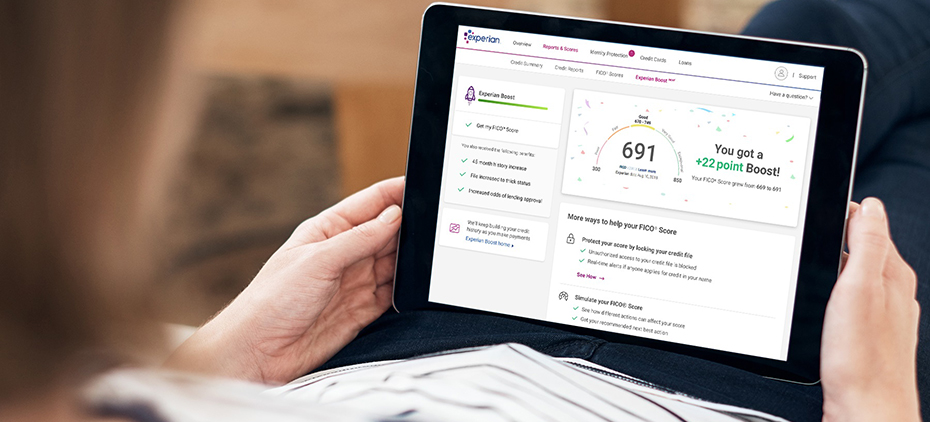
At Experian, we know a credit score is the gatekeeper to better financial opportunities, which is why we are committed to developing products and services that support consumers in their financial journey. Six months ago, we hit a major milestone in bringing this commitment to life with the launch of Experian Boost. This innovative tool gave consumers the ability to add positive telecom and utility payment history directly to their credit file for an opportunity to instantly increase their credit scores for the first time. When we launched Experian Boost, we knew there were more than 100 million Americans who didn’t have fair access to credit because of a limited credit history or a subprime score. We also knew these consumers were often forced to pay higher interest rates and fees for financial services. Today, as we look at our Experian Boost results, we know we’re helping to change that. To date, for consumers who’ve used Experian Boost, we’ve seen: More than 11 million cumulative FICO Score points boosted FICO Scores increased for 2 out of 3 users with an average increase of more than 10 points Of those who boosted their credit scores, an average of 13% moved up a credit tier and of those in the “poor” credit tier, 24% moved to a “fair” tier Approximately 90% of “thin” file consumers who improve their credit scores saw an average increase of 19 points California, Texas and Florida rank 1-2-3 in number of consumers who have boosted their scores and total points boosted To say we’re pleased with the positive feedback we’ve received about Experian Boost to date would be an understatement, but we’re not surprised. For years, lenders have been seeking new means to identify creditworthy consumers. At the same time, consumers have been asking for more control of their data and credit where credit is due. This is exactly what we’re providing with Experian Boost. We’re helping to level the playing field and reward positive behavior and it’s not going unnoticed. Members of the credit counseling and advocacy community have reached out with excitement about Experian Boost. This solution is giving many of their clients a tangible way to impact their credit scores and improve their financial lives. Improving consumer financial health is a core part of our sense of purpose and we’re just getting started. We’ll continue to enhance Experian Boost and develop new products and solutions to improve financial access to for more consumers. To find out more about the Experian Boost, please visit www.experian.com/boost.
In this article…
First Heading
Lorem Ipsumis simply dummy text of the printing and typesetting industry. Lorem Ipsum has been the industry’s standard dummy text ever since the 1500s, when an unknown printer took a galley of type and scrambled it to make a type specimen book. It has survived not only five centuries, but also the leap into electronic typesetting, remaining essentially unchanged
It was popularised in the 1960s with the release of Letraset sheets containing Lorem Ipsum passages, and more recently with desktop publishing software like Aldus PageMaker including versions of Lorem Ipsum.
Why do we use it?
It is a long established fact that a reader will be distracted by the readable content of a page when looking at its layout. The point of using Lorem Ipsum is that it has a more-or-less normal distribution of letters, as opposed to using ‘Content here, content here’, making it look like readable English. Many desktop publishing packages and web page editors now use Lorem Ipsum as their default model text, and a search for ‘lorem ipsum’ will uncover many web sites still in their infancy. Various versions have evolved over the years, sometimes by accident, sometimes on purpose (injected humour and the like).
It was popularised in the 1960s with the release of Letraset sheets containing Lorem Ipsum passages, and more recently with desktop publishing software like Aldus PageMaker including versions of Lorem Ipsum.
Why do we use it?
It is a long established fact that a reader will be distracted by the readable content of a page when looking at its layout. The point of using Lorem Ipsum is that it has a more-or-less normal distribution of letters, as opposed to using ‘Content here, content here’, making it look like readable English. Many desktop publishing packages and web page editors now use Lorem Ipsum as their default model text, and a search for ‘lorem ipsum’ will uncover many web sites still in their infancy. Various versions have evolved over the years, sometimes by accident, sometimes on purpose (injected humour and the like).
Second Heading
It was popularised in the 1960s with the release of Letraset sheets containing Lorem Ipsum passages, and more recently with desktop publishing software like Aldus PageMaker including versions of Lorem Ipsum.

Where can I get some?
There are many variations of passages of Lorem Ipsum available, but the majority have suffered alteration in some form, by injected humour, or randomised words which don’t look even slightly believable. If you are going to use a passage of Lorem Ipsum, you need to be sure there isn’t anything embarrassing hidden in the middle of text. All the Lorem Ipsum generators on the Internet tend to repeat predefined chunks as necessary, making this the first true generator on the Internet. It uses a dictionary of over 200 Latin words, combined with a handful of model sentence structures, to generate Lorem Ipsum which looks reasonable.
There are many variations of passages of Lorem Ipsum available, but the majority have suffered alteration in some form, by injected humour, or randomised words which don’t look even slightly believable. If you are going to use a passage of Lorem Ipsum, you need to be sure there isn’t anything embarrassing hidden in the middle of text. All the Lorem Ipsum generators on the Internet tend to repeat predefined chunks as necessary, making this the first true generator on the Internet. It uses a dictionary of over 200 Latin words, combined with a handful of model sentence structures, to generate Lorem Ipsum which looks reasonable. The generated Lorem Ipsum is therefore always free from repetition, injected humour, or non-characteristic words etc.
Author test
Buttons margin test