Many desktop publishing packages and web page editors now use Lorem Ipsum as their default model text, and a search for ‘lorem ipsum’ will uncover many web sites still in their infancy.

Managing Holiday Debt the Smart Way
Many desktop publishing packages and web page editors now use Lorem Ipsum as their default model text, and a search for ‘lorem ipsum’ will uncover many web sites still in their infancy.Many desktop publishing packages and web page editors now use Lorem Ipsum as their default model text, and a search for ‘lorem ipsum’ will uncover many web sites still in their infancy.Many desktop publishing packages and web page editors now use Lorem Ipsum as their default model text, and a search for ‘lorem ipsum’ will uncover many web sites still in their infancy.Many desktop publishing packages and web page editors now use Lorem Ipsum as their default model text, and a search for ‘lorem ipsum’ will uncover many web sites still in their infancy.

Many desktop publishing packages and web page editors now use Lorem Ipsum as their default model text, and a search for ‘lorem ipsum’ will uncover many web sites still in their infancy.Many desktop publishing packages and web page editors now use Lorem Ipsum as their default model text, and a search for ‘lorem ipsum’ will uncover many web sites still in their infancy.Many desktop publishing packages and web page editors now use Lorem Ipsum as their default model text, and a search for ‘lorem ipsum’ will uncover many web sites still in their infancy.Many desktop publishing packages and web page editors now use Lorem Ipsum as their default model text, and a search for ‘lorem ipsum’ will uncover many web sites still in their infancy.Many desktop publishing packages and web page editors now use Lorem Ipsum as their default model text, and a search for ‘lorem ipsum’ will uncover many web sites still in their infancy.

Many desktop publishing packages and web page editors now use Lorem Ipsum as their default model text
The Marketing Guy
The Marketing Guy speaks the truth
Many desktop publishing packages and web page editors now use Lorem Ipsum as their default model text, and a search for ‘lorem ipsum’ will uncover many web sites still in their infancy.Many desktop publishing packages and web page editors now use Lorem Ipsum as their default model text, and a search for ‘lorem ipsum’ will uncover many web sites still in their infancy.Many desktop publishing packages and web page editors now use Lorem Ipsum as their default model text, and a search for ‘lorem ipsum’ will uncover many web sites still in their infancy.

Guess That Credit Score
Many desktop publishing packages and web page editors now use Lorem Ipsum as their default model text, and a search for ‘lorem ipsum’ will uncover many web sites still in their infancy.Many desktop publishing packages and web page editors now use Lorem Ipsum as their default model text, and a search for ‘lorem ipsum’ will uncover many web sites still in their infancy.Many desktop publishing packages and web page editors now use Lorem Ipsum as their default model text, and a search for ‘lorem ipsum’ will uncover many web sites still in their infancy.
Check out the latest post

Experian announced today that its 34th annual Vision Conference will challenge attendees to “Think Big,” focusing on data- and analytics-driven solutions to attain quality business growth. One of the industry’s leading events, Vision 2015 will feature Earvin “Magic” Johnson, Jr., legendary NBA athlete and businessman; Dr. Madeleine K. Albright, former U.S. Secretary of State; and James W. Paulsen, Chief Investment Strategist at Wells Capital Management, as keynote speakers. Vision 2015 will be held May 3–6 at the Gaylord National Resort in the Washington, D.C. Area. Each year, Vision combines in-depth research, cutting-edge technology and expertise from industry leaders to help Experian’s clients strengthen their balance sheets and plan for sustained growth. “In the data-driven economy, trusted insights are more important than ever before, especially as businesses continue to face increased scrutiny over their practices and attempt to navigate a complicated regulatory landscape,” said Lloyd Parker Jr., group president of Credit Services, Experian North America. “The Vision 2015 Conference will convene the brightest minds to speak about a wealth of trends and topics that can be applied directly to business strategies.” This year’s theme of “Think Big: Data. Analytics. Insights. Growth” will be explored through more than 80 breakout sessions with thought-provoking perspectives, best practices and solutions for addressing emerging business issues for clients: Beyond Financial Services — Beyond Financial Services will feature experts and clients across a variety of industries who will share tested approaches to improving both the customer experience and confidence in business, as well as ways to increase the stability and soundness of portfolios, launch effective digital-marketing campaigns and optimize understanding of auto industry opportunities. Commercial Lending Insight — The Commercial Lending Insight track will deliver unique perspectives on managing credit risk, improving operating margins and other portfolio management issues that commercial and small-business lenders continue to face today. Peers and industry experts will lead thought-provoking sessions exploring a broad range of topics — from acquisitions to loan management — that will have attendees re-evaluating how they approach their commercial lending practices. Data and Analytics — The Data and Analytics track will cover the innovative ways Experian and its clients are responding to the newest challenges and opportunities in today’s rapidly expanding data environment. Session topics will include new technologies, best practices and real-world case studies. Fraud Prevention — Fraud Prevention will feature discussions with service providers and industry leaders on current and emerging fraud prevention and identity authentication techniques spanning private, public and healthcare sectors, as well as strategies for improvements to current operational processes and future road maps. Hot Topics — Hot Topics will explore innovations and new concepts related to the challenges of the ever-changing market through panels and case studies featuring industry experts on the regulatory environment, social media impacts to assessing credit risk, improved loss forecasting, model governance and treatment of medical collection trades. Hot Topics also will cover the growth of mobile offers through optimization tools and unique analyses of millennial borrowers. Making Big Decisions — This track will deliver unique and valuable perspectives on lender decisions through discussions on new data assets and processes across customer acquisition, account and customer management, loss mitigation and collections. Public Sector — Public Sector clients will hear from industry experts and learn about best practices in data, analytics and advanced technologies at a variety of sessions covering data, fraud prevention, improved revenue streams, population shifts and community planning. Targeted Growth — The Targeted Growth track will provide insights into strategies for acquiring new consumers, including enhanced targeting based on current consumer behaviors, moving beyond traditional methods into digital channels and using data analysis to find your next best customer. Who Should Attend Vision Experian’s Vision Conference has proven valuable to attendees across a broad spectrum of industries. Each year, participants range from C-level executives to business line management and functional roles, including credit and collections management, business development, consumer and commercial lending, analytics, modeling and fraud management. Learn more about Vision 2015 and follow us on Twitter at @ExperianVision and our LinkedIn community.

Every day, 2.5 quintillion bytes of data are created – in fact, 90% of the world’s data was created in only the last few years. With the staggering amount of data available, we have an unprecedented opportunity to uncover new insights and improve the way our world functions. The implications of these new capabilities are perhaps nowhere else as crucial as within our government. Public sector officials carry the great responsibility of conducting complex missions that directly affect our communities, our economy, and our nation’s future. The ability to make more informed, insightful choices and better decisions is paramount. Especially at a time of broader global unrest and uncertainty, Americans rely on our government to be transparent, fair, ready and to make the right decisions – our trust is in the hands of our elected officials and public servants. Data alone is not enough to inform and affect change. However, with integrated information assets, insightful analysts and collaborative processes, data can be transformed into something meaningful and actionable. Our government has already begun leveraging data for good across agencies and varied missions, with more potential unlocked each day. Local governments like Orange County, California are utilizing data through address verification services to keep their voting lists accurate – ensuring the integrity of elections and saving the taxpayers thousands of dollars otherwise wasted on mailings to outdated lists. The Orange County Registrar of Voters – the fifth largest voting jurisdiction in the county – has been able to cancel 40,000 voting records, with an estimated savings of $94,000 expected from 2012 through 2016. The examples are numerous and growing: A suite of optimization tools helps states find non-custodial parents, determine their capacity and likelihood to pay child support, and trigger alerts with new critical information, maximizing the likelihood of payment and recovery, ultimately improving the welfare of children and reducing poverty More than 150 state, county and local law enforcement agencies leverage data to help identify persons of interest, conduct background screening for employees and contractors and provide financial backgrounds for criminal investigations, ensuring our continued safety By using the power of data to manage user authentication, credentials and access controls, the government is working harder – and smarter – to protect our security The government is leveraging verified commercial data to help agencies validate the fiscal responsibility of potential contractors and monitor existing contractors, which helps provide transparency and reduce risk By using data and analytics to authenticate applicants and validate financial data, the government is ensuring access to benefits for those who meet eligibility requirements, while at the same time reducing fraud Private sector partners are supporting municipal efforts to improve financial stability in households by providing the current credit standing of consumers and monitoring overall changes in financial behaviors over time, to help counsel and educate citizens And that’s only the beginning. The possibilities are endless – from healthcare to finance to energy – data can be leveraged for the advancement of our society. It even happens behind the scenes, working to protect information in ways most citizens never realize. Data insights are used to ensure citizens have secure online access to their information – ever see those randomized, personal questions? That’s data at work. The same technology is the de facto ID Proofing standard for the VA and CMS. How does it all work? By combing through the data carefully, putting it in context, looking at it in new ways, and thinking about what all this information really means. Much of this is made possible through public-private partnerships between the government and companies like Experian. So the next time someone complains about the slow pace of government, let them know the truth is government is moving quickly, leveraging data and private sector partnerships to uncover new insights that impact the greater good.

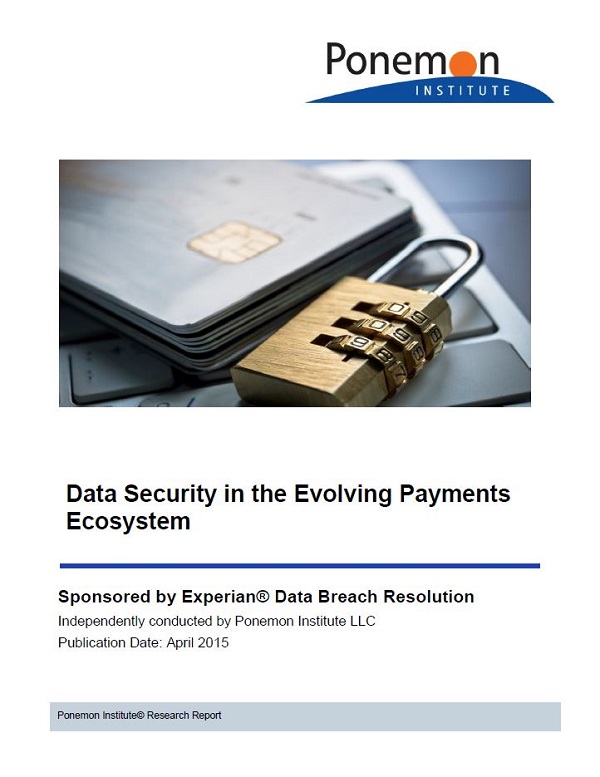
Big data received a lot of press coverage in 2014; unfortunately, it wasn’t all kind. That’s too bad; because it’s not fair to lay the blame for every security lapse or e-mail misdeed squarely on big data. The truth is that some of the very technologies that are considered big data are in fact the same ones that best protect us from abuse. Like most technologies, big data can be used for good or it can be abused. However, I believe that the good that big data brings far outweighs any accompanying risks. While data security begins with common sense, and we must all deploy data security best practices, we should also appreciate the value in what big data offers. Identity verification and transaction validation rely on the massive power of big data. It is big data initiatives that safeguard more than 5.5 billion transaction events annually. When managed appropriately – and in compliance with existing laws and regulations regarding privacy – data is a force for good. At Experian we see the use of data for good every day. We see how big data is being used to serve more than 2,800 hospitals and thousands of medical practitioners. It is data processes that verify patient identities and conditions when they arrive for treatment. Additionally, by making sure patients are who they say they are, data processes verify coverage and help care-providers prevent fraud. In many cases, these systems alert patients to eligibility for aid that they were not even aware of they were entitled. Fraud prevention is particularly important in an age of electronic medical records. A combination of technology advances and recent healthcare reforms have made patient data available online to pharmacies, hospitals and labs, and patients themselves. According to a survey by the Ponemon Institute, 72 percent of healthcare organizations indicated they are only “somewhat confident” or “not confident” in the security of electronic patient data. Further, Ponemon expects that the cost of breaches could reach $5.6 billion in 2015. This is why healthcare providers are using big data to safeguard patient records by adopting identity theft protection platforms and device verification technologies – the same security mechanisms used by banks. These safeguards are possible thanks to the power of big data. It is what gives us the ability to sift through large amounts of data, find patterns and distill the insight that allows us to make better decisions, improve our business processes and ultimately, drive our economy forward. Across the country big data technology, along with analytical and consultative services, help financial institutions and businesses in all industries derive insight, which ultimately enables them to make more sound lending decisions, better manage their credit portfolios and acquire the best customers. It is the insight brought by big data that is allowing millions of renters to obtain their first lines of credit. For example, by collecting and analyzing on-time rental payments more people are building the credit histories necessary for financial and economic inclusion. These uses of data for good are stories I hope to see better publicized in the year ahead. There are examples from coast to coast. Like at the National Institutes of Health, as part of its “BD2K” (Big Data to Knowledge) initiative, which allows physicians to analyze patient data and vast health care histories databanks to determine which patients may be at greater risk of developing conditions such as diabetes or heart disease; or in Kansas City, where researchers are maximizing the productivity of their lands by studying detailed soil data. And in Indiana, where the state government is analyzing population data to prioritize funding for the most effective programs, including those that reduce infant mortality rates. Yes; we must continue to carefully safeguard our sensitive information. Yet we must also recognize that there will always be those looking to exploit any vulnerability. There comes a point where we must decide whether to embrace the benefit that comes from the power of information or allow the cynics to constrain the innovation and limit its potential. It’s unrealistic to imagine that we will stop relying on big data processing. Our financial systems, healthcare systems, and scientific advancement rely on it. Rather, our focus should be on how we protect our data. So yes, big data is good. The responsible, smart and compliant use of big data benefits people, our society and our economy. In 2015, let’s resolve to not paint big data with such a broad brush. It is my hope that in this New Year, more people will come to recognize ways to use data for good. Craig Boundy is CEO of Experian North America.
Many desktop publishing packages and web page editors now use Lorem Ipsum as their default model text, and a search for ‘lorem ipsum’ will uncover many web sites still in their infancy.
This is a pull quote
This is test
This is a heading
Many desktop publishing packages and web page editors now use Lorem Ipsum as their default model text, and a search for ‘lorem ipsum’ will uncover many web sites still in their infancy.
- Test 1
- Test 2
- Test 3

It was popularised in the 1960s with the release of Letraset sheets containing Lorem Ipsum passages, and more recently with desktop publishing software like Aldus PageMaker including versions of Lorem Ipsum.
My Company Experian