
Experian to Empower Black and Brown Women Entrepreneurs with New Partnership
Corporate ResponsibilityWe know small businesses are critical to the vibrancy of our economy and communities. Watching how hard the COVID-19 pandemic has affected them and their founders has been troubling. Here at Experian, we created new tools to help small businesses navigate this uncertain time. But we want to do more, and help businesses survive and thrive even in “normal” times. That’s why I’m especially excited about our newest partnership with Black Girl Ventures (BGV). This is part of our United for Financial Health program, which aims to empower vulnerable consumers to improve their financial health and protect them from fraud and identity theft. Through this partnership,we will provide resources, tools and services to Black and Brown women entrepreneurs to enable them and their small businesses to grow and prosper. We know that long-standing inequities have created barriers for women, especially women of color. Our partnership will provide financial resources to help scale its BGV Style Pitch Competition and Amplify BGV Programs and we are a proud sponsor of BGV’s new weekly podcast, “From Hustling to Handling, How to Stay in Business.” Together, we will curate entrepreneurial education content to assist a broader audience with knowledge and best practices related to financial literacy and wealth management. The negative financial impact on these women and their businesses has had a reverberating effect across communities of color. Our United for Financial Health program is one of the many ways we are staying true to our mission to support all consumers and clients through their financial health journey, in normal and extraordinary times. This partnership with BGV will fuel the economic recovery by reaching millions of Black and Brown women entrepreneurs and, in turn, supporting the communities they serve.

Complacency will cost more: Why businesses need to invest in the digital customer experience now
Data & AnalyticsAs businesses across the globe have started to see their operations stabilize, they will be tested once again as the world faces another resurgence of the Covid-19 but this time consumer expectations will be much higher. According to the latest Experian’s Global Insights Report, 60% of consumers have higher expectations of their digital experience than before Covid-19. The study which surveyed 3,000 consumers and 900 businesses in 10 countries, including: Australia, Brazil, France, Germany, India, Japan, Singapore, Spain, the United Kingdom and the United States, found that while many consumers may have stayed loyal to businesses they frequented before COVID-19 initially, that may no longer be the case. High expectations for security and convenience compounded by the increased demand for online payments, banking and shopping are pushing businesses to re-imagine the customer journey and the investments needed to drive future growth. In fact, the study found that one in three consumers are only willing to wait 30 seconds or less before abandoning an online transaction, specifically when accessing their financial accounts. This means that businesses have an increasingly short time frame to prove the experience will be safe and convenient. Businesses have no choice but to invest in their digital presence and experience. We believe the cost of doing nothing will be greater than what it will cost to invest in the customer journey. While half of the businesses we surveyed have either mostly or completely resumed operations since Covid-19 began, only 24% are deliberately making changes to their digital customer journey. This is not enough. The integration of data, analytics and technology is the key to enable businesses to quickly adapt decisioning strategies to minimize risk, preserve valuable relationship and remain fair and compliant. In order to strengthen digital transformation, Experian recommends that retail banks, payment providers and retailers consider the following: Understanding the customer Businesses need to understand their customers more than ever before. They need to understand their behaviors, preferences, and financial situation. Each transaction creates hundreds of different touchpoints that financial institutions and retailers need to accommodate across all devices. The tricky part is using the right technology to put all the datapoints together and to link them into one single-view of the customer. Use of AI to improve and automate customer decisions Being able to make the right decision is more important than ever. Today’s economic conditions are unprecedented, and unfortunately we don’t have historic data to count on. Therefore, we need to use data and technology better than before. In the area of artificial intelligence, businesses are strengthening the security of mobile and digital channels, new credit risk analytics and artificial intelligence (AI) models and increasing digital customer acquisition and engagement. Strengthening security of mobile and digital channels Businesses need to provide not only a convenient experience but also a secure one. In order to improve security, businesses need to use a multi-level approach where they can easily access and layer fraud solutions to catch more fraud and reduce friction for genuine consumers. Discover more insights from our longitudinal study of the impact of Covid-19 on businesses and consumers.

I was recently invited to a panel discussion as a part of Money 20/20 titled Do Credit Scores Still Matter? Closing the Chasm through Data and Innovation with Lauryn Nwankpa, Head of Social Impact at Dave and Jay Moon, General Manager of Credit at Credit Sesame. We discussed how important data and innovation are right now to ensure that consumers get access to credit that they need. As the largest credit bureau in the country, and in service of our mission to be the consumers’ bureau, we at Experian have a responsibility both to consumers seeking credit and to lenders who seek to assess the risk that a loan applicant represents. As part of this, we’ll continue to extract value from the data that lenders are used to getting from us and we innovate by providing new forms of data that can help the many Americans who either face barriers or sometimes pay more for credit because of a lack of credit history or having a credit file that’s too thin. I’m especially passionate about this as I myself was an immigrant and a thin-file customer at one point. When I came to this country, it was incredibly hard for me to develop a credit profile that I felt accurately reflected my financial situation and the (lack of) risk that I, as a borrower, would represent. But I was lucky as my first lender at the time was patient, just as I needed to be. They spent months seeking additional information about my situation, eventually enough to extend a firm offer of credit. It is not only immigrants who may face this or similar challenges. The impact of COVID-19 has created a difficult economic reality for many Americans. At Experian, we’re dedicated to having a culture of continuous innovation, from the way we work to the solutions we create to help consumers on the road to recovery. Especially during times of economic uncertainty, finding innovative means to effectively assess the creditworthiness of these consumers is critical. That’s exactly what we focus on at Experian in order to help consumers gain financial access and stability. Alternative data plays a critical role in achieving this. We’re finding new ways to use consumer-permissioned and alternative credit data in the credit scoring process, which can help lenders identify consumers who are excluded from the traditional credit ecosystem, but who can fulfill their financial obligations. I’ve seen firsthand how our data and technology can help transform the way businesses operate and have spoken to many consumers who leveraged our innovative services to help them thrive in society. Consumers want to be in the driver’s seat of their credit journey and we’re seeing a greater openness to providing data, which in turn enables lenders to make more informed decisions. This change is disrupting the status quo. Experian Boost is a great example of this. It’s a free and first-of-its-kind financial tool that empowers consumers to add positive telecom, utility and Netflix payment histories directly into their Experian credit file for an opportunity to instantly increase their FICO Score and access quality credit. More than 2.5 million have seen their scores improve with Experian Boost. So, do credit scores still matter? My answer is that credit reports are more relevant than ever. They matter more than the score alone as they detail a consumer’s financial track record and deliver a historical view of how a consumer is managing and repaying debt over time. This information helps lenders determine who can fulfill their financial obligations and ensures consumers continue to have access to credit so I don’t believe credit reports are going anywhere. As we navigate the road to recovery, it will be critical that all of us in the financial ecosystem work together to safeguard consumers and to maintain the integrity and openness of the credit market. The credit report, augmented by consumer-consented and alternative data, is a foundational pillar to achieve both of those objectives.

People’s engagement with financial information and their understanding of how organisations use it to make decisions about the products and services they can access has been growing for many years. Experian has played a role in this journey. We were the first to allow people to view their credit report at any time and see their Experian Credit Score with the launch of CreditExpert in September 2003. It has allowed people to view their own information through a lender’s eyes, so they can understand how to improve their situation. We’re excited to announce the next huge leap forward – the launch of Experian Boost in the UK. Now for the very first time, people can instantly increase their credit score to help them access more financial products and services at better rates. Experian Boost is a free service which allows people to use a secure Open Banking platform to share their everyday transactions – from council tax to digital entertainment subscriptions, such as Netflix and Spotify. These payments have never been factored into a credit score before, so adding them should broaden access to financial services. Our analysis shows that more than 50% of people will see their credit score increase from using Experian Boost. But, crucially, the service will not make people’s score go down when they sign up to Boost. People are also in total control of their data. If they wish, they can withdraw their information with a few clicks, and they are still free to re-join at any time. But by keeping Boost activated on their Experian account they can build a stronger payment history which could help them get their credit card, loan or mortgage they want. We’re confident this is going to be a significant moment in how people represent their financial profile to organisations. Five million people have signed up for Boost in the US since it launched last year, with three million of those seeing their score increase. At Experian, we strive to put people in control of their financial data and the launch of Boost is entirely in line with this goal. Now it’s over to you – give your credit score a Boost.

October marked Black History Month (UK) – a celebration of the culture, heritage and achievements of Black people past and present. Although we weren’t able to celebrate in person this year, our Black at Experian employee network were still able to serve up an incredible range of inspiring webinars, videos, articles and podcasts covering topics discussing Black British culture, ways to discuss race and racism with our children, as well as the importance of being an ally. This exciting schedule of activities has been the perfect opportunity to learn more and many of us were personally touched by the stories of our Black colleagues who have openly and courageously shared their thoughts and experiences with us all. But as Black History Month comes to an end for another year, it’s essential that our support doesn’t stop here. As an organisation, we are committed to promoting equality and diversity for all. And our Black at Experian network has already been instrumental in helping us understand how we can improve in some of these areas. Part of this includes signing the Business in the Community (BITC) ‘Race at Work Charter’. By working alongside BITC, as well as our other employee networks, it’s helping us create initiatives that will continue to drive positive change and inclusion for all. We are committed more than ever to leverage our differences as individuals and use this broad range of talents to develop our competitive advantage as a business. We’ve made good progress in a short space of time, but this is just the beginning. We are looking forward to continuing this important journey in building a workplace that embraces a more diverse and inclusive culture.

02 November 2020 is a day we’re really proud of at Experian – our Danish Credit Bureau turns 150 years old! As we prepared to celebrate this milestone with our people, our customers and all our wider stakeholders, we delved into our archives. We found extraordinary pieces of our history that still resonate with us, with how we do business, today. On this historic day, it’s my pleasure to share some of these here. In 1783, a Danish merchant wrote a polite request to a potential customer who was asking for credit to provide information about their circumstances rather than their “Happiness and Piousness”. It’s the earliest example we have of a credit check. Businesses still need that information today, and it’s a demand Experian helps meet globally every day. Købmandstandens Oplysningsbureau, or KOB, is a name that still appears on Experian products. Evidence of not only offering data and information services that meet businesses and consumers’ needs, but being a trusted provider of accurate data and information. We continue to publish a quarterly analysis of start-ups across industries in the Nordics, which started when we first printed a solvency book in 1930. In 1928, KOB had a woman on its Board of Directors. Mrs M C Gazette served alongside three men, and during her tenure created the Gazette Fund, a hardship fund to which employees could apply in times of need. The fund ran until 2016, when it moved to a different structure for fiscal reasons. In 1938, the German Information Agencies demanded the names of Danish businessmen of Jewish descent be given to them. We uncovered a news article from 1945 showing our Chairman rejected this demand, safeguarding the trust those consumers placed in our business, and morally doing the right thing. Both actions by former Board members exemplify principles we continue to hold dear at Experian today. Operating in the Experian way, we safeguard the information we hold, we embrace diversity, are inclusive, and strive to ensure all our people feel free to bring their whole and unique self to work at our Company, contributing to our high performance culture. What is clear from these examples and others in this celebratory digital storybook published today, is data has been at the heart of all we do for 150 years, and it will continue to be in future. From the early days, when we helped Danish businesses assess creditworthiness of their customers, through to today, we’re still empowering businesses and consumers to manage their data with confidence. We’re grateful for the many years our customers have trusted us to provide them with data and insights that help their businesses to thrive. We’re proud of our employees in the past, and those we have with us today. As a team, we work daily to value each other, safeguard our future and delight our customers. It has been an exciting journey, and we have only just begun. We are investing in the future, through new technology, talented people and innovative solutions that power opportunities that create a better tomorrow for our employees, our customers, consumers and the communities in which we operate. We’re celebrating today, and we’re excited about the opportunities ahead of us too.
Related Posts

Read Moreio55 Button 2- Learn more Primary button Secondary button Related Posts

Insights from Reuters Next: Building a More Inclusive Financial System with Data and AI
Data & AnalyticsToday, we stand at the forefront of a digital revolution that is reshaping the financial services industry. And, against this backdrop, financial institutions are at vastly different levels of maturity; the world’s biggest banks are managing large-scale infrastructure migrations and making significant investments in AI while regional banks and credit unions are putting plans in place for modernization strategies, and fintechs are purpose-built and cloud native. To explore this more, I recently had the privilege of attending the annual Reuters NEXT live event in New York City. The event gathers globally recognized leaders across business, finance, technology, and government to tackle some of today’s most pressing issues. On the World Stage, I joined Del Irani, a talented anchor and broadcast journalist, to discuss the future of lending and the pivotal role of data and AI in building a more inclusive financial system. Improving financial access Our discussion highlighted the lack of access to traditional financial systems, and the impact it has on nearly 100 million people in North America alone. Globally, the problem affects over one billion people. These people, who are credit invisible, unscoreable, or have subprime credit scores, are unable to secure everyday financial products that many of us take for granted. What many don’t realize is, this is not a fringe subset of the population. Most of us, myself included, know someone who has faced the challenges of financial exclusion. Everyday Americans, including young people who are just starting out, new immigrants and people from diverse communities, often lack access to mainstream financial products. We discussed how traditional lending has a limited view of a consumer. Like looking through a keyhole, the lender’s understanding of the person in view is often incomplete and obstructed. However, with expanded data, technology, and advanced analytics, there is an opportunity to better understand the whole person, and as a result have a more inclusive financial system. At Experian, we have a unique ability to connect the power of traditional credit with alternative data, bringing a more holistic understanding of consumers and their behaviors. We are dedicated to leveraging our rich history in data and our expertise in technology to create the future of credit and ultimately bring financial power to everyone. The future of lending After spending two days with over 700 industry leaders from around the world, one thing is abundantly clear: much like the early days of the internet, today, we are at the cutting-edge of a technical revolution. Reflecting on my time at Reuters NEXT, I am particularly excited by the collective commitment to drive innovative, and smarter ways of working. We are only beginning to scratch the surface of how data and technology can transform financial services, and Experian is positioned to play a significant role. As we look to the future, I am excited about the ways we will create new opportunities for businesses and consumers alike.
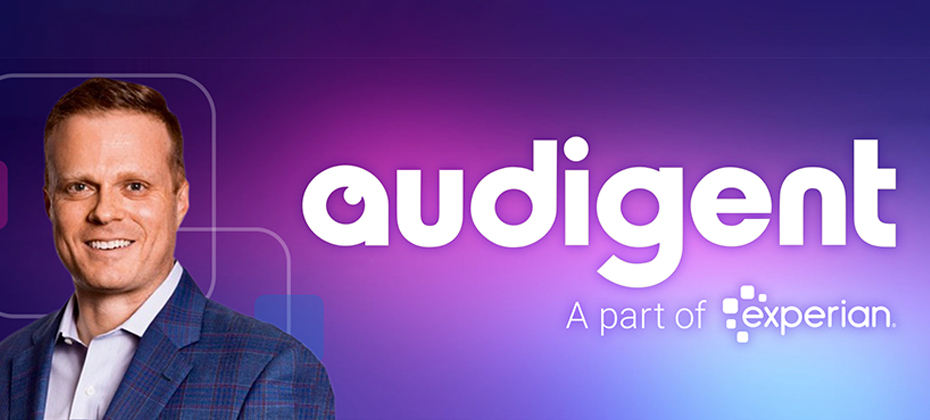
The advertising ecosystem has seen significant transformation over the past few years, with increased privacy regulation, changes in available signals, and the rise of channels like connected TV and retail media. These changes are impacting the way that consumers interact with brands and how brands understand and continue to deliver relevant messages to consumers with precision. Experian has been helping marketers navigate these changes, and as a result, our marketing data and identity solutions underpin much of today’s advertising industry. We’re committed to empowering marketers and agencies to understand and reach their target audiences, across all channels. Today, we are excited to announce our acquisition of Audigent—a leading data and activation platform in the advertising industry. With Audigent’s combination of first-party publisher data, inventory and deep supply-side distribution relationships, publishers, big and small, can empower marketers to better understand their customers, expand the reach of their target audiences and activate those audiences across the most impactful inventory. I am excited to bring together Audigent’s supply-side network as a natural extension to our existing demand-side capabilities. Audigent’s ability to combine inventory with targeted audiences using first-party, third-party and contextual signals provides the best of all worlds, allowing marketers to deliver campaigns centered on consumer choices, preferences, and behaviors. The addition of Audigent further strengthens our strategy to be the premier independent provider of marketing data and identity, ultimately creating more relevant experiences for consumers. To learn more about Experian and Audigent, visit https://www.experian.com/marketing/ and https://audigent.com/.