sdfsad sddfs sdfsdf sdsf sd sfsdfsdf s
asdf sa dsdfdsf ds dsf sdfsdf sdfsd sdf
In this article…

One of my favorite sayings growing up as a kid was, “One man’s trash is another man’s treasure.” While these words can have a very literal meaning, at its essence, it means that everything has a value to someone. There couldn’t be a more fitting circumstance to apply this saying than when you look at the automotive industry, especially in relation to leased and certified used vehicles. After all, most certified used vehicles were once leases.
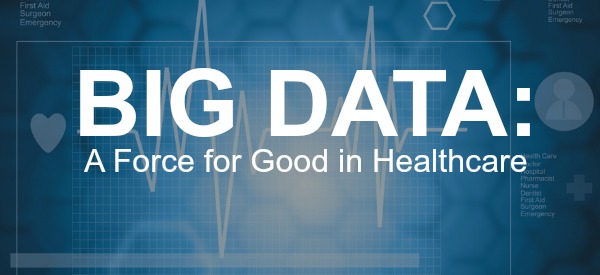 With all the discussions around the risks of big data, the fact that it can be used as a powerful enabler of good seems to be missed. The benefits of big data can be seen throughout our day to day lives from simple things like traffic alerts to more impactful purposes like those seen in today’s healthcare environment.
At Experian we serve more than 2,800 hospitals and 9,000 physician practices and use big data to help serve their patients as quickly and efficiently as possible. Our data and technology guides hospitals, physicians and patients step by step through an increasingly complex healthcare process.
With all the discussions around the risks of big data, the fact that it can be used as a powerful enabler of good seems to be missed. The benefits of big data can be seen throughout our day to day lives from simple things like traffic alerts to more impactful purposes like those seen in today’s healthcare environment.
With all the discussions around the risks of big data, the fact that it can be used as a powerful enabler of good seems to be missed. The benefits of big data can be seen throughout our day to day lives from simple things like traffic alerts to more impactful purposes like those seen in today’s healthcare environment.
At Experian we serve more than 2,800 hospitals and 9,000 physician practices and use big data to help serve their patients as quickly and efficiently as possible. Our data and technology guides hospitals, physicians and patients step by step through an increasingly complex healthcare process.
With all the discussions around the risks of big data, the fact that it can be used as a powerful enabler of good seems to be missed. The benefits of big data can be seen throughout our day to day lives from simple things like traffic alerts to more impactful purposes like those seen in today’s healthcare environment.
This week, Experian is participating in the Money 20/20 conference at the Aria Resort and Casino in Las Vegas. This premier conference highlights innovators that are profoundly changing how consumers and businesses manage, spend and borrow money. At the conference, Experian is providing a comprehensive view on customer intelligence and how we can be a data partner in helping businesses make powerful decisions that help acquire, grow and protect mobile customers. The Experian team has hit the ground running and if you are attending the conference, be sure to check out all of the ways to meet up with us and stay connected.
Independent research firm concludes that email marketers are poised to be industry leaders in cross-channel marketing
NewsNew research shows email marketers are two times more likely than all other marketers to integrate customer data across all channels According to a commissioned study conducted by Forrester Consulting on behalf of Experian Marketing Services, maturity in cross-channel marketing is low and, despite the adoption of multiple channels in marketing programs, integration and coordination do not occur consistently. The global research study, entitled The Road to Cross-Channel Maturity, also found that marketers seasoned in email, more than any other digital channel, are in a position to be the ones to lead the transition to the cross-channel marketing era. A complimentary copy of the study can be downloaded at Experian Marketing Services’ Website. Please visit http://ex.pn/ZDxdEQ. In particular, Forrester Consulting found that marketers around the world struggle to integrate data sources and adopt effective data-management practices. Only 24 percent of marketers surveyed said they use contextual data and customer data for a real-time view across channels. Sophisticated email marketers demonstrated significantly higher rates of data-usage best practices, which was twice as much as the average respondent. Practices among marketers in Asia-Pacific (APAC) countries demonstrated the highest prevalence of this mature use of customer data at 36 percent, with China leading the pack at 47 percent. APAC also led other regions in overall cross-channel marketing maturity. Seventy-five percent of marketers that Forrester Consulting identified as “sophisticated marketers” use data in real time. In the study, Forrester Consulting states “…an email can provide a consumer with information or incentive to engage with other channels. As one of the most reliable, consistently used channels, email has an opportunity to be more than another transaction-driving medium… With cues from email, marketers can better provide interactions in other channels and touch-points.” The Forrester Consulting study recommends that marketers identify where email is most relevant and influential in the customer’s path to purchase and then incorporate additional channels along the path that tie all the communications together. To understand marketers’ maturity in cross-channel marketing, Experian Marketing Services commissioned Forrester Consulting to evaluate digital marketers’ attitudes about, experiences with and challenges related to cross-channel marketing, as well as the role email marketing has and will have in delivering cross-channel interaction. Forrester Consulting surveyed nearly 500 digital-marketing executives in various industries in North America, Europe, Asia and South America, including decision makers responsible for search, email, social, Website, mobile and display marketing strategy execution. It also conducted in-depth interviews with senior executives in the United States and Canada. A Webcast about the study conducted by Forrester Consulting and commissioned by Experian Marketing Services is available to view on demand at http://ex.pn/1Ftjhyx.
 More than 10 years ago I spoke about a trend at the time towards an underutilization of the information being managed by companies. I referred to this trend as “data skepticism.” Companies weren’t investing the time and resources needed to harvest the most valuable asset they had – data.
Today the volume and variety of data is only increasing as is the necessity to successfully analyze any relevant information to unlock its significant value. Big data can mean big opportunities for businesses and consumers.
More than 10 years ago I spoke about a trend at the time towards an underutilization of the information being managed by companies. I referred to this trend as “data skepticism.” Companies weren’t investing the time and resources needed to harvest the most valuable asset they had – data.
Today the volume and variety of data is only increasing as is the necessity to successfully analyze any relevant information to unlock its significant value. Big data can mean big opportunities for businesses and consumers.
Experian addresses fraud and cybersecurity challenges as risks mount for banks, retailers and public sector
Identity & FraudExperian hosting Future of Fraud and Identity event during National Cyber Security Awareness Month Costa Mesa, Calif., Oct. 13, 2014 — Identity and fraud concerns are a pressing global issue for many industries, including financial services, public sector and retailers. With the rise in security and data breaches, many organizations across the United States are particularly challenged, due to the growth of malware viruses, mobile-payment advancements and the need to authenticate online and mobile consumers better. To help business leaders address these rising fraud and identity issues, Experian® is hosting the Future of Fraud and Identity event on Oct. 21 in New York City, N.Y. The event will feature: Ori Eisen, Experian fraud expert and founder of 41st Parameter, highlighting the current trends in cybersecurity and how technology can combat these major threats Frank Abagnale, of Catch Me If You Can fame and respected authority on financial crime and fraud, sharing his personal story highlighting his work with numerous financial institutions over the past 38 years Charles Chung, president of Experian Decision Analytics, a global leader in fraud and identity products, opening the event Jon Jones, senior vice president of fraud and identity for Experian Decision Analytics, presenting Experian’s strategic view on identity risk management Many organizations are trying to address fraud risks while adapting to the changing habits of customers. One example of this is the acceptance of new mobile-payment options that are driving a transformation of the payments ecosystem. Current mobile-fraud trends include the use of increasingly sophisticated malware as attackers capitalize on banks and retailers providing these new service offerings to consumers via mobile devices. “Gaining control in this dynamic fraud environment is a major challenge for businesses as the Internet and mobile technologies were not designed with fraud in mind. Consumers accessing their financial or personal data at any time is a key fraud risk today, further enabling criminal activity,” said Eisen. “As companies invest to meet customer expectations and ensure that payments are secure and reliable, we see an urgent need for proactive next-generation security measures with fraud detection and intelligent device identification for corporate accounts and online transactions.” In 2013, identity theft affected more than 13 million U.S. consumers and accounted for more than $18 billion in losses. As technologies evolve and information security tightens, the savvy nature of fraudsters becomes more sophisticated. As a result, fraud management needs to evolve and include both offline and online fraud strategies to provide a panoramic view of the customer. In order to achieve this, authentication processes need to become seamless and straightforward to allow both the consumer and the business to feel confident in the authentication process while creating a positive customer experience. “Serious risks are emerging for consumers and businesses as fraudsters identify new targets to attack. The monetary cost of fraud losses can be high, but the impact a loss or breach can have on customer relationships and brand integrity can be even higher,” said Chung. “Combining comprehensive authentication processes with proportionate measures to monitor user activities and protect consumer data throughout the life cycle is a competitive requirement in today’s market.” The Future of Fraud and Identity event will take place on Oct. 21 in New York City, from 7:30 a.m. to noon at the Helen Mills Event Space at 137 West 26th Street.
Related Posts
Read Moreio55 Button 2- Learn more Primary button Secondary button Related Posts
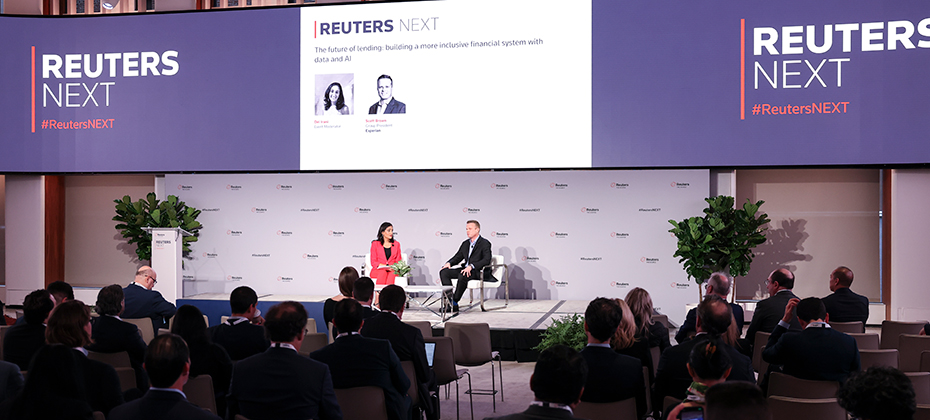
Insights from Reuters Next: Building a More Inclusive Financial System with Data and AI
Data & AnalyticsToday, we stand at the forefront of a digital revolution that is reshaping the financial services industry. And, against this backdrop, financial institutions are at vastly different levels of maturity; the world’s biggest banks are managing large-scale infrastructure migrations and making significant investments in AI while regional banks and credit unions are putting plans in place for modernization strategies, and fintechs are purpose-built and cloud native. To explore this more, I recently had the privilege of attending the annual Reuters NEXT live event in New York City. The event gathers globally recognized leaders across business, finance, technology, and government to tackle some of today’s most pressing issues. On the World Stage, I joined Del Irani, a talented anchor and broadcast journalist, to discuss the future of lending and the pivotal role of data and AI in building a more inclusive financial system. Improving financial access Our discussion highlighted the lack of access to traditional financial systems, and the impact it has on nearly 100 million people in North America alone. Globally, the problem affects over one billion people. These people, who are credit invisible, unscoreable, or have subprime credit scores, are unable to secure everyday financial products that many of us take for granted. What many don’t realize is, this is not a fringe subset of the population. Most of us, myself included, know someone who has faced the challenges of financial exclusion. Everyday Americans, including young people who are just starting out, new immigrants and people from diverse communities, often lack access to mainstream financial products. We discussed how traditional lending has a limited view of a consumer. Like looking through a keyhole, the lender’s understanding of the person in view is often incomplete and obstructed. However, with expanded data, technology, and advanced analytics, there is an opportunity to better understand the whole person, and as a result have a more inclusive financial system. At Experian, we have a unique ability to connect the power of traditional credit with alternative data, bringing a more holistic understanding of consumers and their behaviors. We are dedicated to leveraging our rich history in data and our expertise in technology to create the future of credit and ultimately bring financial power to everyone. The future of lending After spending two days with over 700 industry leaders from around the world, one thing is abundantly clear: much like the early days of the internet, today, we are at the cutting-edge of a technical revolution. Reflecting on my time at Reuters NEXT, I am particularly excited by the collective commitment to drive innovative, and smarter ways of working. We are only beginning to scratch the surface of how data and technology can transform financial services, and Experian is positioned to play a significant role. As we look to the future, I am excited about the ways we will create new opportunities for businesses and consumers alike.
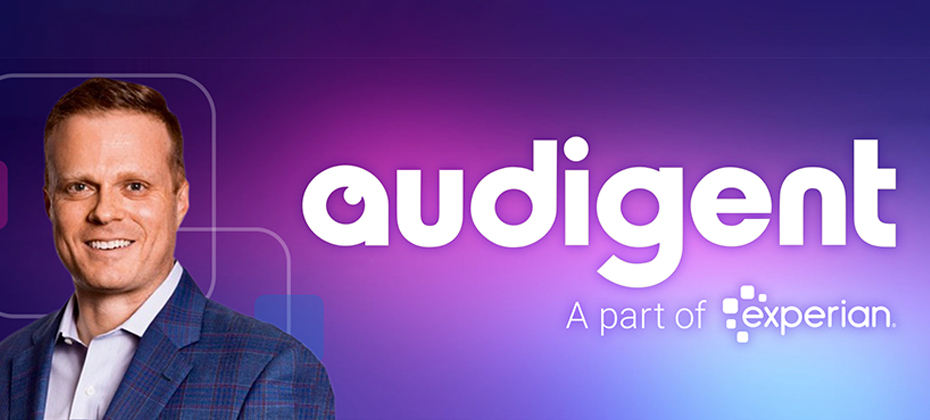
The advertising ecosystem has seen significant transformation over the past few years, with increased privacy regulation, changes in available signals, and the rise of channels like connected TV and retail media. These changes are impacting the way that consumers interact with brands and how brands understand and continue to deliver relevant messages to consumers with precision. Experian has been helping marketers navigate these changes, and as a result, our marketing data and identity solutions underpin much of today’s advertising industry. We’re committed to empowering marketers and agencies to understand and reach their target audiences, across all channels. Today, we are excited to announce our acquisition of Audigent—a leading data and activation platform in the advertising industry. With Audigent’s combination of first-party publisher data, inventory and deep supply-side distribution relationships, publishers, big and small, can empower marketers to better understand their customers, expand the reach of their target audiences and activate those audiences across the most impactful inventory. I am excited to bring together Audigent’s supply-side network as a natural extension to our existing demand-side capabilities. Audigent’s ability to combine inventory with targeted audiences using first-party, third-party and contextual signals provides the best of all worlds, allowing marketers to deliver campaigns centered on consumer choices, preferences, and behaviors. The addition of Audigent further strengthens our strategy to be the premier independent provider of marketing data and identity, ultimately creating more relevant experiences for consumers. To learn more about Experian and Audigent, visit https://www.experian.com/marketing/ and https://audigent.com/.

test