sdfsad sddfs sdfsdf sdsf sd sfsdfsdf s
asdf sa dsdfdsf ds dsf sdfsdf sdfsd sdf
In this article…

Experian Supports Transgender and Non-binary Consumers with Name Change Process on Credit Reports
Corporate ResponsibilityAs a leading information services company, some of our chief priorities include protecting and ensuring the accuracy of consumer information. The integrity of our data is critical and aligns with our efforts to advocate for financial inclusion for everyone. Data accuracy is particularly relevant for the transgender and non-binary community with regard to name changes. It’s important to note that information about gender/sex, age, race, ethnicity, religion or sexual orientation is not included in credit reports or scores. However, when someone transitions, and changes their name, their credit and financial history may still be tied to their birth name, which is also referred to as their “deadname.” This can unintentionally “out” the consumer or force them to establish a new credit history. At Experian, we have a process through which those who identify as transgender and non-binary can provide legal documentation to prove their identity without the negative emotional and financial impact. You can learn more about this process here. When you affirm your identity and update your name, Experian will also suppress your deadname so it does not appear on your Experian credit report. Taking these steps only changes your name on your Experian credit reports, and you may need to inquire about the process with other credit bureaus. Fair access to credit tools is part of our mission, as is providing these services with dignity and respect. At Experian, this is our purpose, advocating for all communities and people. This is financial inclusion.

Experian Africa’s United for Financial Health campaign with the National Small Business Chamber
EMEA – Europe, Middle East, & AfricaIn 2021, Experian announced that United for Financial Health programme would be launching in two EMEA markets – Italy and South Africa. Today we are pleased to bring you more news of our plans in South Africa. Our partnership with the National Small Business Chamber is focused on supporting Small and Medium-sized Enterprises (SMEs) to improve their financial fitness. As a result of the pandemic, many small businesses are under enormous strain in the current environment. As the backbone of the South African economy, any challenges faced among these enterprises may have far-reaching implications on the number of unemployed people. Our campaign with the NSBC aims to support SMEs to stay in business and become more resilient to economic disruptions as they continue to be a driving force of inclusive economic growth and job creation in the country. Many SMEs are harming their chances of gaining access to credit, getting better deals from suppliers, and securing additional funding to help grow their business due to a lack of awareness and understanding of their business credit profile. Working alongside the NSBC, we aim to educate, encourage and assist SMEs to become creditworthy. The programme aims to provide tangible ways to help improve financial health, help SMEs overcome the financial difficulties that have resulted from the effects of the pandemic and kick-start people on the road to recovery. Mike Anderson, the CEO of our partners the NSBC, said: “We are extremely excited to launch a ‘How to become financially fit’ campaign in partnership with Experian South Africa, one of the leading credit bureaus, where we can equip SMEs with key tips and strategies to assist them in understanding their financial and credit health. The aim is to empower them to understand the impact of both their personal and business credit profiles on their business’s reputation and ultimately their ability to access the funding required to maintain and grow their businesses.” As part of this financial education drive, we’ll support a series of webinars hosted by the NSBC, with topics ranging from how to improve both your personal and business credit profiles, managing your cash flow, understanding what credit providers are looking for as well as protecting your own business from credit risk. The webinars are open to all NSBC members and will kick off on 28 January 2022 and run until the end of March. For more information on the ‘How to get financially fit’ NSBC campaign in partnership with Experian South Africa visit www.nsbc.africa.

For the past several years, we’ve been on a journey to improve financial access for millions of people around the world. We’ve made it our job to help consumers get the best financial outcomes. This focus on consumers defines us and informs everything we do. In 2019, we reshaped how consumers access credit with Experian Boost™. Since then, nearly 9 million consumers have connected to the product. While we are proud of what we have and continue to accomplish with Experian Boost, we know there is more to be done to ensure more consumers can access fair and affordable credit. Improving outcomes for underserved consumers When credit is used responsibly, it can create new opportunities from getting a college degree, buying a car or home and starting or expanding a business. These are milestones that help people establish careers, build wealth and ultimately achieve greater financial freedom. Yet, there are millions of consumers who are unable to participate in the mainstream financial ecosystem today because they don’t have a financial identity. In fact, our recent research shows there are at least 28 million credit invisibles in the U.S. with an additional 21 million consumers who are unscoreable by the credit score models most used by lenders today. Without an established credit history, these consumers struggle to qualify for everything from an auto loan to a mortgage and even an apartment or employment. This problem more frequently impacts communities of color with 28 percent of all Black and 26 percent of all Hispanic consumers currently unscoreable or credit invisible. Increasing financial inclusion depends on creating opportunities for underrepresented consumers to succeed. And this starts with ensuring all consumers have a financial identity. Bringing financial power to all with Experian Go The challenge is many consumers who are not in the credit ecosystem today are unsure where to start. Today, we reached a pivotal and exciting milestone in our commitment to consumers with the launch of Experian Go™. This new program opens the front door to the financial ecosystem for millions of consumers by helping them establish their financial identity and move from credit invisible to scoreable. Within minutes, credit invisibles can have an authenticated Experian credit report, tradelines and a credit history by using Experian Boost™[1], and instant access to financial offers through Experian Go. In fact, early analysis shows 91 percent of consumers with no credit history who connect to Experian Boost, a free feature that allows users to contribute their on-time cell phone, video streaming service, internet, and utility payments directly to their Experian credit report, can become scoreable in minutes with an average starting near-prime FICO® Score of 665[2]. Throughout the experience, we’ll provide ongoing credit education and access to tools like Experian Boost™ to make it easy for consumers to learn how to use and responsibly grow their credit histories. Until now, our industry has struggled to verify the identity of credit invisibles. Over the last several years, we’ve introduced new identity verification technologies to our toolbox. With Experian Go, we’re leveraging these technologies to verify a credit invisible’s identity and get them in the front door to start building credit. No other credit bureau or organization is doing this today. During our pilot, we helped more than 15,000 consumers establish their credit history. This is a great start. Now that Experian Go has launched, I look forward to helping millions more consumers get the credit they deserve. To learn more about Experian Go, visit www.experian.com/go. [1] Results may vary. Some may not see improved scores or approval odds. Not all lenders use Experian credit files, and not all lenders use scores impacted by Experian Boost. [2] Experian analysis based on an anonymized and statistically relevant sample of consumer credit reports with only Experian Boost tradelines included and FICO® Scores. December 2021.

I’m delighted to announce that Experian has been named as a Top Employer across five countries. Our teams in the UK, Germany, Brazil, Singapore and Australia were all recognised in the 2022 awards which is a fantastic achievement. At Experian we pride ourselves on having a great People First culture, it’s something we are all proud of and want to protect. We do this by supporting a dynamic, positive and inclusive working environment for our employees wherever they are in the world. Our people are passionate about the work that we do, using data, analytics and technology to help transform lives and create a better tomorrow for people and organisations. We see our people live that purpose everyday in their work and it is wonderful to see that pride, about the role we play – supporting clients, consumers economies and society – getting recognised once again.

The past few years have sparked a swift digital transformation that subsequently drove a rapid increase in fraud. In fact, fraudsters have gotten more creative, putting businesses and consumers at risk now more than ever. At Experian, we predict that more intricate challenges lie ahead and are dedicated to helping businesses combat fraud threats. Here’s what we expect in 2022: 1. Buy Now, Pay Never – The Buy Now, Pay Later (BNPL) space has grown massively recently. In fact, the number of BNPL users in the US has grown by more than 300 percent per year since 2018, reaching 45 million active users in 2021 who are spending more than $20.8 billion . Without the right identity verification and fraud mitigation tools in place, fraudsters will take advantage of some BNPL companies and consumers in 2022. Experian predicts BNPL lenders will see an uptick in two types of fraud: identity theft and synthetic identity fraud, when a fraudster uses a combination of real and fake information to create an entirely new identity. This could result in significant losses for BNPL lenders. 2. Beware of Cryptocurrency Scams – Digital currencies, such as cryptocurrency, have become more conventional and scammers have caught on quickly. According to the FTC, investment cryptocurrency scam reports have skyrocketed, with nearly 7,000 people reporting losses totaling more than $80 million from October 2020 to March 2021 . In 2022, Experian predicts that fraudsters will set up cryptocurrency accounts to extract, store and funnel stolen funds, such as the billions of stimulus dollars that were swindled by fraudsters. 3. Double the Trouble for Ransomware Attacks – In the first six months of 2021, there was $590 million in ransomware-related activity, which exceeds the value of $416 million reported for the entirety of 2020 according to the U.S. Treasury’s Financial Crimes Enforcement Network . Experian predicts that ransomware will be a significant fraud threat for companies in 2022 as fraudsters will look to not only ask for a hefty ransom to gain back control, but criminals will also steal data from the hacked company. This will not only result in companies losing sales because of the halt caused by the ransom attack, but it will also enable fraudsters to gain access and monetize stolen data such as employees’ personal information, HR records and more – leaving the company’s employees vulnerable to personal fraudulent attacks. 4. Love, Actually? – Because more consumers went on dating apps and social media to look for love during the pandemic, fraudsters saw an opportunity to create intimate, trusted relationships without the immediate need to meet in-person. The FBI found that from January 1, 2021 — July 31, 2021, the FBI Internet Crime Complaint Center received over 1,800 complaints, related to online romance scams, resulting in losses of approximately $133 million. Experian predicts that romance scams will continue to see an uptick as fraudsters take advantage of these relationships to ask for money or a “loan” to cover anything from travel costs to medical expenses. 5. Digital Elder Abuse Will Rise – According to Experian’s latest Global Insights Report, there has been a 25 percent increase in online activity since the start of Covid-19 as many, including the elderly, went online for everything from groceries to scheduling health care visits. This onslaught of digital newbies presents a new audience for fraudsters to attack. Experian predicts that consumers will get hit hard by fraudsters through social engineering (when a fraudster manipulates a person to divulge confidential or private information) and account takeover fraud (when a fraudster steals a username and password from one site to takeover other accounts). This could result in billions of dollars of losses in 2022. As a leader in fraud prevention and identity verification, Experian offers a full suite of automated tools that harness data and analytics to prevent fraud and mitigate losses. Learn more about Experian’s fraud management tools.

In the early 1960s, Simon Ramo had a vision of a cashless society made possible by information and technology. This vision led to the creation of our business in North America. Ramo believed information could change the way people lived. Today, we know this to be true and continually see the ways data and technology can create enormous good in the lives of millions of consumers. While much has changed since the 1960s, Ramo’s vision holds true and continues to fuel the way we work at Experian. These principles have put consumers at the center of our business, which has forced us to think outside the box and do things differently. Let me give you an example. Until 2019, consumers had never been able to contribute information directly to their credit report. When we launched Experian Boost, we fundamentally changed the game. We put consumers in the driver’s seat and empowered them to contribute their on-time bill payments directly to their Experian credit report. By doing so, we’ve helped millions of consumers instantly improve their FICO® Score. This was a game changing move that is making a tangible difference for consumers. In fact, Experian Boost users have accessed more than $1.7 billion in credit due to improved credit scores. While we are proud of what we continue to accomplish with Experian Boost, we know financial inclusion depends on all of us doing more. On all of us doing things differently. We recently released new research in partnership with Oliver Wyman which shows 106 million Americans, or 42% of the adult population, lack access to mainstream credit because they are credit invisible, unscoreable or have a subprime credit score. Communities of color are more likely to lack access to mainstream credit, with 28% of Black and 26% of Hispanic consumers unscoreable or invisible, which is perpetuating historic disadvantage. While we have made a lot of progress in recent years by incorporating new data in decisions, as an industry, we can and must do better to ensure all consumers have access to fair and affordable credit. The old way of doing things, the old tools, will not work to ensure more consumers can access the financial services they need when they need them. The score models historically used by lenders are leaving nearly 50 million Americans behind. We need better data and better technology to help more consumers. When advanced analytics and machine learning are combined with expanded data sets as they are with Experian’s Lift Premium™ score, 96% of the population can be scored, including an estimated 65% credit invisibles and the entire conventionally unscoreable population. This is significantly greater than the 81% of consumers that can be scored by conventional scores today. Scoring 100% of Americans and expanding fair access to credit to creditworthy consumers is our goal. This is an exciting time as we are nearing a point where we can say, no matter who you are, where you live or what part of your financial journey you’re on, we can score you and help you access the financial services you need. We can’t do it on our own. Financial inclusion depends on industry adoption of these new tools and insights. As we begin a new year, I believe the financial services industry is at an inflection point. And I am hopeful. I think we can all agree it’s time for a new way of doing things and today we have the tools available to make it happen.

Read Moreio55 Button 2- Learn more Primary button Secondary button Related Posts
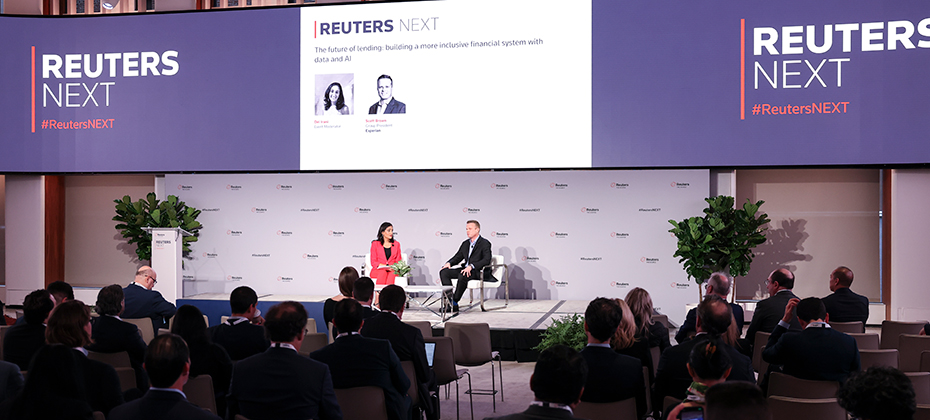
Insights from Reuters Next: Building a More Inclusive Financial System with Data and AI
Data & AnalyticsToday, we stand at the forefront of a digital revolution that is reshaping the financial services industry. And, against this backdrop, financial institutions are at vastly different levels of maturity; the world’s biggest banks are managing large-scale infrastructure migrations and making significant investments in AI while regional banks and credit unions are putting plans in place for modernization strategies, and fintechs are purpose-built and cloud native. To explore this more, I recently had the privilege of attending the annual Reuters NEXT live event in New York City. The event gathers globally recognized leaders across business, finance, technology, and government to tackle some of today’s most pressing issues. On the World Stage, I joined Del Irani, a talented anchor and broadcast journalist, to discuss the future of lending and the pivotal role of data and AI in building a more inclusive financial system. Improving financial access Our discussion highlighted the lack of access to traditional financial systems, and the impact it has on nearly 100 million people in North America alone. Globally, the problem affects over one billion people. These people, who are credit invisible, unscoreable, or have subprime credit scores, are unable to secure everyday financial products that many of us take for granted. What many don’t realize is, this is not a fringe subset of the population. Most of us, myself included, know someone who has faced the challenges of financial exclusion. Everyday Americans, including young people who are just starting out, new immigrants and people from diverse communities, often lack access to mainstream financial products. We discussed how traditional lending has a limited view of a consumer. Like looking through a keyhole, the lender’s understanding of the person in view is often incomplete and obstructed. However, with expanded data, technology, and advanced analytics, there is an opportunity to better understand the whole person, and as a result have a more inclusive financial system. At Experian, we have a unique ability to connect the power of traditional credit with alternative data, bringing a more holistic understanding of consumers and their behaviors. We are dedicated to leveraging our rich history in data and our expertise in technology to create the future of credit and ultimately bring financial power to everyone. The future of lending After spending two days with over 700 industry leaders from around the world, one thing is abundantly clear: much like the early days of the internet, today, we are at the cutting-edge of a technical revolution. Reflecting on my time at Reuters NEXT, I am particularly excited by the collective commitment to drive innovative, and smarter ways of working. We are only beginning to scratch the surface of how data and technology can transform financial services, and Experian is positioned to play a significant role. As we look to the future, I am excited about the ways we will create new opportunities for businesses and consumers alike.
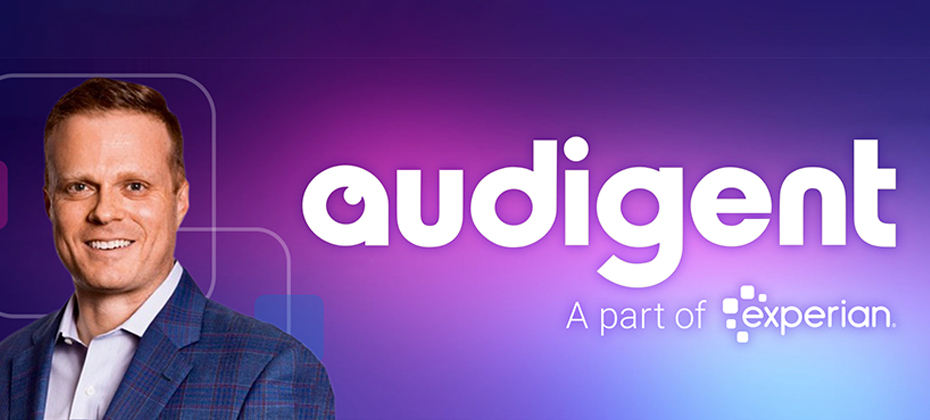
The advertising ecosystem has seen significant transformation over the past few years, with increased privacy regulation, changes in available signals, and the rise of channels like connected TV and retail media. These changes are impacting the way that consumers interact with brands and how brands understand and continue to deliver relevant messages to consumers with precision. Experian has been helping marketers navigate these changes, and as a result, our marketing data and identity solutions underpin much of today’s advertising industry. We’re committed to empowering marketers and agencies to understand and reach their target audiences, across all channels. Today, we are excited to announce our acquisition of Audigent—a leading data and activation platform in the advertising industry. With Audigent’s combination of first-party publisher data, inventory and deep supply-side distribution relationships, publishers, big and small, can empower marketers to better understand their customers, expand the reach of their target audiences and activate those audiences across the most impactful inventory. I am excited to bring together Audigent’s supply-side network as a natural extension to our existing demand-side capabilities. Audigent’s ability to combine inventory with targeted audiences using first-party, third-party and contextual signals provides the best of all worlds, allowing marketers to deliver campaigns centered on consumer choices, preferences, and behaviors. The addition of Audigent further strengthens our strategy to be the premier independent provider of marketing data and identity, ultimately creating more relevant experiences for consumers. To learn more about Experian and Audigent, visit https://www.experian.com/marketing/ and https://audigent.com/.

test