sdfsad sddfs sdfsdf sdsf sd sfsdfsdf s
asdf sa dsdfdsf ds dsf sdfsdf sdfsd sdf
In this article…

“I’ve been working with Turkcell for about six years now. I was on my way to have lunch with my main contact there, Elif, and I bumped into so many familiar faces. We agreed that you don’t often get that kind of long, trusted relationship in business. About two years ago, Elif explained to me that Turkcell needed help keeping customer communications fresh and relevant. Turkcell had a fixed weekly marketing plan, but a week is a long time in marketing. Customers were interacting with them all the time, across lots of different channels. These different types of customer communication cancelled out Turkcell’s planned weekly messages. They had to cancel more than half of their planned contacts. The marketing team were really frustrated – this was a complex challenge to fix. We wanted to create a marketing tool that meant Turkcell could speak to their customers every day instead of once a week. And so the right messages got to the right people at the right time. The team we got together on this project were based all over the world: Turkcell and an Experian team in Turkey, me and my team in Nottingham, our software development team in Bulgaria, our product development over in Washington, and Vusal in Monaco who helped us completely automate the process. Vusal’s fluent Turkish certainly came in useful. I flew over to Turkey a few times during the project. Being onsite made a big difference – it meant we could understand and fix issues in hours, rather than days. There’s one particular time that stands out. It was five weeks before the launch, so we had loads to get through. We worked non-stop for two weeks straight, right through the weekends, making sure nothing would stop us getting the daily marketing tool up and running. We’d each bring in different food and fruits for our ‘table picnic’ to keep us going. There was a lot of attention focussed on this project. When it finally went live, we had a ‘phew’ and a ‘wow’ moment. And then we saw the difference it made. It’s done exactly what we wanted it to do and Turkcell’s take-up rates have improved. And now we’ve won a Global Telecoms Business Innovation award for it. It’s a joint award, for both Turkcell and Experian – which feels right. It was hard work, but worth it.”

The UK is home to some of the brightest minds in the Fintech sector. It is a hive of innovation that is starting to deliver consumer services which challenge conventional thinking about the role and function of traditional service providers. During the last few years we have seen customers develop ever-increasing expectations when it comes to digital services. People are demanding engaging content with useful and simple functionality which delivers a great user-experience. And it is the new entrants into the marketplace, the disrupting Fintechs, who appear to be most effective at meeting this need at present. Start-ups also have the advantage of agility and speed. And the impact of the rapidly evolving Fintech community should not be underestimated. Although we are one of the biggest companies in the world, Experian’s own pioneering application of data, analytics and technology plays an important role in finding new innovative solutions too – from helping consumers understand and improve their financial situations, to supporting the growth of businesses, managing risk and protecting against fraud. Now we’re looking to discover and support a new generation of innovators and entrepreneurs who will change the future of finance. That’s why we’re so delighted to be working with Tech City UK on the FinTech4All competition. The Experian Spotlight Award is designed to recognise a particularly outstanding concept, product or service from all those who enter the contest. It’s our intention to build the award package with the people who win it, depending on what they need – whether that’s mentoring, advice, access to our own expertise, or something else. It’s a hugely exciting project and it’s going to be really interesting to see what kind of original ideas emerge. Interested? Part of a start-up that wants to make financial services work for everyone? Then visit FinTechForAll to enter.
In the aftermath of Hurricane Harvey, the nation is waiting to assess the scope of the damage.

How a Culture of Innovation helps Experian Continue Among Forbes’ Top 100 Most Innovative Companies in the World
Data & AnalyticsFor the fourth consecutive year, Experian has been named to Forbes Magazine’s Top 100 list of the “World’s Most Innovative Companies.” At Experian, we are proud to foster a global culture of continuous innovation, from finding breakthroughs around better utilizing data to identifying ways we can make access to credit faster and simpler for millions around the world. The recognition as a top innovative company is a testament to our employees’ focus on putting the consumer and our customers at the center of what we do, and powering innovative opportunities to secure better, more productive futures for people and organizations. This past year has been a year of significant milestones, including our partnership with Finicity, the introduction of our Text for Credit product, and our drive to create a more open and adaptive technology environment by implementing API capabilities across the Experian network. In March, we were among the first companies to digitize the mortgage underwriting process. We partnered with Finicity to join our new Digital Verification Solution with their data aggregation and insight platform, creating technology that easily verifies consumer assets and income. This new service enables us improve data accuracy and reduce fraud risk for lenders, and removes the hassle and piles of paperwork for consumers, accelerating the loan underwriting process to as little as 10 days. In July, we introduced the first-ever credit solution that enables consumers to apply for credit with a simple text message. Utilizing patent-pending mobile identification through our Smart Lookup process, consumers can be recognized by their device credentials, bypassing the need to fill out a lengthy credit application. Our Text for Credit product enables consumers to apply for real-time access to credit while standing in line to make their purchases, or before entering an auto dealership. We’ve also implemented application programming interfaces (APIs) across the Experian network. This works to improve the transfer of data, speed up the pace of innovation and foster a more collaborative environment, enabling us to create a more efficient and targeted platform for our customers. Additionally, understanding that healthcare is becoming the “new retail” environment, Experian launched price transparency and patient estimate tools that provide health systems with real-time eligibility and insurance coverage to help patients avoid the sticker shock associated with unforeseen medical expenses. An industry’s greatest innovators are successful not only because they deliver superior products in the present, but also – and perhaps more importantly – because they continuously solidify their place in the future through a culture of discovery that encourages modernization and disruption. As author Greg Satell outlined in his new book, Mapping Innovation: A Playbook for Navigating a Disruptive Age, the work we do in our DataLabs – and throughout Experian – shows our commitment to being inventive and agile in an increasingly competitive market. Experian embraces a culture of discovery that enables us to grow and evolve while remaining at the forefront of innovation. Of course, the key is to never stop questioning, evolving and innovating. And we won’t.

A few years back, a friend approached me at church, devastated because his identity had been stolen. His tampered identity made it difficult for him to access credit, and his small business was suffering as a result. I’ve been working at Experian for 9 years, and I’m regularly asked by folks how to effectively build credit and keep identities secure, but this case had me stumped. I ended up directing him to a colleague of mine who helped facilitate his recovery, but I wanted to do more. I started asking around the office how I could help not only friends and family, but anyone in the community who is concerned about their credit. That’s when I joined Experian’s Ambassadors Program. As an Ambassador, I now regularly volunteer my time to share financial literacy presentations on credit and identify theft prevention with people in my community, from students to church groups. One presentation I gave recently really changed my perspective on the power of credit. My son asked me to present at his company, Capital Group, in the Financial District of Los Angeles. Walking into the presentation, I assumed that their work in finance would make them credit experts. I assumed I would be presenting to a small group of people who felt confident about their credit and would ask very few questions. I couldn’t have been more wrong. The group was two times larger than any audience I’d presented to before, and they were incredibly engaged. Many inquired about simple credit concepts: “What should I be aware of regarding my credit report? How can I make my credit better?” It dawned on me that just because someone’s in finance or business doesn’t automatically mean they understand the ins and outs of credit – they work just like you and I do, and it’s not their #1 job to worry about their credit. I realized that everyone could benefit from the information we were providing. During that presentation, I broke the concept of credit down into manageable chunks, explaining things like the consequences of late mortgage payments, how to prevent identity fraud and a person’s credit utilization rate. I drew on the mistakes I made as a young man and the hindsight I now have as a grandfather to 19 children. I wanted to equip them with the tools they needed to adjust to all of life’s events – from divorce to sending a kid off to college – and help them make financial changes that will positively benefit them and their families. One presentation at a time, I want to continue ensuring that families can confidently pursue their dreams and achieve financial milestones.

A core theme of the European Union’s General Data Protection Regulation (EU GDPR), which is to keep consumer interests front of mind at all times, mirrors sound fundamental advice for all companies. Customer centric business practices are especially essential in the data-driven age, driving innovation and opportunity. The transparent, secure and effective use of data has transformative potential for consumers and businesses. But consumers must feel comfortable and in control of its opportunities, and there is a clear role for our industry to play in addressing their understandable concerns around privacy and security. In particular, there is a need for more openness about how data is collected and used for the benefit of consumers. In business, we are all aware of the advantages that data-driven technology can bring. Yet the way data is harnessed for good hasn’t, to date, been central part of the prevailing ‘data narrative’. At Experian, we process over 1,151 billion records a year, with a global segmentation of more than 2.3 billion consumers in more than 30 countries, and demographic data on over 700 million individuals and 270 million households combined. It’s a responsibility we take very seriously. We have always aspired to set new benchmarks for best practice in our operating standards and our approach to data stewardship. As a trusted data custodian for millions of consumers, we aim to unlock the power of data to create opportunities for individuals, businesses and society. The world is becoming more connected every day, and if businesses are serious about keeping up with the change, a truly holistic approach to managing all this data is required. One which protects our customers and our products from risks, such as an ever-increasing array of cyber threats, while ensuring the customer journey is as relevant and fluid as it needs to be. To help businesses to start thinking about how they can survive and thrive in the new regulatory environment, we’ve created a new whitepaper, ‘Defining the Data Powered Future’. It sets out some key steps that business should consider working through, our three ‘I’s – “Investigate”, “Improve” and “Integrate”. Businesses need to start to thinking about their implementation requirements now, if they haven’t already. And we hope this paper will offer some food for thought. It’s not good enough to feel ‘fairly confident’ that the data held is being used in the interests of the customer. It’s a requirement that new levels of scrutiny are applied here, and the customer’s perspective is the be-all and end-all guide to whether you are getting it right. With the advent of GDPR, this type of joined-up thinking will need to become the new normal, as the “datafication” of our world continues. I would encourage businesses of all shapes and sizes to take the opportunity that this moment brings. Now is the time to create a truly consumer-centric approach to data governance and strategy, and to secure your customer’s place at the heart of your data powered future.

Read Moreio55 Button 2- Learn more Primary button Secondary button Related Posts
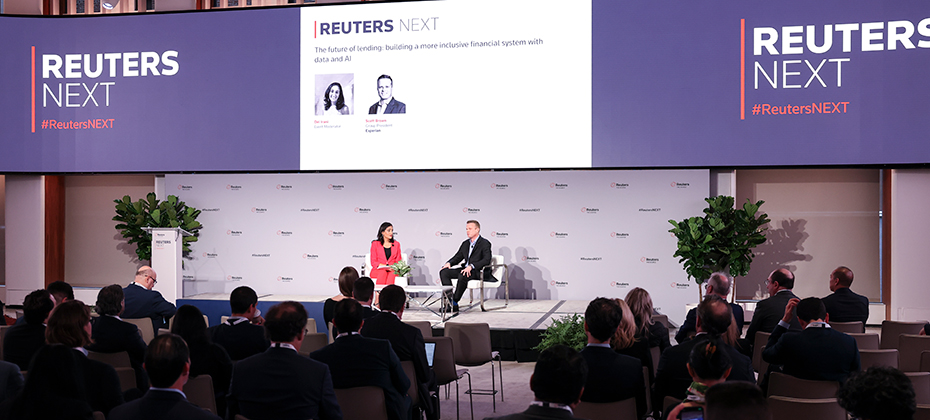
Insights from Reuters Next: Building a More Inclusive Financial System with Data and AI
Data & AnalyticsToday, we stand at the forefront of a digital revolution that is reshaping the financial services industry. And, against this backdrop, financial institutions are at vastly different levels of maturity; the world’s biggest banks are managing large-scale infrastructure migrations and making significant investments in AI while regional banks and credit unions are putting plans in place for modernization strategies, and fintechs are purpose-built and cloud native. To explore this more, I recently had the privilege of attending the annual Reuters NEXT live event in New York City. The event gathers globally recognized leaders across business, finance, technology, and government to tackle some of today’s most pressing issues. On the World Stage, I joined Del Irani, a talented anchor and broadcast journalist, to discuss the future of lending and the pivotal role of data and AI in building a more inclusive financial system. Improving financial access Our discussion highlighted the lack of access to traditional financial systems, and the impact it has on nearly 100 million people in North America alone. Globally, the problem affects over one billion people. These people, who are credit invisible, unscoreable, or have subprime credit scores, are unable to secure everyday financial products that many of us take for granted. What many don’t realize is, this is not a fringe subset of the population. Most of us, myself included, know someone who has faced the challenges of financial exclusion. Everyday Americans, including young people who are just starting out, new immigrants and people from diverse communities, often lack access to mainstream financial products. We discussed how traditional lending has a limited view of a consumer. Like looking through a keyhole, the lender’s understanding of the person in view is often incomplete and obstructed. However, with expanded data, technology, and advanced analytics, there is an opportunity to better understand the whole person, and as a result have a more inclusive financial system. At Experian, we have a unique ability to connect the power of traditional credit with alternative data, bringing a more holistic understanding of consumers and their behaviors. We are dedicated to leveraging our rich history in data and our expertise in technology to create the future of credit and ultimately bring financial power to everyone. The future of lending After spending two days with over 700 industry leaders from around the world, one thing is abundantly clear: much like the early days of the internet, today, we are at the cutting-edge of a technical revolution. Reflecting on my time at Reuters NEXT, I am particularly excited by the collective commitment to drive innovative, and smarter ways of working. We are only beginning to scratch the surface of how data and technology can transform financial services, and Experian is positioned to play a significant role. As we look to the future, I am excited about the ways we will create new opportunities for businesses and consumers alike.
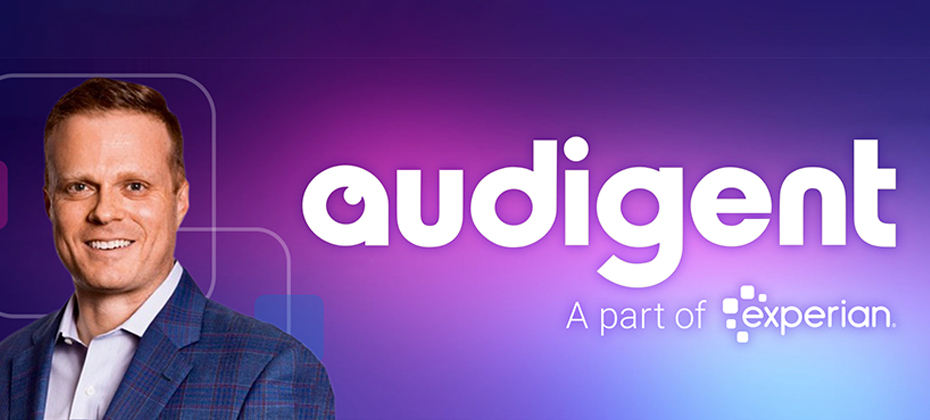
The advertising ecosystem has seen significant transformation over the past few years, with increased privacy regulation, changes in available signals, and the rise of channels like connected TV and retail media. These changes are impacting the way that consumers interact with brands and how brands understand and continue to deliver relevant messages to consumers with precision. Experian has been helping marketers navigate these changes, and as a result, our marketing data and identity solutions underpin much of today’s advertising industry. We’re committed to empowering marketers and agencies to understand and reach their target audiences, across all channels. Today, we are excited to announce our acquisition of Audigent—a leading data and activation platform in the advertising industry. With Audigent’s combination of first-party publisher data, inventory and deep supply-side distribution relationships, publishers, big and small, can empower marketers to better understand their customers, expand the reach of their target audiences and activate those audiences across the most impactful inventory. I am excited to bring together Audigent’s supply-side network as a natural extension to our existing demand-side capabilities. Audigent’s ability to combine inventory with targeted audiences using first-party, third-party and contextual signals provides the best of all worlds, allowing marketers to deliver campaigns centered on consumer choices, preferences, and behaviors. The addition of Audigent further strengthens our strategy to be the premier independent provider of marketing data and identity, ultimately creating more relevant experiences for consumers. To learn more about Experian and Audigent, visit https://www.experian.com/marketing/ and https://audigent.com/.

test