
At Experian, we often say our people are our biggest superpower – and today, I’m thrilled to share that this belief has been recognised once again. Experian has been named one of the 2025 World’s Best Workplaces™ by Fortune and Great Place to Work® for the second year in a row.
This achievement reflects the culture we’ve built together – one that’s welcoming, inclusive, and rooted belonging. It’s a celebration of every colleague who brings their whole self to work, who lifts others up, and who powers opportunities for our clients, consumers, and communities.

We’ve made it our mission to create a workplace where everyone feels included, respected, and empowered. That’s why we’re proud to have earned top scores on the Corporate Equality Index and the Disability Equality Index, and to be recognised with the Outie Award for Workplace Excellence and Belonging.
These recognitions matter. But what matters most is how our people experience life at Experian. Whether it’s collaborating, innovating, or growing through world-class development of products, services and contributing to our communities, our culture is designed to help everyone thrive.
We’ve also made bold commitments to career development. Initiatives like Global Careers Week, the AI-driven performance coach Nadia, and the NextGen Forum – a global leadership development programme for emerging talent from across our regions – give our people the resources to take charge of their growth and build a “One Experian” mindset.
Being named one of the World’s Best Workplaces is a moment to celebrate but also a reminder to keep aiming higher. The world of work is evolving fast, and so are we. From embracing AI to enhancing our digital workplace experience, we’ll continue to push forward and listen to our people every step of the way.
Questions we will discuss:
- What does “retirement readiness” mean to you, and how can someone tell when they are financially ready to retire?
- Is there a magic number for retirement savings, and what factors should someone consider when setting a retirement goal?
- How can someone estimate their retirement expenses realistically?
- What are some common myths or misconceptions about how much money you need to retire?
- How should Gen Z, Millennials, and Gen Xers each approach retirement planning differently based on their stage of life?
- What are the biggest obstacles people face when trying to save for retirement, and how can they overcome them?
- How can you balance saving for retirement with paying off debt or supporting family today?
- What tools, calculators, or strategies can help people figure out if they’re on track for retirement?
- How can people prepare for unexpected costs or life changes that could impact their retirement plans?
- What’s one piece of advice you’d give someone just starting—or restarting—their retirement savings journey?
| Columns 1 | Column 2 | Column 3 | Column 4 |
|---|---|---|---|
| Row 1 Col 1 | |||
| Row 2 Col 1 | |||
| Row 3 Col 1 | |||
| Footer 1 | Footer 2 | Footer 3 | Footer 4 |

Credit Chat
Stretching your Dollars: Practical Tips to Cut Costs and Save More
February 5, 2025 3-4 PM ET
- What does “retirement readiness” mean to you, and how can someone tell when they are financially ready to retire?
- Is there a magic number for retirement savings, and what factors should someone consider when setting a retirement goal?
- How can someone estimate their retirement expenses realistically?
Greater transparency in buy now, pay later activity is key to helping consumers build their credit histories and supporting responsible lending. We have members of the military right now right out of high school and there’s not a lot of experience managing their own money. They’re quickly thrust into a place where they don’t have a support system to do that. We have members of the military right now right out of high school and there’s not a lot of experience managing their own money. They’re quickly thrust into a place where they don’t have a support system to do that. We have members of the military right now right out of high school and there’s not a lot of experience managing their own money. They’re quickly thrust into a place where they don’t have a support system to do that. We have members of the military right now right out of high school and there’s not a lot of experience managing their own money. They’re quickly thrust into a place where they don’t have a support system to do that. We have members of the military right now right out of high school and there’s not a lot of experience managing their own money. They’re quickly thrust into a place where they don’t have a support system to do that.
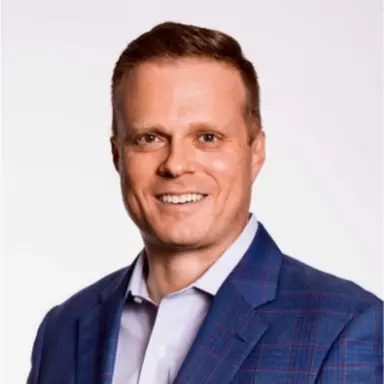
Experian North AmericaScott Brown, Group President, Financial Services

This morning on my way into the office, I made my usual stop for coffee. Just like every other day, the barista greeted me by name and my usual drink was being made before I got to the counter. Doesn’t it feel nice when you’re recognized? The same holds true when we interact online. We want to be recognized when we transact online, because recognition helps to stimulate trust. And trust is what makes all of us feel safe and protected. New research from our Global Fraud and Identity Report demonstrates that customer recognition also plays a large role in indicators of fraud. Most of the 500 business executives in 11 countries that we interviewed across the globe, said that if they were certain about a customer’s identity, the need for fraud risk mitigation would be reduced. One of the trickiest components to fraud detection, is finding the fine line between turning away good customers and letting the fraudsters slip through. Our global research revealed that most businesses tend to demonstrate suspicion when it comes to preventing fraud, following a route of detection rather than permission or trust. In fact, 71 percent of businesses know that they deny more transactions than they should. The end result isn’t just a loss of sales, but it also may very likely damage the lifetime value of that customer. Business leaders agree that if they were more precise in identifying the customer and avoiding denial of real transactions, they would see an increase in revenue. In addition, the report confirmed what we all already know – as consumers, we expect the companies we do business with to protect us. We surveyed 5,500 people in 11 countries, and many said they equate visual signs of security and the barriers they encounter when accessing their accounts to mean the transaction is more secure. Nearly 7 out of every 10 people like the security protocols when they transact online because it makes them feel protected. As customers, we want to believe that banks and retailers are doing everything they can to protect and secure our online transactions. Our study also found that 72 percent of businesses say fraud is a growing concern, with online fraud continuing to be a top concern across the globe. One of out every 10 businesses are experiencing the same or more fraudulent losses online compared to a year ago. Fraud is always evolving and fraudsters are becoming more resourceful than ever before. And while there is no silver bullet, and good modern fraud detection requires multiple fraud detection strategies, better customer recognition could make an immediate difference. Simply put, the better you recognize the customer, the better you can recognize fraud. Get a copy of the complete Global Fraud and Identity Report

Patients ideally should know what they’re going to owe when they show up for an appointment – the last thing they need is a big financial surprise to add to the stress of their visit. Similarly, doctors, nurses, hospitals and all healthcare providers help people to stay healthy day in and day out. Providers should be able to go to sleep at night knowing that they’ll be fairly compensated for the work that they do. However, making that happen isn’t easy. Behind the scenes, contracts, benefits and eligibility between medical groups, hospitals and insurance payers are fairly nuanced and complex. Clients benefit when it comes to how much a patient owes a hospital or medical group after treatment, rough estimates aren’t ideal – perfection is difficult/ create problems and issues. Billing must have pinpoint accuracy and add nuance based on unique contract terms that all medical groups and hospitals sign with their employers and payers. The details can actually be quite difficult to keep straight, and there is an extensive amount of variation in each contract’s rules. Experian Health works to make payment transparency the norm, so that patients know what to expect and healthcare providers are paid fairly, accurately and in a timely fashion. I began working for Experian in 2004 but my interest in product development and research eventually led me to Experian Health. My team of more than 100 Experian employees painstakingly reviews contracts, patient eligibility, benefits information and historical claims to generate an accurate fee estimate for each patient’s medical visit. Nuance/aiding are helping to work toward this. We utilize up-to-date technology that organizes all the information we find in an extensive database and review the claims on behalf of both our medical group clients and patients. The biggest challenge for me and my team is anticipating both patients’ and hospitals’ future needs and innovation in the field. Any time healthcare policies are changed or reimbursement guidelines shift, it affects our clients and requires nimble thinking on our part. How do we ensure that our technology is as modern as possible and our team members stay current on the latest trends and news? I’m looking forward to seeing how we continue adapting in the future.

I’m the Managing Director of Serasa Experian, meaning I work with Experian’s Business Services Unit to identify how data can unlock new opportunities for businesses across Brazil. I worked in the banking industry for more than twenty years, but joined Experian two years ago because I was excited by the company’s innovative use of data to solve real-world problems. I regularly work with small businesses in Brazil and hear firsthand about the challenges they face. From client conversations and recent data analysis, my team discovered that companies across the country were having difficulty identifying trustworthy suppliers for their supply chain. In fact, a recent Experian survey found that eight percent of suppliers pose risks to their business partners due to labor, tax or environmental problems. Verified background information – such as financial history and risk of default – are surprisingly difficult to find, making it difficult and time-consuming for small businesses to find trustworthy supply chains. We knew there had to be a simpler way to match companies. That’s why we created Serasa Conecta, an online marketplace that connects verified suppliers with verified buyers. Using Seresa Conecta, a buyer of a clothing store, for example, can register a customized page and scroll through the pages of trusted retail suppliers who can partner with their business. Suppliers, on the other hand, can use the portal to identify new customers to help increase sales and build their reputation. On the backend of the marketplace, Experian analyzes each company’s background, and can help determine which companies could forge the best partnerships based on simple reports and balance sheet analyses. Whenever a buyer selects a supplier, Experian also runs a risk assessment of both parties to ensure it’s a good fit. When Serasa Conecta was launched, buyers and suppliers in Brazil were thrilled by the marketplace’s ability to both increase sales and verify safe companies quickly and easily. I take pride in knowing my team and I have made a positive impact on thousands of small businesses in the country. Although I have only been at Experian Serasa for two years, I am excited to see how data can continue to unlock opportunities, connecting communities and improving the lives of companies around the world.

2024 Best Place to Work for Disability Inclusion

Web Developer
With a passion for crafting seamless digital experiences and a keen eye for front-end development, Krishna brings practical insights and hands-on expertise to every post. Whether exploring new frameworks or optimizing performance, his writing reflects a commitment to clean code and user-centric design.
With a passion for crafting seamless digital experiences and a keen eye for front-end development, Krishna brings practical insights and hands-on expertise to every post. Whether exploring new frameworks or optimizing performance, his writing reflects a commitment to clean code and user-centric design.
With a passion for crafting seamless digital experiences and a keen eye for front-end development, Krishna brings practical insights and hands-on expertise to every post. Whether exploring new frameworks or optimizing performance, his writing reflects a commitment to clean code and user-centric design.