
At Experian, we often say our people are our biggest superpower – and today, I’m thrilled to share that this belief has been recognised once again. Experian has been named one of the 2025 World’s Best Workplaces™ by Fortune and Great Place to Work® for the second year in a row.
This achievement reflects the culture we’ve built together – one that’s welcoming, inclusive, and rooted belonging. It’s a celebration of every colleague who brings their whole self to work, who lifts others up, and who powers opportunities for our clients, consumers, and communities.

We’ve made it our mission to create a workplace where everyone feels included, respected, and empowered. That’s why we’re proud to have earned top scores on the Corporate Equality Index and the Disability Equality Index, and to be recognised with the Outie Award for Workplace Excellence and Belonging.
These recognitions matter. But what matters most is how our people experience life at Experian. Whether it’s collaborating, innovating, or growing through world-class development of products, services and contributing to our communities, our culture is designed to help everyone thrive.
We’ve also made bold commitments to career development. Initiatives like Global Careers Week, the AI-driven performance coach Nadia, and the NextGen Forum – a global leadership development programme for emerging talent from across our regions – give our people the resources to take charge of their growth and build a “One Experian” mindset.
Being named one of the World’s Best Workplaces is a moment to celebrate but also a reminder to keep aiming higher. The world of work is evolving fast, and so are we. From embracing AI to enhancing our digital workplace experience, we’ll continue to push forward and listen to our people every step of the way.
Questions we will discuss:
- What does “retirement readiness” mean to you, and how can someone tell when they are financially ready to retire?
- Is there a magic number for retirement savings, and what factors should someone consider when setting a retirement goal?
- How can someone estimate their retirement expenses realistically?
- What are some common myths or misconceptions about how much money you need to retire?
- How should Gen Z, Millennials, and Gen Xers each approach retirement planning differently based on their stage of life?
- What are the biggest obstacles people face when trying to save for retirement, and how can they overcome them?
- How can you balance saving for retirement with paying off debt or supporting family today?
- What tools, calculators, or strategies can help people figure out if they’re on track for retirement?
- How can people prepare for unexpected costs or life changes that could impact their retirement plans?
- What’s one piece of advice you’d give someone just starting—or restarting—their retirement savings journey?
| Columns 1 | Column 2 | Column 3 | Column 4 |
|---|---|---|---|
| Row 1 Col 1 | |||
| Row 2 Col 1 | |||
| Row 3 Col 1 | |||
| Footer 1 | Footer 2 | Footer 3 | Footer 4 |

Credit Chat
Stretching your Dollars: Practical Tips to Cut Costs and Save More
February 5, 2025 3-4 PM ET
- What does “retirement readiness” mean to you, and how can someone tell when they are financially ready to retire?
- Is there a magic number for retirement savings, and what factors should someone consider when setting a retirement goal?
- How can someone estimate their retirement expenses realistically?

Greater transparency in buy now, pay later activity is key to helping consumers build their credit histories and supporting responsible lending. We have members of the military right now right out of high school and there’s not a lot of experience managing their own money. They’re quickly thrust into a place where they don’t have a support system to do that. We have members of the military right now right out of high school and there’s not a lot of experience managing their own money. They’re quickly thrust into a place where they don’t have a support system to do that. We have members of the military right now right out of high school and there’s not a lot of experience managing their own money. They’re quickly thrust into a place where they don’t have a support system to do that. We have members of the military right now right out of high school and there’s not a lot of experience managing their own money. They’re quickly thrust into a place where they don’t have a support system to do that. We have members of the military right now right out of high school and there’s not a lot of experience managing their own money. They’re quickly thrust into a place where they don’t have a support system to do that.
Experian North AmericaScott Brown, Group President, Financial Services

Balancing holiday marketing efforts with fraud prevention requires a coordinated approach according to survey findings from 41st Parameter, a part of Experian. The survey results from 250 marketers released today, looks at the relationship between omnichannel retailing, fraud prevention and the holiday shopping season. The findings show that few marketers understand the full benefit of fraud-prevention systems on their activities as 60 percent of marketers were unsure of the cost of fraud to their organization. The survey also indicated that 40 percent of marketers said their organization had been targeted by hackers or cybercriminals. Download the Holiday Marketing Fraud Survey: http://snip.ly/JoyF With holiday shopping in full stride, 35 percent of businesses said they planned to increase their digital spend for the 2014 holiday season. Furthermore, Experian Marketing Services reported that during 2014, 80 percent of marketers planned on running cross-channel marketing campaigns. As marketers integrate more channels into their campaigns, new challenges emerge for fraud-risk managers who face continuous pressure to adopt new approaches. Here are three steps to help marketers and risk managers maintain a frictionless experience for customers: Marketers should communicate their plans early to the fraud-risk team, especially if they are planning to target a new or unexpected audience. Making this part of the process will reduce the chances that risk management will stop or inhibit customers. Ensure that marketers understand what the risk-management department is doing with respect to fraud detection. Chances are risk managers are waiting to tell you. Marketers shouldn’t assume that fraud won’t affect their business and talk to their risk-management division to learn how much fraud truly costs their company. Then they can understand what they need to do to make sure that their marketing efforts are not thwarted. “Marketers spend a great deal of time and money bringing in new customers and increasing sales, especially this time of year, and in too many cases, those efforts are negated in the name of fraud prevention,” said David Britton, vice president of industry solutions, 41st Parameter. “Marketers can help an organization’s bottom line by working with their fraud-risk department to prevent bad transactions from occurring while maintaining a seamless customer experience. Reducing fraud is important and protecting the customer experience is a necessity.” Few marketers understand the resulting impact of declined transactions because of suspected fraud and this is even more pronounced among small businesses, with 70 percent saying they were unsure of fraud’s impact. Fifty percent of mid-sized business marketers and 67 percent of large-enterprise marketers were unsure of the impact of fraud as well. An uncoordinated approach to new customer acquisition can result in lost revenue affecting the entire organization. For example, the industry average for card-not-present declines is 15 percent. However, one to three percent of those declined transactions turn out to be valid transactions, equating to $1.2 billion in lost revenue annually. Wrongfully declined transactions can be costly as the growth of cross-channel marketing increases and a push towards omnichannel retailing pressures marketers to find new customers. “Many businesses loosen their fraud detection measures during high peak time because they don’t have the tools to review potentially risky orders manually during the higher-volume holiday shopping period,” said Britton. “Criminals look to capitalize on this and exploit these gaps in any way possible, taking an omnifraud approach to maximizing their chances of success. Striking the right balance between sales enablement and fraud prevention is the key to maximizing growth for any business at all times of the year.” Download Experian’s fraud prevention report to learn more about how businesses can address these new marketing challenges.
 The world of mobile devices is constantly changing—everything is faster, bigger and better, and consumers have become more savvy and discerning about the features and benefits that make their lives more convenient, and in many cases, more manageable.
I use my phone to do everything from simple tasks like checking email or Facebook, to downloading coupons, buying movie and concert tickets, to checking my bank balance and making deposits on the fly (which is such a great feature).
The world of mobile devices is constantly changing—everything is faster, bigger and better, and consumers have become more savvy and discerning about the features and benefits that make their lives more convenient, and in many cases, more manageable.
I use my phone to do everything from simple tasks like checking email or Facebook, to downloading coupons, buying movie and concert tickets, to checking my bank balance and making deposits on the fly (which is such a great feature).
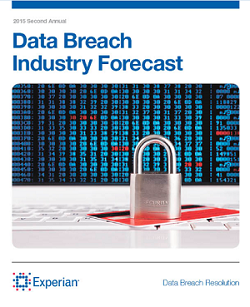 The growing prevalence of widely publicized data breaches is sparking a change in the attitudes of business leaders and consumers when it comes to cybersecurity.
Board members and the C-suite can no longer ignore the drastic impact a data breach has on company reputation, and consumers are demanding more communication and remedies from businesses after a data breach occurs. As a result, the topic is a high priority facing businesses and regulators in 2015.
The Experian Data Breach Resolution group serviced more than 3,000 breaches in 2014, the most in more than a decade of handling breach resolution. While our data breach services and identity protection products assist companies after a breach has occurred, our experience and insights help companies beforehand to plan and better protect their reputations in the aftermath.
The growing prevalence of widely publicized data breaches is sparking a change in the attitudes of business leaders and consumers when it comes to cybersecurity.
Board members and the C-suite can no longer ignore the drastic impact a data breach has on company reputation, and consumers are demanding more communication and remedies from businesses after a data breach occurs. As a result, the topic is a high priority facing businesses and regulators in 2015.
The Experian Data Breach Resolution group serviced more than 3,000 breaches in 2014, the most in more than a decade of handling breach resolution. While our data breach services and identity protection products assist companies after a breach has occurred, our experience and insights help companies beforehand to plan and better protect their reputations in the aftermath.

2024 Best Place to Work for Disability Inclusion

Web Developer
With a passion for crafting seamless digital experiences and a keen eye for front-end development, Krishna brings practical insights and hands-on expertise to every post. Whether exploring new frameworks or optimizing performance, his writing reflects a commitment to clean code and user-centric design.
With a passion for crafting seamless digital experiences and a keen eye for front-end development, Krishna brings practical insights and hands-on expertise to every post. Whether exploring new frameworks or optimizing performance, his writing reflects a commitment to clean code and user-centric design.
With a passion for crafting seamless digital experiences and a keen eye for front-end development, Krishna brings practical insights and hands-on expertise to every post. Whether exploring new frameworks or optimizing performance, his writing reflects a commitment to clean code and user-centric design.