
At Experian, we often say our people are our biggest superpower – and today, I’m thrilled to share that this belief has been recognised once again. Experian has been named one of the 2025 World’s Best Workplaces™ by Fortune and Great Place to Work® for the second year in a row.
This achievement reflects the culture we’ve built together – one that’s welcoming, inclusive, and rooted belonging. It’s a celebration of every colleague who brings their whole self to work, who lifts others up, and who powers opportunities for our clients, consumers, and communities.

We’ve made it our mission to create a workplace where everyone feels included, respected, and empowered. That’s why we’re proud to have earned top scores on the Corporate Equality Index and the Disability Equality Index, and to be recognised with the Outie Award for Workplace Excellence and Belonging.
These recognitions matter. But what matters most is how our people experience life at Experian. Whether it’s collaborating, innovating, or growing through world-class development of products, services and contributing to our communities, our culture is designed to help everyone thrive.
We’ve also made bold commitments to career development. Initiatives like Global Careers Week, the AI-driven performance coach Nadia, and the NextGen Forum – a global leadership development programme for emerging talent from across our regions – give our people the resources to take charge of their growth and build a “One Experian” mindset.
Being named one of the World’s Best Workplaces is a moment to celebrate but also a reminder to keep aiming higher. The world of work is evolving fast, and so are we. From embracing AI to enhancing our digital workplace experience, we’ll continue to push forward and listen to our people every step of the way.
Questions we will discuss:
- What does “retirement readiness” mean to you, and how can someone tell when they are financially ready to retire?
- Is there a magic number for retirement savings, and what factors should someone consider when setting a retirement goal?
- How can someone estimate their retirement expenses realistically?
- What are some common myths or misconceptions about how much money you need to retire?
- How should Gen Z, Millennials, and Gen Xers each approach retirement planning differently based on their stage of life?
- What are the biggest obstacles people face when trying to save for retirement, and how can they overcome them?
- How can you balance saving for retirement with paying off debt or supporting family today?
- What tools, calculators, or strategies can help people figure out if they’re on track for retirement?
- How can people prepare for unexpected costs or life changes that could impact their retirement plans?
- What’s one piece of advice you’d give someone just starting—or restarting—their retirement savings journey?
| Columns 1 | Column 2 | Column 3 | Column 4 |
|---|---|---|---|
| Row 1 Col 1 | |||
| Row 2 Col 1 | |||
| Row 3 Col 1 | |||
| Footer 1 | Footer 2 | Footer 3 | Footer 4 |
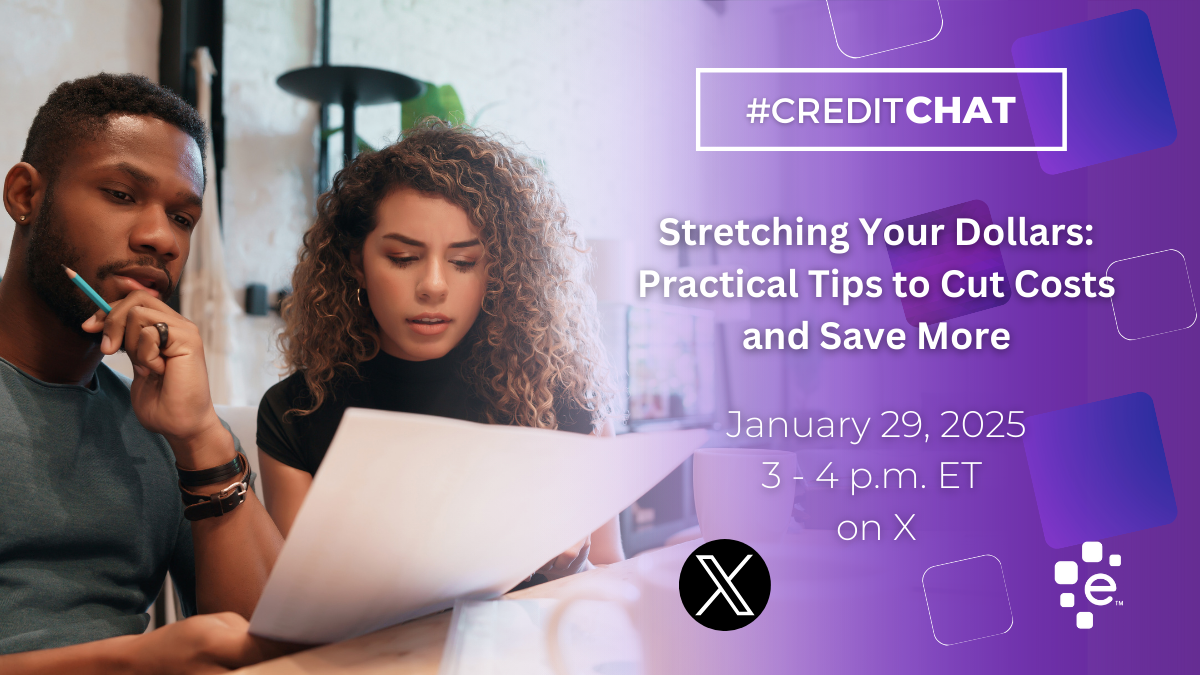
Credit Chat
Stretching your Dollars: Practical Tips to Cut Costs and Save More
February 5, 2025 3-4 PM ET
- What does “retirement readiness” mean to you, and how can someone tell when they are financially ready to retire?
- Is there a magic number for retirement savings, and what factors should someone consider when setting a retirement goal?
- How can someone estimate their retirement expenses realistically?

Greater transparency in buy now, pay later activity is key to helping consumers build their credit histories and supporting responsible lending. We have members of the military right now right out of high school and there’s not a lot of experience managing their own money. They’re quickly thrust into a place where they don’t have a support system to do that. We have members of the military right now right out of high school and there’s not a lot of experience managing their own money. They’re quickly thrust into a place where they don’t have a support system to do that. We have members of the military right now right out of high school and there’s not a lot of experience managing their own money. They’re quickly thrust into a place where they don’t have a support system to do that. We have members of the military right now right out of high school and there’s not a lot of experience managing their own money. They’re quickly thrust into a place where they don’t have a support system to do that. We have members of the military right now right out of high school and there’s not a lot of experience managing their own money. They’re quickly thrust into a place where they don’t have a support system to do that.
Experian North AmericaScott Brown, Group President, Financial Services

Today the UK Government’s Department for Culture, Media and Sport (DCMS) launched its consultation into the new data strategy for the UK. The consultation lays out an ambitious approach to protect consumers and deliver positive change in the UK. We welcome the announcement and share its vision for a thriving, innovative digital Britain, one where people feel confident that their data is looked after and know that their privacy is protected. We’ve always believed that data has the power to help improve lives, businesses and economies both in the UK and around the world. Over the last 18 months data-driven services have helped people manage their money during unprecedented economic and financial uncertainties; helped small businesses connect with their customers; and supported charities, the NHS and local Government in deploying resources and support to those who need it the most. Now, data can help rebuild the economy, nurture the green shoots of future success, help people take control of their financial lives, and position the UK as a global leader in consumer protection and technological innovation. We look forward to engaging with the consultation process, and working with stakeholders across the ecosystem to help shape that future vision. You can find the full consultation document here and this morning’s press announcement from the Government here.

We believe every individual deserves the opportunity to reach their fullest financial potential through fair and affordable access to credit. While leveraging data, analytics and technology are key components of this, we must also ensure consumers understand how credit works and the ways it can be used as a financial tool throughout their lifetimes. This notion is the impetus behind our annual State of Credit report. Now in its twelfth year, this report takes a close look at how consumers are managing their credit histories to educate them about the factors influencing their financial health. This year’s report shows the average credit score has climbed to 695 – the highest point in more than 13 years. Many consumers were managing credit well before the pandemic’s arrival and the accommodations afforded by the Coronavirus Aid, Relief and Economic Security (CARES) Act may have helped consumers protect their financial health. At the same time, stay-at-home orders and record savings levels may have contributed to fewer missed payments, lower credit utilization rates and lower debt. While these findings are positive, we recognize they do not tell the full story. There are tens of millions of consumers who lack fair access to credit because of a limited credit history. Low-income consumers and communities of color are disproportionately credit invisible, preventing them from obtaining low-cost, traditional financial services. There is significantly more work to do to ensure all consumers have fair access to credit. We are committed to working with lenders, regulators, businesses, consumers and partners to eliminate credit invisibility and improve financial equity and access. Our meaningful partnership with Operation HOPE, the largest financial literacy nonprofit in the U.S., is one example of this commitment brought to life. Operation HOPE has goals that align with ours: to uplift disenfranchised youth and adults from poverty to thriving in a credit ecosystem. Together with Operation Hope, we are making a tangible difference in financial inclusion by helping consumers raise their credit scores through financial coaching, education and tools like Experian Boost. As part of this year’s State of Credit report, we also helped introduce Operation HOPE’s new HOPE Financial Wellness Index. This new tool will be a valuable resource for the Hope Research Institute who plans to leverage it to identify the communities most in need of financial literacy programs. “While consumers on average are managing their credit histories well, we know there are many communities in critical need of more financial education and resources,” said John Hope Bryant, Operation HOPE founder and CEO. “By helping people raise their credit scores, we are empowering them to take advantage of one of our nation’s most democratic tools. From housing and employment to healthcare and education, credit worthiness can be leveraged to improve our overall quality of life. We’re committed to using the HOPE Financial Wellness Index as a force for good in the communities we serve.” Through our investments in expanded data, technology, advanced analytics and new innovations, we will continue to help lenders identify consumers who are excluded from the credit ecosystem, but who can fulfill their financial obligations and pay responsibly. At the same time, we will continue to take strides that empower consumers to take control of their financial lives. For additional free educational resources and more information about this year’s State of Credit report, I encourage you to visit the links below. State of Credit report findings: https://www.experian.com/blogs/insights/2021/09/state-of-credit-2021 Join Experian’s weekly #CreditChat hosted by @Experian on Twitter with financial experts every Wednesday. Bilingual and Spanish speakers are also invited to join Experian’s monthly #ChatDeCrédito hosted on Twitter at 3 p.m. Eastern time beginning September 16. The Ask Experian blog includes answers to common questions, advice and education about credit Positive telecom, utility and streaming service payments can be added to your Experian credit report by visiting experian.com/boost Additional resources available at https://www.experian.com/consumereducation

The summer months in Italy often provide us with a short time to take a break and recharge our batteries as we head into the second half of Experian’s financial year. Yet, there is still the opportunity to move important projects further forward. In July, Chief Operating Officer of Experian EMEA Marco Benvenuto announced we had agreed to partnerships with two non-profit organisations as part of our United for Financial Health programme. MircoLab and AMS both have goals that align with ours in working to reduce financial exclusion. Today, I can provide you with more details about our partnership and how we will help groups of people who find it hard to access fair and affordable credit because they lack relevant financial data. These credit “invisibles” can often come from vulnerable groups such as NEETs (Not in Employment, Education or Training), foreign caregivers and female victims of violence. The Covid-19 pandemic has been a challenge for us all, not least the people in these groups. Working with our partners, the IncludiMi initiative aims to create a new credit assessment based on data that can contribute to a more inclusive measure once analysed. We will also strengthen the skills of the people involved by offering financial education and mentoring them to become economically independent. At the heart of the new programme is the planned IncludiMi app, which will allow credit “invisibles”, including the unbanked, to have their financial health estimated by reviewing non-traditional data. People will use the app to create and understand their personal and family’s budgets while following tips and suggestions from the financial education sessions led by experts at our partners. We are excited about the potential this partnership – and the United for Financial Health programme overall – has to improve the lives of so many people by tackling financial exclusion. I look forward to providing you with further updates on our progress in the coming months.

2024 Best Place to Work for Disability Inclusion

Web Developer
With a passion for crafting seamless digital experiences and a keen eye for front-end development, Krishna brings practical insights and hands-on expertise to every post. Whether exploring new frameworks or optimizing performance, his writing reflects a commitment to clean code and user-centric design.
With a passion for crafting seamless digital experiences and a keen eye for front-end development, Krishna brings practical insights and hands-on expertise to every post. Whether exploring new frameworks or optimizing performance, his writing reflects a commitment to clean code and user-centric design.
With a passion for crafting seamless digital experiences and a keen eye for front-end development, Krishna brings practical insights and hands-on expertise to every post. Whether exploring new frameworks or optimizing performance, his writing reflects a commitment to clean code and user-centric design.