
At Experian, we often say our people are our biggest superpower – and today, I’m thrilled to share that this belief has been recognised once again. Experian has been named one of the 2025 World’s Best Workplaces™ by Fortune and Great Place to Work® for the second year in a row.
This achievement reflects the culture we’ve built together – one that’s welcoming, inclusive, and rooted belonging. It’s a celebration of every colleague who brings their whole self to work, who lifts others up, and who powers opportunities for our clients, consumers, and communities.

We’ve made it our mission to create a workplace where everyone feels included, respected, and empowered. That’s why we’re proud to have earned top scores on the Corporate Equality Index and the Disability Equality Index, and to be recognised with the Outie Award for Workplace Excellence and Belonging.
These recognitions matter. But what matters most is how our people experience life at Experian. Whether it’s collaborating, innovating, or growing through world-class development of products, services and contributing to our communities, our culture is designed to help everyone thrive.
We’ve also made bold commitments to career development. Initiatives like Global Careers Week, the AI-driven performance coach Nadia, and the NextGen Forum – a global leadership development programme for emerging talent from across our regions – give our people the resources to take charge of their growth and build a “One Experian” mindset.
Being named one of the World’s Best Workplaces is a moment to celebrate but also a reminder to keep aiming higher. The world of work is evolving fast, and so are we. From embracing AI to enhancing our digital workplace experience, we’ll continue to push forward and listen to our people every step of the way.
Questions we will discuss:
- What does “retirement readiness” mean to you, and how can someone tell when they are financially ready to retire?
- Is there a magic number for retirement savings, and what factors should someone consider when setting a retirement goal?
- How can someone estimate their retirement expenses realistically?
- What are some common myths or misconceptions about how much money you need to retire?
- How should Gen Z, Millennials, and Gen Xers each approach retirement planning differently based on their stage of life?
- What are the biggest obstacles people face when trying to save for retirement, and how can they overcome them?
- How can you balance saving for retirement with paying off debt or supporting family today?
- What tools, calculators, or strategies can help people figure out if they’re on track for retirement?
- How can people prepare for unexpected costs or life changes that could impact their retirement plans?
- What’s one piece of advice you’d give someone just starting—or restarting—their retirement savings journey?
| Columns 1 | Column 2 | Column 3 | Column 4 |
|---|---|---|---|
| Row 1 Col 1 | |||
| Row 2 Col 1 | |||
| Row 3 Col 1 | |||
| Footer 1 | Footer 2 | Footer 3 | Footer 4 |
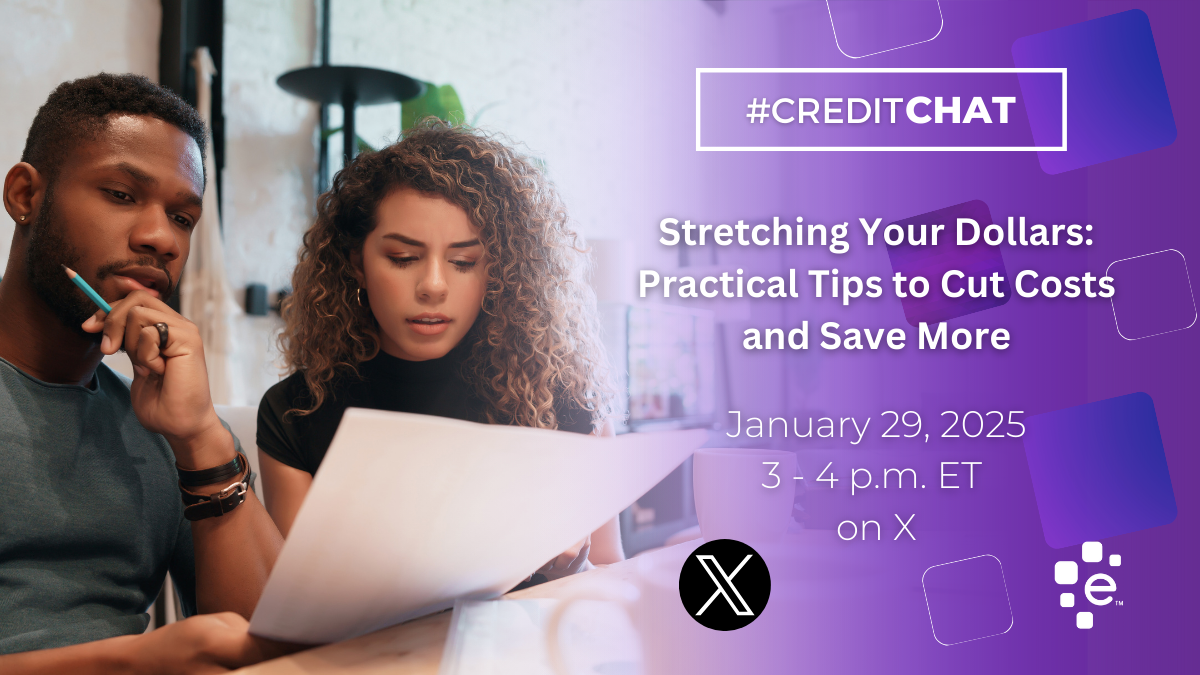
Credit Chat
Stretching your Dollars: Practical Tips to Cut Costs and Save More
February 5, 2025 3-4 PM ET
- What does “retirement readiness” mean to you, and how can someone tell when they are financially ready to retire?
- Is there a magic number for retirement savings, and what factors should someone consider when setting a retirement goal?
- How can someone estimate their retirement expenses realistically?

Greater transparency in buy now, pay later activity is key to helping consumers build their credit histories and supporting responsible lending. We have members of the military right now right out of high school and there’s not a lot of experience managing their own money. They’re quickly thrust into a place where they don’t have a support system to do that. We have members of the military right now right out of high school and there’s not a lot of experience managing their own money. They’re quickly thrust into a place where they don’t have a support system to do that. We have members of the military right now right out of high school and there’s not a lot of experience managing their own money. They’re quickly thrust into a place where they don’t have a support system to do that. We have members of the military right now right out of high school and there’s not a lot of experience managing their own money. They’re quickly thrust into a place where they don’t have a support system to do that. We have members of the military right now right out of high school and there’s not a lot of experience managing their own money. They’re quickly thrust into a place where they don’t have a support system to do that.
Experian North AmericaScott Brown, Group President, Financial Services

Over the past 18 months, we’ve monitored insights related to consumer and business economic outlooks, financial well-being, online behavior and more. One of the most significant insights was the accelerated shift toward e-commerce and digital financial services. In fact, there has been a 25% increase in digital transaction across the globe since the start of the pandemic including shopping, banking, and transacting online. Our latest 2021 Global Insights Report found that the increase in online activity held steady, even with the return of physical shopping and banking. The study also found that consumers are spending again. Nearly 10% of consumers are spending more and putting less away in retirement or emergency savings than from one year ago. However, even though customers are spending more, loyalty to online businesses is declining. We found that 61% of consumers say they are staying with the same online service provider they used prior to COVID-19. This a decrease of 8% from one year ago. The continued increase in online activity, coupled with heightened consumer expectations, dwindling customer loyalty, and increased competition, could lead to potential revenue loss or gain. Businesses must find solutions to improve digital engagement and customer acquisition. Fortunately, improving digital engagement and customer acquisition are companies’ top priorities as they maneuver the pandemic-accelerated boost in digital transactions. They are leveraging advanced technologies like digital credit risk decisioning, passive authentication, and artificial intelligence to improve the digital customer experience and grow their business. According to Experian’s report, 90 percent of companies are investing in business automation, 76 percent are improving or rebuilding their analytics models and 65% intend to increase fraud budgets. Adoption of AI has risen from 69% to 74% and machine learning from 68% to 73% in one year. We also found that 50% of companies are exploring the use of expanded data sources. To develop the study, Experian surveyed 3,000 consumers and 900 businesses across 10 countries around the world including Australia, Brazil, Germany, India, Italy, Japan, Singapore, Spain, United Kingdom and United States. This report is part of a longitudinal study and published series that started in June 2020 through October 2021 exploring the major shifts in consumer behavior and business strategy throughout COVID. Access all global research reports here. To learn about more findings, download the Global Insights Report and visit the Global Insights blog.

Growing up, my family rarely talked about money. So, in college, when I had the opportunity to get my first credit card, I also found myself in a little trouble when the first bill came. Most of us simply don’t learn about money matters until we find ourselves in these difficult situations. That’s one of the reasons why we’re excited to launch a creative and new program to teach young adults about the basics to building a financial legacy. “Protect The Bag” debuts today. It’s a six-part web series produced in partnership with Grammy-award winning artist, entrepreneur, author and community advocate, Lecrae. We first met Lecrae when he supported a United for Financial Health initiative in his hometown last year. “Protect The Bag” is a hip master class with finance and credit basics presented in an authentic way. Lecrae describes it as “edutainment” that includes scripted skits and interviews with everyday people. His friends Tyler Lockett, Coco Jones and WHATUPRG, among others, join him and share their financial health journeys as part of the shows as well. “Protect The Bag” is not just about credit. It’s about all aspects of personal finance. We’re proud of this innovative way to help consumers understand topics like saving, investing, budgeting and identity protection through someone they admire and trust. We hope you tune in every Tuesday, starting today, for the next six weeks. Episodes will appear on Lecrae’s YouTube channel starting at 7:00 p.m.EST/4 p.m.PST.

I am delighted to have announced our new partnership with Code First Girls, a non-profit organisation that teaches women to code for free, and helps increase the number of women – an under-represented group – working in tech. As a South African woman of Indian heritage, a single parent of two bi-racial girls aged 18 and 22, and a human resources executive with a passion for talent, leadership, and development, I work daily with my team to support Experian deliver on its brand promise of powering opportunities to create a better tomorrow for our people, consumers and businesses globally. So I am personally and professionally very proud of this development. Our partnership means four young women can study for a Code First Girls‘ Nanodegree, while working as paid interns in EMEA for the next nine months. These young talents come from diverse backgrounds, helping us diversify our workforce and bringing fresh thinking and new perspectives. They’ll benefit from our flexible ways of working, being based primarily from home. They’ll gain international experience as they are joining our Data Science and Innovation teams in South Africa and Italy. Moreover, they will help us drive our financial inclusion agenda by working on our United for Financial Health programme. This means we will have four young women working on financial inclusion solutions for women and four 18 to 25-year-olds working on financial inclusion solutions for the same demographic. This is a people-led innovation that contributes to the circular economy and adds purpose to our Company’s commitment to Diversity, Equity & Inclusion in its fullest sense, supporting our sustainable business goals. This isn’t philanthropy or theory. This partnership means our interns will work hard, learn and develop themselves as they prepare for a career in data and tech. It means we will also learn and evolve through this initiative. I’m curious: how do young, fresh talented people experience us? Will this partnership really enable four young women to start sustainable, fulfilling careers in tech, data, artificial intelligence, or software development? Will it help Experian attract and retain the best early tech talent in future? As with every innovative step we take, we’re unsure of the outcome, and that’s OK, as well as exciting. What is important is that we’ve started a new journey together, and I’m excited to see where it takes us. If you’d like to meet our EMEA interns and track their journey, follow us on Facebook, Instagram, LinkedIn and Twitter.

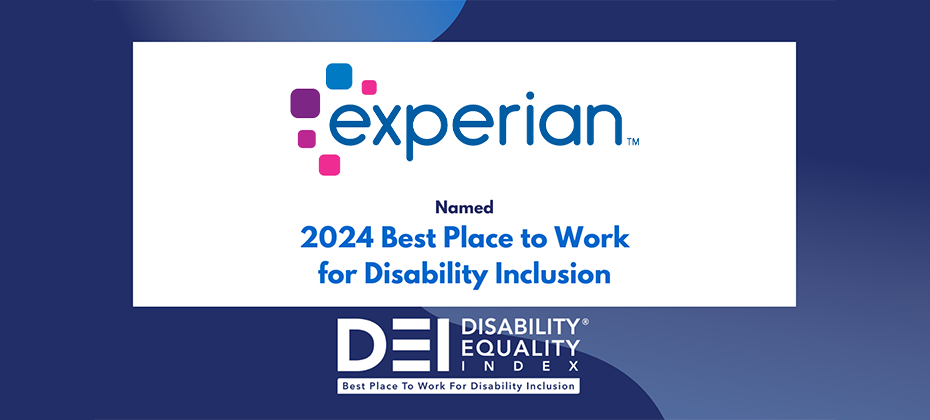
2024 Best Place to Work for Disability Inclusion

Web Developer
With a passion for crafting seamless digital experiences and a keen eye for front-end development, Krishna brings practical insights and hands-on expertise to every post. Whether exploring new frameworks or optimizing performance, his writing reflects a commitment to clean code and user-centric design.
With a passion for crafting seamless digital experiences and a keen eye for front-end development, Krishna brings practical insights and hands-on expertise to every post. Whether exploring new frameworks or optimizing performance, his writing reflects a commitment to clean code and user-centric design.
With a passion for crafting seamless digital experiences and a keen eye for front-end development, Krishna brings practical insights and hands-on expertise to every post. Whether exploring new frameworks or optimizing performance, his writing reflects a commitment to clean code and user-centric design.