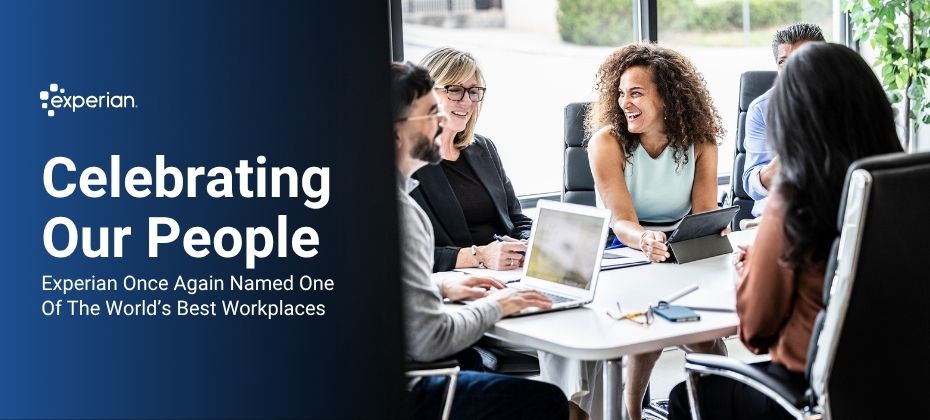
At Experian, we often say our people are our biggest superpower – and today, I’m thrilled to share that this belief has been recognised once again. Experian has been named one of the 2025 World’s Best Workplaces™ by Fortune and Great Place to Work® for the second year in a row.
This achievement reflects the culture we’ve built together – one that’s welcoming, inclusive, and rooted belonging. It’s a celebration of every colleague who brings their whole self to work, who lifts others up, and who powers opportunities for our clients, consumers, and communities.
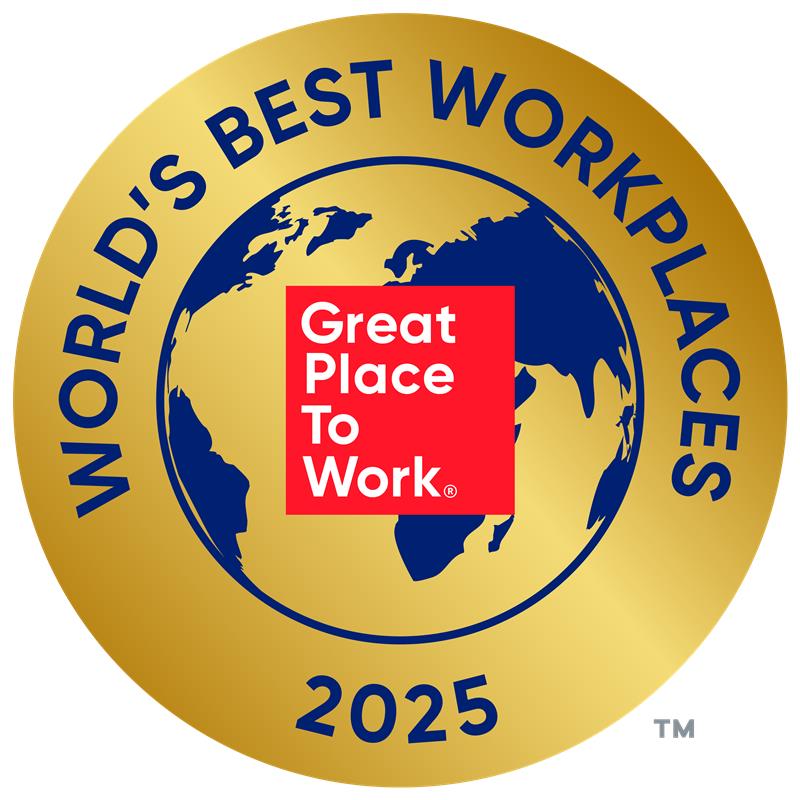
We’ve made it our mission to create a workplace where everyone feels included, respected, and empowered. That’s why we’re proud to have earned top scores on the Corporate Equality Index and the Disability Equality Index, and to be recognised with the Outie Award for Workplace Excellence and Belonging.
These recognitions matter. But what matters most is how our people experience life at Experian. Whether it’s collaborating, innovating, or growing through world-class development of products, services and contributing to our communities, our culture is designed to help everyone thrive.
We’ve also made bold commitments to career development. Initiatives like Global Careers Week, the AI-driven performance coach Nadia, and the NextGen Forum – a global leadership development programme for emerging talent from across our regions – give our people the resources to take charge of their growth and build a “One Experian” mindset.
Being named one of the World’s Best Workplaces is a moment to celebrate but also a reminder to keep aiming higher. The world of work is evolving fast, and so are we. From embracing AI to enhancing our digital workplace experience, we’ll continue to push forward and listen to our people every step of the way.
Questions we will discuss:
- What does “retirement readiness” mean to you, and how can someone tell when they are financially ready to retire?
- Is there a magic number for retirement savings, and what factors should someone consider when setting a retirement goal?
- How can someone estimate their retirement expenses realistically?
- What are some common myths or misconceptions about how much money you need to retire?
- How should Gen Z, Millennials, and Gen Xers each approach retirement planning differently based on their stage of life?
- What are the biggest obstacles people face when trying to save for retirement, and how can they overcome them?
- How can you balance saving for retirement with paying off debt or supporting family today?
- What tools, calculators, or strategies can help people figure out if they’re on track for retirement?
- How can people prepare for unexpected costs or life changes that could impact their retirement plans?
- What’s one piece of advice you’d give someone just starting—or restarting—their retirement savings journey?
| Columns 1 | Column 2 | Column 3 | Column 4 |
|---|---|---|---|
| Row 1 Col 1 | |||
| Row 2 Col 1 | |||
| Row 3 Col 1 | |||
| Footer 1 | Footer 2 | Footer 3 | Footer 4 |
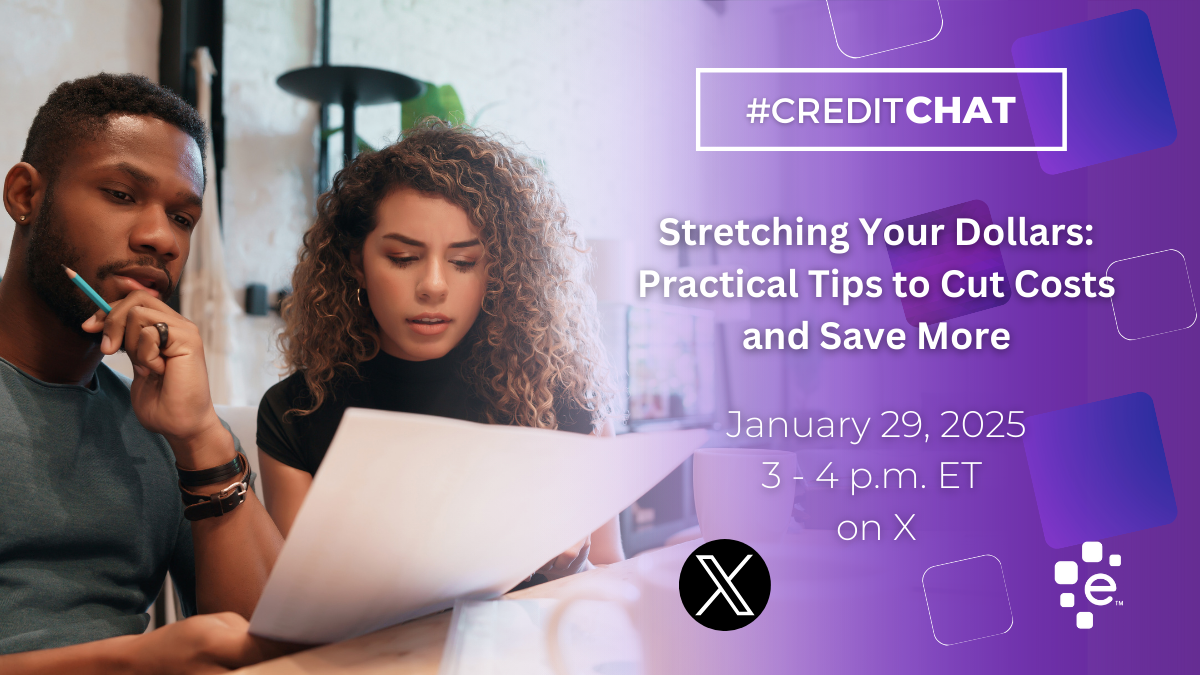
Credit Chat
Stretching your Dollars: Practical Tips to Cut Costs and Save More
February 5, 2025 3-4 PM ET
- What does “retirement readiness” mean to you, and how can someone tell when they are financially ready to retire?
- Is there a magic number for retirement savings, and what factors should someone consider when setting a retirement goal?
- How can someone estimate their retirement expenses realistically?
Greater transparency in buy now, pay later activity is key to helping consumers build their credit histories and supporting responsible lending. We have members of the military right now right out of high school and there’s not a lot of experience managing their own money. They’re quickly thrust into a place where they don’t have a support system to do that. We have members of the military right now right out of high school and there’s not a lot of experience managing their own money. They’re quickly thrust into a place where they don’t have a support system to do that. We have members of the military right now right out of high school and there’s not a lot of experience managing their own money. They’re quickly thrust into a place where they don’t have a support system to do that. We have members of the military right now right out of high school and there’s not a lot of experience managing their own money. They’re quickly thrust into a place where they don’t have a support system to do that. We have members of the military right now right out of high school and there’s not a lot of experience managing their own money. They’re quickly thrust into a place where they don’t have a support system to do that.
Experian North AmericaScott Brown, Group President, Financial Services
In many countries around the world June 1st marks the beginning of Pride Month. This annual celebration of the LGBTQ+ community is a time to reflect on the progress that has been made and the work there is still to do for LGBTQ+ equality around the world. As well as being a time of celebration, Pride Month offers a chance for us to get to know each other better. It is a time to think about how we create a truly inclusive workplace for everyone, regardless of sexual orientation, gender identity or gender expression. Everyone should feel safe, included and respected at work. It is up to all of us to create the right environment for LGBTQ+ colleagues to prosper and thrive, and we’re proud to work closely with partners like Stonewall and Out & Equal to help us achieve that goal. Around the world, Experian stands for diversity, for equity and inclusion. We support and welcome our LGBTQ+ colleagues, and we are proud to celebrate with you today and every day.

This morning, we announced our year-end earnings. Once again, we have demonstrated our resilience in the most difficult of circumstances. With this set of results, I am pleased to report that Experian has now grown through two major global economic downturns. None of this would have been possible without the incredible hard work and commitment of everyone in the company. The coronavirus pandemic is the gravest crisis faced by the world for a generation. From the beginning, Experian moved quickly to make our data insights available to governments, health services, communities, businesses and charities around the world. We also worked rapidly with lenders and governments to support financial accommodation programmes. This has proven to be crucial in making sure financial assistance reached those who needed it, helping people to manage their financial health and ensuring that our economies kept moving through these turbulent times. Looking ahead to the next financial year, our vision for Experian is to continue to bring the benefits of our world class data and analytics capabilities directly to consumers and wider society. Data-led decision making, and technology have been critical in helping humanity to take on the biggest challenge in a generation. It will be a crucial driver of the global economic recovery, helping us all to bounce back stronger and providing the foundations to flourish in the years ahead. I am tremendously proud of our employees around the world. Our people’s professional and personal responses to the pandemic, and the results we have delivered, have been remarkable. We have worked from our kitchen tables, while home-schooling our children, and caring for our family members. We have pulled together and gone above and beyond during one of the most turbulent times in a generation. There can be no greater testament to the character and the strength of our team. I think it’s no overstatement to say that we have delivered one of our most remarkable performances ever. We have made important strategic progress. We have pressed ahead with new product innovation, with our technology transformation, and we have extended our presence across many new markets and segments. As we enter our next year, we do so with strong foundations for further growth and the uplifting confidence that even through the most challenging of times, we can and will continue to create a better tomorrow for everyone.

In March 2020 we left our office desks without knowing we would not return for over a year. It’s been an incredible year and as our focus shifts to navigating our way out of lockdown and our hopes for a post pandemic life, it’s hard not to be reflective. At Experian we have taken the opportunity to rethink how we work going forward. We have had a lot of feedback from our people and we know they want to continue to have a degree of flexibility, but they’re equally keen to maintain the collaborative and innovative culture we have cultivated over the years. The pandemic has accelerated innovation in ways of working and gives us an opportunity to reimagine where, when and how work gets done. Whether it is our data scientists working on brilliant new concepts, our product designers taking part in hackathons across several countries at the same time, or our creative teams working on advertising concepts for a purple cow; we have learned over the past year that flexible working is no barrier to creativity and innovation. When our offices re-open we will give people the opportunity to work in a way that works for everyone – this may be working remotely, in the office, or a mix of both, and flexibility over start and finish times. In some cases, we may ask people to be office based. Our aim is to strike the right balance between what works for an individual and what works for the business. This balance can mean that we provide more flexibility to people during their workday. It is not just about remote working. It’s our commitment to make a difference in our people’s working lives. We’re obsessed with finding new ways to use data to help transform lives and create a better tomorrow. Our powerful combination of smart minds, deep data, and sophisticated technology enable us to do things that others can’t. And we also want our working culture to make a world of difference to our colleagues. Our culture is what connects us across the world. The role of the office will serve an enhanced purpose and we plan to maximise collaborative spaces and ensure people have the space and create time to connect with their teams – even if it’s on a more ad hoc basis. This is important to us and we make no apology for occasionally insisting on team meetings in the office to make sure we preserve our special culture. Looking back and learning from lockdown has been essential to form our new flexible working plan. It has been clear that colleagues have been experiencing the situation differently. Many of our colleagues have really enjoyed the freedom of working from home, spending more time with their families in some cases, and working at a rhythm that suits them – allowing them to time manage their days to fit in things like more regular exercise, for example. And many have really valued the time they’ve got back from cutting down on all the travel in and out of the office. For others, remote working has at times tested their mental wellbeing. Many of us live alone or have stressful home lives to manage which means that going into a dedicated place of work can be a blessing, maybe even a necessity, or simply a preference. It’s also been a time when businesses have had to embrace the technology of connectivity more than ever before. This has actually brought more of our people together – albeit virtually. Video calls are now a well-established part of our lives. It has been great to get more facetime with colleagues around the world – technology can deliver that for us, but it’s taken a pandemic for us to really embrace it. It’s not been a one-size fits all experience. What this crisis has reminded us, beyond everything else, is that we are all individuals living different lives. As an employer, if we can take one thing from this experience and build on it, it’s that our people will benefit from being offered different working arrangements to suit individual circumstances. We want to give colleagues the option of creating a working environment which suits their situation. So that they can do the best job possible and deliver great results, yes, but also so that they can live fulfilled and balanced lives. It has been a very challenging time, but we can deliver positive outcomes. We need to embrace this moment and build a future of work that is fit for purpose in the 21st century.

2024 Best Place to Work for Disability Inclusion

Web Developer
With a passion for crafting seamless digital experiences and a keen eye for front-end development, Krishna brings practical insights and hands-on expertise to every post. Whether exploring new frameworks or optimizing performance, his writing reflects a commitment to clean code and user-centric design.
With a passion for crafting seamless digital experiences and a keen eye for front-end development, Krishna brings practical insights and hands-on expertise to every post. Whether exploring new frameworks or optimizing performance, his writing reflects a commitment to clean code and user-centric design.
With a passion for crafting seamless digital experiences and a keen eye for front-end development, Krishna brings practical insights and hands-on expertise to every post. Whether exploring new frameworks or optimizing performance, his writing reflects a commitment to clean code and user-centric design.