Loading...

testpage

Published: November 21, 2025 by ahmadalbakri, adam.lewis@experian.com, Christina Roman, Chris Rose

At A Glance

aag optional

this is heading!

kjdaskldj

some company name herekdljsaldkjlska

Docker is an open-source project to easily create lightweight, portable, self-sufficient containers from any application. The same container that a developer builds and tests on a laptop can run at scale, in production, on VMs, bare metal, OpenStack clusters, public clouds and more.

Docker is an open-source project to easily create lightweight, portable, self-sufficient containers from any application. The same container that a developer builds and tests on a laptop can run at scale, in production, on VMs, bare metal, OpenStack clusters, public clouds and more.

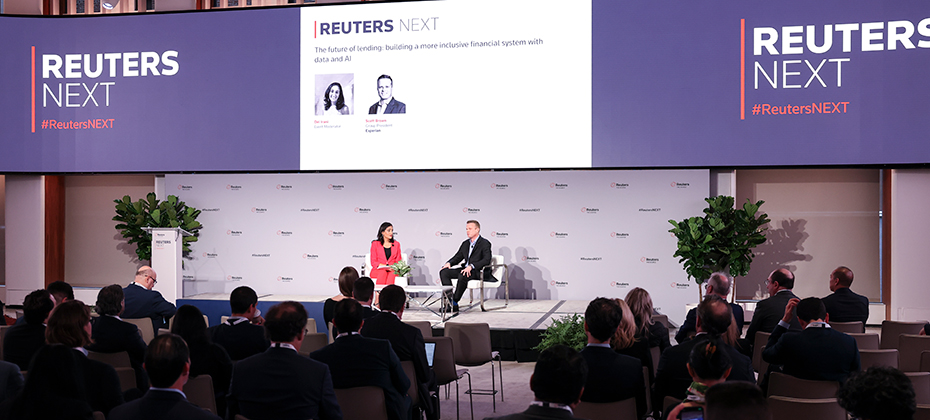
Scott Brown and Del Irani having a discussion onstage at Reuters Next
dasdasdad

thisis a contet t for medai text block!

Paragraph Block- is simply dummy text of the printing and typesetting industry. Lorem Ipsum has been the industry’s standard dummy text ever since the 1500s, when an unknown printer took a galley of type and scrambled it to make a type specimen book. It has survived not only five centuries, but also the leap into electronic typesetting, remaining essentially unchanged. It was popularised in the 1960s with the release of Letraset sheets containing Lorem Ipsum passages, and more recently with desktop publishing software like Aldus PageMaker including versions of Lorem Ipsum.
my alt text
This is an image caption
This is my alt text. Sample
This image is linked to google

Heading 2

Heading 3

Heading 4

Heading 5

  • This is a list
  • Item 1
  • Item 2
    • Sub list
    • Sub list 2
    • Sub list 3
      • More list
      • More list 2
      • More list 3
        • More more

This is the pull quote block Lorem Ipsumis simply dummy text of the printing and typesetting industry. Lorem Ipsum has been the industry’s standard dummy text ever since the 1500s,

ExperianThis is the citation

This is the pull quote block Lorem Ipsumis simply dummy text of the printing and typesetting industry. Lorem Ipsum has been the industry’s standard dummy text ever since the 1500s,

ExperianThis is the citation
Table elementTable elementTable element
my tablemy tablemy table
Table element Table elementTable element
Test alt

Media Text Block

of the printing and typesetting industry. Lorem Ipsum has been the industry’s standard dummy text ever since the 1500s, when an unknown printer took a galley of type and scrambled it to make a type specimen book. It has survived not only five centuries, but also the leap into electronic typesetting, remaining essentially unchanged. It was popularised in the 1960s with the release of Letraset sheets containing Lorem Ipsum passages, and more recently with desktop publishing software like Aldus PageMaker including versions of Lorem Ipsum

My Small H5 Title

unmasking romance blogs

My first column title

Many desktop publishing packages and web page editors now use Lorem Ipsum as their default model text, and a search for ‘lorem ipsum’ will uncover many web sites still in their infancy.

This is alt text

My second column title

Many desktop publishing packages and web page editors now use Lorem Ipsum as their default model text, and a search for ‘lorem ipsum’ will uncover many web sites still in their infancy.

Test alt

This site is protected by reCAPTCHA and the Google Privacy Policy and Terms of Service apply.

Heading 1

This is Icon List

Heading 2

This is more info

Heading 3

Last info

Heading 1

This is Icon List

Heading 2

This is more info

Heading 3

This last icon

Loading…
FTC’s Proposal for a Central Website for “Data Brokers” Won’t Work…Here’s Why

The FTC has advocated for the creation of a central website where marketing information service providers (FTC calls them “data brokers”) would be listed, with links to these companies, their privacy policies and also choice options, giving consumers the capability to review/amend the data that companies maintain. The FTC claims that such a website would bring needed transparency to the practices of companies that are not well-known to consumers. However, the proposal raises many more questions than it answers. The FTC first discussed this proposal in its 2012 report, entitled “Protecting Consumer Privacy in an Era of Rapid Change: Recommendations for Businesses and Policymakers,” and FTC Commissioners and staff have repeatedly cited the need for a centralized  website in testimony before Congress and speeches to stakeholder groups. The proposal was also referenced in December 2013 reports issued by the Government Accountability Office (GAO) and Senate Commerce Committee. The concept seems simple, but it would almost certainly have the unintended effect of confusing consumers and eroding trust in e-commerce. Experian believes there are alternatives that would work better to improve consumers’ understanding of the role information providers play in the US economy, and how consumers can control the use of data held by these companies. No clear definition of a “data broker” The FTC’s central website proposal is based upon the mistaken presumption that there are only a few large companies in the marketplace that would be subject to these requirements. Unfortunately, the FTC has been unable to clearly define “data broker” in a manner that does not sweep in companies occupying large swaths of the economy. In December 2013, the GAO admitted as much, noting that “determining the precise size and nature of the industry can be difficult because definitions for resellers vary.” The Direct Marketing Association (DMA) estimates that even a narrow definition of a marketing information service provider is likely to include more than 2,500 companies from all sectors of the economy. Of course, more broadly, tens of thousands of US businesses that share and use consumer data to deliver products and services to their customers will be significantly impacted. Simply put, the entire data industry – extremely vital to the US economy — cannot be neatly or accurately identified and then subjected to unrealistic requirements of a single website. A single website doesn’t provide consumers with meaningful disclosure Due to the lack of a narrow definition of a “data broker,” the potential scope of coverage is unlimited. As the GAO found in its report, the industry for consumer data is generally separated into four broad categories. These categories are truly industries in themselves, including:  those providing fraud prevention services; those helping businesses make credit eligibility decisions; those providing consumer look-up services (i.e. telephone directories); and those that provide information for marketing and advertising purposes. As a way of limiting the scope of the proposal, the FTC has suggested that only the leading “data brokers” would be required to be included on the centralized website. This is counterintuitive, as it is these very industry leaders that have comprehensive compliance and disclosure measures already in place. It is also these industry leaders that follow robust laws (such as the Fair Credit Reporting Act), regulations (such as FTC’s Section 5), and also adhere to strong self-regulations (such as those required by the Direct Marketing Association). Further, having only a fractional portion of the industry make disclosures would not help promote greater transparency. Instead, the companies that consumers are least aware of – literally dozens and dozens of smaller data providers with long histories of questionable practices — would be free to operate outside the norms of self-regulation and best business practices. Again, these are the companies upon which the FTC truly needs to set its sights through enforcement of existing laws and regulations. The proposal’s content and format requirements remain undefined The FTC’s proposal is premature in other respects as well, raising questions about what information companies would be required to provide to consumers and in what formats. For example, here are just a couple of key considerations not currently addressed by the FTC’s proposal: Would data brokers be required to provide consumers the right to view and correct data about them? How would the data be presented to consumers? Would it be in standardized formats?  Would it include an explanation of the context of how the data is used? This gets at the heart of enabling consumers to view the data in a way that is informative, meaningful and easy for them to understand, and yet the FTC hasn’t addressed them in its proposal. Better alternatives exist to increase transparency There are much better options available to consumers that would allow for enhanced transparency. These alternatives would also avoid great expenses that would be borne by both the government and a vital industry in the operating of a website with little or no benefit to consumers. First, companies that collect and share consumer information for marketing purposes should voluntarily adhere to the DMA’s ethical guidelines, which require companies to provide robust notices to consumers and honor consumers’ choices to opt-out of having their data used for solicitations. The guidelines also require that marketing information be used only for marketing purposes. In addition, consumers who wish to have their data removed from marketing databases can choose to do so through existing opt-out mechanisms. These are available through numerous venues, including both companies’ own websites (see Experian’s own opt-out website), as well as through the DMA. We also believe that regulatory agencies should enforce existing laws against companies engaged in unfair or deceptive practices marketing and lending practices. Finally, Experian continues to play a leading role in improving the industry’s efforts to increase transparency and consumer understanding. For example, we’re working with DMA to improve its self-regulations in this area. Revisions to the guidelines will provide an immediate, workable, and enforceable way to increase the transparency and consumer understanding of data broker practices.

Mar 05,2014 by Editor

Consumer trust isn’t just a philosophy, it’s our way of doing business

Every organization that touches consumer data is responsible for creating and maintaining consumer trust writes Rick Erwin, President of Targeting at Experian Marketing Services, in a recent issue of Direct Marketing News. Erwin, a direct marketing industry veteran and DMA board member, challenges the data industry at large to adopt strict guidelines and business principles that further consumer trust and effective data stewardship. Most organizations within the data industry realize the need for greater consumer education around privacy, but how do we address that need and put it into practice? At Experian Marketing Services, for example, we are guided by balance, accuracy, security, integrity and communications, the five tenets of our Global Information Values. These values aren’t visionary standards that we strive to meet; they dictate how we do business, daily. Data-driven marketing is an important sector of business and can add significant value to the end consumer. But, as Erwin emphasizes, building consumer trust for data-driven marketing requires that all companies within the data and ad tech ecosystem adopt and implement similar principles. You can read more about the five Global Information Values and how they come to life at Experian Marketing Services in Erwin’s article, “We’re all links in the chain of customer trust.”

Mar 03,2014 by

Car and home buyers underestimate the impact of identity fraud on securing a good interest rate, survey reveals

Most consumers (89 percent) agree that credit plays an important role when buying a home or a car but only 73 percent recognize that identity fraud could affect their ability to get loans with favorable interest rates, according to a new survey from Experian Consumer Services. In addition, more than half of big-ticket purchasers fail to check their credit at any point in the buying process, which leads to surprises when it comes time to close the deal. “Identity fraud is real and affects consumers at very important times of life,” said Ken Chaplin, senior vice president of marketing for Experian Consumer Services. “In today’s environment, it’s especially important that consumers check their credit regularly to spot signs of fraud, understand better what affects their credit and make decisions that will help them be in the best position possible when it comes time to buy their dream home or car.” The key highlights of the research include: Many consumers live credit confident: Eighty-two percent of consumers report they feel confident about their credit status — only 14 percent say they worry their credit status might hurt their ability to make a home or vehicle purchase Credit affects when and what people buy: Sixteen percent of respondents delay purchasing a vehicle or home in order to improve their credit — 13 percent would purchase a more expensive car or home if they had better credit Checking credit plays a part in the buying process: Sixty percent of home buyers and 25 percent of car buyers check their credit as part of the purchase process For those that check their credit: Thirteen percent were surprised by their credit scores Thirty-six percent said their credit scores were higher than expected Eleven percent report their credit scores were lower than expected Eleven percent found something negative on their credit report that they did not know about Consumers can learn more by visiting Experian.com and watching the most recent commercials from Experian Consumer Services about how they can live credit confident™ when buying a car or securing a home loan. Survey methodology The data points referenced above come from a study commissioned by ConsumerInfo.com® Inc., an Experian company, produced by research firm Edelman Berland and conducted as an online survey of 500 car and home buyers (250 car buyers, 250 home buyers). Buyers were defined as adults who had purchased within the past year or plan to purchase in the next year. Interviewing took place from January 27–30, 2014. The margin of error is plus or minus 4.4 percent. Experian

Feb 25,2014 by

No posts

In this article…

typesetting, remaining essentially unchanged. It was popularised in the 1960s with the release of Letraset sheets containing Lorem Ipsum passages, and more recently with desktop publishing software like Aldus PageMaker including versions of Lorem Ipsum.