Loading...

Icon block

Published: November 26, 2025 by Rathnathilaga.MelapavoorSankaran@experian.com

Lorem Ipsumis simply dummy text of the printing and typesetting industry. Lorem Ipsum has been the industry’s standard dummy text ever since the 1500s, when an unknown printer took a galley of type and scrambled it to make a type specimen book. It has survived not only five centuries, but also the leap into electronic typesetting, remaining essentially unchanged.


Loading…
Experian Data Breach Resolution Debuts Its Third Annual Data Breach Industry Forecast

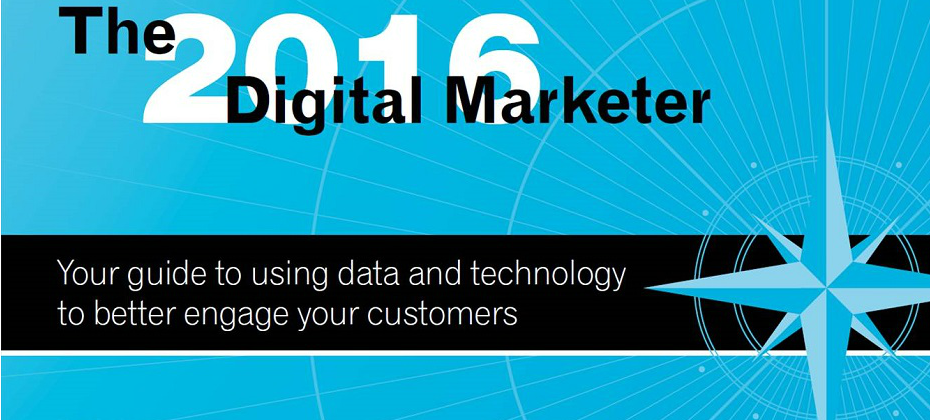
As data breaches become more prevalent, companies must try to stay ahead of the curve and be prepared to respond to any kind of security incident. In an effort to provide a glimpse into what 2016 could bring, Experian Data Breach Resolution released its third annual Data Breach Industry Forecast white paper. After having conversations with leading industry experts and handling more than 3,000 data breaches in just this year, Experian Data Breach Resolution was able to harness this information and create five key predictions outlined in the white paper. Some issues still will remain relevant in 2016, but there are a few emerging areas that will get on the radar. What can organizations expect in 2016? Global cyber conflicts, the rise of hacktivism, and disruptions during the presidential campaign are just few of the topics addressed in the paper. We hope this information helps businesses with their data breach preparedness and incident response. As we have seen, no data breach is the same. And no one is immune. Executives from across an organization’s spectrum from IT to HR and industries ranging from retail to healthcare should keep abreast of the data breach landscape and how evolving threats will affect their company. To read all five predictions, download the complimentary white paper at http://bit.ly/1l05dq8.  Hear from industry experts on what they foresee in 2016 in our Talking Data Breach video series: http://bit.ly/1N6iELD.

Dec 09,2015 by

Data Science Central Interview With Dr. Shanji Xiong, Chief Scientist at Experian’s Global Data Labs

The following interview was conducted by William Vorhies and featured on Data Science Central. Q: What work does a data scientist do and what knowledge do they need? A: 90% of the data in the world has been created in the last two years. Data Scientists retrieve, sift, analyze, process, and store all the data according to business or consumer needs. Simply put, Data Scientists convert the collected and analyzed data into business intelligence. Thus, there are multiple attributes a Data Scientist should have. Not only should they have technical expertise and coding capabilities, but they should also have good intuition and communication skills. Q: How does the work data scientists do improve and protect the lives of people? A: There are breakthrough experiments going on every day that are doing good things with data.  For consumers, it can help them with things such as secure an affordable loan and improve their credit score. It can even help protect identities by detecting and stopping suspicious activity. For businesses, the data can mitigate risk, help prevent fraudulent transactions, or even ensure marketing to proper audiences. Businesses need data scientists to stay competitive and up to date with products, processes, and business operations. Q: What are some of the challenges that face Data Scientists today? A: One of the biggest challenges for Data Scientists is the ability to access and use data.  Since the field is relatively new, many businesses’ security and compliance regulations have yet to catch up, blocking data scientists from the necessary data. Without access, Data Scientists cannot accurately analyze the data set and find helpful insights that can impact consumers, business and society.  As long as privacy rights are respected, adequate security measures are in place to protect personal information, compliance protocols are carefully maintained and there remains a total commitment to data accuracy, the opportunities brought by the use of data by Data Scientists should not be hindered. Q: What does the future hold for Data Scientists? A: Over the last several years, organizations have invested significantly in data collection, storage and analytical platforms.  In the future, their focus will be on developing impactful analytical intelligence and applying it to business processes.  Data scientists with business acumen and solid analytical capability will play an instrumental role in this process.  This presents tremendous opportunities for data scientists to have a positive impact on business and society. Powered by big data analytics, business will happen more in real-time and be tailored for individuals. Examples include, consumers being able to design their own car online, having their medicine customized for their specific needs and delivered to them even before they know they need it. The productivity increase from big data analytics will help us use data for good by benefiting people, our society and our economy. Q: What are some tips for those who would like to work in Data Science? A: As the field grows, keep an open mind and evolve with it. Work hard, think outside the box, and learn as much as you can about the technical side of being a data scientist. Be responsible with the data and realize the potential the data can have to solving problems. Always ask yourself how the data can be used to positively impact the lives around you, and use that to guide your design and development. Bio Dr. Shanji Xiong is the Chief Scientist of Experian’s Global DataLabs. Prior to his current role, he held senior positions with Morgan Stanley, FICO, HNC, and ID Analytics.  For the past 20 years, he has been working in the “Big Data” area, developing analytical solutions for financial, telecommunication and insurance companies.  Dr. Xiong received his doctoral degree from Columbia University in Engineering Mechanics.

Dec 09,2015 by

Touchless Healthcare is Becoming More Prevalent

The following article was written by Kassandra Kurth, Director of Strategic Initiatives for Experian Health, and featured in Executive Insight:  Touchless Healthcare is Becoming More Prevalent The revenue cycle, however, is anything but Telemedicine has transformed the healthcare industry. From rural America, where in-person doctor visits are difficult, to the farthest reaches of the globe, internet technology allows doctors to visit the sick, diagnose illness, prescribe medicine and even perform surgery without ever actually touching a patient. The recent focus of healthcare automation for providers has been on electronic clinical documentation, but providers also have opportunities to automate revenue cycle functions. Identity verification, insurance validation and payment responsibility now demand a disproportionate amount of a medical staff's time. This is true for both specialist care and elective services, in which approval and payment processes require the provider to supply clinical information to the payer prior to treatment. This need for human involvement invariably bogs down the revenue stream. For patients, the overall healthcare experience suffers. Administrative payment uncertainties become a greater concern than the actual treatment. It's difficult for a medical center to predict the extent of insurance coverage and the patient's out-of-pocket costs. There are just so many variables impacting projected liability that it's unreasonable for facilities that rely on manual processing to provide estimates. While a facility may have an established book of clinical charges, specific procedures can carry variable costs, which must be verified with the appropriate department. In addition, individual insurance carriers have contracted coverage rates and policyholders have varying deductibles, copays and limits that must be considered. The cost-estimation process is so time-consuming – and requires such an abundance of coordination between the physician's plan of care and services provided and the healthcare facility -that many caregivers do not attempt to provide estimates. These concerns are echoed by Lisa Rickey, Patient Access Manager at Brazosport Regional Hospital in Texas. "We had three employees working on estimates for scheduled events and never knew how long each would take to produce," she said. "Because it was not a seamless part of registration, it actually became a negative part of the patient experience." Another concern is remote access to documents – not just by caregivers, but also by insurance providers, labs and patients themselves – via patient portals. While this is becoming the norm, it introduces the same security vulnerabilities seen in financial transactions. To address these issues, robust revenue cycle management (RCM) solutions are being developed that combine a number of analytical tools similar to those used by the credit industry. Medical document processors are now adopting the same information-processing and security technologies used in the financial services and credit industries. In fact, RCM is one of the fastest-growing health information segments. A recent article cited no fewer than 83 companies that are staking a claim in this space. These integrated patient information access, claims management and collections products automate many patient care administrative functions. By leveraging data and analytics, manual tasks such as eligibility and benefits verification, preauthorization, medical necessity, and billing and collections can be streamlined, reducing handling and shortening the payment cycle. Initially these systems were adopted by larger hospitals, which have the technical staff needed to support RCM implementation and benefit most from RCM automation. However, recent advances in ease of deployment have led to more individual practices and private physicians' offices recognizing the benefits as well. Information management companies with legacy workflow, business intelligence and data analytics tools also recognize the overlap between their existing products and the need for comparable tools tailored to healthcare. These providers either have customized established products or partnered with (or acquired) healthcare information companies. Experian Health's acquisition of Passport Health, for example, ties Passport's well-established RCM technology to Experian's established data analytics and revenue-recovery expertise. This powerful combination is expanding RCM to more than 3,000 hospitals and more than 10,000 other medical and ancillary groups across the U.S. Integrating RCM Practices are challenged by the need to integrate RCM with their existing workflows and those of partnering providers. Referring doctors, testing labs and a host of insurers each have their own technology. On the back end, credit and collections procedures may carry another set of tools that must be compatible. For many medical professionals or specialty medical facilities, this is a major barrier to adopting better platforms. A practice can't stop its current process while it ramps up a new one, and few have a large internal IT staff to complete the task. For this reason, it's important to partner with a skilled integrator to maximize the benefits of a revenue cycle solution. A product integrator can assess the unique workflow and objectives and determine the optimal combination of solutions. Ideally, users will be able to make updates to their existing process to align with RCM products. For specialty medical practices such as oncologists or radiologists, each step in the care process carries a measurable cost. Minimizing the time and labor required for each workflow stage translates into better patient care and improved revenue cycles. Each phase – from initial patient identification, service ordering and scheduling through patient admission and treatment, insurance coverage verification, and finally payment collection and archiving – can benefit from a streamlined process. A comprehensive RCM solution can help providers manage the entire patient continuum from registration through recovery. Tasks such as eligibility and benefit verification can be analyzed in batches or in real time at the point of service, ultimately reducing readmissions. Manual data functions like patient verification and prospective financial responsibility assignment can be streamlined. In addition, risk scoring, preauthorization and medical necessity evaluation (critical for Medicare eligibility) can be analyzed. "Many healthcare delivery organization CIOs resist making changes to revenue cycle management applications at their own peril," cautioned HIM Consultant Melanie A. Meyer, writing for Gartner. "CIOs should make investments now to achieve an enterprise view of RCM and deliver these next-generation capabilities." Integrated patient and payment RCM systems, which offer insights from real-time data-handling capabilities and advanced analytics along with competent integration and consultative services, are giving healthcare providers greater control over their revenue processes. By leveraging data in beneficial ways, caregivers finally can move away from pushing paper and get back to the business of healing patients.

Dec 08,2015 by

Insights from Reuters Next: Building a More Inclusive Financial System with Data and AI

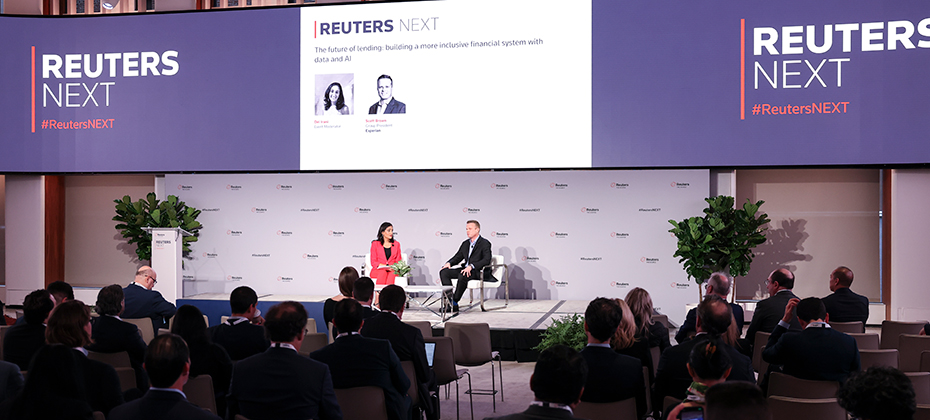
Today, we stand at the forefront of a digital revolution that is reshaping the financial services industry. And, against this backdrop, financial institutions are at vastly different levels of maturity; the world’s biggest banks are managing large-scale infrastructure migrations and making significant investments in AI while regional banks and credit unions are putting plans in place for modernization strategies, and fintechs are purpose-built and cloud native.  To explore this more, I recently had the privilege of attending the annual Reuters NEXT live event in New York City. The event gathers globally recognized leaders across business, finance, technology, and government to tackle some of today’s most pressing issues.  On the World Stage, I joined Del Irani, a talented anchor and broadcast journalist, to discuss the future of lending and the pivotal role of data and AI in building a more inclusive financial system. Improving financial access Our discussion highlighted the lack of access to traditional financial systems, and the impact it has on nearly 100 million people in North America alone. Globally, the problem affects over one billion people. These people, who are credit invisible, unscoreable, or have subprime credit scores, are unable to secure everyday financial products that many of us take for granted.  What many don’t realize is, this is not a fringe subset of the population. Most of us, myself included, know someone who has faced the challenges of financial exclusion. Everyday Americans, including young people who are just starting out, new immigrants and people from diverse communities, often lack access to mainstream financial products.  We discussed how traditional lending has a limited view of a consumer. Like looking through a keyhole, the lender’s understanding of the person in view is often incomplete and obstructed. However, with expanded data, technology, and advanced analytics, there is an opportunity to better understand the whole person, and as a result have a more inclusive financial system.  At Experian, we have a unique ability to connect the power of traditional credit with alternative data, bringing a more holistic understanding of consumers and their behaviors. We are dedicated to leveraging our rich history in data and our expertise in technology to create the future of credit and ultimately bring financial power to everyone. The future of lending After spending two days with over 700 industry leaders from around the world, one thing is abundantly clear: much like the early days of the internet, today, we are at the cutting-edge of a technical revolution. Reflecting on my time at Reuters NEXT, I am particularly excited by the collective commitment to drive innovative, and smarter ways of working.  We are only beginning to scratch the surface of how data and technology can transform financial services, and Experian is positioned to play a significant role. As we look to the future, I am excited about the ways we will create new opportunities for businesses and consumers alike.    

Dec 13,2024 by Scott Brown

New Initiative Aims to Empower Opportunities in the Hispanic Community

We believe that financial literacy leads to empowerment. That is why Experian supports initiatives and partners with community organizations to deliver financial education. We also develop products and services that give more control to consumers over their credit profile and financial health. As part of advancing our mission of Financial Power to All®, we are proud to announce we are helping more than 5,000 Hispanic individuals nationwide by relieving $10 million dollars of consumer debt. To provide families with this boost, we joined forces with ForgiveCo, a Public Benefit Corporation (PBC), to administer the acquisition and cancellation of qualifying consumer debt for the selected recipients. Beneficiaries will also receive a one-year premium Experian membership for free that offers access to their Experian credit report in English and Spanish[i], FICO® Score[ii], bilingual educational content, and other financial resources. We hope this effort helps raise awareness of the importance of financial literacy for everyone, and that Experian has resources to help individuals reach their financial dreams.  To amplify the message, we collaborated with multi-platinum, award-winning singer and songwriter Prince Royce and you can see his video here. In fact, we have been making a concerted effort the last several years to evolve our educational resources and products to better support all underserved communities. Some of our other activities include the creation of the B.A.L.L. for Life initiative that connects African American and Hispanic youth with financial education, supporting scholarships for Asian Americans through the Ascend organization, providing custom resources for Out & Equal and Born This Way Foundation for the LGBTQ+ community, supporting the NextGen Innovation Lab for Disability:IN, and sponsoring credit counseling for the military community with Operation HOPE. For resources in Spanish, Experian offers a credit e-book and consumers can access a full suite of articles at the Ask Experian blog here. [i] Only Experian credit reports are available in Spanish. All other services associated with an Experian membership are available in English only. English fluency is required for full access to Experian’s products.  [ii] Credit score calculated based on FICO® Score 8 model. Your lender or insurer may use a different FICO® Score than FICO® Score 8, or another type of credit score altogether. Learn more.

Oct 22,2024 by Jeff Softley

Three Myths Blocking the Way to Greater Financial Inclusion

Amid some of the financial challenges that underserved communities experience, members across the financial services community remain committed to championing initiatives and programs that drive greater financial inclusion. In fact, collaboration has led to the inclusion of non-debt related payment information on consumers’ credit profiles, as well as digital services that make it easier to manage money. These efforts have helped to broaden access to fair and affordable financial resources for more individuals. While significant progress has been made, there is still more work to do. However, some of the misconceptions and myths about the financial services community are hindering further advancement. Debunking these myths will accelerate progress by building trust between the financial services community and consumers. Person withdrawing money from ATM contactless Myth #1: “Financial institutions have no interest in underserved consumers or credit invisibles.” The truth is, banks and credit unions want to say “yes” to more prospective borrowers, including individuals and families from underserved communities. Beyond being the right thing to do, it’s an opportunity to potentially build lifelong relationships with a relatively untapped market. A show of good faith to communities who have largely been ignored by the financial system could lead to customer loyalty that may extend to their family and friends. That’s why participants across the financial ecosystem have been proponents of including expanded data sources—such as on-time telecom, utility and video streaming service payments—on to consumer credit reports, as well as exploring other Fair Credit Reporting Act (FCRA)-regulated data sources, including payment data on short-term small dollar loans and expanded public records data. Making this data more accessible to lenders provides a more comprehensive view of a consumer’s ability and willingness to repay outstanding debt—an actionable solution to extending credit to consumers without lenders taking on additional risk. Myth #2: “There is a lack of trustworthy financial education resources.” The financial services community and affiliated organizations recognize that empowering people with financial knowledge and skillset are critical to consumers’ financial success. In fact, banks and credit unions are partnering with nonprofits and non-governmental organizations to better understand the unique challenges and opportunities within specific communities and provide relevant tools and resources. For example, Experian’s B.A.L.L. for Life (Be A Legacy Leader) program, launched in partnership with the National Urban League, serves as a catalyst for engaging with Black communities and low-income youth through live events and digital financial education. Subject matter experts, professional athletes, celebrities, and other influencers share their experiences and expertise, covering topics such as banking, credit, financial management and investing. In addition, to help people improve their financial management, Experian partners with the National Foundation for Credit Counseling (NFCC). The NFCC connects consumers with certified financial counselors to help them address various pain points, including debt management, homeownership, student loans or small business cash flow issues. Myth #3: “Underserved communities have few opportunities to build credit and enter the mainstream financial system.” People from underserved communities, as well as younger consumers and recent immigrants are often excluded from the mainstream financial system because they lack an extensive credit history. Historically, it’s created a vicious cycle; in order to get credit, you have to have credit. Fortunately, there has been a sea change in innovative solutions to address the specific needs of these populations. These include new credit scoring models and microfinancing which provide financial services to individuals who may have been excluded from traditional banking systems. In addition, by incorporating expanded data sources, such as telecom, utility and residential rental payments onto credit reports, lenders have more visibility into consumers who may have been excluded by traditional credit scoring methods.These programs help individuals and families from underserved communities establish and build a credit history that could enable loans, or the ability to rent an apartment or open their dream business. An example is Experian Boost®, a free feature that allows Experian members to contribute their history of making utility, cellphone, insurance, residential rent and video streaming service payments directly into their Experian credit profile. By incorporating nontraditional credit data like paying utility bills on time, online banking transactions, rental payments and verified income data, more people can establish a credit profile that can potentially qualify them for a loan. More Inclusion, Fewer Myths It’s encouraging that community organizations and banks are beginning to see the economic and social benefits of aligning on financial literacy and inclusion. As more initiatives come online, underserved populations will be able to establish a better financial foundation. Then, we can declare the myths to be history.

Jul 23,2024 by Sandy Anderson