Loading...

Icon block

Published: November 26, 2025 by Rathnathilaga.MelapavoorSankaran@experian.com

Lorem Ipsumis simply dummy text of the printing and typesetting industry. Lorem Ipsum has been the industry’s standard dummy text ever since the 1500s, when an unknown printer took a galley of type and scrambled it to make a type specimen book. It has survived not only five centuries, but also the leap into electronic typesetting, remaining essentially unchanged.


Loading…
24 Personal Finance Writers Share Their Favorite Money-Saving Apps

Do you love saving money? Do you ever use apps to help you cut costs and stay on budget? In our continuing quest to promote financial literacy and help consumers live credit smart, we asked some of our favorite personal finance writers to share a favorite app that helps them stay on budget and save money. Check out these great apps: The Ballpark Calculator I really like the Ballpark calculator at choosetosave.org because it gives you a quick, easy estimate of how much you need to save in order to retire comfortably. Knowing *what* you're saving for always makes saving easier for people. Jean Chatzky is the financial editor for NBC’s TODAY show, is an award-winning personal finance journalist, AARP’s personal finance ambassador, and the host of “Money Matters with Jean Chatzky” on RLTV. You can reach her on Twitter @JeanChatzky and find more tips like this in her book: Money Rules The Simple Path to Lifelong Security.    Mint.com I’m a big fan of Mint, which tracks all of our financial accounts and alerts us when we’re paying fees or reaching a spending limit that we’ve set on our accounts. Mint makes it easy to review our transactions so I can see exactly where our money is going and make adjustments as necessary. Liz Weston, writes for MSN, and author of "There Are No Dumb Questions About Money." I love Mint.com. It's just so helpful to be able to look at the state of all of your accounts in one place, and the site makes it easy to set budgets and savings goals. Plus, as a visual person, I find their graphs super helpful — it seems kind of silly, but it's so much easier to have the different sections of my budget visualized instead of looking at them as a series of little numbers in a spreadsheet. Meg Favreau is the Senior Editor at Wisebread.com and tweets @wisebreadmeg. She's also a comedian, food enthusiast, and author of the book Little Old Lady Recipes.   I like Mint.com's app — it securely pulls your bank account and credit card information into one place so you can quickly see how much you've spent and what kinds of things you're spending too much on. It also helps you set spending caps and then will email when you're about to go over these. Catey Hill is the author of "Shoo, Jimmy Choo! The Modern Girl's Guide to Spending Less and Saving More." She regularly writes regularly about personal finance for MarketWatch.com and eHow.com. ShopSavvy Shopping App ShopSavvy is a must-have shopping app for Android users. The app lets you scan barcodes and compare prices across some 20,000 retailers, either the brick and mortar ones or those online. Beats going to each store individually to do canvassing. Plus, you’ve got reviews to make sure you’re purchasing products that others have already tried and tested; it’s got wish lists for those nudge/wink/hint times of the year, and price alerts for the busy folks who still want to save on deals. The best part? The app is free! Kathryn Finney is the founder of TheBudgetFashionista.com and named “One of the Top Ten Women in Money by AOL. Google Calendar I like Google Calendar a lot because I can set up email and text alerts for when bills are due or when a particular promotion is ending. This helps keep my bill payments up-to-date as well as lets me know when it's time to renegotiate items like cable TV fees. Glen Craig is the founder of FreeFromBroke.com. Budgetable App I have so many that I use and love, but my favorite would have to be Budgetable. It not only show you a full snapshot of your finances, but also includes a deals map so you can save even more dough. Kelly Whalen is the blogger behind TheCentsiblelife.com, and has been featured in Money Magazine, USA Today, Consumerist, and MSN Money Blog. My Money Center My favorite tool for saving money and managing my finances is LearnVest’s My Money Center –and it's free! Through My Money Center, you can connect all of your accounts, from credit cards and debit cards to savings accounts, loans and investment accounts. Alexa von Tobel is the founder and CEO of LearnVest.com And check out the new LearnVest app: RetailMeNot Right now, my favorite tool for saving money is the RetailMeNot mobile app that shows coupons and deals both online or in store. It's especially great to have when I'm on the road traveling. I can find discounts on everything from hotels to rental cars to Starbucks (and who doesn't want to save at Starbucks?). Carrie Smith is the blogger and founder of CarefulCents.com RedLaser & Other Barcode Scanning Apps The app I use the most on my iPhone is called RedLaser. It provides product search results sorted by the lowest price for almost any item that has a bar code. It helps me save money at the grocery store, and also when I am shopping at department stores. It provides the best price on items from both brick-and-mortar stores and online retailers. Andrew Schrage is the Editor-in-Chief of MoneyCrashers.com, which has been featured in the Wall Street Journal, US News and World Report, Yahoo Finance, Forbes, and more. I really like the bar code scanning apps out there, where you scan the bar code of a product and it tells you if you can buy it for less somewhere else. I've found a lot of things cheaper on Amazon and those apps (there are a million of them, I think I use Red Laser the most) are great for helping you save a few bucks, especially if you're not in a rush to get it. Sometimes I don't even end up buying the item! Jim Wang is the blogger behind WalletHacks. I'm a big fan of those barcode scanning apps. While you're shopping, you can just take an image of the barcode and it will allow you to compare prices at other stores in town, as well as online. It's a great way to comparison shop and get the best value for your money. Miranda Marquit is the founder of PlantingMoneySeeds.com.  ImpulseSave & LevelUp Obviously, we're huge fans of ImpulseSave. Our app allows you to turn those impulse buys into ImpulseSaves right in the moment  – transferring that money you would have spent into a separate savings account under a goal that you really care about. If you can buy on Impulse just about anywhere – why shouldn't you be able to save on impulse too? Another staff favorite is LevelUp, which allows you to make payments with your phone while also getting loyalty discounts from local merchants. It's beautifully simple to setup and use, and loyalty rewards are automatically applied to your transaction (no more carrying around those "free sandwich" cards). Phil Fremont-Smith is the co-founder and CEO of ImpulseSave.com  Hotel Tonight My favorite new app is Hotel Tonight. Check it out the day that you need a hotel, and it will let you know if your city has any inventory on sale! The app is adding cities constantly and it's a fun way to catch a last minute hotel sale. You can get rooms for up to 70 percent off. Natalie P. McNeal, creator, TheFrugalista.com, author, The Frugalista Files: How One Woman Got Out of Debt Without Giving Up the Fabulous Life  Craigslist App I really like the Craigslist app. When I find something that's been lying around my house for too long without getting used, I take out the app, snap a pic, and list my item for sale. The app is also good for quickly finding a used version of something I may need. Philip Taylor is the blogger and founder behind PTmoney.com, and has been featured on CNBC, Fox Business, U.S. News and World Report, and MSN.  Peapod Grocery Shopping App My Peapod grocery shopping app– it makes it so easy for me to shop for my groceries online (for delivery) that I can easily plan my meals, see what's on sale, and make my shopping list. I can do it all while I'm waiting in line or watching TV. Kimberly Palmer is the Sr. Editor at U.S. News & World Report and author of GenerationEarn.com  Pencil and Paper Whether you scratch a budget out on a ledger with a pencil like we did in our early years of marriage or whether you use a high-tech budgeting software that syncs with your phone and computer, I believe a written budget is imperative for true financial success. Without it, all your money will just pass through your fingers like sand with little to show for it. Contrary to what many people think, following a budget gives you freedom. You can guiltlessly spend the money you've allotted in your eating out budget without having to worry about how you're going to afford to pay your electric bill since you already have money set aside for that and all of your other necessities. Crystal Paine is founder of MoneySavingMom.com and author of The Money Saving Mom®'s Budget. Follow her on Twitter or Facebook.   I don’t own a smartphone (that saves me money) so I don’t use any apps.  My favorite tool is a pencil and a piece of paper, which I use to make a menu plan and a grocery list.  The menu plan helps prevent me from eating out and the grocery list helps me buy only the things I need. Kristen is the founder of TheFrugalGirl.com, where she shares practical tips for simple, frugal living. She tweets at @thefrugalgirl can also be found at facebook.com/thefrugalgirl. ReadyForZero When I decided to get out of debt earlier this year, I knew I would use ReadyForZero, a free online tool that helps you organize and pay off your debts as fast as possible. But I didn't realize just how useful it would be! The most important feature is that it lets you make a plan that works with your individual budget, and it can be adjusted at any time. Then it tells you which account has the highest interest rate, and helps you target that one with timely e-mail reminders and a bright blue progress bar to keep you focused on your goal. Ben Feldman is the writer and content strategist for ReadyforZero.com   ING App My favorite app is ING's, only because of the awesome check deposit tool. You take pictures of the front and back of a check, and can deposit it easily. The app has dramatically reduced the number of trips I make to the bank! Other banks have similar apps, I just happen to use ING so it's the only one I have personal experience with. Cathy is the founder of ChiefFamilyOfficer.com and wrote a great post on creating a price book to help you save money. Yelp My husband and I consider eating out a special treat both financially and nutritionally.  When we indulge, we love to get special deals by using Yelp.  It is a great way to see what others think of the restaurant and occasionally to enjoy free wine or two-for-one dining. Maxine Sweet is vice president of Experian North America’s Public Education organization and leads Experian’s consumer education, community involvement and corporate responsibility teams.   BigCrumbs.com & Ebates.com So what types of applications or tools do I use to help save me money?  I thoroughly appreciate any great comparison shopping tool or review site.  These tools and sites allow me to get a better grasp for a product and service before I commit to a purchase.  I also like using cash back sites such as BigCrumbs.com and Ebates.com. These cash back shopping sites can help you save money even as you spend.  I manage to earn enough cash back from these sites to help defray the costs of my holiday shopping every Christmas season. Silicon Valley Blogger (SVB) runs The Digerati Life, a personal finance site that offers tips and resources on saving money, stock investing, credit management and general money management. You can check out her twitter page at @TheDigeratiLife and Facebook. Excel Spreadsheet I'm a tinkerer by nature, so my favorite tool for saving money is actually my trusty old spreadsheet. Whether it's my budget, investment performance or net worth, I can tailor the information to my liking without worrying about security, updatability or cost. David Ning is the founder of MoneyNing.com. Ah, there are so many! I get that question often. So often, that I put together a list of all of the money saving products I use. Some favorites include the American Express Blue Preferred card, which gives 6% cash back on groceries and a low-flow showerhead. G.E. Miller is the founder and blogger behind 20somethingfinance.com.   Do you use any apps that help you stay on budget? Comment below and let us know. Photo: Shutterstock

Oct 29,2012 by

Toyota Tops Corporate Loyalty, Ford Leads Brand Loyalty

Whether you own the largest pickup or the smallest hybrid on the market, one thing remains clear – folks in the U.S. love their vehicles. In the recently released Loyalty and Market Trends Report by Experian Automotive, we looked at several key trends that highlight who is buying what, and which auto makers received highest marks in loyalty in Q2. The infographic here reveals that Toyota took the top spot in Corporate Loyalty* for the first time since Q3 2009, and that the Chevrolet Sonic was top model in Brand Loyalty. The analysis also found that Ford owners were the most Brand Loyal overall, landing six models in the top ten. The report also highlighted several other areas of the Auto industry including registration trends, market share shifts and changes in the average vehicle age. All of this information will be presented in a free webinar on Oct. 11 at 11am PT / 1pm CT / 2pm ET. If you would like to attend the event, visit www.ExperianAutomotive.com to register. If you can’t make the live event, a recording will be available on the site for download. *To measure loyalty, we looked at vehicle owners and their subsequent vehicle purchase. For example, if you owned an Acura, then purchased a Honda, you would be considered Corporate Loyal, but not Brand Loyal. To be Brand Loyal, you need to buy another Acura.

Oct 10,2012 by

CFPB Credit Score Report: “Correlations across the results of scoring models were high”

The Consumer Financial Protection Bureau (CFPB) has just issued its latest report to Congress on credit scores sold to consumers versus credit scores sold to creditors. The 42-page report, which you can find here, provides an analysis of different scoring models, comparing credit scores sold to creditors and those sold to consumers by the national credit reporting agencies, including Experian. Of particular interest, and of reassurance to consumers, are some high-level conclusions from the report: "The CFPB found that for a majority of consumers the scores produced by different scoring models provided similar information about the relative creditworthiness of the consumers. That is, if a consumer had a good score from one scoring model the consumer likely had a good score on another model. For a substantial minority, however, different scoring models gave meaningfully different results." "Correlations across the results of scoring models were high, generally over .90 (out of a possible one). Correlations were stronger among the models for consumers with scores below the median than for consumers with scores above the median." There are many details in the report, but Stuart Pratt, president and CEO of the Consumer Data Industry Association, provides a thoughtful analysis of the report in the CDIA’s public response: We applaud the Consumer Financial Protection Bureau’s credit score report that was released today. We think it puts an end to the debate over the value of educational scores versus those scores lenders use. The CFPB study concluded that ‘correlations across the results of the scoring models were high.’ As a result, it determined ‘that for a majority of consumers the scores produced by different scoring models provided similar information about the relative creditworthiness of the consumers. The study found that different scoring models would place consumers in the same credit-quality category 73-80% of the time. The study sheds new light on why consumers can trust the credit score disclosures they receive and the products in the commercial marketplace that help consumers build a deeper understanding of their credit scores and how they affect their financial decisions. Consumers want to be proactive in learning about their scores. Unfortunately, too many mixed messages have made them hesitant to access the data currently available that will help them better understand the scoring process. This study is good news for consumers who can now be confident that the disclosures and services they are getting today are helping to empower them to receive better prices tomorrow in the credit market, according to Pratt. The study was built on the foundation of two key facts made clear in the Bureau’s 2011 report and reiterated again in this study: Given this complexity it is unlikely that a consumer will often be able to know the exact score that a particular lender will use to evaluate them. Lenders use credit scores produced by many different scoring models. The CFPB is right. No one score is used by all lenders. However, the credit score is a valuable educational tool and can enable consumers to better understand their creditworthiness relative to other consumers. As the CFPB’s report notes, the many credit score options in the marketplace today will help consumers answer these questions, Pratt concluded. In its announcement, the CFPB also made two recommendations to consumers, which reflect what Experian frequently advocates to consumers who are working to improve their credit history and credit scores: Shop around for credit. Consumers benefit by shopping for credit. Regardless of the scores different lenders use, they may offer different loan terms because they operate different risk models or face different competitive pressures.Consumers should not rule out of seeking lower priced credit because of assumptions they make about their credit score. While some consumers are reluctant to shop for credit out of fear that they will harm their credit score, that negative impact may be overblown. Inquiries generally do not result in a large reduction in a consumer credit score. Check the credit report for accuracy and dispute errors. Credit scores are calculated based on information in a consumer’s credit file. Inaccurate information may be the difference between a consumer being approved or denied a loan. Before shopping for major credit items, the Bureau recommends that consumers review their credit files for inaccuracies. Each of the nationwide credit bureaus is required by law to provide credit reports for free to consumers who request them once every 12 months.

Sep 26,2012 by Editor

Insights from Reuters Next: Building a More Inclusive Financial System with Data and AI

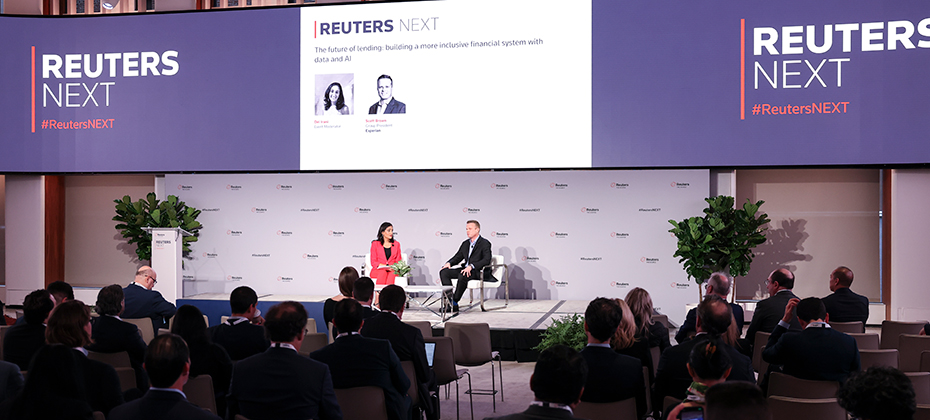
Today, we stand at the forefront of a digital revolution that is reshaping the financial services industry. And, against this backdrop, financial institutions are at vastly different levels of maturity; the world’s biggest banks are managing large-scale infrastructure migrations and making significant investments in AI while regional banks and credit unions are putting plans in place for modernization strategies, and fintechs are purpose-built and cloud native.  To explore this more, I recently had the privilege of attending the annual Reuters NEXT live event in New York City. The event gathers globally recognized leaders across business, finance, technology, and government to tackle some of today’s most pressing issues.  On the World Stage, I joined Del Irani, a talented anchor and broadcast journalist, to discuss the future of lending and the pivotal role of data and AI in building a more inclusive financial system. Improving financial access Our discussion highlighted the lack of access to traditional financial systems, and the impact it has on nearly 100 million people in North America alone. Globally, the problem affects over one billion people. These people, who are credit invisible, unscoreable, or have subprime credit scores, are unable to secure everyday financial products that many of us take for granted.  What many don’t realize is, this is not a fringe subset of the population. Most of us, myself included, know someone who has faced the challenges of financial exclusion. Everyday Americans, including young people who are just starting out, new immigrants and people from diverse communities, often lack access to mainstream financial products.  We discussed how traditional lending has a limited view of a consumer. Like looking through a keyhole, the lender’s understanding of the person in view is often incomplete and obstructed. However, with expanded data, technology, and advanced analytics, there is an opportunity to better understand the whole person, and as a result have a more inclusive financial system.  At Experian, we have a unique ability to connect the power of traditional credit with alternative data, bringing a more holistic understanding of consumers and their behaviors. We are dedicated to leveraging our rich history in data and our expertise in technology to create the future of credit and ultimately bring financial power to everyone. The future of lending After spending two days with over 700 industry leaders from around the world, one thing is abundantly clear: much like the early days of the internet, today, we are at the cutting-edge of a technical revolution. Reflecting on my time at Reuters NEXT, I am particularly excited by the collective commitment to drive innovative, and smarter ways of working.  We are only beginning to scratch the surface of how data and technology can transform financial services, and Experian is positioned to play a significant role. As we look to the future, I am excited about the ways we will create new opportunities for businesses and consumers alike.    

Dec 13,2024 by Scott Brown

New Initiative Aims to Empower Opportunities in the Hispanic Community

We believe that financial literacy leads to empowerment. That is why Experian supports initiatives and partners with community organizations to deliver financial education. We also develop products and services that give more control to consumers over their credit profile and financial health. As part of advancing our mission of Financial Power to All®, we are proud to announce we are helping more than 5,000 Hispanic individuals nationwide by relieving $10 million dollars of consumer debt. To provide families with this boost, we joined forces with ForgiveCo, a Public Benefit Corporation (PBC), to administer the acquisition and cancellation of qualifying consumer debt for the selected recipients. Beneficiaries will also receive a one-year premium Experian membership for free that offers access to their Experian credit report in English and Spanish[i], FICO® Score[ii], bilingual educational content, and other financial resources. We hope this effort helps raise awareness of the importance of financial literacy for everyone, and that Experian has resources to help individuals reach their financial dreams.  To amplify the message, we collaborated with multi-platinum, award-winning singer and songwriter Prince Royce and you can see his video here. In fact, we have been making a concerted effort the last several years to evolve our educational resources and products to better support all underserved communities. Some of our other activities include the creation of the B.A.L.L. for Life initiative that connects African American and Hispanic youth with financial education, supporting scholarships for Asian Americans through the Ascend organization, providing custom resources for Out & Equal and Born This Way Foundation for the LGBTQ+ community, supporting the NextGen Innovation Lab for Disability:IN, and sponsoring credit counseling for the military community with Operation HOPE. For resources in Spanish, Experian offers a credit e-book and consumers can access a full suite of articles at the Ask Experian blog here. [i] Only Experian credit reports are available in Spanish. All other services associated with an Experian membership are available in English only. English fluency is required for full access to Experian’s products.  [ii] Credit score calculated based on FICO® Score 8 model. Your lender or insurer may use a different FICO® Score than FICO® Score 8, or another type of credit score altogether. Learn more.
Oct 22,2024 by Jeff Softley

Three Myths Blocking the Way to Greater Financial Inclusion

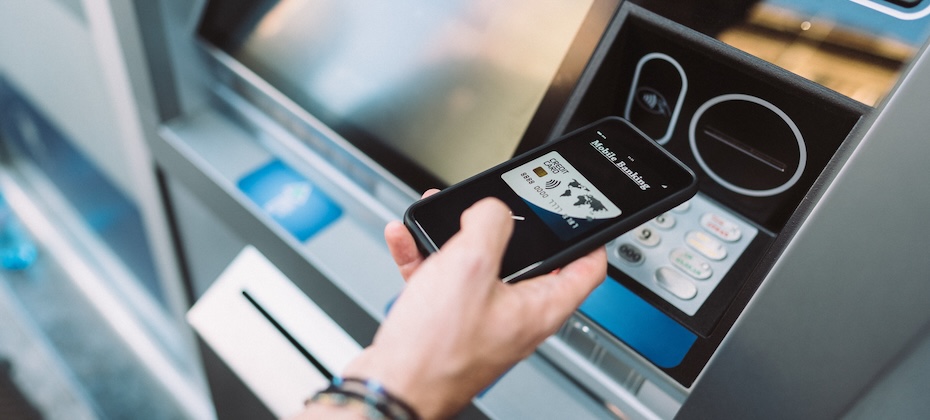
Amid some of the financial challenges that underserved communities experience, members across the financial services community remain committed to championing initiatives and programs that drive greater financial inclusion. In fact, collaboration has led to the inclusion of non-debt related payment information on consumers’ credit profiles, as well as digital services that make it easier to manage money. These efforts have helped to broaden access to fair and affordable financial resources for more individuals. While significant progress has been made, there is still more work to do. However, some of the misconceptions and myths about the financial services community are hindering further advancement. Debunking these myths will accelerate progress by building trust between the financial services community and consumers. Person withdrawing money from ATM contactless Myth #1: “Financial institutions have no interest in underserved consumers or credit invisibles.” The truth is, banks and credit unions want to say “yes” to more prospective borrowers, including individuals and families from underserved communities. Beyond being the right thing to do, it’s an opportunity to potentially build lifelong relationships with a relatively untapped market. A show of good faith to communities who have largely been ignored by the financial system could lead to customer loyalty that may extend to their family and friends. That’s why participants across the financial ecosystem have been proponents of including expanded data sources—such as on-time telecom, utility and video streaming service payments—on to consumer credit reports, as well as exploring other Fair Credit Reporting Act (FCRA)-regulated data sources, including payment data on short-term small dollar loans and expanded public records data. Making this data more accessible to lenders provides a more comprehensive view of a consumer’s ability and willingness to repay outstanding debt—an actionable solution to extending credit to consumers without lenders taking on additional risk. Myth #2: “There is a lack of trustworthy financial education resources.” The financial services community and affiliated organizations recognize that empowering people with financial knowledge and skillset are critical to consumers’ financial success. In fact, banks and credit unions are partnering with nonprofits and non-governmental organizations to better understand the unique challenges and opportunities within specific communities and provide relevant tools and resources. For example, Experian’s B.A.L.L. for Life (Be A Legacy Leader) program, launched in partnership with the National Urban League, serves as a catalyst for engaging with Black communities and low-income youth through live events and digital financial education. Subject matter experts, professional athletes, celebrities, and other influencers share their experiences and expertise, covering topics such as banking, credit, financial management and investing. In addition, to help people improve their financial management, Experian partners with the National Foundation for Credit Counseling (NFCC). The NFCC connects consumers with certified financial counselors to help them address various pain points, including debt management, homeownership, student loans or small business cash flow issues. Myth #3: “Underserved communities have few opportunities to build credit and enter the mainstream financial system.” People from underserved communities, as well as younger consumers and recent immigrants are often excluded from the mainstream financial system because they lack an extensive credit history. Historically, it’s created a vicious cycle; in order to get credit, you have to have credit. Fortunately, there has been a sea change in innovative solutions to address the specific needs of these populations. These include new credit scoring models and microfinancing which provide financial services to individuals who may have been excluded from traditional banking systems. In addition, by incorporating expanded data sources, such as telecom, utility and residential rental payments onto credit reports, lenders have more visibility into consumers who may have been excluded by traditional credit scoring methods.These programs help individuals and families from underserved communities establish and build a credit history that could enable loans, or the ability to rent an apartment or open their dream business. An example is Experian Boost®, a free feature that allows Experian members to contribute their history of making utility, cellphone, insurance, residential rent and video streaming service payments directly into their Experian credit profile. By incorporating nontraditional credit data like paying utility bills on time, online banking transactions, rental payments and verified income data, more people can establish a credit profile that can potentially qualify them for a loan. More Inclusion, Fewer Myths It’s encouraging that community organizations and banks are beginning to see the economic and social benefits of aligning on financial literacy and inclusion. As more initiatives come online, underserved populations will be able to establish a better financial foundation. Then, we can declare the myths to be history.

Jul 23,2024 by Sandy Anderson