Lorem Ipsumis simply dummy text of the printing and typesetting industry. Lorem Ipsum has been the industry’s standard dummy text ever since the 1500s, when an unknown printer took a galley of type and scrambled it to make a type specimen book. It has survived not only five centuries, but also the leap into electronic typesetting, remaining essentially unchanged.


Experian Helping Consumers, Businesses and the Community During the COVID-19 Pandemic: Putting Our Data and Analytics to Good Use
FeaturedThe pandemic’s full economic impact is still unfolding, and I can assure you we have not stopped evaluating and evolving our COVID-19 response nor our thinking about economic recovery for consumers and businesses alike. In the last month, we’ve been driven by two major priorities. The first is the health and safety of our employees. On top of that, we have placed a laser focus on putting our resources to work to help people and businesses during these uncertain times. While we have all been adjusting to our ‘new normal’ working environment, our employees in North America have not slowed down. In fact, they have worked hard to create solutions and tools designed specifically to help people successfully navigate the evolving financial landscape. From free credit reports to complementary ‘payer alerts’ for healthcare organizations to consumer credit education, we’ve launched a wide-range of initiatives. Here are a few highlights I’d like to share with you: FOR CONSUMERS: Experian Credit Report and Score: Consumers can sign up and access their FICO® Score, Experian credit report, and ongoing credit monitoring through Experian’s free CreditWorks product. Consumers can also sign up to Experian Boost, a free financial tool that has helped more than 2 million consumers increase their credit score. Consumer Resources Website: As the consumer’s credit bureau, Experian’s commitment is to inform, guide and protect its consumers and customers during uncertain times. One way the company is doing this is through this dedicated website, with links to multiple resources and materials to help the community learn about credit and other important personal finance topics. COVID-19 and Your Credit Report: Being fully committed to helping consumers and lenders during this unprecedented period, Experian has created this dedicated blog page with ongoing and updated information pertaining to how COVID-19 may impact consumers’ creditworthiness and – ultimately – what people should do to preserve it. The blog will be updated with relevant news as Experian announces new solutions and tactics. #CreditChat: In response to the urgent and rapid changes associated with COVID-19, Experian is accelerating and enhancing its financial education programming to help consumers protect their financial health. With expected delays in bill payments, unprecedented layoffs, hiring freezes and related hardships, Experian seeks to aid consumers in understanding how the credit reporting system and personal finance overall will move forward in this landscape. Experian has launched an eight-week series of #CreditChat conversations surrounding COVID-19 on Wednesdays at 3 pm ET on Twitter and live video credit chats every Friday at 12:30 pm ET on Facebook Live. FOR BUSINESSES: Free Experian Business Credit Report: Experian is offering all American-owned small businesses free access to their Experian business credit report through May 1, 2020, to help small business owners impacted by the COVID-19 pandemic. By accessing a free business credit report now, small business owners can understand where their credit score stands and look for the best lending options for their business before they obtain funding. COVID-19 U.S. Business Risk Index: To further help small businesses gain access to capital they need, Experian launched its free COVID-19 U.S. Business Risk Index to assist lenders and government organizations in understanding how to make lending options available to the business segments that need it the most. This new risk index can help business risk professionals better understand the impact that the pandemic may have on commercial operations based on several key factors. This methodology combines business risk, anticipated impact on business industries and real-time COVID-19 case data to help businesses better simulate various impact scenarios down to the state level to help develop relevant strategies. Experian® Health Payer Policy Alerts: This is a free comprehensive list of COVID-19 and telehealth payer policy alerts for United States hospitals, medical groups, pharmacies and specialty healthcare service organizations. Payer policy alerts are provided by commercial, Medicare and Medicaid payers and summarize changes to medical coverage policies from those organizations. This public service to the healthcare community will continue to be updated and remain free as long as alerts related to the COVID-19 pandemic continue to be distributed. At-Risk Audiences: In an effort to help essential organizations, such as healthcare and government agencies, provide resources to those most in need during the COVID-19 pandemic, Experian is leveraging its data assets, free of charge, to identify groups of individuals that are most likely to be impacted. Experian developed new audience segments that are built in a privacy-compliant manner and designed to help these organizations find and communicate with at-risk populations, enabling them to deliver essential services as quickly as possible. Business Resources Website: This newly launched website was developed to help businesses prepare to manage increased attacks, continue to push toward digital banking, and understand regulatory changes as businesses find their footing in this evolving financial services landscape. FOR COMMUNITIES IN NEED: First Responders First: Experian North America is supporting first responder workers by donating funds for personal protective equipment (PPE) to COVID-19 for hotspots in New York City and New Orleans through the nonprofit organization, First Responders First. These funds will provide essential supplies, equipment and resources such as masks, gowns, gloves and more to those on the frontline. Heart of Experian Giving Opportunity: Experian is leading this effort in which employees can assist by making a donation to First Responders First through Experian’s Heart of Experian giving opportunity. Experian will match employee donations up to the annual limit of $500 per employee, while funds last. This donation is the latest support the company has provided to help minimize exposure for those most at risk. For example, in California, the company also donated 12,000 masks to the Hoag Medical Group. I’m proud of the work we’re doing at Experian to help those impacted by this crisis. We remain dedicated to our employees, consumers, businesses and communities – and we will continue to innovate and develop new offerings to help those in need. Craig Boundy CEO, Experian North America

As I reflect on the impact COVID-19 has had on my work and family life, I’m reminded of the things I once took for granted. My day-to-day routine has evolved into one of working from home, helping to take care of my toddler, and at times, doing so while on conference calls, sorting out the next grocery delivery, and writing this blog. While it’s a challenge, I’ve come to appreciate and value many of the things I’ve once taken for granted. But I also understand, I’m not the only person experiencing change. Across the globe, lives have been upended. The impact of the COVID-19 outbreak has been far-reaching and felt by hundreds of millions of people; whether due to family members that have fallen ill, job loss, shortened working hours or their children out of school. COVID-19 is an existential challenge that no one industry or entity can single-handedly address; we all need to play our part. Some companies, such as Fanatics, Ford, General Motors and Tesla, have shifted production efforts to focus on manufacturing medical resources, including personal protective equipment and ventilators. Others are donating free meals and resources to help consumers across the globe manage during this unprecedented time. Much like these organizations, Experian is committed to helping consumers and businesses navigate our current environment. We’ve expanded our financial education programming with the goal of helping consumers maintain good credit and protect their financial health. We’ve also offered small businesses free access to their Experian business credit report to help them better gauge their financial options and understand what capital is available to them. But as the world continues to combat the pandemic, we, like others, must look for new and additional ways to help. As essential organizations extend outreach efforts for those impacted by the outbreak, we believe data and technology can help them identify the groups that are most at-risk. With finite resources and limited bandwidth, it’s important for these organizations to communicate with at-risk populations and provide essential products and services as quickly as possible. With this urgency in mind, Experian developed At-Risk audience segments, which it is making available free of charge to essential organizations, such as government agencies, healthcare providers and non-governmental organizations, to help combat the fallout of the COVID-19 outbreak. The segments are built in a privacy-compliant manner and provide insights to help essential organizations reach those most in need. Organizations can use the information to determine where to allocate emergency funds, as well as redirect healthcare resources. Because the situation associated with the pandemic is changing seemingly every day and is impacting individuals in different ways and times, we also instituted a daily survey of the general population to gain insights around shifting consumer sentiment as a result of COVID-19. The insights from the survey will help organizations understand consumer sentiment during this difficult time and begin the process to identify at-risk populations. As of April 8, 2020, the survey found that: 73 percent of Baby Boomers are concerned about visiting the doctor and/or would hold off seeking care. 60 percent of Americans are concerned about filling prescriptions and/or accessing healthcare resources. 64 percent of Americans are concerned about their ability to access food and other essentials. COVID-19 has impacted consumers and businesses across the globe. As we all adapt to the new environment, we need to work together and collaborate to find ways to combat the fallout. Experian will not be stopping here, and we are committed to developing new ways to use our resources, data, technology, and creativity to help be part of the solution.

Recently, I had the privilege to serve on a panel during a joint workshop held by the Consumer Financial Protection Agency (CFPB) and the Federal Trade Commission (FTC) to examine the accuracy of credit reports and how to best serve consumers. During the workshop and in following written comments, I shared Experian’s commitment to advance accuracy in consumer credit information and our perspective on how the current regulatory environment supports our efforts to achieve continual improvements. At the workshop, we heard concerns about how inaccuracies in credit reports can impact consumers and businesses in terms of denial of credit or higher-priced credit. For Experian, these are real concerns. Our role as a credit reporting agency is to help facilitate fair and affordable credit to consumers and small businesses, and that’s why data accuracy is mission-critical and central to our corporate values. Since the workshop was held in Washington, DC, it’s no surprise that many stakeholders turned to the topic of reforming the existing regulatory system. Some stakeholders focused on making systemic changes in law and regulation, such as by setting very strict matching standards when credit bureaus receive and issue credit reports. But experience shows us that the current legal and regulatory standards are, indeed, appropriate and we don’t need a sledgehammer to hit a nail. Such actions would have unintended negative consequences and are unnecessary when all stakeholders share the goal of ensuring access to credit. In fact, the central theme I reinforced at the workshop was that the CFPB’s existing supervisory and examination authority, combined with market demand, industry investment and consumer expectations are the most effective ways to continually improve accuracy of credit reports. Let me explain how my over 30 years of experience with Experian leads me to this conclusion. Consumer reporting agencies, like Experian, are regulated by the Federal Fair Credit Reporting Act (FCRA). The FCRA requires that consumer reporting agencies “follow reasonable procedures to assure maximum possible accuracy” when assembling credit reports. Notably, this standard does not set an accuracy rate but appropriately recognizes the complexity brought about by a system with thousands of stakeholders (lenders, users of credit reports, and credit reporting companies reporting billions of pieces of information on hundreds of millions of consumers). It’s been more than eight years since we last saw comprehensive studies to determine the accuracy of credit reports. The two most cited are reports from the Policy and Economic Research Council (“PERC”) and FTC. One of the key findings in both studies was the percentage of consumers that were impacted by material errors in their credit report. In other words, errors that resulted in credit score changes that impacted the interest rate a consumer would pay on a loan. Both studies found that a small percentage of credit reports, 0.5% in the PERC Study and 2.2% in the FTC report, had material errors. While the percentages do represent many consumers (a minimum of 2.5 million to 4.4 million consumers) they also highlight the important need for continuous improvement so that material and consequential errors are the focus of innovation in data integrity. We don’t need to throw the baby out with the bathwater, we need to hone in on targeted and discrete changes. That’s my job at Experian, and I’m passionate about it. In addition to the “maximum possible accuracy” standard, market incentives provide another powerful mechanism to ensure improved data accuracy. Users of credit reports – ranging from banks to employers to government agencies – rely on accurate data to make critical decisions every day about loans, employment access, government benefits, and other important matters. Lenders need accurate data to perform sound risk assessments and provide terms tailored to the borrower’s appropriate risk level. As a result, credit reporting agencies compete to have the most reliable and accurate data. The same is true of lenders reporting data on their customers, as they have incentives to maintain good consumer relationships. Further, if inaccurate data is reported by a lender or maintained by a credit reporting agency, we all spend more time responding to consumer disputes instead of investing in new products and services to help consumers. It’s easy to see why inaccurate data just isn’t good for business! Since the FTC and PERC accuracy studies were completed, the regulatory environment for credit reporting has drastically changed. In 2012, the CFPB began to supervise and examine the credit reporting industry. This regulatory authority allows the CFPB to see the entire credit ecosystem that is composed of not only credit bureaus, but also lenders, other users of credit reports, and entities that furnish data to credit bureaus. CFPB’s comprehensive and continuous examination procedures include directly reviewing the policies, procedures, and practices of major credit reporting agencies. These steps include reviewing how data furnishers are screened, steps taken to minimize the likelihood of incorrect information on a report, measures to prevent duplicative information, and any programs designed to assess the accuracy of consumer information. These actions allow the CFPB to understand the metrics of accuracy and how it improves over time, and to apply the FCRA on a dynamic basis that can meet any challenges unforeseen when the law was originally passed. The CFPB’s supervisory authority thus serves as a powerful tool to holistically address data accuracy. In a 2017 supervisory report, the CFPB stated that “Credit reporting agencies have made significant advances to promote greater accuracy, the oversight of furnishers, and enhancements to the dispute resolution function.” It’s also important that there are ongoing discussions among the credit bureaus about how to move accuracy forward. To that end, joint efforts by the credit reporting agencies pursuant to an agreement with a group of state attorneys general, resulted in a joint working group to look at what can be done collectively to agree on improvements to accuracy. Recent changes include the delayed reporting of medical debt to allow time for insurance to process payments, and the removal of judgment and tax lien information, which did not meet new, elevated standards. The joint working group continues to explore new ways of increasing the accuracy of credit data. A broad, flexible, yet demanding legal structure, combined with strong market incentives and a robust and effective supervisory program, all work together to foster an environment to best serve consumers. As the consumer’s bureau, Experian is committed to playing a leading role in furthering a strong and accurate credit reporting system.
Related Posts
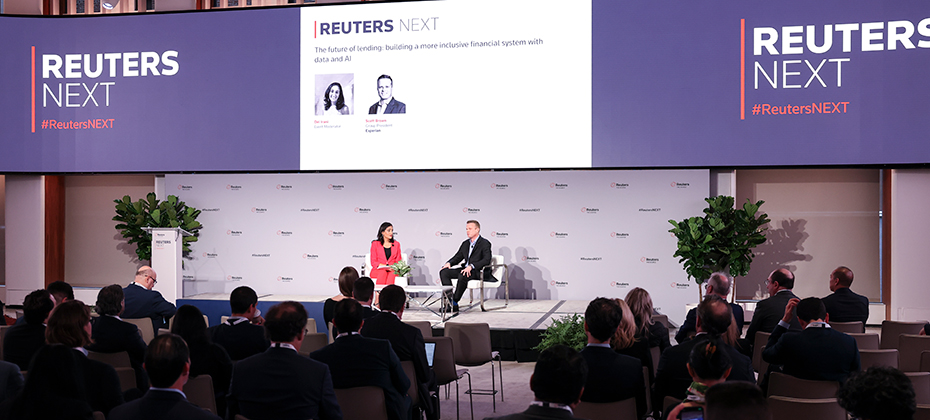
Insights from Reuters Next: Building a More Inclusive Financial System with Data and AI
Data & AnalyticsToday, we stand at the forefront of a digital revolution that is reshaping the financial services industry. And, against this backdrop, financial institutions are at vastly different levels of maturity; the world’s biggest banks are managing large-scale infrastructure migrations and making significant investments in AI while regional banks and credit unions are putting plans in place for modernization strategies, and fintechs are purpose-built and cloud native. To explore this more, I recently had the privilege of attending the annual Reuters NEXT live event in New York City. The event gathers globally recognized leaders across business, finance, technology, and government to tackle some of today’s most pressing issues. On the World Stage, I joined Del Irani, a talented anchor and broadcast journalist, to discuss the future of lending and the pivotal role of data and AI in building a more inclusive financial system. Improving financial access Our discussion highlighted the lack of access to traditional financial systems, and the impact it has on nearly 100 million people in North America alone. Globally, the problem affects over one billion people. These people, who are credit invisible, unscoreable, or have subprime credit scores, are unable to secure everyday financial products that many of us take for granted. What many don’t realize is, this is not a fringe subset of the population. Most of us, myself included, know someone who has faced the challenges of financial exclusion. Everyday Americans, including young people who are just starting out, new immigrants and people from diverse communities, often lack access to mainstream financial products. We discussed how traditional lending has a limited view of a consumer. Like looking through a keyhole, the lender’s understanding of the person in view is often incomplete and obstructed. However, with expanded data, technology, and advanced analytics, there is an opportunity to better understand the whole person, and as a result have a more inclusive financial system. At Experian, we have a unique ability to connect the power of traditional credit with alternative data, bringing a more holistic understanding of consumers and their behaviors. We are dedicated to leveraging our rich history in data and our expertise in technology to create the future of credit and ultimately bring financial power to everyone. The future of lending After spending two days with over 700 industry leaders from around the world, one thing is abundantly clear: much like the early days of the internet, today, we are at the cutting-edge of a technical revolution. Reflecting on my time at Reuters NEXT, I am particularly excited by the collective commitment to drive innovative, and smarter ways of working. We are only beginning to scratch the surface of how data and technology can transform financial services, and Experian is positioned to play a significant role. As we look to the future, I am excited about the ways we will create new opportunities for businesses and consumers alike.

We believe that financial literacy leads to empowerment. That is why Experian supports initiatives and partners with community organizations to deliver financial education. We also develop products and services that give more control to consumers over their credit profile and financial health. As part of advancing our mission of Financial Power to All®, we are proud to announce we are helping more than 5,000 Hispanic individuals nationwide by relieving $10 million dollars of consumer debt. To provide families with this boost, we joined forces with ForgiveCo, a Public Benefit Corporation (PBC), to administer the acquisition and cancellation of qualifying consumer debt for the selected recipients. Beneficiaries will also receive a one-year premium Experian membership for free that offers access to their Experian credit report in English and Spanish[i], FICO® Score[ii], bilingual educational content, and other financial resources. We hope this effort helps raise awareness of the importance of financial literacy for everyone, and that Experian has resources to help individuals reach their financial dreams. To amplify the message, we collaborated with multi-platinum, award-winning singer and songwriter Prince Royce and you can see his video here. In fact, we have been making a concerted effort the last several years to evolve our educational resources and products to better support all underserved communities. Some of our other activities include the creation of the B.A.L.L. for Life initiative that connects African American and Hispanic youth with financial education, supporting scholarships for Asian Americans through the Ascend organization, providing custom resources for Out & Equal and Born This Way Foundation for the LGBTQ+ community, supporting the NextGen Innovation Lab for Disability:IN, and sponsoring credit counseling for the military community with Operation HOPE. For resources in Spanish, Experian offers a credit e-book and consumers can access a full suite of articles at the Ask Experian blog here. [i] Only Experian credit reports are available in Spanish. All other services associated with an Experian membership are available in English only. English fluency is required for full access to Experian’s products. [ii] Credit score calculated based on FICO® Score 8 model. Your lender or insurer may use a different FICO® Score than FICO® Score 8, or another type of credit score altogether. Learn more.

Amid some of the financial challenges that underserved communities experience, members across the financial services community remain committed to championing initiatives and programs that drive greater financial inclusion. In fact, collaboration has led to the inclusion of non-debt related payment information on consumers’ credit profiles, as well as digital services that make it easier to manage money. These efforts have helped to broaden access to fair and affordable financial resources for more individuals. While significant progress has been made, there is still more work to do. However, some of the misconceptions and myths about the financial services community are hindering further advancement. Debunking these myths will accelerate progress by building trust between the financial services community and consumers. Person withdrawing money from ATM contactless Myth #1: “Financial institutions have no interest in underserved consumers or credit invisibles.” The truth is, banks and credit unions want to say “yes” to more prospective borrowers, including individuals and families from underserved communities. Beyond being the right thing to do, it’s an opportunity to potentially build lifelong relationships with a relatively untapped market. A show of good faith to communities who have largely been ignored by the financial system could lead to customer loyalty that may extend to their family and friends. That’s why participants across the financial ecosystem have been proponents of including expanded data sources—such as on-time telecom, utility and video streaming service payments—on to consumer credit reports, as well as exploring other Fair Credit Reporting Act (FCRA)-regulated data sources, including payment data on short-term small dollar loans and expanded public records data. Making this data more accessible to lenders provides a more comprehensive view of a consumer’s ability and willingness to repay outstanding debt—an actionable solution to extending credit to consumers without lenders taking on additional risk. Myth #2: “There is a lack of trustworthy financial education resources.” The financial services community and affiliated organizations recognize that empowering people with financial knowledge and skillset are critical to consumers’ financial success. In fact, banks and credit unions are partnering with nonprofits and non-governmental organizations to better understand the unique challenges and opportunities within specific communities and provide relevant tools and resources. For example, Experian’s B.A.L.L. for Life (Be A Legacy Leader) program, launched in partnership with the National Urban League, serves as a catalyst for engaging with Black communities and low-income youth through live events and digital financial education. Subject matter experts, professional athletes, celebrities, and other influencers share their experiences and expertise, covering topics such as banking, credit, financial management and investing. In addition, to help people improve their financial management, Experian partners with the National Foundation for Credit Counseling (NFCC). The NFCC connects consumers with certified financial counselors to help them address various pain points, including debt management, homeownership, student loans or small business cash flow issues. Myth #3: “Underserved communities have few opportunities to build credit and enter the mainstream financial system.” People from underserved communities, as well as younger consumers and recent immigrants are often excluded from the mainstream financial system because they lack an extensive credit history. Historically, it’s created a vicious cycle; in order to get credit, you have to have credit. Fortunately, there has been a sea change in innovative solutions to address the specific needs of these populations. These include new credit scoring models and microfinancing which provide financial services to individuals who may have been excluded from traditional banking systems. In addition, by incorporating expanded data sources, such as telecom, utility and residential rental payments onto credit reports, lenders have more visibility into consumers who may have been excluded by traditional credit scoring methods.These programs help individuals and families from underserved communities establish and build a credit history that could enable loans, or the ability to rent an apartment or open their dream business. An example is Experian Boost®, a free feature that allows Experian members to contribute their history of making utility, cellphone, insurance, residential rent and video streaming service payments directly into their Experian credit profile. By incorporating nontraditional credit data like paying utility bills on time, online banking transactions, rental payments and verified income data, more people can establish a credit profile that can potentially qualify them for a loan. More Inclusion, Fewer Myths It’s encouraging that community organizations and banks are beginning to see the economic and social benefits of aligning on financial literacy and inclusion. As more initiatives come online, underserved populations will be able to establish a better financial foundation. Then, we can declare the myths to be history.