

Greater transparency in buy now, pay later activity is key to helping consumers build their credit histories and supporting responsible lending.
Experian North AmericaScott Brown, Group President, Financial Services
Affirm plans to report all pay-over-time loan products issued from April 1, 2025, and beyond, including Pay-in-4. The move will help drive greater transparency into the buy now, pay later market while helping consumers build their credit histories over time.

Read Moreio55 Button 2- Learn more Primary button Secondary button Related Posts
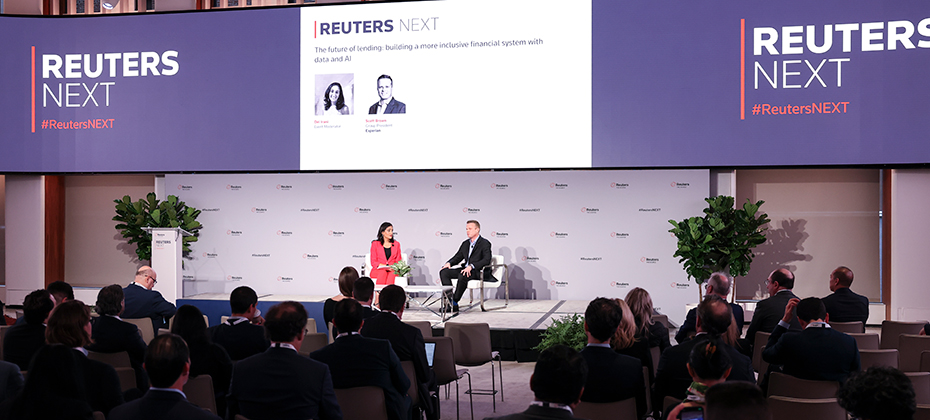
Today, we stand at the forefront of a digital revolution that is reshaping the financial services industry. And, against this backdrop, financial institutions are at vastly different levels of maturity; the world’s biggest banks are managing large-scale infrastructure migrations and making significant investments in AI while regional banks and credit unions are putting plans in place for modernization strategies, and fintechs are purpose-built and cloud native. To explore this more, I recently had the privilege of attending the annual Reuters NEXT live event in New York City. The event gathers globally recognized leaders across business, finance, technology, and government to tackle some of today’s most pressing issues. On the World Stage, I joined Del Irani, a talented anchor and broadcast journalist, to discuss the future of lending and the pivotal role of data and AI in building a more inclusive financial system. Improving financial access Our discussion highlighted the lack of access to traditional financial systems, and the impact it has on nearly 100 million people in North America alone. Globally, the problem affects over one billion people. These people, who are credit invisible, unscoreable, or have subprime credit scores, are unable to secure everyday financial products that many of us take for granted. What many don’t realize is, this is not a fringe subset of the population. Most of us, myself included, know someone who has faced the challenges of financial exclusion. Everyday Americans, including young people who are just starting out, new immigrants and people from diverse communities, often lack access to mainstream financial products. We discussed how traditional lending has a limited view of a consumer. Like looking through a keyhole, the lender’s understanding of the person in view is often incomplete and obstructed. However, with expanded data, technology, and advanced analytics, there is an opportunity to better understand the whole person, and as a result have a more inclusive financial system. At Experian, we have a unique ability to connect the power of traditional credit with alternative data, bringing a more holistic understanding of consumers and their behaviors. We are dedicated to leveraging our rich history in data and our expertise in technology to create the future of credit and ultimately bring financial power to everyone. The future of lending After spending two days with over 700 industry leaders from around the world, one thing is abundantly clear: much like the early days of the internet, today, we are at the cutting-edge of a technical revolution. Reflecting on my time at Reuters NEXT, I am particularly excited by the collective commitment to drive innovative, and smarter ways of working. We are only beginning to scratch the surface of how data and technology can transform financial services, and Experian is positioned to play a significant role. As we look to the future, I am excited about the ways we will create new opportunities for businesses and consumers alike.
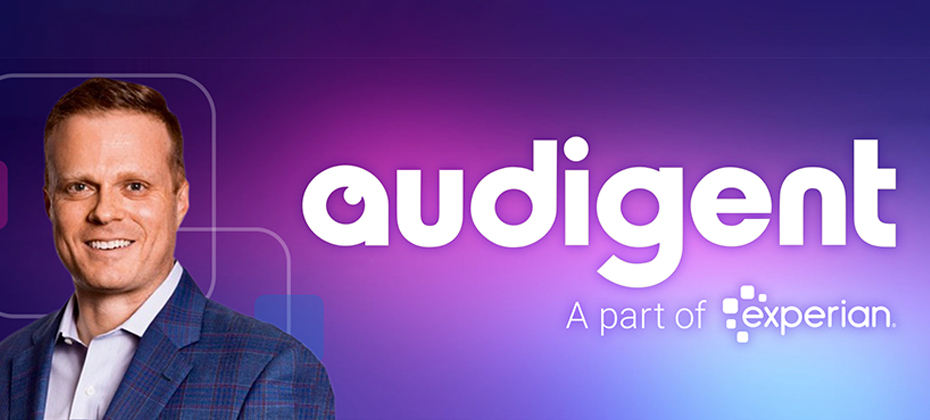
The advertising ecosystem has seen significant transformation over the past few years, with increased privacy regulation, changes in available signals, and the rise of channels like connected TV and retail media. These changes are impacting the way that consumers interact with brands and how brands understand and continue to deliver relevant messages to consumers with precision. Experian has been helping marketers navigate these changes, and as a result, our marketing data and identity solutions underpin much of today’s advertising industry. We’re committed to empowering marketers and agencies to understand and reach their target audiences, across all channels. Today, we are excited to announce our acquisition of Audigent—a leading data and activation platform in the advertising industry. With Audigent’s combination of first-party publisher data, inventory and deep supply-side distribution relationships, publishers, big and small, can empower marketers to better understand their customers, expand the reach of their target audiences and activate those audiences across the most impactful inventory. I am excited to bring together Audigent’s supply-side network as a natural extension to our existing demand-side capabilities. Audigent’s ability to combine inventory with targeted audiences using first-party, third-party and contextual signals provides the best of all worlds, allowing marketers to deliver campaigns centered on consumer choices, preferences, and behaviors. The addition of Audigent further strengthens our strategy to be the premier independent provider of marketing data and identity, ultimately creating more relevant experiences for consumers. To learn more about Experian and Audigent, visit https://www.experian.com/marketing/ and https://audigent.com/.

This article is by Michele Bodda, general manager of Experian Mortgage, and co-sponsor of Experian’s PRIDE employee resource group (ERG) Like most of us in the LGBT+ community, my coming out story is more like an unfinished novel than a tightly worded chapter in a book once read and forgotten on a bookshelf. It unfolded over the years. I wasn’t always confident enough to be fully out, but I never pretended to be something I wasn’t. For me, there wasn’t a day of reckoning or a loud declaration. I arrived at this point over the years, and there were two pivotal incidents that served as catalysts for me. First, after working at Experian for several years, a male colleague stunned me when he said his feelings were hurt that I didn’t trust him enough to bring my whole self to work. I was dumbstruck by his frankness and desire to know the real me. And second, I realized I couldn’t ask my children to go through life with two moms confidently and comfortable if I wasn’t truly authentic in every aspect of my life as well. For me, coming out happens again and again. I will always need the quiet confidence to say, “I’m a mom, a daughter, a friend. I’m an executive. And yes, I am gay.” When Experian asked me to lead our company’s LGBT+ ERG, I took a moment of pause. Yes, this was a big decision, but ultimately, drawing on that confidence, it was an easy decision to make. In light of the 30th anniversary of National Coming Out Day on Oct. 11, I want to assure people wondering if acknowledging diversity is significant, it is. The difficulty some of our LGBT+ colleagues face making daily decisions about where they can be fully present aren’t merely insecurities. They are the realities of being LGBT+. No federal law exists protecting the rights of employees from discrimination based on sexual orientation or gender identity in the United States. In 28 U.S. states, employees aren’t afforded state-level protection for sexual orientation, meaning they can be fired for being lesbian, gay or bisexual, and it’s even worse for transgender members of the workforce. The fear is real for many members of the LGBT+ community – but so is the motivation to seek change and create an inclusive workforce in America. Just imagine working in America if everyone felt as safe as I do to bring their whole selves to work? The mental and emotional energy I expended hiding my whole self from my colleagues many years ago saddens me. Could I have bonded with others quicker, positively affecting team performance and achieving goals faster? Could I have helped someone else know it was OK to be fully themselves at Experian and watched them confidently come into work every day? Today, I’m not raising my voice for myself. I’m raising it on behalf of talented LGBT+ employees across the country and to tell business leaders that the economic results they’ll receive by instilling and nurturing inclusion is worth it. According to research presented at Deloitte’s IMPACT 2017 conference, organizations with inclusive cultures are six times more likely to be innovative, six times more likely to anticipate change and respond effectively, and twice as likely to meet or exceed financial targets. It’s the right thing to do. I feel fortunate to have spent the last 20 years at a company that is overt in saying it’s OK to be who you are: You are not only welcomed here, you belong here.
The following is written by Alison Sharp, Experian. Mental illness affects thousands of people in the UK, their friends, families and work colleagues. In fact, one in four of us will be affected by mental health issues at some stage of our lives. It's hard enough to experience mental health problems, without having to face the judgement, shame and isolation that often surrounds it. Today is World Mental Health Day, an opportunity for us, and others, to help raise awareness of mental health issues. However, our work to change the way people think and act about mental health problems doesn’t stop here. I am proud that our MD, Charles Butterworth, signed the Time to Change pledge last month, to help bring an end to mental health discrimination and show our commitment to supporting mental health awareness. Signing the pledge marks the beginning of a shift to make sure well-being and mental health support becomes the norm for us. I believe that the workplace should be an environment where everyone can thrive, no matter who they are. Experian joins the wide movement of more than 800 organisations that have signed the Time to Change pledge, including E.ON, British Gas, Ernst & Young, Transport for London, Royal Mail, Barclays, Shell, Pepsico, the Church of England, Sunday Mirror, Marks and Spencer, WH Smiths and many NHS trusts, universities, and local authorities. At Experian, we are dedicated to making colleagues feel more support and connected to the help we have, as and when they need it. I truly believe that mental health is something that shouldn’t be brushed off or pushed aside and I hope that if you are suffering, or know someone that is, that you have the courage to reach out for support because after all, it is OK to not be OK.

Working at Experian I am constantly amazed by the many innovative ways we work with data, to find new and exciting solutions with our partners. If we can harness the power of data, and derive real value from it, it has the potential to make hugely positive changes to the way we all live and work. And there’s no doubt that organisations of all shapes and sizes are stepping up to meet the challenge, investing in technology and insight to move with the times. With that in mind, I am delighted to be able to announce the finalists for Experian’s inaugural ‘Data Excellence’ award, part of this year’s Lloyds Bank National Business Awards. This award is the first of its kind, and was designed by us to recognise organisations that are pushing the boundaries in this space, creating opportunities for people, businesses and society in the process. We’ve had some great entries and the final shortlist features some of the finest examples of those working at the forefront of data and analytics. It’s a diverse and dynamic group. Data, innovation and technology has the power to change the world for the better and there’s no better way to demonstrate this than through real-life examples. The award shortlist showcases this perfectly. All our finalists have demonstrated the capacity to use data-driven solutions to not only deliver better outcomes for their customers, but embrace the opportunities presented by an ever-changing data landscape. So, who made the final shortlist? Center Parcs Cleveland Police Minicabit Principality Building Society SyndicateRoom Validis Zurich Insurance The judges now face the difficult task of selecting a winner, someone who truly personifies data excellence. At Experian, we pride ourselves on our culture of continuous innovation, that’s why we are so excited to celebrate the UK’s most ‘data excellent’ companies at this year’s National Business Awards. I’d like to wish all the finalist the very best of luck, To find out more, you can visit the National Business Awards website.
In this article…