

Greater transparency in buy now, pay later activity is key to helping consumers build their credit histories and supporting responsible lending.
Experian North AmericaScott Brown, Group President, Financial Services
Affirm plans to report all pay-over-time loan products issued from April 1, 2025, and beyond, including Pay-in-4. The move will help drive greater transparency into the buy now, pay later market while helping consumers build their credit histories over time.

Read Moreio55 Button 2- Learn more Primary button Secondary button Related Posts
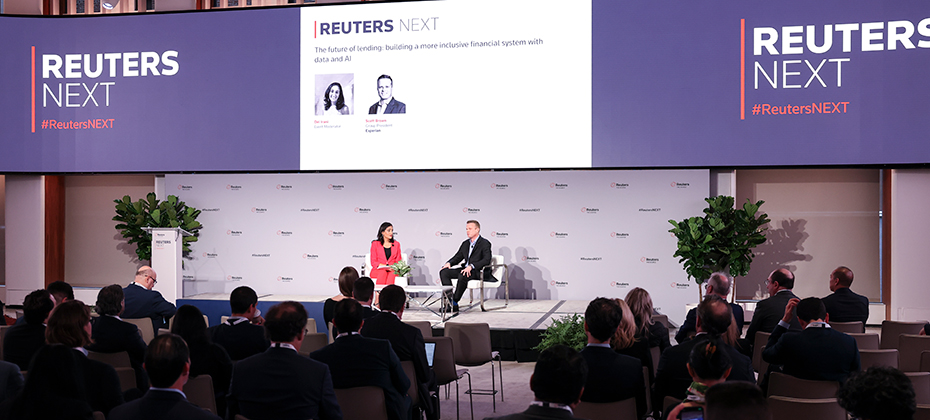
Today, we stand at the forefront of a digital revolution that is reshaping the financial services industry. And, against this backdrop, financial institutions are at vastly different levels of maturity; the world’s biggest banks are managing large-scale infrastructure migrations and making significant investments in AI while regional banks and credit unions are putting plans in place for modernization strategies, and fintechs are purpose-built and cloud native. To explore this more, I recently had the privilege of attending the annual Reuters NEXT live event in New York City. The event gathers globally recognized leaders across business, finance, technology, and government to tackle some of today’s most pressing issues. On the World Stage, I joined Del Irani, a talented anchor and broadcast journalist, to discuss the future of lending and the pivotal role of data and AI in building a more inclusive financial system. Improving financial access Our discussion highlighted the lack of access to traditional financial systems, and the impact it has on nearly 100 million people in North America alone. Globally, the problem affects over one billion people. These people, who are credit invisible, unscoreable, or have subprime credit scores, are unable to secure everyday financial products that many of us take for granted. What many don’t realize is, this is not a fringe subset of the population. Most of us, myself included, know someone who has faced the challenges of financial exclusion. Everyday Americans, including young people who are just starting out, new immigrants and people from diverse communities, often lack access to mainstream financial products. We discussed how traditional lending has a limited view of a consumer. Like looking through a keyhole, the lender’s understanding of the person in view is often incomplete and obstructed. However, with expanded data, technology, and advanced analytics, there is an opportunity to better understand the whole person, and as a result have a more inclusive financial system. At Experian, we have a unique ability to connect the power of traditional credit with alternative data, bringing a more holistic understanding of consumers and their behaviors. We are dedicated to leveraging our rich history in data and our expertise in technology to create the future of credit and ultimately bring financial power to everyone. The future of lending After spending two days with over 700 industry leaders from around the world, one thing is abundantly clear: much like the early days of the internet, today, we are at the cutting-edge of a technical revolution. Reflecting on my time at Reuters NEXT, I am particularly excited by the collective commitment to drive innovative, and smarter ways of working. We are only beginning to scratch the surface of how data and technology can transform financial services, and Experian is positioned to play a significant role. As we look to the future, I am excited about the ways we will create new opportunities for businesses and consumers alike.
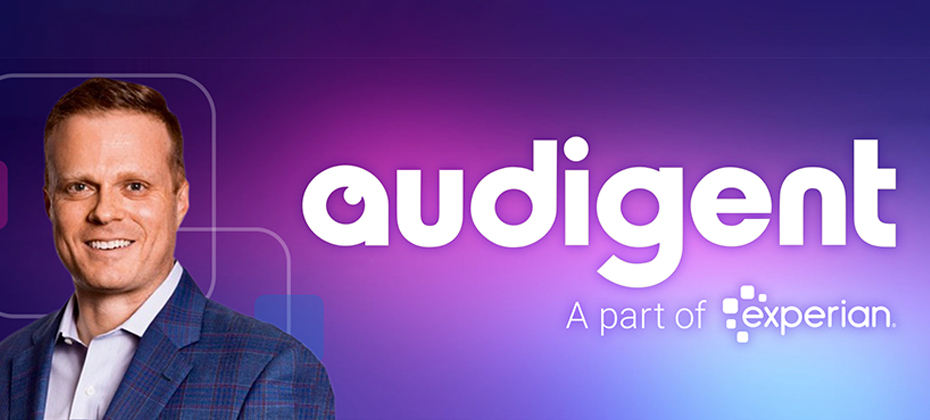
The advertising ecosystem has seen significant transformation over the past few years, with increased privacy regulation, changes in available signals, and the rise of channels like connected TV and retail media. These changes are impacting the way that consumers interact with brands and how brands understand and continue to deliver relevant messages to consumers with precision. Experian has been helping marketers navigate these changes, and as a result, our marketing data and identity solutions underpin much of today’s advertising industry. We’re committed to empowering marketers and agencies to understand and reach their target audiences, across all channels. Today, we are excited to announce our acquisition of Audigent—a leading data and activation platform in the advertising industry. With Audigent’s combination of first-party publisher data, inventory and deep supply-side distribution relationships, publishers, big and small, can empower marketers to better understand their customers, expand the reach of their target audiences and activate those audiences across the most impactful inventory. I am excited to bring together Audigent’s supply-side network as a natural extension to our existing demand-side capabilities. Audigent’s ability to combine inventory with targeted audiences using first-party, third-party and contextual signals provides the best of all worlds, allowing marketers to deliver campaigns centered on consumer choices, preferences, and behaviors. The addition of Audigent further strengthens our strategy to be the premier independent provider of marketing data and identity, ultimately creating more relevant experiences for consumers. To learn more about Experian and Audigent, visit https://www.experian.com/marketing/ and https://audigent.com/.

Positive female role models are important if we are to transform some of the preconceptions that the public, and more importantly young girls, have about a career in STEM. To achieve this, it’s important that the effort starts at an early age to breakdown the stereotypes and outdated views that certain professions are gender-specific. At Experian, we are committed to empowering more women to become data scientists. That’s why we were delighted to sponsor the Women in Data conference in November, to help inspire, educate and support women into the data industry. Further to that, we are absolutely thrilled to find out that Experian's data scientist Berenice Pila-Díez was announced as one of the 20 women in data and technology, a project showcasing women forging careers in the traditionally male-dominated fields of data and technology. We hope that Berenice’s story, along with the others, will act as inspiration for the next generation of girls (and boys) to follow in their footsteps and establish a successful career in STEM.

As Doug Conant, the former CEO of Campbell’s Soup once said, “To win in the marketplace you must first win in the workplace.” This is quite befitting as Experian celebrates being named a 2017 top workplace for the fifth consecutive year by the Orange County Register. While we work hard to run our business and service our clients, this recognition is a testament to our culture, which emphasizes collaboration, innovation and diversity amongst our employees. “We are proud to foster a global culture of continuous innovation,” said Craig Boundy, former chief executive officer, Experian North America. “Our goal is to create a culture where everyone has a real sense of belonging and trust and is comfortable showing up every day, being their authentic self.” Boundy continued, “We’re thrilled with our continued presence on the Orange County Register list as it validates the great work we do every day for consumers, clients and our communities.” Culture of Collaboration At Experian, we get the opportunity to work with a great group of people that truly want to make a difference in the lives of consumers and our customers, Experian employees do this by working to help people do important things to improve their lives and realize their ambitions; such as buying a car or home, funding an education, growing a business or protecting their identity. This commitment to put consumers first comes from our diverse culture and the collective strength of our highly motivated team members who are constantly collaborating to help Experian create a better tomorrow for millions of people every day. At the Forefront of Innovation As part of our work, we have embraced a culture of discovery that has enabled us to grow and evolve while remaining at the forefront of innovation. We continue to have a positive impact on consumers, businesses and the economy with our products, technology and innovations. From finding breakthroughs around better utilizing data, to identifying ways we can make access to credit faster and simpler for millions around the world. This past year has been a year of significant milestones, including our partnership with Finicity, the introduction of our Text for Credit product, and our drive to create a more open and adaptive technology environment by implementing API capabilities across the Experian network. Giving Back to the Community We are equally committed to giving back to our communities by creating better tomorrows. From volunteering with the Jessie Rees Foundation – which helps children deal with cancer – and the Blind Children’s Learning Center. This year Experian also provided a $750,000 gift to create the Experian Assistant Professorship in Machine Learning at Chapman University. This investment is being used to expand machine learning opportunities at the university’s Machine Learning and Assistive Technology Lab (MLAT), where Chapman researchers use big data and technology to address challenges of social significance like autism. The gift is the latest of a long series of collaborations between Chapman and Experian. Several years ago, Experian and Chapman began a partnership that involved placing graduate students to become data scientists in internships within Experian to provide them real-world, hands on training. Since then, the partnership has blossomed to include embedding a Chapman faculty member within Experian to better ground the academic community on how data scientists work within the private sector to better shape their curriculum. We’ve also supported scholarships and programs at Chapman to ensure that the field of data science remains inclusive, diverse, and talented. We’ve also helped with the Hurricane Harvey relief efforts. From the moment the storm hit, our team was already rolling up their sleeves. Our corporate responsibility team set up a donation link right away for employees to make contributions to the South/Central Texas American Red Cross, providing critical aid to families. We were met with an overwhelming amount of generosity from our employees, and raised more than $90,000. Also, we partnered with 14 banks with branches in Texas who provided free credit and identity checks for hurricane victims, along with free memberships to our identity theft protection product. Recognition and Awards We continued to be recognized for our innovation and diversity by leading publications and industry organizations. Experian was named to Forbes Magazine’s Top 100 list of the “World’s Most Innovative Companies” for the fourth consecutive year. The Advancing Women in Technology (AWT) organization recently honored several Experian women at its 16th Annual Scholarship event. We are also one of 28 companies named to the Grace Hopper Leadership Index of companies whose representation and development of women technologists is above the mean. We are very proud to be among this select group of companies recognized by the Register for our positive workplace culture that attracts and retains top talent in Orange County, as well as our other locations across North America. Our employees are committed to helping to create better tomorrows in our communities through social responsibility activities, technology and innovation, and through our everyday work and business purpose.

In the United States, many individuals struggle with managing their money. In fact, a recent study by Mintel found that only 19 percent of respondents would rate themselves highly on their financial knowledge. As the Director of Public Education at Experian, this finding, while concerning, is not surprising. Since joining Experian twenty years ago, my team and I have spoken with thousands of consumers across the country about personal finance. From bank presidents to blue-collar workers, the individuals I speak to all want the answer to one question – “how can I plan for my financial future, taking into consideration life’s ups and downs?” The Mintel survey found that 21 percent of Americans today are not at all confident about reaching their financial goals, but my team and I are working every day to change this. We are committed to working with various communities within the U.S. to help them better understand their finances. We provide training for young men and women in the Air Force about how to succeed financially while on active duty and when returning to civilian life as part of a program with the Hero’s at Home organization. In partnership with the Society for Financial Education and Professional Development, we also educate young adults at historically black colleges and universities, answering questions about building credit and managing money. Through the LifeSmarts Competition, we challenge high school students to compete on knowledge of personal finance. And through some of our other programs, we work with low-income women and immigrant populations to promote financial inclusion by helping them establish credit or understand loans. Through these experiences, we’ve met countless inspiring individuals from various backgrounds with compelling success stories. For example, a member of the Air Force once told us that, following one of our sessions, she was able to improve her credit and buy her first home. Stories like this are why I am so proud to be part of the only dedicated financial education team in the industry. I am excited to continue empowering people from all walks of life to reach their financial goals. Learn more about the Mintel research here.
In this article…