
Loading...

Test release 117 stories

Published: January 7, 2026 by Krishna.Nelluri@experian.com

Greater transparency in buy now, pay later activity is key to helping consumers build their credit histories and supporting responsible lending.

Experian North AmericaScott Brown, Group President, Financial Services

Affirm plans to report all pay-over-time loan products issued from April 1, 2025, and beyond, including Pay-in-4. The move will help drive greater transparency into the buy now, pay later market while helping consumers build their credit histories over time.

Latest Post Related Post

Read Moreio55 Button 2- Learn more Primary button Secondary button Related Posts
Mar 27,2025 by qamarketingtechnologists

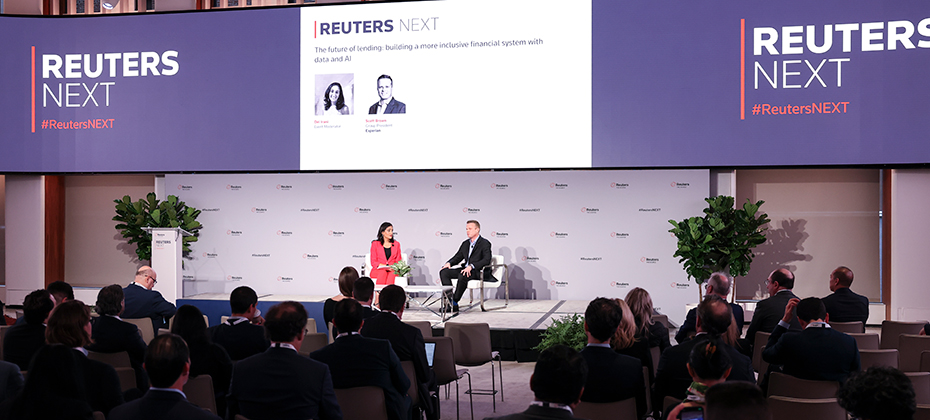
Insights from Reuters Next: Building a More Inclusive Financial System with Data and AI

Today, we stand at the forefront of a digital revolution that is reshaping the financial services industry. And, against this backdrop, financial institutions are at vastly different levels of maturity; the world’s biggest banks are managing large-scale infrastructure migrations and making significant investments in AI while regional banks and credit unions are putting plans in place for modernization strategies, and fintechs are purpose-built and cloud native.  To explore this more, I recently had the privilege of attending the annual Reuters NEXT live event in New York City. The event gathers globally recognized leaders across business, finance, technology, and government to tackle some of today’s most pressing issues.  On the World Stage, I joined Del Irani, a talented anchor and broadcast journalist, to discuss the future of lending and the pivotal role of data and AI in building a more inclusive financial system. Improving financial access Our discussion highlighted the lack of access to traditional financial systems, and the impact it has on nearly 100 million people in North America alone. Globally, the problem affects over one billion people. These people, who are credit invisible, unscoreable, or have subprime credit scores, are unable to secure everyday financial products that many of us take for granted.  What many don’t realize is, this is not a fringe subset of the population. Most of us, myself included, know someone who has faced the challenges of financial exclusion. Everyday Americans, including young people who are just starting out, new immigrants and people from diverse communities, often lack access to mainstream financial products.  We discussed how traditional lending has a limited view of a consumer. Like looking through a keyhole, the lender’s understanding of the person in view is often incomplete and obstructed. However, with expanded data, technology, and advanced analytics, there is an opportunity to better understand the whole person, and as a result have a more inclusive financial system.  At Experian, we have a unique ability to connect the power of traditional credit with alternative data, bringing a more holistic understanding of consumers and their behaviors. We are dedicated to leveraging our rich history in data and our expertise in technology to create the future of credit and ultimately bring financial power to everyone. The future of lending After spending two days with over 700 industry leaders from around the world, one thing is abundantly clear: much like the early days of the internet, today, we are at the cutting-edge of a technical revolution. Reflecting on my time at Reuters NEXT, I am particularly excited by the collective commitment to drive innovative, and smarter ways of working.  We are only beginning to scratch the surface of how data and technology can transform financial services, and Experian is positioned to play a significant role. As we look to the future, I am excited about the ways we will create new opportunities for businesses and consumers alike.    
Dec 13,2024 by Scott Brown

Powering the Advertising Ecosystem with Our Identity and Activation Capabilities

The advertising ecosystem has seen significant transformation over the past few years, with increased privacy regulation, changes in available signals, and the rise of channels like connected TV and retail media. These changes are impacting the way that consumers interact with brands and how brands understand and continue to deliver relevant messages to consumers with precision.   Experian has been helping marketers navigate these changes, and as a result, our marketing data and identity solutions underpin much of today’s advertising industry. We’re committed to empowering marketers and agencies to understand and reach their target audiences, across all channels. Today, we are excited to announce our acquisition of Audigent—a leading data and activation platform in the advertising industry.   With Audigent’s combination of first-party publisher data, inventory and deep supply-side distribution relationships, publishers, big and small, can empower marketers to better understand their customers, expand the reach of their target audiences and activate those audiences across the most impactful inventory.      I am excited to bring together Audigent’s supply-side network as a natural extension to our existing demand-side capabilities. Audigent’s ability to combine inventory with targeted audiences using first-party, third-party and contextual signals provides the best of all worlds, allowing marketers to deliver campaigns centered on consumer choices, preferences, and behaviors.    The addition of Audigent further strengthens our strategy to be the premier independent provider of marketing data and identity, ultimately creating more relevant experiences for consumers.   To learn more about Experian and Audigent, visit https://www.experian.com/marketing/ and https://audigent.com/.  

Dec 04,2024 by Scott Brown

Loading…
Smart Stats in Sports and Business

More than 2.5 billion gigabytes of data is generated every single day. By 2020, it’s estimated that 40 zettabytes of data will be created. The sheer amount of data available today is changing nearly every aspect of our business and personal lives. Big Data is also transforming the world of sports – from the way General Managers recruit and draft players, to how coaches set lineups and design plays and even how everyday fans watch and participate in professional sports. Today, every major professional sports team either has an analytics department or an analytics expert on staff. By 2021, the markets for sports analytics is expected to reach $4.7 billion. This year, nearly 57 million people in the United States and Canada will play fantasy sports. At Experian, we’re fascinated with this transformation of the sports industry, in large part, because we are immersed in Big Data. Similar to the use of analytics in sports, we are in the business of compiling, analyzing and transforming massive amounts of information into actionable insights. Every day, we are using Big Data for good – to streamline processes, mitigate risk, grow the economy and improve society. To explore the many parallels between Big Data in business and sports, we sat down with Diane Bloodworth, president and CEO of Competitive Sports Analysis (CSA) to find out more. Here’s what we learned: What's the mission of CSA? Competitive Sports Analysis turns today’s overwhelming amount of data into meaningful predictions and useful analytics. Essentially, we provide coaches, fans and fantasy sports players with meaningful information that helps them make decisions ranging from which players should be drafted to which quarterback to start in a fantasy roster. Our vision is simple – to put game-changing data in the hands of as many sports fans, decision makers and influencers as possible. What makes CSA different from other analytics tools and experts? CSA is the only sports analytics company with patented software that merges data from both objective and subjective sources. For college coaches, our scoutSMART app imports data from existing recruitment systems and tracks original data to help coaches make better and more-informed decisions in real-time. More importantly, it helps coaches consider “fit” when recruiting. They can customize skills based on their own system and schemes and the player’s specific position. For fans and fantasy players, scoutPRO cuts through the chatter of pundits, bloggers and sports analysts to take the guess work out of fantasy sports. scoutPRO calculates skill ratings and converts them into fantasy points to give GMs numerical measurements for real time decisions. In other words, CSA is different because we understand that data has to be useful. General Managers and coaches are still the decision makers, CSA is a tool to make those decisions easier. Risk Management is a key focus for us at Experian. This is also relevant in your business, especially with injury and risk management? How can analytics help with that aspect of sports? Just like data can be used to help recruit and draft the right players, it also has potential to maximize player performance by managing risk – helping to predict fatigue and prevent injury. We are exploring new ways to gather data points on athlete performance to help inform training, lend insight to the ideal game day lineups and better predict individual athlete performance during competition. Is sports learning from business or is business learning from sports when it comes to Big Data? There’s a sharing of knowledge both ways. Right now, the business world is slightly ahead of the sports world in terms of real analytics, primarily because businesses are profit-driven and that drive encourages innovation and creativity. But, because sports are universally loved and understood, they are also a good conduit for people – including business leaders – to explore analytics and the advantages that come with them. At Experian, we agree that the sports and business worlds have a lot of commonalities, and more importantly, a lot of knowledge to share. Like Competitive Sports Analysis, Experian is distilling huge amounts of information into actionable insights to drive efficiencies and improve results. We are both providing leaders with tools to manage risk and make decisions. And we both demonstrate that when used for good, Big Data has the power to deliver positive outcomes not only in sports or business, but across the economy and society. Don't miss our #DataTalk with Competitive Sports Analysis this Thursday, November 5 at 5 p.m. ET on Twitter.  

Nov 02,2015 by

Experian Partners With the Movember Foundation to Launch Mobile Messaging

This Movember, participants can change the face of men’s health directly from their mobile device. Experian Marketing Services and The Movember Foundation, the global charity raising funds and awareness for men’s health, are kicking off a new mobile program for Movember 2015 participants. The mobile messaging program will give participants the option to receive reminders and updates from The Movember Foundation directly from their mobile device. Powered by the Experian Marketing Suite, The Foundation will be able to reward, encourage and inform participants with more immediacy and relevance across channels, including email and mobile. “Mobile messaging is a natural extension of our mission to start more conversations around men’s health and inspire people to get active,” said Mark Hedstrom, U.S. Country Director of the Movember Foundation. "In partnership with Experian, we’re mobilizing men’s health awareness and giving participants a more personal and immediate way to understand how their contributions are helping us to tackle some of the biggest health issues faced by men.” The announcement of The Foundation’s new mobile messaging program comes just days before the kickoff of the annual Movember campaign. Since 2003, The Movember Foundation has raised more than $650 million and funded more than 1,000 world-class programs in 21 countries. Every Movember, the hairiest month of the year, The Foundation challenges men to grow a moustache and women to support a moustache or to increase their activity and commit to MOVE, the foundation’s 30-day fitness challenge, all to help raise funds and awareness for men’s health. Men and women who choose to participate in Movember and then subscribe to the mobile messaging program can stay connected to the men’s health movement through special rewards, event information and innovative fundraising ideas delivered straight to their mobile device. “Mobile messaging done right isn’t just promotional. It’s an opportunity to drive meaningful, two-way communications between a brand and its audience, particularly for brands that can add value in a specific location or moment, such as Movember,” said Matt Seeley, group president, Experian Marketing Services. “Movember participants are more than customers; they are brand ambassadors for the men’s health movement and want to receive information and ideas when they need it most. We’re thrilled to contribute our expertise to help The Movember Foundation take those communications to the next level to make Movember a more personal and rewarding experience for those involved.” To sign up for the Movember campaign or for more information about mobile messaging, go to Movember.com to Grow, Give or MOVE.    

Oct 29,2015 by

Insight into the Millennial Business Owner Paves the Way for the Future

It was only a few months ago when millennials officially surpassed baby boomers to become the largest living generation. Since millennials are so numerous, it stands to reason, that they could also become the most prevalent population of small business owners in the U.S. As a matter of fact, everyday there are hundreds of new start-ups being created by this younger demographic. Clearly, the millennial generation is gravitating toward entrepreneurship, but what do we really know about this segment of the population? While we know they are deeply rooted in technology, what industries are they most likely to enter? Where are millennials more apt to establish their companies? How do they handle credit? In order to put a face to the average millennial business owner, Experian recently conducted an analysis exploring the demographic and its credit characteristics. Interestingly, we found correlations between their education level and the industries in which they were most likely to start a business. Interestingly, the analysis showed millennial business owners had the highest percentage of those without a high school diploma and subsequently established companies in industries that typically do not require a college degree. For example, the top three industries for millennials include business services, building cleaning and maintenance and general contractors. From a geographic perspective, we found more than 68 percent of millennials establish businesses primarily in three states, including California, Texas and Florida. While the number may seem a bit high, it makes sense considering one of the states is a hub for technology, and the other two do not have state income tax. We also found millennial business owners have the lowest commercial* and consumer credit scores at 32 and 628, respectively. However, despite their low scores, millennials show to be the most credit active generation. More than 17 percent of millennials have opened a commercial account within past 24 months. While they have a brief credit profile, which can impact their credit score, millennials seem to understand the importance of building credit by opening new accounts. By putting a face to the name, so to speak, creditors and suppliers will have a better understanding of what drives the millennial business owner. These insights will enable them to better market to this growing segment of entrepreneurs, as well as position them to service these young business owners and uncover their own growth opportunities. Millennials are the future, and the more we understand how to help them succeed, the better off our economy and society will be. *Based on a scale of 1 to 100 (with 100 being least risky); predicts the likelihood of severe delinquency (more than 91 days past due) within the next 12 months  

Oct 29,2015 by Editor

In this article…