

Loading...

Test release 117 stories

Published: January 7, 2026 by Krishna.Nelluri@experian.com

Greater transparency in buy now, pay later activity is key to helping consumers build their credit histories and supporting responsible lending.

Experian North AmericaScott Brown, Group President, Financial Services

Affirm plans to report all pay-over-time loan products issued from April 1, 2025, and beyond, including Pay-in-4. The move will help drive greater transparency into the buy now, pay later market while helping consumers build their credit histories over time.

Latest Post Related Post

Read Moreio55 Button 2- Learn more Primary button Secondary button Related Posts
Mar 27,2025 by qamarketingtechnologists

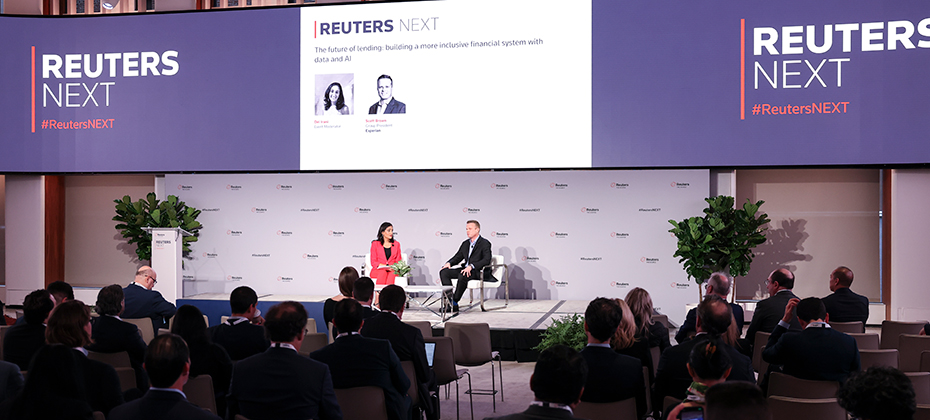
Insights from Reuters Next: Building a More Inclusive Financial System with Data and AI

Today, we stand at the forefront of a digital revolution that is reshaping the financial services industry. And, against this backdrop, financial institutions are at vastly different levels of maturity; the world’s biggest banks are managing large-scale infrastructure migrations and making significant investments in AI while regional banks and credit unions are putting plans in place for modernization strategies, and fintechs are purpose-built and cloud native.  To explore this more, I recently had the privilege of attending the annual Reuters NEXT live event in New York City. The event gathers globally recognized leaders across business, finance, technology, and government to tackle some of today’s most pressing issues.  On the World Stage, I joined Del Irani, a talented anchor and broadcast journalist, to discuss the future of lending and the pivotal role of data and AI in building a more inclusive financial system. Improving financial access Our discussion highlighted the lack of access to traditional financial systems, and the impact it has on nearly 100 million people in North America alone. Globally, the problem affects over one billion people. These people, who are credit invisible, unscoreable, or have subprime credit scores, are unable to secure everyday financial products that many of us take for granted.  What many don’t realize is, this is not a fringe subset of the population. Most of us, myself included, know someone who has faced the challenges of financial exclusion. Everyday Americans, including young people who are just starting out, new immigrants and people from diverse communities, often lack access to mainstream financial products.  We discussed how traditional lending has a limited view of a consumer. Like looking through a keyhole, the lender’s understanding of the person in view is often incomplete and obstructed. However, with expanded data, technology, and advanced analytics, there is an opportunity to better understand the whole person, and as a result have a more inclusive financial system.  At Experian, we have a unique ability to connect the power of traditional credit with alternative data, bringing a more holistic understanding of consumers and their behaviors. We are dedicated to leveraging our rich history in data and our expertise in technology to create the future of credit and ultimately bring financial power to everyone. The future of lending After spending two days with over 700 industry leaders from around the world, one thing is abundantly clear: much like the early days of the internet, today, we are at the cutting-edge of a technical revolution. Reflecting on my time at Reuters NEXT, I am particularly excited by the collective commitment to drive innovative, and smarter ways of working.  We are only beginning to scratch the surface of how data and technology can transform financial services, and Experian is positioned to play a significant role. As we look to the future, I am excited about the ways we will create new opportunities for businesses and consumers alike.    
Dec 13,2024 by Scott Brown

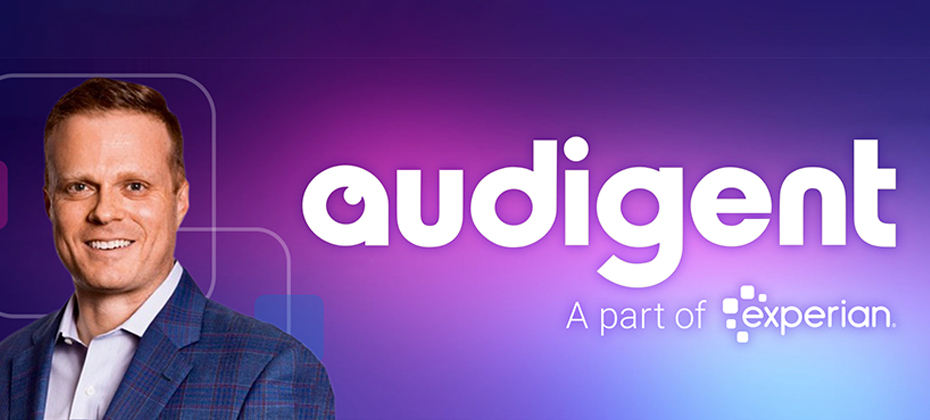
Powering the Advertising Ecosystem with Our Identity and Activation Capabilities

The advertising ecosystem has seen significant transformation over the past few years, with increased privacy regulation, changes in available signals, and the rise of channels like connected TV and retail media. These changes are impacting the way that consumers interact with brands and how brands understand and continue to deliver relevant messages to consumers with precision.   Experian has been helping marketers navigate these changes, and as a result, our marketing data and identity solutions underpin much of today’s advertising industry. We’re committed to empowering marketers and agencies to understand and reach their target audiences, across all channels. Today, we are excited to announce our acquisition of Audigent—a leading data and activation platform in the advertising industry.   With Audigent’s combination of first-party publisher data, inventory and deep supply-side distribution relationships, publishers, big and small, can empower marketers to better understand their customers, expand the reach of their target audiences and activate those audiences across the most impactful inventory.      I am excited to bring together Audigent’s supply-side network as a natural extension to our existing demand-side capabilities. Audigent’s ability to combine inventory with targeted audiences using first-party, third-party and contextual signals provides the best of all worlds, allowing marketers to deliver campaigns centered on consumer choices, preferences, and behaviors.    The addition of Audigent further strengthens our strategy to be the premier independent provider of marketing data and identity, ultimately creating more relevant experiences for consumers.   To learn more about Experian and Audigent, visit https://www.experian.com/marketing/ and https://audigent.com/.  

Dec 04,2024 by Scott Brown

Loading…
Highlights from Experian’s Vision 2015 Conference – Think Big

On Monday, Experian’s former North American CEO Craig Boundy welcomed conference attendees, asking everyone to Think BIG during the week. Later in the day, we heard an inspirational forward thinking keynote address by former US secretary of state Dr. Madeleine Albright on the geopolitical environment touching on information security. On Tuesday, it was all about BIG insights on the US economy as Adam Fingersh introduced Dr. James Paulsen from Wells Capital Management, who delivered an in-depth economic and financial market update. Paulsen, deemed the recovery the longest in U. S. history, saying “The great recession is often compared to the great depression, but this is really a great exaggeration.” After Dr. Paulsen’s remarks, Experian began its second day of breakout sessions with insights from our team of experts in big data, decision analytics, consumer credit, compliance and fraud before heading off for a day of networking activities. Later in the evening we all celebrated over dinner together while being entertained by the legendary Kool and the Gang. On The final day of the conference, Lloyd Parker, Group President of Credit Services closed Vision by introducing NBA Legend and Hall of Famer, Earvin “Magic” Johnson, who delivered an inspiring talk. Magic got up close and personal with the audience, sharing his insights on being a champion athlete, overcoming obstacles, and the many life lessons on becoming a successful entrepreneur, job creator and community advocate. We are all looking forward to seeing you in Scottsdale, Arizona next year for Vision 2016. Twitter Highlights "Big data is a force for good and makes a difference in the economy, consumers and society," Craig Boundy #vision2015 — Vision Conference (@ExperianVision) May 4, 2015 One day we hope to have a client user event like @ExperianVision as its the best for content, networking and fun! #V…https://t.co/LGiyxKAh5i — masterQueue (@intellaegis) May 8, 2015 I shared my business expertise and how I transitioned from basketball court to the boardroom! @Experian_B2B #vision2015 — Earvin Magic Johnson (@MagicJohnson) May 6, 2015 "Whether you are a foreign minister or a CEO you have to be able to manage risk," Madeleine K. Albright #vision2015 — Vision Conference (@ExperianVision) May 4, 2015 For more Twitter highlights, click here.

May 11,2015 by Kelsey Audagnotti

Marketing: What’s Bigger Than Big Data?

At Experian we believe that data is good. Good for our economy, good for consumers and good for society.  Analytics and technology designed to help marketers put their data to use and become truly customer-centric is just one example of using data as a force for good.  The following column was written by Emad Georgy, senior vice president of development and global head of development at Experian Marketing Services, as part of a “Data-Driven Thinking” series for AdExchanger. Emad explores the topic of customer-centric marketing, and raises the question: “What does a marketing ecosystem look like when we focus on the customer and work backward from there? It’s not about the cloud; it’s about the customer.”  In the age of the half-read article, far too few have taken the time to understand deeply what big data can do for their business. The focus has been more on the medium, with more talk about channels, clouds and the data than about the customers themselves. This begs the question: What does a marketing ecosystem look like when we focus on the customer and work backward from there? It’s not about the cloud; it’s about the customer. Looking for big answers in the channel and the technology is important, but focusing on the “how” of big data can obscure the reasons for why we use the data. It’s as if some are staring at a large explosion of data and wondering, “What can I do with this data? How can it benefit my business?” This is backward at best. With more data in our marketing ecosystem, the complexities of mining and predicting have increased exponentially. More marketing communities are investing in data scientists as a result. But there’s something out there bigger than big data: the big questions we want answered and the answers themselves. Now we need to identify the big questions and answers that can come out of this big data boom. One of the keys to answering the right big questions: predictive analytics. Predictive models and tools are easier and more accessible than ever, with the ability to put big data insights into an automated, future-finding realm that is becoming more open by the day. This accessibility enables professionals in every industry to answer in mere minutes questions that would have once required many years and millions of dollars. The Right Questions Before we identify what the right questions are, it’s important to understand what the right questions are not. Marketers often view predictive analytics as the solution to their budget optimization decisions. Sure, CMOs are under increased pressure to predict future spending and adjust channel budgeting accordingly. Real-time predictive analytics allows them to do this without waiting for end-of-the-month reporting. This is an important decision, and analytics can help. But marketers need to go beyond the budgeting mindset to consider the customer’s role in analytics. Customers offer up so many other data points as they engage with a brand, and marketers are responsible for using that information to improve the customer’s day-to-day experience. So what are the right questions? Here are a few. Who is my best customer segment? Keep in mind that this is a transient answer and can change in real time. Who is showing signs and/or probabilities that they are going to become my next best customer segment? Which cross-channel consumer experiences are resonating, and when and where? Which customers are showing behaviors that may predict a lack of engagement or declining engagement? By asking the right questions, marketers can move beyond the marketing mix budget question. Predictive analytics can offer insight into what types of consumer segments are resonating in which channels, at which times of day, for which products and at which point in a path to purchase. It can give insight into things that are about to happen – when a customer is about to fit your “best customer profile,” or perhaps the warning signs to predict when a customer is about to terminate the relationship. Real-time capabilities to understand and optimize buyer personas, to deliver contextually relevant messages to individuals, not demographics, are just some of the ways we can leverage these capabilities. Building intelligent, mutually beneficial interactions for individual customers requires knowing these signals. Avoid The Snapshot Predictive analytics is so important for optimizing the customer experience because a customer’s experience – whether it’s preferences, behavior or desired conversations – can change every second. Models that are used to inform the marketing experience can’t be built from static variables, but rather must learn and adjust in real time. When the insights are made predictive and are constantly attuned accordingly, a critical shift is made: Customers, not marketing technologies, are driving the intelligence. And that’s the crux of the crossroads we face. We’ve focused for so long on the how of analytics that we’ve forgotten the human side. The algorithms and technology we’ve built are impressive and incredibly useful, but predictive analytics can’t be entirely machine-run. There’s a human element that must coexist and we must recognize that behind the data are real, irrational humans with constantly changing and sometimes unpredictable stories. We mustn’t let our obsession with the “how” of data get in the way of the “why” we care. That is what customers want: seamless, integrated experiences that are contextually relevant to their wants and needs. Follow Experian Marketing Services (@ExperianMkt) and AdExchanger (@adexchanger) on Twitter.

May 05,2015 by Editor

Experian Vision 2015: Daily–Round up

  Today Experian Vision 2015 conference kicked off to great start with a full house here to learn the latest about how data and analytics can transform the way we do business today, drive growth and solve some of our biggest business challenges. Craig Boundy, former CEO of Experian North America challenged the audience to think big over the next two days and beyond. Without question, big data is a huge driver in today’s economy. How can companies operating in today’s data driven world acknowledge the power of data and also embrace the power of data as a force for good. A panel of business leaders from Experian then took the stage to address a range of questions about topics common and critical to successfully grow business, find opportunities and solve problems. The topics addressed:preventing fraud, reaching unbanked and underbanked consumers and the importance of quality data. The more than 80 breakout sessions presented by Experian experts and industry luminaries drilled deeper into these topics. A highlight for all attendees was the keynote from Dr. Madeleine K. Albright, Former U.S. Secretary of State and chair of the Albright Stonebridge Group and Albright Capital Management. Dr. Albright highlighted  her years of international diplomacy and business experience. In her comments, she stated that it is the private sector who truly have an important role to play in embracing technology and data. “It’s the private sector’s know-how, innovation and job creation that invigorates communities and countries. Globally, private sector investment overwhelmingly exceeds foreign aid, which many Americans would be surprised to learn is less than 1% of the federal budget. And needless to say, the financial services sector, which many of you represent, does have an indispensible role. I’ve often said, that for many countries the key to development is not discovering oil or gold; it's having financial institutions that are accessible, accountable and available in the right places at the right time.” To learn more about Experian’s Vision 2015 Conference click here. Be sure to follow us on Twitter at @ExperianVision and our LinkedIn Community for instant conference updates.  

May 04,2015 by Kelsey Audagnotti

In this article…