

Loading...

Test release 117 stories

Published: January 7, 2026 by Krishna.Nelluri@experian.com

Greater transparency in buy now, pay later activity is key to helping consumers build their credit histories and supporting responsible lending.

Experian North AmericaScott Brown, Group President, Financial Services

Affirm plans to report all pay-over-time loan products issued from April 1, 2025, and beyond, including Pay-in-4. The move will help drive greater transparency into the buy now, pay later market while helping consumers build their credit histories over time.

Latest Post Related Post

Read Moreio55 Button 2- Learn more Primary button Secondary button Related Posts

Mar 27,2025 by qamarketingtechnologists

Insights from Reuters Next: Building a More Inclusive Financial System with Data and AI

Today, we stand at the forefront of a digital revolution that is reshaping the financial services industry. And, against this backdrop, financial institutions are at vastly different levels of maturity; the world’s biggest banks are managing large-scale infrastructure migrations and making significant investments in AI while regional banks and credit unions are putting plans in place for modernization strategies, and fintechs are purpose-built and cloud native.  To explore this more, I recently had the privilege of attending the annual Reuters NEXT live event in New York City. The event gathers globally recognized leaders across business, finance, technology, and government to tackle some of today’s most pressing issues.  On the World Stage, I joined Del Irani, a talented anchor and broadcast journalist, to discuss the future of lending and the pivotal role of data and AI in building a more inclusive financial system. Improving financial access Our discussion highlighted the lack of access to traditional financial systems, and the impact it has on nearly 100 million people in North America alone. Globally, the problem affects over one billion people. These people, who are credit invisible, unscoreable, or have subprime credit scores, are unable to secure everyday financial products that many of us take for granted.  What many don’t realize is, this is not a fringe subset of the population. Most of us, myself included, know someone who has faced the challenges of financial exclusion. Everyday Americans, including young people who are just starting out, new immigrants and people from diverse communities, often lack access to mainstream financial products.  We discussed how traditional lending has a limited view of a consumer. Like looking through a keyhole, the lender’s understanding of the person in view is often incomplete and obstructed. However, with expanded data, technology, and advanced analytics, there is an opportunity to better understand the whole person, and as a result have a more inclusive financial system.  At Experian, we have a unique ability to connect the power of traditional credit with alternative data, bringing a more holistic understanding of consumers and their behaviors. We are dedicated to leveraging our rich history in data and our expertise in technology to create the future of credit and ultimately bring financial power to everyone. The future of lending After spending two days with over 700 industry leaders from around the world, one thing is abundantly clear: much like the early days of the internet, today, we are at the cutting-edge of a technical revolution. Reflecting on my time at Reuters NEXT, I am particularly excited by the collective commitment to drive innovative, and smarter ways of working.  We are only beginning to scratch the surface of how data and technology can transform financial services, and Experian is positioned to play a significant role. As we look to the future, I am excited about the ways we will create new opportunities for businesses and consumers alike.    
Dec 13,2024 by Scott Brown

Powering the Advertising Ecosystem with Our Identity and Activation Capabilities

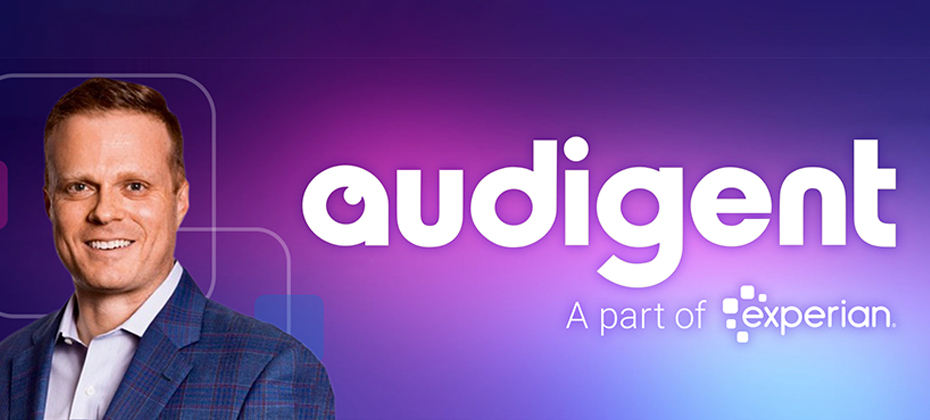
The advertising ecosystem has seen significant transformation over the past few years, with increased privacy regulation, changes in available signals, and the rise of channels like connected TV and retail media. These changes are impacting the way that consumers interact with brands and how brands understand and continue to deliver relevant messages to consumers with precision.   Experian has been helping marketers navigate these changes, and as a result, our marketing data and identity solutions underpin much of today’s advertising industry. We’re committed to empowering marketers and agencies to understand and reach their target audiences, across all channels. Today, we are excited to announce our acquisition of Audigent—a leading data and activation platform in the advertising industry.   With Audigent’s combination of first-party publisher data, inventory and deep supply-side distribution relationships, publishers, big and small, can empower marketers to better understand their customers, expand the reach of their target audiences and activate those audiences across the most impactful inventory.      I am excited to bring together Audigent’s supply-side network as a natural extension to our existing demand-side capabilities. Audigent’s ability to combine inventory with targeted audiences using first-party, third-party and contextual signals provides the best of all worlds, allowing marketers to deliver campaigns centered on consumer choices, preferences, and behaviors.    The addition of Audigent further strengthens our strategy to be the premier independent provider of marketing data and identity, ultimately creating more relevant experiences for consumers.   To learn more about Experian and Audigent, visit https://www.experian.com/marketing/ and https://audigent.com/.  

Dec 04,2024 by Scott Brown

Loading…
Data-Driven Companies Need a Foundation in Data Quality

Data is one of the most valuable assets in our society and drives many decisions. For businesses, data can reveal insights about customers and prospects, product trends, areas for investment and efficiency improvements. For consumers, data provides more personalized interactions with brands, including targeted deals or coupons, and geo-location services. Because of these benefits, business leaders are increasingly reliant on first and third party information when it comes to decision making and operational execution. According to a recent Experian Data Quality study, 95 percent of global companies feel the drive to turn data into insight. The four main reasons behind this include the desire to: understand customer needs, find new customers, increase the value of each customer, and secure future budgets. However, many businesses are falling short. They aren’t able to get the insight needed from data assets. While there are many challenges around data, like rapidly-changing technology, skills shortages in data management and shifting regulations, business leaders can control data quality strategy. Many are not able to gain insight because the quality of their data is not up to par. Ninety-two percent of organizations suspect their customer and prospect data might be inaccurate in some way and on average, businesses believe 26 percent of their data is inaccurate. That figure has risen significantly over the past several years. While there are many possible reasons for this increase, one major contributing factor is that data management strategies have not kept pace with the changing needs of business intelligence and analytics. Many organizations still manage data using legacy technology and processes. This creates reactive strategies that stop data issues from being discovered before they cause harm and prevent a single customer view. To move into a modernized and proactive strategy, businesses need to adjust their data management strategy from a departmentalized approach to a central data owner. We see many companies finding success by doing so. In fact, more companies who have enjoyed significant profits in the last 12 months manage their data quality strategy centrally, with ownership resting with a single director. We also see companies who have more sophisticated data management approaches dealing with less inaccurate data and fewer negative consequences. Most commonly, that director tends to be the CDO or CIO. There is certainly a case for adding a CDO to the organization, especially considering the value of data and the benefit of having someone to take responsibility for the quality, standards, meaning, security, metrics, integration or coordination of data among the various divisions. The rise of the CDO is something we are watching very closely at Experian and we expect this role to grow rapidly in prominence over the next few years. Building a foundation in data quality by centralizing data management people, technology and processes under one group is a key step in creating actionable insight from the valuable asset of data. To stay competitive, businesses have to operate in intelligent ways by developing strong consumer understanding. That starts with quality data. We at Experian enable business users to obtain quality, actionable data when it is required. This doesn’t mean implementing massive technology solutions that take months or years to see benefit from. We focus on solving specific problems with targeted technology solutions, helping you focus on counting the data that really matters to your business. To become data-driven, start by thinking about where you’re currently getting your data insights. Do you trust your information? Does it produce reliable information and insight? By starting with a strong data management strategy, organizations can build trust in their data and see the true benefit of data having a positive influence on their business. Subscribe to this blog by email to learn more about our data and analytics.

Mar 24,2015 by Editor

Empowering Small Businesses Locally and Around the World

For more than 40 years, Orange County has been the home of Experian’s North American headquarters. We have strong roots here. And as part of that, Experian and our employees work and volunteer with organizations around the community to help make the OC a better place to live. As a long-time Experian employee and Orange County resident, I am proud to represent a critically important organization to our community: the Orange County Business Council (OCBC). And as 2015 Chair of OCBC, I thought it was a good time to discuss not only the mission of OCBC, but more importantly, how it relates to what we do at Experian. OCBC’s mission is to advance business and enhance the quality of life for all Orange County residents. As an organization, Experian is committed to assisting businesses around the world understand and harness the power of data and insights to positively move the economy forward. ­ In short, helping businesses grow. One of the goals of Experian’s Business Information Services unit, for which I lead marketing, is to provide information that help business owners manage their credit, enabling them to take action and obtain funding that will increase cash flow and uncover growth opportunities. The business unit works with organizations such as the Small Business Administration (SBA) and the National Federation of Independent Businesses (NFIB) to reach entrepreneurs and sole proprietorships to deliver tools and educational resources that help them better understand the credit landscape and position their business for future success. This is yet a small example of what Experian does and how it correlates to OCBC, and my mission in chairing this important organization. Ultimately, businesses, both large and small, are what drive our economy forward, and we believe the work OCBC does to help businesses is of the utmost importance. Whether in Orange County or around the world, advancing business and enhancing the quality of life for consumers are goals we can all get behind. As Walt Disney would say, “it is a small world after all.”

Mar 19,2015 by Editor

A Glimpse in the Rear View Mirror: The Automotive Market in 2014

Just as looking in the rear view mirror can help you navigate your next move, looking into recent trends can serve as a guide to where the industry should head in the future. With that in mind, let’s take a step back and look at some of the trends in the automotive industry that finished off 2014. After all, it’s the insights from these trends that enable dealers, manufacturers, aftermarket retailers and lenders to take the right action to uncover growth opportunities and improve profitability. As we look at Experian Automotive’s 2014 Market Share and Registration Trends analysis, we see that the volume of new and used vehicle sales continued to increase year-over-year to reach 16.3 million and 39.3 million, respectively. However, despite the volume increases, the growth rate for both types of sales has slowed considerably. The growth rate of new vehicle sales slowed to 6.6 percent, while the growth rate for used vehicle sales actually decreased to 1.8 percent from 1.9 percent a year ago. Findings from the analysis also showed that entry-level cross-over utility vehicles and full-sized pickup trucks remained the top two new registered vehicle segments, while alternative-powered vehicles fell out of the top ten. Among new entrants into the top ten was the upscale-near luxury vehicle segment, which includes such cars as the BMW 3-Series, Mercedes-Benz C Class and the Lexus ES350 Other findings from the analysis include: The total number of vehicles on the road increased by 5 million from a year ago to reach 251.1 million More than 92 million vehicles on the road fell within the aftermarket “sweet spot,” model years 2003-2009. Analysis also shows the sweet spot shifting toward a higher share of import vehicles. Ford F150, Chevrolet Silverado/1500 and Honda Accord were the top three vehicle models of all vehicles on the road at the end of 2014 Ford (20.6 percent), International (16.9 percent) and Freightliner (15.8 percent) were top three manufacturers of medium- and heavy-duty vehicles in terms market share of all vehicles on the road General Motors had the highest market share of new vehicle sales in the South and Midwest, while Toyota led the way in the Northeast and West Fast forward three months into 2015, the automotive industry seems to be picking up right where it left off last year – clicking on all cylinders. It will be important to keep an eye on how these trends fluctuate through the rest of the year, as those insights can help the industry navigate and adapt to situations that may arise. Subscribe to this blog by email to learn more about our data and analytics.

Mar 18,2015 by

In this article…