
Loading...

Test release 117 stories

Published: January 7, 2026 by Krishna.Nelluri@experian.com

Greater transparency in buy now, pay later activity is key to helping consumers build their credit histories and supporting responsible lending.

Experian North AmericaScott Brown, Group President, Financial Services

Affirm plans to report all pay-over-time loan products issued from April 1, 2025, and beyond, including Pay-in-4. The move will help drive greater transparency into the buy now, pay later market while helping consumers build their credit histories over time.

Latest Post Related Post

Read Moreio55 Button 2- Learn more Primary button Secondary button Related Posts
Mar 27,2025 by qamarketingtechnologists

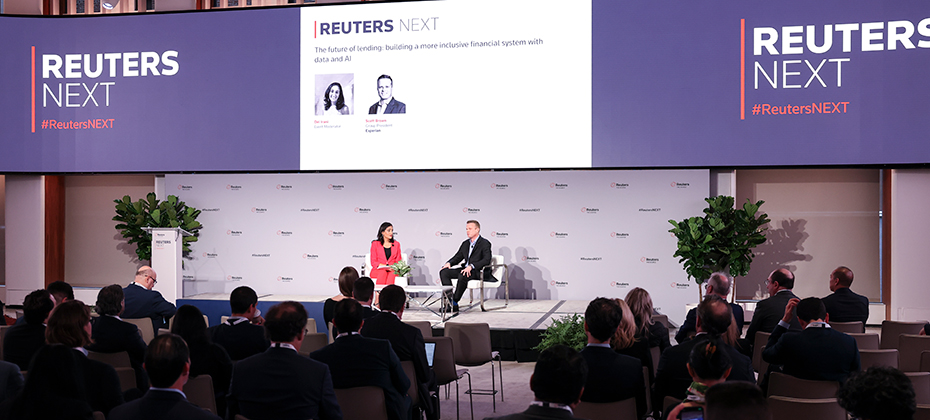
Insights from Reuters Next: Building a More Inclusive Financial System with Data and AI

Today, we stand at the forefront of a digital revolution that is reshaping the financial services industry. And, against this backdrop, financial institutions are at vastly different levels of maturity; the world’s biggest banks are managing large-scale infrastructure migrations and making significant investments in AI while regional banks and credit unions are putting plans in place for modernization strategies, and fintechs are purpose-built and cloud native.  To explore this more, I recently had the privilege of attending the annual Reuters NEXT live event in New York City. The event gathers globally recognized leaders across business, finance, technology, and government to tackle some of today’s most pressing issues.  On the World Stage, I joined Del Irani, a talented anchor and broadcast journalist, to discuss the future of lending and the pivotal role of data and AI in building a more inclusive financial system. Improving financial access Our discussion highlighted the lack of access to traditional financial systems, and the impact it has on nearly 100 million people in North America alone. Globally, the problem affects over one billion people. These people, who are credit invisible, unscoreable, or have subprime credit scores, are unable to secure everyday financial products that many of us take for granted.  What many don’t realize is, this is not a fringe subset of the population. Most of us, myself included, know someone who has faced the challenges of financial exclusion. Everyday Americans, including young people who are just starting out, new immigrants and people from diverse communities, often lack access to mainstream financial products.  We discussed how traditional lending has a limited view of a consumer. Like looking through a keyhole, the lender’s understanding of the person in view is often incomplete and obstructed. However, with expanded data, technology, and advanced analytics, there is an opportunity to better understand the whole person, and as a result have a more inclusive financial system.  At Experian, we have a unique ability to connect the power of traditional credit with alternative data, bringing a more holistic understanding of consumers and their behaviors. We are dedicated to leveraging our rich history in data and our expertise in technology to create the future of credit and ultimately bring financial power to everyone. The future of lending After spending two days with over 700 industry leaders from around the world, one thing is abundantly clear: much like the early days of the internet, today, we are at the cutting-edge of a technical revolution. Reflecting on my time at Reuters NEXT, I am particularly excited by the collective commitment to drive innovative, and smarter ways of working.  We are only beginning to scratch the surface of how data and technology can transform financial services, and Experian is positioned to play a significant role. As we look to the future, I am excited about the ways we will create new opportunities for businesses and consumers alike.    
Dec 13,2024 by Scott Brown

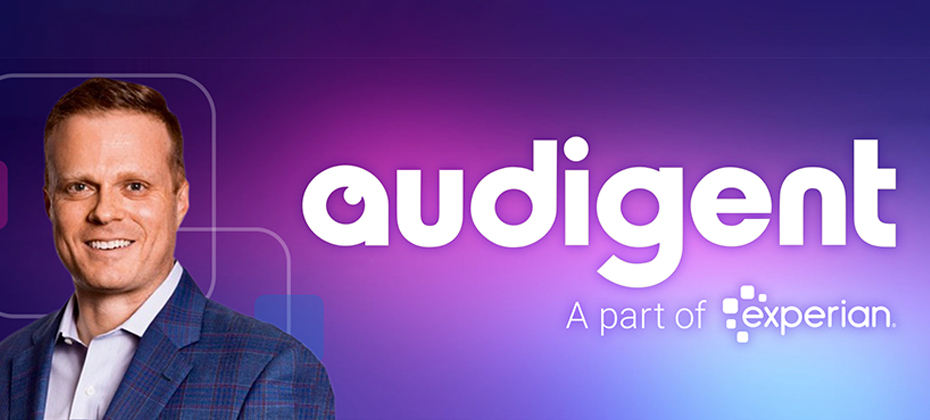
Powering the Advertising Ecosystem with Our Identity and Activation Capabilities

The advertising ecosystem has seen significant transformation over the past few years, with increased privacy regulation, changes in available signals, and the rise of channels like connected TV and retail media. These changes are impacting the way that consumers interact with brands and how brands understand and continue to deliver relevant messages to consumers with precision.   Experian has been helping marketers navigate these changes, and as a result, our marketing data and identity solutions underpin much of today’s advertising industry. We’re committed to empowering marketers and agencies to understand and reach their target audiences, across all channels. Today, we are excited to announce our acquisition of Audigent—a leading data and activation platform in the advertising industry.   With Audigent’s combination of first-party publisher data, inventory and deep supply-side distribution relationships, publishers, big and small, can empower marketers to better understand their customers, expand the reach of their target audiences and activate those audiences across the most impactful inventory.      I am excited to bring together Audigent’s supply-side network as a natural extension to our existing demand-side capabilities. Audigent’s ability to combine inventory with targeted audiences using first-party, third-party and contextual signals provides the best of all worlds, allowing marketers to deliver campaigns centered on consumer choices, preferences, and behaviors.    The addition of Audigent further strengthens our strategy to be the premier independent provider of marketing data and identity, ultimately creating more relevant experiences for consumers.   To learn more about Experian and Audigent, visit https://www.experian.com/marketing/ and https://audigent.com/.  

Dec 04,2024 by Scott Brown

Loading…
Using Data to Spread Holiday Cheer this Season

Black Friday has come and gone, and the holiday shopping season is in full swing. This year, retailers and economic experts alike have high hopes for robust spending and a needed economic boost. And so far the results look promising. On Cyber Monday, alone, the top online retail sites registered 242 million visits, followed closely by Black Friday’s 228 million visits. And according to a new survey from Experian Consumer Services, 36 percent of consumers plan to spend more on gifts this year than they did in 2013. At Experian, everything we do is about putting insights into action. This entails formulating and analyzing insights that can help both consumers and businesses alike. We sat down with two of Experian’s leading experts, one from the consumer side of the business and another from our marketing services business, to find out more about the key trends that will define this holiday shopping season. Guy Abramo, President, Experian Consumer Services and Matt Seeley, President, North America, Experian Marketing Services share their thoughts and insights below: Q: What kinds of shopping and spending patterns are you expecting to see this holiday season? Guy: We conduct consumer holiday shopping research to identify how people plan to make their purchases. Respondents report they plan to spend more than last year and fewer are using a budget. At Experian, we want people to better understand credit, so we commission meaningful research, and our findings can help people make more informed credit decisions. Matt: This holiday season, consumer economic sentiment is strong, according to data and insights from Experian’s Consumer Expectation Index (CEI). We’re also seeing consumers doing more of their shopping online, whether on a computer, tablet or right from their phone. This year, marketers are beginning to respond to this more receptive audience by ramping up their cross-channel marketing campaigns – and more importantly, making them personal. Ninety-one percent of global marketers will use email in their 2014 holiday marketing campaigns, and 40 percent of online adults will make a purchase because of a promotional email. But the companies that are really seeing results are those that are using personalization – adjusting messaging based on the customer’s purchases, demographics or preferences. Today’s consumer is more demanding than ever before. They want a consistent experience across channels, whenever and wherever they prefer, tailored to their unique desires. Compared to standard trigger mailings – emails in response to a customer’s actions or based on an event in his or her life – those that use personalization achieve a 147 percent increase in transaction rates. Q: What does this mean for consumers – and retailers – when the lights and tinsel come down in January? Matt: Well, for retailers and marketers it doesn’t have to mean anything different. Personalization is especially important during the holidays as consumers try to cut through an increasing volume of communication, but it’s critical all year round. This holiday season is a great reminder of how important it is to create meaningful connections with customers. Guy: And for consumers, a happy New Year requires smart celebrations in December. People have a tendency to overspend in December, only to feel overwhelmed in January when it’s time to pay their credit cards statements. We want all consumers to live credit confident and that means avoiding the temptation to throw away good spending behaviors, and instead, setting realistic, specific budgets and sticking to them. Q: So why does this data matter and where does Experian fit in? Guy: At Experian, we transform all this information on shopping habits and spending patterns into insights and advice that consumers and businesses can actually use. We provide data, but more importantly, we use this data to help consumers make better credit decisions. We’re helping shoppers protect their credit information, set sensible budgets and avoid potentially detrimental spending decisions that could put a dent in their credit scores. Matt: The holiday season is crunch time for our clients. Not doing well during the holidays could make or break a retailer’s business. That’s where our expertise in data comes in. We work with retailers to draw meaningful insights from their own data and third party data, like data from Experian Marketing Services that provides them with a complete picture of how their customers think, and what they do in a multichannel world during the holiday season.  Further, our technology allows retailers to use that insight in real-time so they can tailor offers and messages in the moment that it matters most. This results in improved connections and engagement throughout the calendar year, and builds critical trust among consumers. Guy: Data is at the core of our business. We’re using that data for good to help Americans live credit confident and move both businesses and individuals forward. This holiday season, consumer confidence is up, and marketers are making meaningful connections with their customers. Additionally, a majority of Americans this year plan to charge their purchases on either a major credit card (48 percent) or a store credit card (22 percent), and another 17 percent plan to open a store credit card to purchase a holiday gift. And yet, only 38 percent plan to make a budget. The credit economy empowers consumers and gives them the means to fully enjoy this season and make meaningful purchases, but it’s important to make smart credit decisions.   From everyone at Experian, we wish you a credit confident holiday season!    

Dec 17,2014 by

Sixty percent of marketers are unsure of the cost of fraud to their organization

Balancing holiday marketing efforts with fraud prevention requires a coordinated approach according to survey findings from 41st Parameter, a part of Experian. The survey results from 250 marketers released today, looks at the relationship between omnichannel retailing, fraud prevention and the holiday shopping season. The findings show that few marketers understand the full benefit of fraud-prevention systems on their activities as 60 percent of marketers were unsure of the cost of fraud to their organization. The survey also indicated that 40 percent of marketers said their organization had been targeted by hackers or cybercriminals. Download the Holiday Marketing Fraud Survey: http://snip.ly/JoyF With holiday shopping in full stride, 35 percent of businesses said they planned to increase their digital spend for the 2014 holiday season. Furthermore, Experian Marketing Services reported that during 2014, 80 percent of marketers planned on running cross-channel marketing campaigns. As marketers integrate more channels into their campaigns, new challenges emerge for fraud-risk managers who face continuous pressure to adopt new approaches. Here are three steps to help marketers and risk managers maintain a frictionless experience for customers: Marketers should communicate their plans early to the fraud-risk team, especially if they are planning to target a new or unexpected audience. Making this part of the process will reduce the chances that risk management will stop or inhibit customers. Ensure that marketers understand what the risk-management department is doing with respect to fraud detection. Chances are risk managers are waiting to tell you. Marketers shouldn’t assume that fraud won’t affect their business and talk to their risk-management division to learn how much fraud truly costs their company. Then they can understand what they need to do to make sure that their marketing efforts are not thwarted. “Marketers spend a great deal of time and money bringing in new customers and increasing sales, especially this time of year, and in too many cases, those efforts are negated in the name of fraud prevention,” said David Britton, vice president of industry solutions, 41st Parameter. “Marketers can help an organization’s bottom line by working with their fraud-risk department to prevent bad transactions from occurring while maintaining a seamless customer experience. Reducing fraud is important and protecting the customer experience is a necessity.” Few marketers understand the resulting impact of declined transactions because of suspected fraud and this is even more pronounced among small businesses, with 70 percent saying they were unsure of fraud’s impact. Fifty percent of mid-sized business marketers and 67 percent of large-enterprise marketers were unsure of the impact of fraud as well. An uncoordinated approach to new customer acquisition can result in lost revenue affecting the entire organization. For example, the industry average for card-not-present declines is 15 percent. However, one to three percent of those declined transactions turn out to be valid transactions, equating to $1.2 billion in lost revenue annually. Wrongfully declined transactions can be costly as the growth of cross-channel marketing increases and a push towards omnichannel retailing pressures marketers to find new customers. “Many businesses loosen their fraud detection measures during high peak time because they don’t have the tools to review potentially risky orders manually during the higher-volume holiday shopping period,” said Britton. “Criminals look to capitalize on this and exploit these gaps in any way possible, taking an omnifraud approach to maximizing their chances of success. Striking the right balance between sales enablement and fraud prevention is the key to maximizing growth for any business at all times of the year.” Download Experian’s fraud prevention report to learn more about how businesses can address these new marketing challenges.  

Dec 17,2014 by Editor

Top Mobile Banking Trends

The world of mobile devices is constantly changing—everything is faster, bigger and better, and consumers have become more savvy and discerning about the features and benefits that make their lives more convenient, and in many cases, more manageable. I use my phone to do everything from simple tasks like checking email or Facebook, to downloading coupons, buying movie and concert tickets, to checking my bank balance and making deposits on the fly (which is such a great feature). When it comes to banking, mobile has become a growing consumer trend that Experian wanted to explore in its latest white paper, Mobile Banking: Enhancing Your Customers’ Experience. According to the Consumer Financial Protection Bureau, in 2013, about 74,000 new consumers used mobile banking per day. With more and more consumers utilizing mobile platforms to conduct business, this paper takes an in-depth look at how lenders have the opportunity to increase engagement with customers, offer more customized products and services with in-the-moment offers and enhance loyalty by anticipating their financial service’s needs. Some key points in this paper include: • Consumers are not only using their smartphones, but their tablets as well. Tablet adoption was slow at only 5 percent in 2011, but increased to 34 percent in 2013. • According to a recent survey from Pew Internet Research, 98 percent of mobile banking customers move between multiple devices within the same day. • According to the Census Bureau, 21-to-23 year olds comprise the largest age group using smartphones in America. To read more about how consumers are banking and being empowered in this digital age, download the report.

Dec 17,2014 by

In this article…