

Greater transparency in buy now, pay later activity is key to helping consumers build their credit histories and supporting responsible lending.
Experian North AmericaScott Brown, Group President, Financial Services

Affirm plans to report all pay-over-time loan products issued from April 1, 2025, and beyond, including Pay-in-4. The move will help drive greater transparency into the buy now, pay later market while helping consumers build their credit histories over time.
Related Posts

Read Moreio55 Button 2- Learn more Primary button Secondary button Related Posts

Insights from Reuters Next: Building a More Inclusive Financial System with Data and AI
Data & AnalyticsToday, we stand at the forefront of a digital revolution that is reshaping the financial services industry. And, against this backdrop, financial institutions are at vastly different levels of maturity; the world’s biggest banks are managing large-scale infrastructure migrations and making significant investments in AI while regional banks and credit unions are putting plans in place for modernization strategies, and fintechs are purpose-built and cloud native. To explore this more, I recently had the privilege of attending the annual Reuters NEXT live event in New York City. The event gathers globally recognized leaders across business, finance, technology, and government to tackle some of today’s most pressing issues. On the World Stage, I joined Del Irani, a talented anchor and broadcast journalist, to discuss the future of lending and the pivotal role of data and AI in building a more inclusive financial system. Improving financial access Our discussion highlighted the lack of access to traditional financial systems, and the impact it has on nearly 100 million people in North America alone. Globally, the problem affects over one billion people. These people, who are credit invisible, unscoreable, or have subprime credit scores, are unable to secure everyday financial products that many of us take for granted. What many don’t realize is, this is not a fringe subset of the population. Most of us, myself included, know someone who has faced the challenges of financial exclusion. Everyday Americans, including young people who are just starting out, new immigrants and people from diverse communities, often lack access to mainstream financial products. We discussed how traditional lending has a limited view of a consumer. Like looking through a keyhole, the lender’s understanding of the person in view is often incomplete and obstructed. However, with expanded data, technology, and advanced analytics, there is an opportunity to better understand the whole person, and as a result have a more inclusive financial system. At Experian, we have a unique ability to connect the power of traditional credit with alternative data, bringing a more holistic understanding of consumers and their behaviors. We are dedicated to leveraging our rich history in data and our expertise in technology to create the future of credit and ultimately bring financial power to everyone. The future of lending After spending two days with over 700 industry leaders from around the world, one thing is abundantly clear: much like the early days of the internet, today, we are at the cutting-edge of a technical revolution. Reflecting on my time at Reuters NEXT, I am particularly excited by the collective commitment to drive innovative, and smarter ways of working. We are only beginning to scratch the surface of how data and technology can transform financial services, and Experian is positioned to play a significant role. As we look to the future, I am excited about the ways we will create new opportunities for businesses and consumers alike.
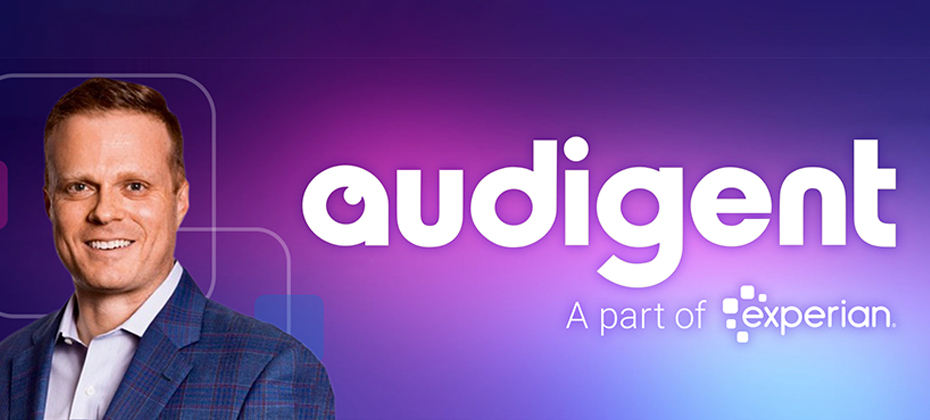
The advertising ecosystem has seen significant transformation over the past few years, with increased privacy regulation, changes in available signals, and the rise of channels like connected TV and retail media. These changes are impacting the way that consumers interact with brands and how brands understand and continue to deliver relevant messages to consumers with precision. Experian has been helping marketers navigate these changes, and as a result, our marketing data and identity solutions underpin much of today’s advertising industry. We’re committed to empowering marketers and agencies to understand and reach their target audiences, across all channels. Today, we are excited to announce our acquisition of Audigent—a leading data and activation platform in the advertising industry. With Audigent’s combination of first-party publisher data, inventory and deep supply-side distribution relationships, publishers, big and small, can empower marketers to better understand their customers, expand the reach of their target audiences and activate those audiences across the most impactful inventory. I am excited to bring together Audigent’s supply-side network as a natural extension to our existing demand-side capabilities. Audigent’s ability to combine inventory with targeted audiences using first-party, third-party and contextual signals provides the best of all worlds, allowing marketers to deliver campaigns centered on consumer choices, preferences, and behaviors. The addition of Audigent further strengthens our strategy to be the premier independent provider of marketing data and identity, ultimately creating more relevant experiences for consumers. To learn more about Experian and Audigent, visit https://www.experian.com/marketing/ and https://audigent.com/.
dsad secondary some updates What Business Owners Need to Know As of January 1st, 2024, a crucial new reporting requirement will take effect for business owners across the United States: the Beneficial Ownership Information Report (BOI). This mandate, part of the Corporate Transparency Act, is designed to increase transparency within the business community and to combat illegal activities such as money laundering and fraud. Business owners have until January 1st, 2025, to comply with this new regulation, making it essential to understand who must file and what information needs to be reported. Watch Our Explainer Video The Corporate Transparency Act: A Brief Overview The Corporate Transparency Act is a significant piece of legislation aimed at enhancing corporate transparency in the U.S. One of its key components is the Beneficial Ownership Information Report, which requires certain businesses to disclose details about their beneficial owners to the Financial Crimes Enforcement Network (FinCEN). This effort is intended to curb illegal activities by making it more difficult for individuals to hide behind anonymous corporate entities. Who Is Considered a Beneficial Owner? Understanding who qualifies as a beneficial owner is critical for determining your company’s obligations under the Corporate Transparency Act. A beneficial owner is any individual who meets one of the following criteria: Directly or indirectly owns or controls 25% or more of the company Exercises substantial control over the company This definition can include company founders, executives, and significant shareholders, all of whom may be required to be listed in the BOI report. Does Your Company Need to File? Not all businesses are required to file a Beneficial Ownership Information Report. To determine if your company must comply, consider the following criteria: Your company is a corporation Your company is a limited liability company (LLC) Your company has 20 full-time equivalent employees or fewer Your company is registered to do business in any U.S. state or Tribal jurisdiction by filing a document with a secretary of state, similar state office, or Tribe If any of these conditions apply to your business, you are likely required to file a BOI report with FinCEN. Information Required for the Beneficial Ownership Information Report Filing a Beneficial Ownership Information Report involves submitting specific details about each beneficial owner. The information required includes: Full legal name Date of birth Residential or business address Unique identifying number from an acceptable identification document, such as a passport or driver’s license Providing accurate information is crucial, as it ensures the ownership of companies remains transparent and accountable, a key goal of the Corporate Transparency Act. How to File Your BOI Report The process of filing a BOI report is straightforward, but it requires careful attention to detail. Here’s how to get started: Gather Required Information: Collect all necessary information about your beneficial owners, ensuring that each detail is accurate and up-to-date. Submit Electronically to FinCEN: Visit FinCEN’s secure online portal at boiefiling.fincen.gov. You can submit your BOI report in one of two ways: PDF Submission: Download the form, fill it out, and re-upload it to the portal.Online Filing: Complete the information directly on the website and upload any necessary identification documents. Seeking Professional Assistance Filing a BOI report can seem daunting, especially for business owners unfamiliar with the process. If you feel more comfortable working with someone who has experience in this area, consider reaching out to a legal or financial advisor. These professionals can offer personalized assistance and ensure your report is filed correctly and on time. Final Thoughts: Stay Informed and Prepared The introduction of the Beneficial Ownership Information Report represents a significant shift in the regulatory landscape for U.S. businesses. By understanding your obligations and taking the necessary steps to comply, you can avoid potential penalties and contribute to a more transparent and accountable business environment. Finally, as you prepare to file your BOI report, it may also be a good time to review your business credit report. Knowing what others see about your business can help you better manage your credit score and overall financial health. Checking your business credit report is quick and easy, and we recommend doing so through trusted services like Experian. This new reporting requirement is an important step toward greater transparency in business ownership. By staying informed and acting promptly, business owners can ensure they meet their obligations under the Corporate Transparency Act. Frequently Asked Questions Who is considered a beneficial owner? A beneficial owner is someone who owns or controls at least 25% of the company, or who has substantial control over it.https://www.fincen.gov/sites/default/files/shared/BOI_Reporting_Key_Questions_Published_508C.pdf What information is required? A reporting company must provide its legal name, address, jurisdiction of formation, and Taxpayer Identification Number (TIN). Who can file the report? An employee, owner, or third-party service provider can file the report on behalf of the company. When is the filing deadline? Companies that lose their exempt status between January 1, 2024 and January 1, 2025 have until January 1, 2025 to file their first report. Should my company report beneficial ownership information now? FinCEN launched the BOI E-Filing website for reporting beneficial ownership information (https://boiefiling.fincen.gov) on January 1, 2024.A reporting company created or registered to do business before January 1, 2024, will have until January 1, 2025, to file its initial BOI report.A reporting company created or registered in 2024 will have 90 calendar days to file after receiving actual or public notice that its creation or registration is effective.A reporting company created or registered on or after January 1, 2025, will have 30 calendar days to file after receiving actual or public notice that its creation or registration is effective. Time needed: 3 hours and 10 minutes. go to step 1 this is step 1 descriptpin go to step 2 this is step 2 description go to step 3 this is step 3 description first second
Patients use self-service tools to easily connect with providers online and manage administrative tasks 24/7. Common patient self-service tools include patient portals, online scheduling and mobile registration. Self-service solutions also include robust financial tools that help patients update insurance information, get accurate estimates, apply for charity care, set up payment plans, combine payments to multiple providers or set up a fundraising page. Patients use self-service tools to easily connect with providers online and manage administrative tasks 24/7. Common patient self-service tools include patient portals, online scheduling and mobile registration. Self-service solutions also include robust financial tools that help patients update insurance information, get accurate estimates, apply for charity care, set up payment plans, combine payments to multiple providers or set up a fundraising page. Patients use self-service tools to easily connect with providers online and manage administrative tasks 24/7. Common patient self-service tools include patient portals, online scheduling and mobile registration. Self-service solutions also include robust financial tools that help patients update insurance information, get accurate estimates, apply for charity care, set up payment plans, combine payments to multiple providers or set up a fundraising page. Patients use self-service tools to easily connect with providers online and manage administrative tasks 24/7. Common patient self-service tools include patient portals, online scheduling and mobile registration. Self-service solutions also include robust financial tools that help patients update insurance information, get accurate estimates, apply for charity care, set up payment plans, combine payments to multiple providers or set up a fundraising page. This is my caption ThiRevving Up Innovation: Experian Helps Consumers Unshop for Auto Insurances is a link test List one List two List three test learn more buton Neque porro quisquam est qui dolorem ipsum quia dolor sit amet, consectetur, adipisci velit…The Best Author Ever Header here “Neque porro quisquam est qui dolorem ipsum quia dolor sit amet, consectetur, adipisci velit…””Neque porro quisquam est qui dolorem ipsum quia dolor sit amet, consectetur, adipisci velit…””Neque porro quisquam est qui dolorem ipsum quia dolor sit amet, consectetur, adipisci velit…” Header 1 “Neque porro quisquam est qui dolorem ipsum quia dolor sit amet, consectetur, adipisci velit…””Neque porro quisquam est qui dolorem ipsum quia dolor sit amet, consectetur, adipisci velit…””Neque porro quisquam est qui dolorem ipsum quia dolor sit amet, consectetur, adipisci Header 2 “Neque porro quisquam est qui dolorem ipsum quia dolor sit amet, consectetur, adipisci velit…””Neque porro quisquam est qui dolorem ipsum quia dolor sit amet, consectetur, adipisci velit…””Neque porro quisquam est ui dolorem ipsum quia dolor sit amet, consectetur, adipisci Learn 1 Learn 2 This is a quoteThis is a sitation <iframe title=”YouTube video player” src=”https://www.youtube.com/embed/ras0Ly946mY” width=”560″ height=”315″ frameborder=”0″ allowfullscreen=”allowfullscreen”></iframe>
In this article…