

Greater transparency in buy now, pay later activity is key to helping consumers build their credit histories and supporting responsible lending.
Experian North AmericaScott Brown, Group President, Financial Services

Affirm plans to report all pay-over-time loan products issued from April 1, 2025, and beyond, including Pay-in-4. The move will help drive greater transparency into the buy now, pay later market while helping consumers build their credit histories over time.
Related Posts

Read Moreio55 Button 2- Learn more Primary button Secondary button Related Posts

Insights from Reuters Next: Building a More Inclusive Financial System with Data and AI
Data & AnalyticsToday, we stand at the forefront of a digital revolution that is reshaping the financial services industry. And, against this backdrop, financial institutions are at vastly different levels of maturity; the world’s biggest banks are managing large-scale infrastructure migrations and making significant investments in AI while regional banks and credit unions are putting plans in place for modernization strategies, and fintechs are purpose-built and cloud native. To explore this more, I recently had the privilege of attending the annual Reuters NEXT live event in New York City. The event gathers globally recognized leaders across business, finance, technology, and government to tackle some of today’s most pressing issues. On the World Stage, I joined Del Irani, a talented anchor and broadcast journalist, to discuss the future of lending and the pivotal role of data and AI in building a more inclusive financial system. Improving financial access Our discussion highlighted the lack of access to traditional financial systems, and the impact it has on nearly 100 million people in North America alone. Globally, the problem affects over one billion people. These people, who are credit invisible, unscoreable, or have subprime credit scores, are unable to secure everyday financial products that many of us take for granted. What many don’t realize is, this is not a fringe subset of the population. Most of us, myself included, know someone who has faced the challenges of financial exclusion. Everyday Americans, including young people who are just starting out, new immigrants and people from diverse communities, often lack access to mainstream financial products. We discussed how traditional lending has a limited view of a consumer. Like looking through a keyhole, the lender’s understanding of the person in view is often incomplete and obstructed. However, with expanded data, technology, and advanced analytics, there is an opportunity to better understand the whole person, and as a result have a more inclusive financial system. At Experian, we have a unique ability to connect the power of traditional credit with alternative data, bringing a more holistic understanding of consumers and their behaviors. We are dedicated to leveraging our rich history in data and our expertise in technology to create the future of credit and ultimately bring financial power to everyone. The future of lending After spending two days with over 700 industry leaders from around the world, one thing is abundantly clear: much like the early days of the internet, today, we are at the cutting-edge of a technical revolution. Reflecting on my time at Reuters NEXT, I am particularly excited by the collective commitment to drive innovative, and smarter ways of working. We are only beginning to scratch the surface of how data and technology can transform financial services, and Experian is positioned to play a significant role. As we look to the future, I am excited about the ways we will create new opportunities for businesses and consumers alike.
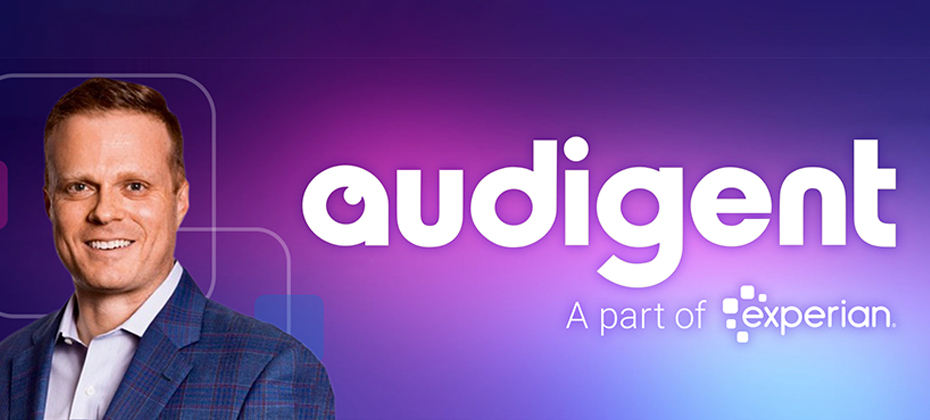
The advertising ecosystem has seen significant transformation over the past few years, with increased privacy regulation, changes in available signals, and the rise of channels like connected TV and retail media. These changes are impacting the way that consumers interact with brands and how brands understand and continue to deliver relevant messages to consumers with precision. Experian has been helping marketers navigate these changes, and as a result, our marketing data and identity solutions underpin much of today’s advertising industry. We’re committed to empowering marketers and agencies to understand and reach their target audiences, across all channels. Today, we are excited to announce our acquisition of Audigent—a leading data and activation platform in the advertising industry. With Audigent’s combination of first-party publisher data, inventory and deep supply-side distribution relationships, publishers, big and small, can empower marketers to better understand their customers, expand the reach of their target audiences and activate those audiences across the most impactful inventory. I am excited to bring together Audigent’s supply-side network as a natural extension to our existing demand-side capabilities. Audigent’s ability to combine inventory with targeted audiences using first-party, third-party and contextual signals provides the best of all worlds, allowing marketers to deliver campaigns centered on consumer choices, preferences, and behaviors. The addition of Audigent further strengthens our strategy to be the premier independent provider of marketing data and identity, ultimately creating more relevant experiences for consumers. To learn more about Experian and Audigent, visit https://www.experian.com/marketing/ and https://audigent.com/.
In the early 1970’s a brilliant engineer/inventor/music lover designed a credit card sized electronic music player. Early prototypes and models of this small music player received the accolades of “the most radical music system ever” from the audio industry. Many of you may think I am talking about Steve Jobs – well I am not. This inventor however was distracted, did not pay attention to the business and saw the technology get away from him. And that is why today, Jobs and Apple’s 1.75 billion iPods are a household name and Kane Kramer is not. So the question for you today is…are you keeping your eye on the technology, trends, and market place that will make your commercial lending efforts successful and sustainable? In a CEB TowerGroup survey, bank executives clearly called out that maximizing credit applications with quality growth is the top priority for 2014. To be successful in achieving that growth commercial bankers will be focused in 2014 and beyond on these five key areas: (1) Rationalizing infrastructure, (2) Optimizing sourcing, (3) Centralizing risk management, (4) Enhancing liquidity management, and (5) Implementing commercial loan management solutions. To back that claim, in the 2013 Sales Readiness Assessment, CEB TowerGroup found that banks that are taking these steps to lead in technology changes were seeing an increase of 8% in their top performing relationship managers, and a 13% increase overall. And while growth is critical, we cannot take our eye off the existing portfolio. Best practices suggest that to make the most impact in 2014, institutions should in the next 90 days to take steps to look at their individual loans, but with multiple factors, e.g. duration, convexity, and yield. But even more important banks should aggregate these views to a portfolio level to make sure that can optimize returns overall. So while we see that in commercial lending the 3-year CAGR is now 10.5% and looking stronger, banks need to focus and not be distracted and capitalize on these opportunities. Invest and stay focused on the future! Vision 2014: The new world of commercial lending from Experian Business Information Services Tweet this! Not focusing on #innovation & change can cost you. Kramer designed IXI in the 70’s. But #apple gained with 1.7 B #ipod sold. #vision2014 Click to Tweet This At @ExperianVision and Joanne Pollitt from CEB Tower Group talking about #change in cmcl #banking for 2014. Are you ready? @ExperianVision Click to Tweet This What is your #banks top #commercial #banking #initiative for 2014?? How can @Experian_DA_GCP and @Experian_US help you #succeedandproceed Click to Tweet This
4000! Consumers view over 4000 ads per day. As a result they are overwhelmed with information and opt not to see what could be waiting for them. The best way to grab the consumer’s attention and CLOSE the sale is to target them with content directly related to their interests. This is not an easy task, but Experian can help lenders stay above the noise and drive relevant traffic to their websites. We can turn a site visit into a credit qualified lead and ultimately a high-quality booked account – cutting through the “junk” that drags down your portfolio’s performance.
The amount of data being generated nowadays is staggering. In fact, according to one source, more data has been produced in the past two years than ever before. Certainly Experian has made it our business to understand all of this data and how to harness it. I’ve recently had the opportunity to consider the impact of data in Formula 1 Racing, the most prestigious and high-tech racing series on the planet. Experian is a sponsor of Williams Martini Racing, which is one of the “big four” teams in the sport and has produced 16 Formula One World Championship titles.
In this article…