
Loading...

Test release 117 stories

Published: January 7, 2026 by Krishna.Nelluri@experian.com

Greater transparency in buy now, pay later activity is key to helping consumers build their credit histories and supporting responsible lending.

Experian North AmericaScott Brown, Group President, Financial Services

Affirm plans to report all pay-over-time loan products issued from April 1, 2025, and beyond, including Pay-in-4. The move will help drive greater transparency into the buy now, pay later market while helping consumers build their credit histories over time.

Latest Post Related Post

Read Moreio55 Button 2- Learn more Primary button Secondary button Related Posts

Mar 27,2025 by qamarketingtechnologists

Insights from Reuters Next: Building a More Inclusive Financial System with Data and AI

Today, we stand at the forefront of a digital revolution that is reshaping the financial services industry. And, against this backdrop, financial institutions are at vastly different levels of maturity; the world’s biggest banks are managing large-scale infrastructure migrations and making significant investments in AI while regional banks and credit unions are putting plans in place for modernization strategies, and fintechs are purpose-built and cloud native.  To explore this more, I recently had the privilege of attending the annual Reuters NEXT live event in New York City. The event gathers globally recognized leaders across business, finance, technology, and government to tackle some of today’s most pressing issues.  On the World Stage, I joined Del Irani, a talented anchor and broadcast journalist, to discuss the future of lending and the pivotal role of data and AI in building a more inclusive financial system. Improving financial access Our discussion highlighted the lack of access to traditional financial systems, and the impact it has on nearly 100 million people in North America alone. Globally, the problem affects over one billion people. These people, who are credit invisible, unscoreable, or have subprime credit scores, are unable to secure everyday financial products that many of us take for granted.  What many don’t realize is, this is not a fringe subset of the population. Most of us, myself included, know someone who has faced the challenges of financial exclusion. Everyday Americans, including young people who are just starting out, new immigrants and people from diverse communities, often lack access to mainstream financial products.  We discussed how traditional lending has a limited view of a consumer. Like looking through a keyhole, the lender’s understanding of the person in view is often incomplete and obstructed. However, with expanded data, technology, and advanced analytics, there is an opportunity to better understand the whole person, and as a result have a more inclusive financial system.  At Experian, we have a unique ability to connect the power of traditional credit with alternative data, bringing a more holistic understanding of consumers and their behaviors. We are dedicated to leveraging our rich history in data and our expertise in technology to create the future of credit and ultimately bring financial power to everyone. The future of lending After spending two days with over 700 industry leaders from around the world, one thing is abundantly clear: much like the early days of the internet, today, we are at the cutting-edge of a technical revolution. Reflecting on my time at Reuters NEXT, I am particularly excited by the collective commitment to drive innovative, and smarter ways of working.  We are only beginning to scratch the surface of how data and technology can transform financial services, and Experian is positioned to play a significant role. As we look to the future, I am excited about the ways we will create new opportunities for businesses and consumers alike.    
Dec 13,2024 by Scott Brown

Powering the Advertising Ecosystem with Our Identity and Activation Capabilities

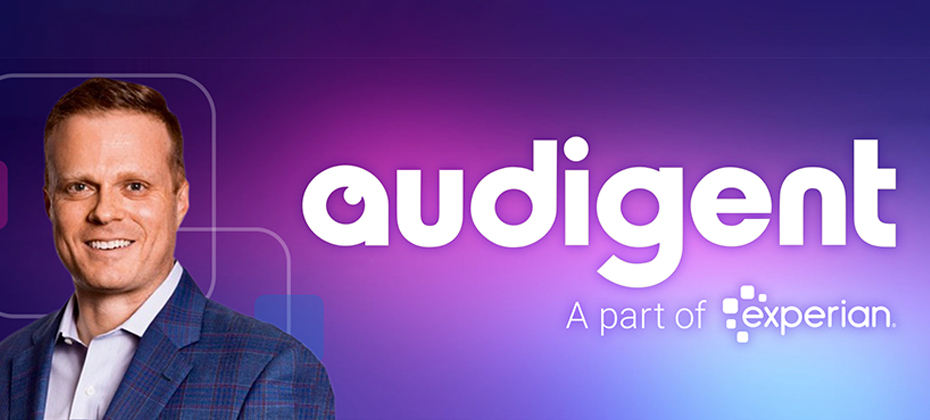
The advertising ecosystem has seen significant transformation over the past few years, with increased privacy regulation, changes in available signals, and the rise of channels like connected TV and retail media. These changes are impacting the way that consumers interact with brands and how brands understand and continue to deliver relevant messages to consumers with precision.   Experian has been helping marketers navigate these changes, and as a result, our marketing data and identity solutions underpin much of today’s advertising industry. We’re committed to empowering marketers and agencies to understand and reach their target audiences, across all channels. Today, we are excited to announce our acquisition of Audigent—a leading data and activation platform in the advertising industry.   With Audigent’s combination of first-party publisher data, inventory and deep supply-side distribution relationships, publishers, big and small, can empower marketers to better understand their customers, expand the reach of their target audiences and activate those audiences across the most impactful inventory.      I am excited to bring together Audigent’s supply-side network as a natural extension to our existing demand-side capabilities. Audigent’s ability to combine inventory with targeted audiences using first-party, third-party and contextual signals provides the best of all worlds, allowing marketers to deliver campaigns centered on consumer choices, preferences, and behaviors.    The addition of Audigent further strengthens our strategy to be the premier independent provider of marketing data and identity, ultimately creating more relevant experiences for consumers.   To learn more about Experian and Audigent, visit https://www.experian.com/marketing/ and https://audigent.com/.  

Dec 04,2024 by Scott Brown

Loading…
60 Minutes Story: Misleading Representation of Credit Reporting Industry

As you may have seen, 60 Minutes ran a story on the credit reporting industry tonight, and unfortunately, much of the story was inaccurate and misleading. The focus of the segment was on data accuracy and the results of the yet-to-be released FTC accuracy study. Many parts of the story did not accurately reflect the facts that have been validated by independent third party studies, the industry’s position or Experian’s position. As such, we would like to clarify our industry position and specific allegations about Experian’s practices. The Business of Credit Reporting The core business of credit reporting agencies is ensuring the accuracy of consumer credit files. This helps lenders rapidly and accurately assess the credit risk of individual consumers and assures consumers that credit reports are an accurate reflection of their credit and repayment history. The more accurate our data, the more accurate assessment the lenders can make of consumer risk. Data Accuracy – What You Didn’t See 60 Minutes showed FTC Commissioner Leibowitz saying that one out of 10 consumers might have an error that would lower their score. To clarify, the focus of the study was on "material" errors and according to the FTC’s own study, which the Consumer Data Industry Association (CDIA) commented on, “98% of credit reports are materially accurate.” CDIA also shared with 60 Minutes that repeated studies have shown that despite the fact that billions of individual pieces of data are received and processed each year, the credit reports assembled provide highly accurate assessments of consumer credit history that both businesses and consumers can use to make informed financial decisions. They pointed to the work done by the Consumer Financial Protection Bureau who looked at the issue of credit accuracy last December. Their analysis found that only between 1.3% and 3.9% of consumers disputed information in their credit report that they believed was in error. Even that number may overstate the number of actual inaccuracies, since the study did not indicate how many of the disputes were the result of an actual error, instead of mere requests to update information or the result of dispute requests from fraudulent credit repair companies who attempt to scam consumers into disputing accurate data. They also highlighted a recent study concluded by the Policy and Economic Research Council that found only one-half of one percent found an error that would cause the consumer to pay a higher price. These studies also showed 60 Minutes that consumers who use the dispute process are generally satisfied with the results and that credit bureaus are handling disputes in a timely manner. In fact, the Policy and Economic Research Council study found that 95% of consumers were satisfied with the outcome of their disputes. Experian’s Management of Dispute Resolution 60 Minutes interviewed three former Experian employees on how they allegedly handled dispute resolutions. As we informed 60 Minutes, these are the details about the important process we employ to manage disputes: “We cannot speak to the motivation of the statements attributed to former Experian employees, particularly as the comments are out of context and simply not reflective of the way Experian runs its business. We can say without question that Experian is focused on providing the highest quality services to consumers. That commitment is reflected in consumer surveys in which 95% of consumers are satisfied with the results of their dispute requests. In addition, Experian does have procedures where its agents can and do question dispute responses directly with data furnishers. Our agents are trained to be proactive when considering information submitted by consumers; they do in fact have the ability to include supporting information provided by the consumer with each dispute. Experian does drive for efficiency in its processes in full support of consumers' needs for speed in resolving their issues. Importantly, however, our agents are empowered to resolve consumer disputes incorporating the highest quality and customer service without time parameters. Regarding the former employee’s comment that “he could not question or investigate a furnisher’s response,” that is simply not true. We utilize a specialized platform, created by our industry and mandated by federal law, for our agents to effectively communicate with data furnishers when processing disputes. The document that the agent reviews includes both the consumer’s dispute as well as the data furnisher’s response. If the agent feels that the response is unclear, they are empowered to phone verify the response. This has been our agents’ process for many years. Consumers need speed in resolving their disputes, and we direct our efforts toward that goal. We complete dispute processing in 14 days on average, well below the required 30 day turnaround required under federal law.” Accusations of Breaking the Law Among the glaring errors, Ohio Attorney General Michael DeWine stated that companies in the industry are in violation of the Fair Credit Reporting Act. This statement demonstrates both a misunderstanding of the law and the efficacy of our dispute systems. Experian is in full compliance with all relevant laws and regulations. And, from an industry perspective, Federal courts have found no violations on multiple occasions. Further, Congress directed the Federal Trade Commission to conduct a year-long review of the dispute process and they did not find any violations of law. This industry is under continuous scrutiny, but we at Experian do not let that deter us from our commitments. We know there is always more work to do to make the system better, and rest assured, this is core to our commitment. We have a long history of doing what’s right for the consumer. I would invite you to visit “Our Commitment” to learn about how we approach data accuracy, customer service and consumer education.

Feb 11,2013 by

Experian’s Commitment to Data Integrity, Customer Service and Consumer Education

As the global leader in the credit business, it’s our responsibility to assist lenders in managing consumer credit risk, and importantly, to empower consumers to understand and responsibly use credit in their financial lives. These responsibilities require a commitment – a commitment from us to play a leading role in helping consumers understand the fundamentals of credit management and how they can benefit from this growing marketplace reliant upon credit. To do this, we continually invest in processes and products that help consumers throughout their credit journey. Experian has created a long-standing culture of commitment to evolve with the changing marketplace and demands of consumers (and the credit industry). We have a proven track record of continual improvements to our systems over the years, including: We’ve invested millions of dollars annually upgrading our systems and processes in pursuit of “error-free” data; We were the first credit reporting agency (CRA) to add rental payment history to credit reports; We empowered our call center operators to stay on the phone with consumers as long as it takes to answer their questions; and, We were the first CRA in the U.S. to launch a nationwide financial education campaign. These are just a few examples – and while we are proud of them, we are not sitting idle and resting on these efforts alone. We are constantly striving to make our data as accurate, complete and current as possible to service the needs of consumers and lenders. We know there is always more work to do to make this system better, and rest assured, this is core to our commitment. The world of consumer credit is evolving, and it’s up to Experian (and the industry) to continue looking at ways to make it better. This is a business – but we realize that consumers are at the core of why we are in business in the first place. We are dedicated to helping consumers throughout their journey in this fast-changing world of consumer lending. This is our culture. This is our commitment. I invite you to hear directly from our employees and our partners about our culture and our commitment at www.experian.com/ourcommitment. Photo: Shutterstock

Feb 09,2013 by Editor

Experian Shares the National Foundation For Credit Counseling‘s Mission of Financial Stability for All

As of 2011, the Hispanic population comprised 16.7% of the United States population, the largest minority group following African-Americans. In addition, 20.3% of U.S. households speak a language other than English. Recognizing the need for expanded financial resources to the Hispanic community, Experian provided a generous grant to translate the NFCC’s MyMoneyCheckUpTM tool into Spanish. The resource provides consumers with a means of evaluating four key areas of personal finance: budgeting and credit management, saving and investing, planning for retirement and home equity. The tool is now available in Spanish at MiAyudaFinanciera.org and Debtadvice.org. “Experian is pleased to work with the NFCC Member Agencies in helping families improve their financial capability and in making this valuable tool available to a wider audience,” said Maxine Sweet, Experian vice president of public education. “We have a shared goal of helping everyone learn to live credit smart. That starts with a clear understanding of your financial position and having readily accessible tools to help guide your future.” Experian has supported the NFCC’s outreach from its earliest days, with representatives previously serving on its Board of Directors, Advisory Council, Education committee and the boards of member agencies across the nation. We recognize the valuable role of the NFCC and its member agencies in helping consumers recover from debt and that they share our passion for educating consumers to live credit smart. To learn more about Experian’s financial education resources, please visit LiveCreditSmart.com. Photo: Shutterstock

Feb 06,2013 by

In this article…