

Loading...

Test release 117 stories

by Krishna.Nelluri@experian.com 1 min read January 7, 2026

test

Greater transparency in buy now, pay later activity is key to helping consumers build their credit histories and supporting responsible lending.

Experian North AmericaScott Brown, Group President, Financial Services

image 2

Affirm plans to report all pay-over-time loan products issued from April 1, 2025, and beyond, including Pay-in-4. The move will help drive greater transparency into the buy now, pay later market while helping consumers build their credit histories over time.

Latest Post Related Post

Read Moreio55 Button 2- Learn more Primary button Secondary button Related Posts

Published: Mar 27, 2025 by qamarketingtechnologists

Insights from Reuters Next: Building a More Inclusive Financial System with Data and AI

Today, we stand at the forefront of a digital revolution that is reshaping the financial services industry. And, against this backdrop, financial institutions are at vastly different levels of maturity; the world’s biggest banks are managing large-scale infrastructure migrations and making significant investments in AI while regional banks and credit unions are putting plans in place for modernization strategies, and fintechs are purpose-built and cloud native.  To explore this more, I recently had the privilege of attending the annual Reuters NEXT live event in New York City. The event gathers globally recognized leaders across business, finance, technology, and government to tackle some of today’s most pressing issues.  On the World Stage, I joined Del Irani, a talented anchor and broadcast journalist, to discuss the future of lending and the pivotal role of data and AI in building a more inclusive financial system. Improving financial access Our discussion highlighted the lack of access to traditional financial systems, and the impact it has on nearly 100 million people in North America alone. Globally, the problem affects over one billion people. These people, who are credit invisible, unscoreable, or have subprime credit scores, are unable to secure everyday financial products that many of us take for granted.  What many don’t realize is, this is not a fringe subset of the population. Most of us, myself included, know someone who has faced the challenges of financial exclusion. Everyday Americans, including young people who are just starting out, new immigrants and people from diverse communities, often lack access to mainstream financial products.  We discussed how traditional lending has a limited view of a consumer. Like looking through a keyhole, the lender’s understanding of the person in view is often incomplete and obstructed. However, with expanded data, technology, and advanced analytics, there is an opportunity to better understand the whole person, and as a result have a more inclusive financial system.  At Experian, we have a unique ability to connect the power of traditional credit with alternative data, bringing a more holistic understanding of consumers and their behaviors. We are dedicated to leveraging our rich history in data and our expertise in technology to create the future of credit and ultimately bring financial power to everyone. The future of lending After spending two days with over 700 industry leaders from around the world, one thing is abundantly clear: much like the early days of the internet, today, we are at the cutting-edge of a technical revolution. Reflecting on my time at Reuters NEXT, I am particularly excited by the collective commitment to drive innovative, and smarter ways of working.  We are only beginning to scratch the surface of how data and technology can transform financial services, and Experian is positioned to play a significant role. As we look to the future, I am excited about the ways we will create new opportunities for businesses and consumers alike.    
Published: Dec 13, 2024 by Scott Brown

Powering the Advertising Ecosystem with Our Identity and Activation Capabilities

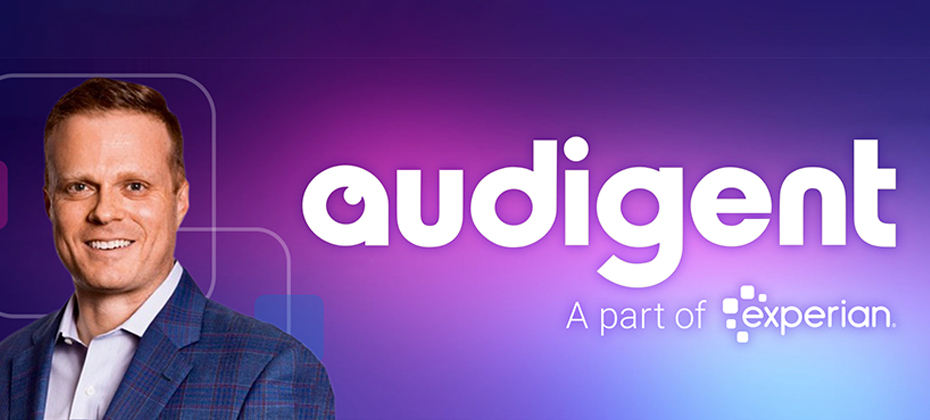
The advertising ecosystem has seen significant transformation over the past few years, with increased privacy regulation, changes in available signals, and the rise of channels like connected TV and retail media. These changes are impacting the way that consumers interact with brands and how brands understand and continue to deliver relevant messages to consumers with precision.   Experian has been helping marketers navigate these changes, and as a result, our marketing data and identity solutions underpin much of today’s advertising industry. We’re committed to empowering marketers and agencies to understand and reach their target audiences, across all channels. Today, we are excited to announce our acquisition of Audigent—a leading data and activation platform in the advertising industry.   With Audigent’s combination of first-party publisher data, inventory and deep supply-side distribution relationships, publishers, big and small, can empower marketers to better understand their customers, expand the reach of their target audiences and activate those audiences across the most impactful inventory.      I am excited to bring together Audigent’s supply-side network as a natural extension to our existing demand-side capabilities. Audigent’s ability to combine inventory with targeted audiences using first-party, third-party and contextual signals provides the best of all worlds, allowing marketers to deliver campaigns centered on consumer choices, preferences, and behaviors.    The addition of Audigent further strengthens our strategy to be the premier independent provider of marketing data and identity, ultimately creating more relevant experiences for consumers.   To learn more about Experian and Audigent, visit https://www.experian.com/marketing/ and https://audigent.com/.  

Published: Dec 04, 2024 by Scott Brown

Loading…
Release 119 Testing Classic

Lorem Ipsum is simply dummy text of the printing and typesetting industry. Lorem Ipsum has been the industry's standard dummy text ever since the 1500s, when an unknown printer took a galley of type and scrambled it to make a type specimen book. It has survived not only five centuries, but also the leap into electronic typesetting, remaining essentially unchanged. It was popularised in the 1960s with the release of Letraset sheets containing Lorem Ipsum passages, and more recently with desktop publishing software like Aldus PageMaker including versions of Lorem Ipsum.

Published: Feb 17, 2026 by Krishna.Nelluri@experian.com

Release 119 Testing

Manual employment and income verification remain a persistent challenge in today’s digital-first financial ecosystem. Despite advances in technology, many organizations still rely on processes that are slow, fragmented, and vulnerable to fraud. These inefficiencies not only strain operational resources but also create friction for consumers seeking timely financial decisions.  Why Manual Income and Employment Verification Falls Short  Traditional income and employment verification methods often involve back-and-forth communication with employer HR departments, unclear documentation requirements, and delays that can stretch from hours to days. Beyond inconvenience, these processes introduce risks such as:  Inaccurate or incomplete data  Exposure to fraud through forged documents  Coverage gaps for gig workers and the self-employed  Operational inefficiency that diverts attention from higher-value tasks  As the workforce evolves—particularly with the rise of the gig economy—these shortcomings become even more pronounced.  Emerging Solutions: From Consumer Permission Data (CPD) to AI  The industry is responding with innovations that prioritize speed, security, and inclusivity:  Consumer-Permissioned Data (CPD): This approach allows individuals to securely share payroll data directly from their provider, reducing manual follow-ups and improving trust through consent-driven access.  Secure Document Upload: For workers without digital payroll systems, document upload offers a practical alternative. Pay stubs, W-2s, and 1099s can be submitted through secure portals, enabling verification for freelancers and small business owners.  AI-Enhanced Verification: Artificial intelligence adds a critical layer of protection and efficiency. Automated scanning detects anomalies, while fraud indicators such as tampered entries are flagged in real time—accelerating review and strengthening accuracy.  Why This Matters  The gig economy is projected to reach $2.145 trillion by 2033, underscoring the need for verification models that accommodate diverse income streams. By integrating CPD, document upload, and AI document verification, organizations can move beyond the limitations of manual employment verification toward systems that are:  Faster and more scalable  Resilient against fraud  Inclusive of non-traditional employment types  Looking Ahead  Manual income and employment verification may still have a role for businesses using niche payroll platforms, but the trajectory is clear: the future of employment and income verification is intelligent, consumer-driven, and built to scale. For lenders and verification providers, embracing these tools isn’t just about efficiency—it’s about setting a new standard for transparency and trust. 

Published: Feb 17, 2026 by Krishna.Nelluri@experian.com

Test SMED7471

Lorem Ipsum is simply dummy text of the printing and typesetting industry. Lorem Ipsum has been the industry’s standard dummy text ever since the 1500s, when an unknown printer took a galley of type and scrambled it to make a type specimen book. It has survived not only five centuries, but also the leap into electronic typesetting, remaining essentially unchanged. It was popularised in the 1960s with the release of Letraset sheets containing Lorem Ipsum passages, and more recently with desktop publishing software like Aldus PageMaker including versions of Lorem Ipsum. Lorem Ipsum is simply dummy text of the printing and typesetting industry. Lorem Ipsum has been the industry's standard dummy text ever since the 1500s, when an unknown printer took a galley of type and scrambled it to make a type specimen book. It has survived not only five centuries, but also the leap into electronic typesetting, remaining essentially unchanged. It was popularised in the 1960s with the release of Letraset sheets containing Lorem Ipsum passages, and more recently with desktop publishing software like Aldus PageMaker including versions of Lorem Ipsum. Lorem Ipsum is simply dummy text of the printing and typesetting industry. Lorem Ipsum has been the industry's standard dummy text ever since the 1500s, when an unknown printer took a galley of type and scrambled it to make a type specimen book. It has survived not only five centuries, but also the leap into electronic typesetting, remaining essentially unchanged. It was popularised in the 1960s with the release of Letraset sheets containing Lorem Ipsum passages, and more recently with desktop publishing software like Aldus PageMaker including versions of Lorem Ipsum.

Published: Feb 11, 2026 by Krishna.Nelluri@experian.com

In this article…

test 3