

Greater transparency in buy now, pay later activity is key to helping consumers build their credit histories and supporting responsible lending.
Experian North AmericaScott Brown, Group President, Financial Services

Affirm plans to report all pay-over-time loan products issued from April 1, 2025, and beyond, including Pay-in-4. The move will help drive greater transparency into the buy now, pay later market while helping consumers build their credit histories over time.
Related Posts

Read Moreio55 Button 2- Learn more Primary button Secondary button Related Posts image1 image2 media text block

Today, we stand at the forefront of a digital revolution that is reshaping the financial services industry. And, against this backdrop, financial institutions are at vastly different levels of maturity; the world’s biggest banks are managing large-scale infrastructure migrations and making significant investments in AI while regional banks and credit unions are putting plans in place for modernization strategies, and fintechs are purpose-built and cloud native. To explore this more, I recently had the privilege of attending the annual Reuters NEXT live event in New York City. The event gathers globally recognized leaders across business, finance, technology, and government to tackle some of today’s most pressing issues. On the World Stage, I joined Del Irani, a talented anchor and broadcast journalist, to discuss the future of lending and the pivotal role of data and AI in building a more inclusive financial system. Improving financial access Our discussion highlighted the lack of access to traditional financial systems, and the impact it has on nearly 100 million people in North America alone. Globally, the problem affects over one billion people. These people, who are credit invisible, unscoreable, or have subprime credit scores, are unable to secure everyday financial products that many of us take for granted. What many don’t realize is, this is not a fringe subset of the population. Most of us, myself included, know someone who has faced the challenges of financial exclusion. Everyday Americans, including young people who are just starting out, new immigrants and people from diverse communities, often lack access to mainstream financial products. We discussed how traditional lending has a limited view of a consumer. Like looking through a keyhole, the lender’s understanding of the person in view is often incomplete and obstructed. However, with expanded data, technology, and advanced analytics, there is an opportunity to better understand the whole person, and as a result have a more inclusive financial system. At Experian, we have a unique ability to connect the power of traditional credit with alternative data, bringing a more holistic understanding of consumers and their behaviors. We are dedicated to leveraging our rich history in data and our expertise in technology to create the future of credit and ultimately bring financial power to everyone. The future of lending After spending two days with over 700 industry leaders from around the world, one thing is abundantly clear: much like the early days of the internet, today, we are at the cutting-edge of a technical revolution. Reflecting on my time at Reuters NEXT, I am particularly excited by the collective commitment to drive innovative, and smarter ways of working. We are only beginning to scratch the surface of how data and technology can transform financial services, and Experian is positioned to play a significant role. As we look to the future, I am excited about the ways we will create new opportunities for businesses and consumers alike.
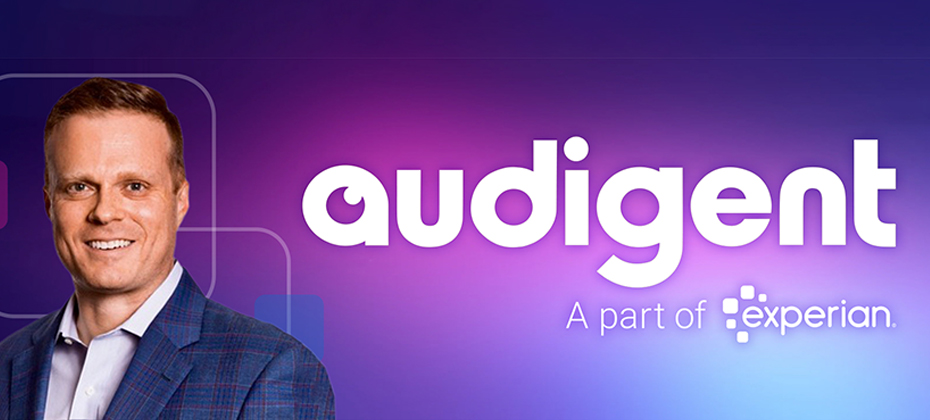
The advertising ecosystem has seen significant transformation over the past few years, with increased privacy regulation, changes in available signals, and the rise of channels like connected TV and retail media. These changes are impacting the way that consumers interact with brands and how brands understand and continue to deliver relevant messages to consumers with precision. Experian has been helping marketers navigate these changes, and as a result, our marketing data and identity solutions underpin much of today’s advertising industry. We’re committed to empowering marketers and agencies to understand and reach their target audiences, across all channels. Today, we are excited to announce our acquisition of Audigent—a leading data and activation platform in the advertising industry. With Audigent’s combination of first-party publisher data, inventory and deep supply-side distribution relationships, publishers, big and small, can empower marketers to better understand their customers, expand the reach of their target audiences and activate those audiences across the most impactful inventory. I am excited to bring together Audigent’s supply-side network as a natural extension to our existing demand-side capabilities. Audigent’s ability to combine inventory with targeted audiences using first-party, third-party and contextual signals provides the best of all worlds, allowing marketers to deliver campaigns centered on consumer choices, preferences, and behaviors. The addition of Audigent further strengthens our strategy to be the premier independent provider of marketing data and identity, ultimately creating more relevant experiences for consumers. To learn more about Experian and Audigent, visit https://www.experian.com/marketing/ and https://audigent.com/.

As people around the country prepare to celebrate Fourth of July, our newly released research shows many Gen Z and millennial consumers are longing for more financial independence from their parents. Why it matters: more than half of Gen Zers and millennials are still financially dependent on their parents. And many don’t feel good about it – with two-thirds saying they feel ashamed when asking their parents for financial support. For many, having an established credit history is key to feeling more financially independent. Additional survey highlights include: StatementGen Z(Ages 18-26)Millennials(Ages 27-42)TotalI am somewhat or very financially dependent on my parents61%47%54%I feel ashamed when I have to ask my parents for financial support62%70%66%I do not consider my parents to be good financial role models28%27%27%Having an established credit history is important to being less financially dependent on my parents77%84%80%I have a hard time saying no to myself when making impulse purchases58%56%57%I am considering cutting down on my online entertainment subscriptions to save money58%55%57%I prefer to spend money on life experiences (like traveling, concerts, etc.) now rather than saving for retirement63%59%61% In addition to limited experience with credit, Gen Z and millennial spending habits may be another factor causing them to rely on parents for financial support. More than half (57%) say they have a hard time saying no to themselves when making an impulse purchase for something they want but don’t need. This is a struggle I can relate to. It’s become easier than ever to purchase what I want, when I want it, right from my phone. When I catch myself doing this, I pause, and I ask myself if this purchase is a need or a want. That quick check-in really helps to curb my impulse spending. Credit can be a financial tool to help us achieve many of the things we want in life, including financial independence from our parents. We have resources available to help consumers lead more financially empowered lives. Our goal is to connect consumers with tools and education to help bring financial power to all. Experian’s free tools and resources If you’re looking to save money, build or improve your credit and be more financially independent, I encourage you to take advantage of Experian’s free tools and resources, including: Reading Experian’s savings blog post with nationally-recognized consumer finance and budgeting expert Andrea Woroch about how to keep more money in your pocket Watching the “In My Bag” Financial Health Video Series featuring actress-singer Coco Jones for savings tipsJoining Experian’s #CreditChat hosted by @Experian on Twitter with financial experts every Wednesday at 3 p.m. Eastern timeSigning up for Experian Boost™[v], a free feature that enables consumers to add positive payment histories for telecom, utility, video streaming services as well as rent directly to their Experian credit file for a chance to potentially improve their FICO® Score instantlyLearning how to build and protect your credit with Experian’s Credit Essentials for Everyone flipbook and find additional credit education resources at http://www.experian.com/consumereducation. Find additional money-saving resources from Experian by visiting Experian.com/savings Survey methodology Experian commissioned Atomik Research to conduct an online survey of 2,008 adults between the ages of 18-42 years old throughout the United States, with even distribution between Generation Z (N=1,005) and millennials (N=1,003) participants. The margin of error is +/- 2 percentage points with a confidence level of 95 percent. Fieldwork took place between March 31, 2023, and April 4, 2023. Atomik Research is an independent, creative market research agency. [v] Results will vary. Not all payments are boost-eligible. Some users may not receive an improved score or approval odds. Not all lenders use Experian credit files, and not all lenders use scores impacted by Experian Boost®. Learn more.

Many times during the course of our last fiscal year, Experian was asked to describe its Diversity, Equity and Inclusion (DEI) “program.” We found this difficult to do. Because DEI isn’t just a “program” at Experian. It drives our mission, our partnerships, and our company culture. We’re happy to share our progress in the Power of YOU: 2023 Diversity, Equity and Inclusion Report. In this edition of our global report, you’ll see how our mission of financial inclusion is at the center of our products and services; how we support our consumers, clients and communities; and how we seek and attract the best talent across the world. Our teammates are key to progress and impact. Together, we drive innovations to meet consumers’ needs, such as Experian Go and our new auto insurance comparison shopping service in North America. The Support Hub pilot in the United Kingdom helps disabled people get easier access to essential services like banking and utilities. We’re proud of programs like Transforme-se in Brazil for people in vulnerable circumstances, which provide scholarships and training in STEM. In the first month, more than half of the participants improved their social and financial standing. Across the globe, partnerships with nonprofits and non-governmental organizations (NGOs) have impacted more than 18 million people so far. I hope you’ll enjoy reading the report to understand why our efforts around inclusion and belonging make Experian such a great place to work. You’ll also gain an appreciation for our ongoing focus on supporting the communities in which we live, work, and serve, and helping consumers achieve their life goals.

Our latest State of the Automotive Finance Report: Q1 2023 showed the average new vehicle loan amount reached $40,851, and today’s average used vehicle loan amount is $26,420. While the growth of average loan amounts is slowing, and in some cases, decreasing from previous years, rising interest rates are pushing monthly payments higher for many consumers. This news comes at a time when many consumers are looking for ways to save money and are holding onto their vehicles longer. In fact, as of Q1 2023, the average length of ownership for new vehicles purchased as far back as 2010 is 4.19 years. At the same time, the cost of vehicle repairs has many consumers feeling financially stressed. Whether to eliminate the burden of rising costs of goods and services, or to plan for big ticket items like vehicle purchases or repairs, our research shows saving money is top of mind for many consumers. Two-thirds tell us they are actively looking for ways to trim expenses from their monthly budget. If you’re shopping for a new set of wheels, or trying to keep your old ones on the road longer, here are four steps you can take to save money: Use credit as a financial tool A good credit score could help you qualify for better interest rates and better terms for loans. Whether you’re looking to purchase a new vehicle or finance repairs, a positive credit history can be a powerful financial tool. Your credit score can also impact the rates you may pay for insurance. Work to keep your credit card balances low and make your payments on time. Using tools like Experian Boost[1] allows you to add your positive payments for telecom and utility bills as well as video streaming services – and now rent payments – to your Experian credit file to potentially increase your FICO®[2] Score instantly. Cut costs where you can We are committed to helping consumers save money in multiple ways and auto insurance is one area consumers may be overpaying. To combat this, we now offer an auto insurance shopping service that delivers tailored rates based on your current policy and vehicle directly from our mobile app. Consumers can potentially save on average more than $900 per year through our service, which is significant. Plan ahead to save on interest rates Interest rates are a key consideration if you’re shopping for a new or used vehicle. Our latest State of the Automotive Finance Market Report showed the average interest rate for a new vehicle is 6.58%. Oftentimes when shopping for a vehicle the main priority is securing a low monthly payment, but it’s also important to assess the total cost of the loan, particularly amid rising interest rates and vehicle prices. With this in mind, some new vehicle shoppers who were in search of lower interest rates opted for shorter loan terms in Q1 2023. Determine how much you can afford to spend each month and opt for shorter loan terms to save on interest. Don’t get a lemon With prices increasing, we know many people are opting for used vehicles. While this can help with costs, it’s important to know what you’re buying before you sign on the dotted line. Request a vehicle history report, like an Experian AutoCheck report, before committing to the purchase. These reports include how many previous owners the vehicle had, or if there were any reported accidents. This can help you avoid surprises down the road and give you a better idea of the value of the car. In addition to a vehicle history report, we recommend having the vehicle inspected by a licensed mechanic. We rely on our vehicles every day. By leveraging the right tools, and with proper planning, you may view them less as a financial burden and more as a means to enjoy the freedom of the open road. [1] [Results will vary. Not all payments are boost-eligible. Some users may not receive an improved score or approval odds. Not all lenders use Experian credit files, and not all lenders use scores impacted by Experian Boost. Learn more. [2] FICO is a registered trademark of Fair Isaac Corporation
In this article…