Consumer First AI: Building AI That Shows Up In Real Life Moments, Like Shopping For Insurance
We believe financial decisions should feel empowering, not overwhelming. Choosing how to protect your family, planning your next move, building your future, these are personal milestones. Yet too often, the tools meant to help consumers navigate them create friction instead of clarity.
We are changing that.
Our Consumer-First AI strategy starts with a simple belief: technology should make life easier for people. We’re building AI-powered experiences that meet consumers where they are, cut through complexity, and provide guidance that feels intuitive, supportive, and genuinely helpful.
Reimagining Insurance Shopping Through Conversation
One example is the launch of our Experian Insurance Marketplace, a leading platform to find and compare auto insurance rates[i], within ChatGPT.
Shopping for insurance has long been a frustrating process. Consumers jump from site to site, repeatedly entering information and trying to decode policy differences, often still unsure if they found the right coverage at the right price.
Now the experience can begin with a simple question inside ChatGPT.
Consumers now can start their journey with Experian and compare estimated rates from more than 35 leading insurance carriers in our network, receive clear coverage explanations, ask follow-up questions in real time, and seamlessly transition into the Experian experience to explore personalized savings and switch carriers. What once took hours across multiple websites can now begin in one guided interaction.

- Reimagining Insurance Shopping Through Conversation
- Powered by Experian’s Innovation Engine
- Just the Beginning
Experian has long helped people build credit, protect their identity, and improve their financial health. Bringing other capabilities, we offer like insurance into conversational AI is a natural extension of that mission
QA Marketing Technologists

At Experian, we believe that every individual deserves to feel valued, respected, and supported to thrive. We are dedicated to fostering a workplace where people can bring their full identities to work. This commitment extends beyond any single initiative; it is embedded in how we show up for one another and in how we build a culture where all employees feel seen, heard, and supported.
We are pleased that for the seventh consecutive year, our people-first approach has earned us a top score on the Human Rights Campaign Foundation’s Corporate Equality Index (CEI), securing our place on the Equality 100 list for LGBTQ+ workplace inclusion. This honor comes on the heels of winning Out & Equal’s 2025 Outie award for Workplace Excellence and Belonging, and reaffirms our efforts for a workplace that embraces inclusion.

Through Experian’s technology and cutting-edge innovations, we’re helping consumers build their credit histories and access affordable, mainstream financial products. We are truly improving consumer’s financial lives in a meaningful way. But, with all the exciting innovations in technology, sometimes, it’s easy to forget the impact we can create in our everyday interactions with people. Let me give you an example. I recently traveled to Nashville, TN for a conference. Since I didn’t know my way around the area, I hired a driver to pick me up and take me to my hotel. As I was heading to the airport exit, I saw a woman holding a sign that read “Experian.” I introduced myself and we both got into the car and headed for the hotel. As we were driving, she asked, “So, do you really work at Experian?” “Here we go…” I thought as I responded, “Yes, I do.” She went on to tell me she was a Desert Storm veteran who faced some real financial hardships that tanked her credit score when she returned home from war. She saw a commercial for Experian Boost, our new tool that allows people to get credit for paying their telecom and utility bills on time. After trying the free tool, her score went up 11 points. This boost got her thinking about other ways she could improve her credit score. I spent the rest of our drive sharing some credit education including the importance improving her debt to income ratio, lowering utilization rates and making on time payments. As we pulled up to my hotel and I got out of the car, she asked if she could give me a hug. “Of course,” I said. I was touched and slightly surprised, to see how much of an effect I had on her. Only, I didn’t realize then just how much of an impact our conversation would truly make on her life. I recently had a chance to reconnect with Renee Preston. She told me about the dramatic changes she’s made since we met that are creating a lasting impact on her financial health. At the time Renee picked me up, she was $56,000 in debt and her credit score was 605. Just a few months after meeting her, Renee put some of the credit education tips I shared with her into practice. Since then, she’s lowered her debt by $36,000 and her credit score has improved by more than 60 points. While Renee knows she still has work to do, she is inspired to continue to improve her financial wellbeing. “I’ve been driving for more than 26 years. I’ve met all kinds of celebrities like Pink and Justin Timberlake. The fact that Alex took the time to talk to a little person like me, it really meant a lot. Since we met, I’ve taken a lot of steps to improve my credit and finances including getting a job with a much higher salary. I truly feel I owe all of these changes to Alex.” Renee Preston, Nashville, TN As a company, we are committed to helping people improve their financial lives. When we talk about being the consumer’s bureau, this is exactly what we mean. I’m so thankful I had the opportunity to meet Renee. I’m inspired to continue to find new ways to improve people’s financial health, both personally and as a leading member of Experian’s team.

As 2019 comes to a close, many people are outlining their goals for the new year. For some people, this means making plans to get healthier, reconnect with old friends or find a new job. For many, improving financial health comes in at the top of the list. In fact, we know saving more is a top resolution for 50% of people and one in three want to improve their credit scores in 2020. Saint Exupery once said, “a goal without a plan is just a wish” and he was right. When setting any goal, it’s important to put a plan in place. An essential first step toward creating an effective plan of action is getting a grasp of your current situation. The same is true for creating and achieving goals related to improving your financial health. Each year, we take a look at how Americans across the country are managing their credit to help people understand the purpose and impact of their credit scores. Our annual State of Credit report highlights average credit scores, debt levels and delinquency rates of people across America. In releasing this report, we hope to give people insight to help them make more informed decisions about credit use as we prepare to head into a new decade. Our latest report showed the average credit score hit an eight-year-high at 682. While people are taking on slightly more credit card, mortgage and nonmortgage debt year-over-year, delinquency rates are decreasing on average and utilization remains consistent at 30%, which means people are responsibly managing the debt they’re carrying. If your credit score is lower than you’d like, or if you’re looking for ways to maintain a positive credit history and improve your financial health, here are five ways you can better your financial standing in 2020: Check your credit report and credit score. Your credit report serves as your financial references. Take care of your credit report and you will take a big step toward better financial health. Credit scores play an important role in your financial journey. They translate the information in your credit report into a number reflecting the risk of doing business with you. Check your credit score at the same time you check your credit report. When you get credit score you should receive an explanation of what the score means and what from your credit report is most affecting it. This is an important step to gauge your current standing and to develop a plan to improve your credit report and scores. You can get a free credit report once every 12 months from Experian by visiting www.annualcreditreport.com or through the Experian app. Keep your utilization rate low. Your utilization rate, or balance-to-limit ratio, should never exceed 30 percent of your credit limit. At a maximum, your total credit card balances should not be more than 30 percent of your total credit card limits, and you don’t want any one card to have a balance of more than 30 percent of the limit of that one card. Both can hurt you. This doesn’t mean that you want to get your balances up to 30 percent and keep them there. The lower your utilization rate, the better. People with the best credit scores have utilization rates of less than 10 percent. As you head into 2020, focus on reducing your credit card balances and keeping your balances low. Use the tools available to you like Experian Boost. If you’re paying your cell phone, cable, satellite and utility payments on time, you can use our free tool, Experian Boost, to potentially increase your credit scores in the new year. We see scores improve for two out of three people who use Experian Boost with an average increase of more than 10 points. Plan ahead for major credit purchases. For many, the start of a new year can mean a new car, a new home and more. When preparing to make a major purchase, it is critical to demonstrate financial stability in the three to six months leading up to it. While it is important to optimize your scores before purchasing a house or a car, be careful not to make too many big moves right before your purchase. Closing accounts or applying for new credit could temporarily reduce your scores, so don’t open any new accounts during the months leading up to your purchase. Wait to close accounts or apply for new ones until after you have the keys to that car or house in hand. Pay on time, every time. Nothing will hurt your credit score more than missed or late payments. To maintain a positive credit history, make a plan to catch up on any missed payments. Enrolling in autopay can be a helpful way to stay on a payment schedule that works for you. Remember, credit can be a financial tool, but debt is a financial problem. Create your financial game plan for 2020 and use these tips to prepare for a financially healthy new year. If you need help along the way, visit the Ask Experian blog or tune into our weekly Credit Chat.
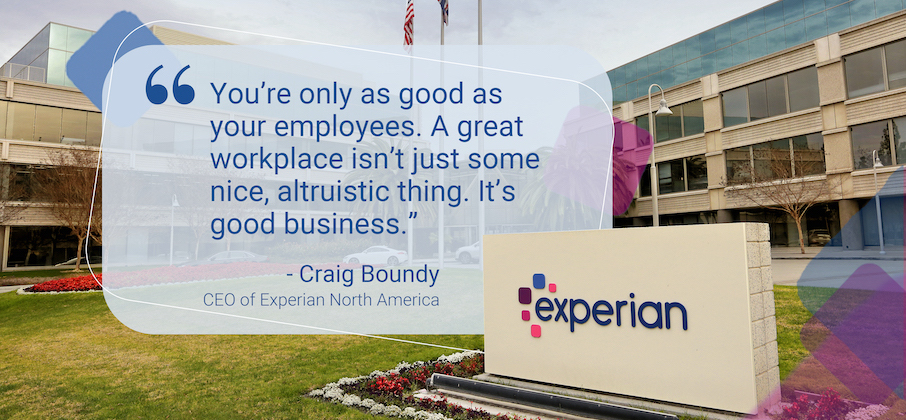
For the past seven years, Experian’s perennial presence on the Orange County Register’s list of Top Workplaces has been the cause for real celebration across our workforce, making this year more special with added honor of receiving the Award of Excellence for its corporate values. “We embrace strong corporate values and celebrate a diversity of ideas and backgrounds across the company. This diversity of thinking and the way we harness it at Experian helps to fuel our innovation and ultimately our ongoing success as a business,” said Craig Boundy, former chief executive officer of Experian North America. “This award is a credit to all the talented people who work here at Experian, bringing a strong drive to perform around a shared mission.” We celebrate our diversity through a range of fun, engaging and informative cultural events, including those supported by our Employee Resource Groups (ERGs). Employees can also join one of our many social clubs to share interests with colleagues, or volunteer with nonprofit organizations to give back to the communities of which Experian supports. Our culture of inclusion is truly something to celebrate and that’s because of every single person who makes up the Experian family and brings our brand to life every day. Experian’s mission is to create a better tomorrow through data, connecting consumers and businesses with more opportunities than ever before. This is supported by our culture of continuous innovation, from the way we work to the solutions we create. This commitment to innovation has helped us create a workplace where our teams across the world have a desire to help change the lives of millions for the better. The diversity of thinking across Experian, and the way in which we harness it, helps fuel our innovation and ultimately our ongoing success as a business. This makes our work relevant to our consumers and clients, adding more value in their own lives – creating a better tomorrow for them. As part of this, our culture works to connect employees to our brand, by involving them in the creation of new products and services. This has had a tremendous positive impact with employees providing valuable feedback and creating advocacy among team members. For example, when developing Experian Boost, which has helped millions of people raise their credit scores, we first beta-tested and shared the innovation internally and were able to garner valuable feedback and support from employees. As a result, we’ve seen tremendous success since the launch of Experian Boost earlier this year. Innovation and Business Success Our culture of diversity and inclusion has enabled Experian to grow and evolve while remaining at the forefront of innovation. For more than 40 years, Orange County has been the heart of our North America operations. We’ve remained focused on developing a culture that achieves and sustains higher performance while giving back to the community, and we’ve strengthened the business across every front. As a result, we continue to have a positive impact on consumers, businesses and the economy. We do this with our products, technology, and innovations — from finding breakthroughs around better utilizing data, to identifying ways we can make access to credit faster and simpler for millions around the world. We’re very proud to be named a Top Workplace by the Orange County Register for our positive workplace culture, which attracts and retains top talent in Orange County, as well as our other locations across North America.
Related Posts

Having a diverse workforce is vital to help us innovate and deliver on the needs of our increasingly diverse clients and consumers. Over the years, we’ve made some great progress, but there’s so much more we can do and it’s going to take the collective effort of all of us to continue to move the needle. That’s why we’re gearing up to celebrate International Women’s Day (IWD). It’s a day celebrated in many countries around the world to recognize the achievements of women and drive equality among men and women. At Experian, IWD activities are extending throughout the month of March. Have a look at what’s going on around the world as Experian celebrates this important day: Asia Pacific The Asia Pacific region is hosting a range of activities across our offices in March, which will include round-table and speaker events as well as an opportunity to network and pledge their support for IWD. EMEA and UK&I EMEA and UK&I are joining together for IWD to support and celebrate diversity and inclusion. The week started with a video of employees from both regions reflecting on what diverse teams bring to our business. Employees will also be invited to a variety of events to engage and network with inspirational women and hear stories from our leaders on what diversity means to them personally. Latin America Throughout the month of March, Latin America has been running a campaign to share stories of achievements in their region and raise awareness about breast cancer prevention and other diseases more common in women. On IWD, there will be a panel of women leaders who will address issues such as the social inclusion of women in the region, women’s participation in the labor market, Experian’s commitment to female leadership and the importance of a work/life In Brazil, IWD is kicking off with a presentation by members of the United Nations to present their 50-50 Gender Equality program (which aims to eliminate gender inequalities by 2030) and how they are working with companies around the world to achieve this vision. Employees will have an opportunity to hear from leaders in our business about diversity and inclusion plans for the region, and listen to a panel of external speakers discuss diversity challenges and career development. North America Our employees in North America will be kicking off the week with celebrations across their ITS’ 13 offices in the region. Each office will have daily activities throughout the week, and all employees – including virtual and those based in smaller offices – will be invited to attend webinars focused on Diversity and Inclusion topics. On IWD, there will be panel discussions with senior leaders who will speak on various career development topics. To close out the week, there will be a special Book Club discussion on March 9. We will continue to update this blog post all week with pictures and other ways we’re celebrating IWD. Bookmark this page and come back.

I work at SEGA, a global games company. I first met Nakamura-san, my contact at Experian, about eight or nine years ago. I remember telling him at the time that I was a little sceptical of credit report and analytic companies – I thought they were either too expensive or their reports weren’t detailed enough. However, a year later I needed help from a company like Experian, and I thought I’d put them to the test. My team and I were starting to communicate with overseas markets, to work with companies around the world. So, I phoned Nakamura-san. It was a business negotiation, so I had my poker face on – I played the usual mind games you have to, insinuating that if Experian did this job well then our company might be able to offer them even more business in the future. Safe to say, they passed the test. We’ve been building a really positive relationship with Experian for the last eight years. We’re working with companies in Hong Kong, Taiwan and London at the moment. To work with them, we need information – for instance, we need to know if they’re actually located where they say they are. Even if a company gives us an address, it’s always possible that it operates from a different country – we’ve all heard about companies and their tax havens. When we have these questions, Nakamura-san and his team at Experian collect and analyse data on these companies, and give us very thorough information – breaking it all down and explaining everything to us really clearly. It’s really difficult to get the rich, detailed analysis of data you need, but Experian provides us much better data than any of our previous credit research companies managed to. They consult with us, and help us use this data to get our business to a better place. I’m very grateful for it – they’ve added great value to our business. Mr. Shinji Mutazono, Team Manager, SEGA Group Companies Finance Department, SEGA Holdings CO., Ltd.

In Malaysia, nearly 280,000 people live without electricity. By volunteering with the Liter of Light program, we’re bringing solar panel lights to remote villages, transforming the quality of life and brightening the darker hours for families. In Malaysia, more than 1 percent of the population lives without electricity – one of life’s basic necessities – which equates to nearly 280,000 people living in darkness after the sun goes down. Some people have never had electricity in their life, making simple tasks like cooking or reading nearly impossible after dark. I wanted to change that. My day job is to support and enable individuals within Experian to pursue various career opportunities, but what I’m most passionate about is the way Experian helps me invest in my local community through the Heart of Experian Corporate Social Responsibility program. This year, my team and I had the chance to collaborate with Liter of Light (LOL) – a global, grassroots movement committed to providing affordable, sustainable solar light to people with limited or no access to electricity. In February, we joined one of their projects to install 60 solar street lights in the village of Orang Asli, an indigenous community in the Cameron Highlands. Over the span of two days in February, a group of 30 Experian volunteers built and installed the solar panel lights. On the first day, the LOL team taught us how to build the panels, teaching us the skills needed to cut wire, assemble PVC pipes and drill holes. The second day, we rode in Jeeps through muddy roads and a three-foot deep river to reach the village. We spent hours unloading the lights and assembling the panel boxes, plotting the village maps and identifying the right spots to install the solar panel lights. I was happy to see some of the local villagers’ curiosity and participation throughout the day. Some helped us assemble the lights while others prepared the right spots for installation by building bamboo stands. The weather was kind to us, so by 5 p.m., nearly all the lights were installed – just before dark! After completing all the hard work, our team recorded a group video using a drone that all of the Orang Asli children chased after. Thanks to our service project providing light to a village in darkness, 150 villagers in Orang Asli will now have more productive, higher-quality lives during the dark hours of the day. I’m so glad I got to play a role in that.
In this article…

Ally is a verb, not just a noun, at Experian. Our Experian Pride Employee Resource Group created an allyship training for all employees and a Parents Group to provide resources to parents, caregivers and family members so they can better support LGBTQ+ youth and family. New this year is our updated bereavement leave policy that acknowledges chosen family, which honors the experiences of many individuals in the community.
As Experian Chief Sustainability Officer Abigail Lovell says, “The world works best when everyone gets to live as they truly are.”
At Experian, we remain dedicated to making that a reality.
Learn more about Experian ‘s commitment to inclusion and belonging in its 2025 Power of YOU Reports: English | Portuguese | Spanish
| Col 1 Heading | Col 2 Heading |
| Col 1 Row 1 | Col 2 Row 1 |