Consumer First AI: Building AI That Shows Up In Real Life Moments, Like Shopping For Insurance
We believe financial decisions should feel empowering, not overwhelming. Choosing how to protect your family, planning your next move, building your future, these are personal milestones. Yet too often, the tools meant to help consumers navigate them create friction instead of clarity.
We are changing that.
Our Consumer-First AI strategy starts with a simple belief: technology should make life easier for people. We’re building AI-powered experiences that meet consumers where they are, cut through complexity, and provide guidance that feels intuitive, supportive, and genuinely helpful.
Reimagining Insurance Shopping Through Conversation
One example is the launch of our Experian Insurance Marketplace, a leading platform to find and compare auto insurance rates[i], within ChatGPT.
Shopping for insurance has long been a frustrating process. Consumers jump from site to site, repeatedly entering information and trying to decode policy differences, often still unsure if they found the right coverage at the right price.
Now the experience can begin with a simple question inside ChatGPT.
Consumers now can start their journey with Experian and compare estimated rates from more than 35 leading insurance carriers in our network, receive clear coverage explanations, ask follow-up questions in real time, and seamlessly transition into the Experian experience to explore personalized savings and switch carriers. What once took hours across multiple websites can now begin in one guided interaction.

- Reimagining Insurance Shopping Through Conversation
- Powered by Experian’s Innovation Engine
- Just the Beginning
Experian has long helped people build credit, protect their identity, and improve their financial health. Bringing other capabilities, we offer like insurance into conversational AI is a natural extension of that mission
QA Marketing Technologists

At Experian, we believe that every individual deserves to feel valued, respected, and supported to thrive. We are dedicated to fostering a workplace where people can bring their full identities to work. This commitment extends beyond any single initiative; it is embedded in how we show up for one another and in how we build a culture where all employees feel seen, heard, and supported.
We are pleased that for the seventh consecutive year, our people-first approach has earned us a top score on the Human Rights Campaign Foundation’s Corporate Equality Index (CEI), securing our place on the Equality 100 list for LGBTQ+ workplace inclusion. This honor comes on the heels of winning Out & Equal’s 2025 Outie award for Workplace Excellence and Belonging, and reaffirms our efforts for a workplace that embraces inclusion.

The following is written by Colin Grieves, Managing Director of Targeting, at Experian. There are many reasons why an advert might catch your attention – maybe it’s because of a celebrity endorsement, clever catchphrase, or a witty one-liner that catches you off guard when you’re waiting for your programme to return after the break. If there has been an advert that has particularly stuck in your mind, those behind the marketing at organisations will tell you it’s no accident. Experian works with a range of organisations to help them understand which people are likely to be most interested in. So, how can you find out what information marketers use to understand you? Experian launched the Consumer Information Portal, or CIP for short, back in April 2018 to help people see what data we have access to, but also to give you the chance to let us know if you want to stop your data being used for marketing. The CIP also explains why our work in marketing can be a good thing for consumers and society as a whole. We’ve recently made improvements to the website to give you an even greater insight. You can now visit our website and promptly check whether your personal data is present on specific marketing channels, what sectors it’s used by, and where we obtained the data from. For the first time, you can also see with which marketing profile your postcode is associated here. This gives you a real flavour of how marketers may view you and the type of people most likely to live in your neighbourhood, to make sure the messages you receive are as relevant as possible. We’re planning to keep adding more new features and information to the CIP, as we keep our promise to deliver transparent and responsible marketing. Drawing on expertise across our business to improve your experience when you use the CIP, as well as looking at new, clearer ways to explain how we work with data in our marketing services. Watch this space for further updates.
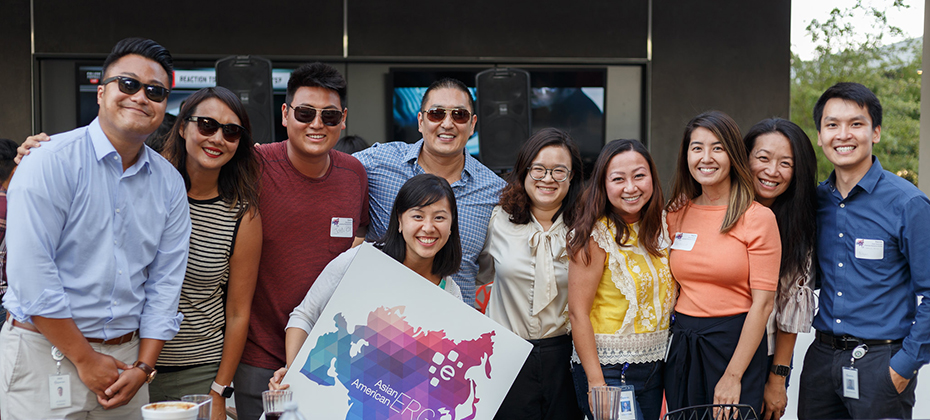
As part of the company’s commitment to diversity and inclusion, Experian is celebrating Asian Pacific American Heritage Month through May. This article is by Dacy Yee, VP of Marketing and Customer Relationship Management for Experian Consumer Services and executive co-sponsor for Experian’s Asian American Employee Resource Group (ERG). My parents’ story is not unlike any other immigrant story. At 20 years old, they came to the United States from Hong Kong with nothing but a dream for more opportunity and a better life for their family. Their drive and resilience empowered me from a young age. I got my hustle from my dad; he is the hardest-working person I know. Throughout my childhood, he juggled multiple jobs, from working in Chinese restaurants and bagging groceries to becoming a mechanic. He worked his way from mechanic to owner of a gas and service station, often spending early mornings and late evenings opening and closing the shop. I got my toughness from my mom; she always pushed me to be better by making me believe that I was capable, strong and resilient, and by telling me that I could achieve anything I wanted to in life. My parents showed me what courage and determination meant by leaving the familiar in their home country to move here and maneuver a new, unfamiliar culture. They empowered me to work hard and take risks—to always think bigger. Asian Americans have a unique place in history; from the Chinese immigrants working on the railroad in the 1880s to the Japanese WWII internment camps of the 1940s, there’s something to be said about the Asian American story in this country that has only recently been explored in pop culture and entertainment. There’s the quiet, hard work ethic and driven mentality from my parents’ generation that worked so well in certain countries, but a steady drumbeat of wanting to stand out in future generations after that. This has profound implications for professional environments. The generalizations of the silent model minority have been disputed in recent years. Even more so, there’s much to be discussed as to how we carry our past generational habits into the future and how that shapes who we become. The lessons my parents taught me sometimes translate differently and result in the culmination of stereotypes I’ve tried to avoid throughout my career. Putting my head down and working hard might suddenly mean I’m passive. Thinking twice about challenging authority might translate to being soft-spoken or submissive. As an Asian American professional woman, I’m faced with minute-to-minute decisions of when to speak up, when to fight my battles and when to simmer down. There have been studies showing that there is a real “bamboo” ceiling for Asian Americans trying to reach the C-suite level. In fact, Asian Americans are currently the racial group least likely to be promoted to management positions in the U.S., according to a study in the Harvard Business Review. The question is: how do we break through that ceiling? As a company rooted and driven by data, we are constantly looking at numbers in everything we do. This is why we’re hosting a speaker to walk through his findings about what builds and creates this “bamboo” ceiling and how it affects Asian Americans in the workplace. We need to speak up and share our struggles with each other; as part of Asian Pacific American Heritage Month, we’re hosting a panel featuring our own Asian American leaders and professionals to talk about this very issue. To each other, to their colleagues, to their managers and to the larger Experian community. Finally, we’re going to chart the path forward and lead by example. As members of the Asian American ERG at Experian, we’re going to host more skill-building workshops, have open and candid conversations, and keep each other accountable to our stretch goals and ultimately our professional aspirations. As we celebrate Asian Pacific American Heritage Month, there will be an ongoing dialogue of what empowerment means to us in the workplace. Ultimately, regardless of where you come from and how you identify yourself, the resounding lesson is of empowerment; standing up for what you’re passionate about and leading the way for others who will be following in your path.

Charles Butterworth talks about the acquisition of leading South African companies Compuscan and Scoresharp Today we announced the completion of our acquisition of Compuscan and Scoresharp in South Africa. This exciting moment creates a single, united Experian organisation that brings together the best of all we offer, not only for South Africa, but the wider African continent. Compuscan’s agile approach has driven its rapid expansion into six Sub-Saharan African countries, alongside emerging business in Australia and the Philippines. Combining Experian’s proven digital strategy with Compuscan and Scoresharp’s cost-effective operating model gives us an excellent foundation for Experian to expand into Africa. This is a commitment we’re serious about, and we’ve made the public commitment to spending at least R120 million on technological enhancements as part of establishing South Africa as an investment hub. For our clients and partners, this acquisition will see the combined organisation bringing new innovations to market, faster and at scale, enabled by our shared bureau data. Delivering additional resources for credit bureau information, decision analytics, marketing services, loyalty & rewards, and training. Allowing us to be more agile, more flexible, and to respond faster to the need of all the organisations and the people we serve. More importantly, this is a chance for us to drive financial inclusion across the region. It’s our intention to use this acquisition to accelerate our financial inclusion goals, bringing many more people into the credit economy and helping us create a better tomorrow for millions. I am delighted to be welcoming Compuscan and Scoresharp to the Experian family, and I am excited about the opportunities that lie ahead as we drive towards our goals of greater financial inclusion and better data management across South Africa and beyond.

Having a diverse workforce is vital to help us innovate and deliver on the needs of our increasingly diverse clients and consumers. Over the years, we've made some great progress, but there's so much more we can do and it's going to take the collective effort of all of us to continue to move the needle. That's why we're gearing up to celebrate International Women's Day (IWD). It's a day celebrated in many countries around the world to recognize the achievements of women and drive equality among men and women. At Experian, IWD activities are extending throughout the month of March. Have a look at what's going on around the world as Experian celebrates this important day: Asia Pacific The Asia Pacific region is hosting a range of activities across our offices in March, which will include round-table and speaker events as well as an opportunity to network and pledge their support for IWD. EMEA and UK&I EMEA and UK&I are joining together for IWD to support and celebrate diversity and inclusion. The week started with a video of employees from both regions reflecting on what diverse teams bring to our business. Employees will also be invited to a variety of events to engage and network with inspirational women and hear stories from our leaders on what diversity means to them personally. Latin America Throughout the month of March, Latin America has been running a campaign to share stories of achievements in their region and raise awareness about breast cancer prevention and other diseases more common in women. On IWD, there will be a panel of women leaders who will address issues such as the social inclusion of women in the region, women's participation in the labor market, Experian's commitment to female leadership and the importance of a work/life In Brazil, IWD is kicking off with a presentation by members of the United Nations to present their 50-50 Gender Equality program (which aims to eliminate gender inequalities by 2030) and how they are working with companies around the world to achieve this vision. Employees will have an opportunity to hear from leaders in our business about diversity and inclusion plans for the region, and listen to a panel of external speakers discuss diversity challenges and career development. North America Our employees in North America will be kicking off the week with celebrations across their ITS’ 13 offices in the region. Each office will have daily activities throughout the week, and all employees – including virtual and those based in smaller offices – will be invited to attend webinars focused on Diversity and Inclusion topics. On IWD, there will be panel discussions with senior leaders who will speak on various career development topics. To close out the week, there will be a special Book Club discussion on March 9. We will continue to update this blog post all week with pictures and other ways we’re celebrating IWD. Bookmark this page and come back.

I work at SEGA, a global games company. I first met Nakamura-san, my contact at Experian, about eight or nine years ago. I remember telling him at the time that I was a little sceptical of credit report and analytic companies – I thought they were either too expensive or their reports weren’t detailed enough. However, a year later I needed help from a company like Experian, and I thought I’d put them to the test. My team and I were starting to communicate with overseas markets, to work with companies around the world. So, I phoned Nakamura-san. It was a business negotiation, so I had my poker face on – I played the usual mind games you have to, insinuating that if Experian did this job well then our company might be able to offer them even more business in the future. Safe to say, they passed the test. We’ve been building a really positive relationship with Experian for the last eight years. We’re working with companies in Hong Kong, Taiwan and London at the moment. To work with them, we need information – for instance, we need to know if they’re actually located where they say they are. Even if a company gives us an address, it’s always possible that it operates from a different country – we’ve all heard about companies and their tax havens. When we have these questions, Nakamura-san and his team at Experian collect and analyse data on these companies, and give us very thorough information – breaking it all down and explaining everything to us really clearly. It’s really difficult to get the rich, detailed analysis of data you need, but Experian provides us much better data than any of our previous credit research companies managed to. They consult with us, and help us use this data to get our business to a better place. I’m very grateful for it – they’ve added great value to our business. Mr. Shinji Mutazono, Team Manager, SEGA Group Companies Finance Department, SEGA Holdings CO., Ltd.

In Malaysia, nearly 280,000 people live without electricity. By volunteering with the Liter of Light program, we’re bringing solar panel lights to remote villages, transforming the quality of life and brightening the darker hours for families. In Malaysia, more than 1 percent of the population lives without electricity – one of life’s basic necessities – which equates to nearly 280,000 people living in darkness after the sun goes down. Some people have never had electricity in their life, making simple tasks like cooking or reading nearly impossible after dark. I wanted to change that. My day job is to support and enable individuals within Experian to pursue various career opportunities, but what I’m most passionate about is the way Experian helps me invest in my local community through the Heart of Experian Corporate Social Responsibility program. This year, my team and I had the chance to collaborate with Liter of Light (LOL) – a global, grassroots movement committed to providing affordable, sustainable solar light to people with limited or no access to electricity. In February, we joined one of their projects to install 60 solar street lights in the village of Orang Asli, an indigenous community in the Cameron Highlands. Over the span of two days in February, a group of 30 Experian volunteers built and installed the solar panel lights. On the first day, the LOL team taught us how to build the panels, teaching us the skills needed to cut wire, assemble PVC pipes and drill holes. The second day, we rode in Jeeps through muddy roads and a three-foot deep river to reach the village. We spent hours unloading the lights and assembling the panel boxes, plotting the village maps and identifying the right spots to install the solar panel lights. I was happy to see some of the local villagers’ curiosity and participation throughout the day. Some helped us assemble the lights while others prepared the right spots for installation by building bamboo stands. The weather was kind to us, so by 5 p.m., nearly all the lights were installed – just before dark! After completing all the hard work, our team recorded a group video using a drone that all of the Orang Asli children chased after. Thanks to our service project providing light to a village in darkness, 150 villagers in Orang Asli will now have more productive, higher-quality lives during the dark hours of the day. I’m so glad I got to play a role in that.
In this article…

Ally is a verb, not just a noun, at Experian. Our Experian Pride Employee Resource Group created an allyship training for all employees and a Parents Group to provide resources to parents, caregivers and family members so they can better support LGBTQ+ youth and family. New this year is our updated bereavement leave policy that acknowledges chosen family, which honors the experiences of many individuals in the community.
As Experian Chief Sustainability Officer Abigail Lovell says, “The world works best when everyone gets to live as they truly are.”
At Experian, we remain dedicated to making that a reality.
Learn more about Experian ‘s commitment to inclusion and belonging in its 2025 Power of YOU Reports: English | Portuguese | Spanish
| Col 1 Heading | Col 2 Heading |
| Col 1 Row 1 | Col 2 Row 1 |