Related Posts

The recent wildfires in Los Angeles are now among the most destructive recorded in California’s history. Thousands of structures have been damaged or destroyed, and many families are facing the heartbreaking loss of their homes, businesses and personal belongings. The fires have also tragically claimed lives and caused significant injuries. In the wake of such devastation, the immediate priority for everyone is, of course, ensuring the safety and well-being of themselves and their loved ones. As communities come together to navigate this challenging time, we are committed to being a resource to consumers. Our hope is to help those impacted by the fires preempt or prevent potential impacts to their financial health and identity where possible. If you or someone you know has been impacted by the Los Angeles fires, here are some key points to keep in mind. 1. Safeguard Your Identity Natural disasters can unfortunately create opportunities for identity theft. Important documents containing personal information may be lost or scattered. According to the Federal Trade Commission, instances of identity theft have nearly tripled over the last decade and scammers often exploit chaotic situations and vulnerable consumers. Be Wary of Scammers: Sadly, following natural disasters, opportunistic fraudsters often deploy schemes tied to charity and donations, insurance, new financing, construction or clean up, and more. These perpetrators may lift and deploy tactics that were successful following natural disasters in other areas and deploy them to target those impacted by the LA wildfires. Stay vigilant against fraudsters who may try to steal your personal information or money through disaster-related schemes or offers that sound too good to be true. Use Free Credit Monitoring and Fraud Alerts: Take advantage of these services to keep an eye on your credit activity. If you notice anything suspicious, report it immediately to your bank or financial institution. Consider Freezing Your Credit: If your personal information has been compromised, freezing your credit with the three major credit reporting agencies can prevent new fraudulent credit applications. You can freeze your credit for free with Experian by clicking here or enrolling in its free app on your mobile device. 2. Contact Your Lenders In times of crisis, many financial institutions are willing to work with affected consumers. If you’re worried about paying your bills on time due to the fires, reach out to your mortgage, auto loan, and credit card companies as soon as possible. Your lenders can report accounts as deferred or in forbearance if you live in an area impacted by the fires. This means no late payments will be reported, allowing you to focus on immediate concerns. However, interest might continue to accrue on the balance, so be sure to understand the terms of any agreement. 3. Use Your Credit Report as a Financial Tool Tracking down contact information for each of your lenders can be overwhelming. Your credit report, which you can access for free at annualcreditreport.com or via the Experian website or its free app on your mobile device, can be a helpful starting point. While, understandably, protecting your credit history or identity may not be your immediate concern, taking a proactive approach could help prevent any or further damage to your financial health at a time when you need access to credit the most. For more tools and resources to protect your credit standing and financial health, please visit Ask Experian.
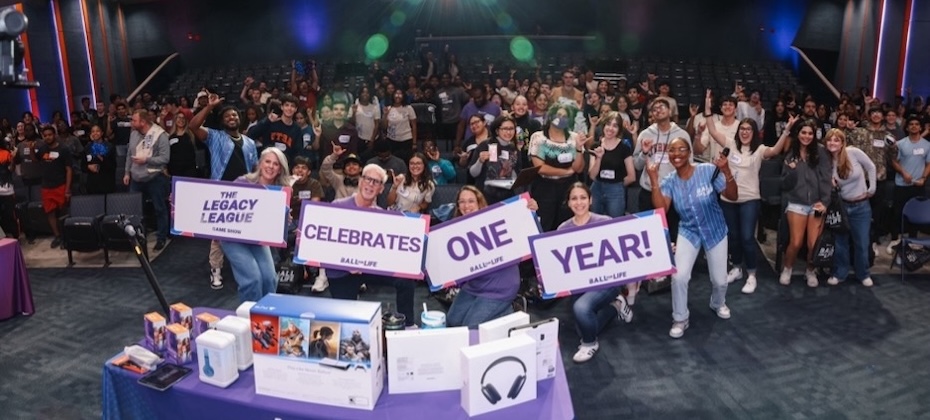
Experian is celebrating the one-year anniversary of The Legacy League Game Show™, a dynamic and interactive event that has revolutionized financial literacy education for students at Historically Black Colleges and Universities (HBCUs) and Hispanic Serving Institutions (HSIs). This innovative program, part of the B.A.L.L. for Life™ initiative, combines the excitement of a game show with essential lessons on credit and financial management. We marked the occasion where it debuted in 2023: at EntreprenUTSA at the University of Texas San Antonio. The Legacy League Game Show™ has traveled to ten universities such as Morgan State and Shaw Universities and major events across the United States. The National Urban League describes the event as transformational; HomeFree-USA calls it a “model for how to teach anything to Gen Z and other generations.” Thousands of students have participated across the country, and more than 99% report an increase in their financial literacy after the experience. As someone whose family didn’t discuss money matters growing up, this impact is especially gratifying. In addition to making learning fun, The Legacy League Game Show™ addresses a critical issue: financial invisibility among young consumers, particularly within communities of color. Forty percent of consumers under 25 are credit invisible, with 26% of Hispanic and 28% of Black consumers affected, compared to 16% of their white and Asian peers. Special guests, including rapper and college basketball standout Flau’jae, comedian and actor Mike Merrill, Louisiana State University wide receiver Chris Hilton, Jr. and Grammy-nominated D Smoke have joined the game show, adding star power and excitement. Next year, The Legacy League Game Show™ will hit the road again, visiting more schools and events. We already have stops planned at the #IYKYK Pitch Competition in partnership with HomeFree-USA, the University of Illinois in collaboration with the Hispanic Alliance for Career Enhancement (HACE), and the UnidosUS National Conference. Check out the action from our 2024 stops by clicking here.Learn more about Experian’s commitment to underserved communities in The Power of YOU 2024: Diversity, equity, inclusion and social impact report.

Modernizing the conversation around credit and financial literacy is a key commitment for Experian, especially for young adults. That’s why we partner with organizations like the Singleton Foundation to produce “Your World on Money,” to meet young people where they are, with engaging, easy-to-understand video shorts about credit, budgeting, and saving and more. We’re thrilled this commitment and creativity has earned both Gold and Bronze Anthem Awards, which recognize excellence in social good, celebrate the impactful work of organizations and initiatives that are driving positive change. Financial literacy is often not taught in schools, and the language around credit and personal finance can be intimidating. By normalizing these conversations, we hope to inspire confidence and action, helping young adults make informed financial decisions as they navigate life’s milestones. Our United for Financial Health partnership with the Singleton Foundation continues with our new series, the Finance Couch, where college students join our experts on a coach in the middle of a Los Angeles campus to answer their money questions. And our Anthem Award-winning series, HeartBroke, helps couples whose relationships are tested with financial issues to determine if they can work through it or end up HeartBroke(n).

Harnessing Generative AI for Financial Success: Transforming Financial Literacy and Health in the Digital Age
Financial EducationThroughout time, we’ve seen examples of how new technologies can reshape the way we live our lives and manage our finances. As a millennial, the standouts to me are the start of the internet and the rise of the smart phone and mobile banking. Each innovation has opened new ways of learning and simplifying the way we do things. Now, we find ourselves on the brink of another intriguing shift with the rise of generative AI. This development is especially timely, as we know consumers are hungry for information and resources to improve their credit scores and overall financial health. To get a better sense of how consumers are tapping into this technology, we deployed a survey which showed a significant number of Americans are already embracing generative AI. In fact, 63% of consumers are familiar with generative AI, including 84% of Gen Zers and 79% of millennials. Having learned about finances through trial and error (an approach I wouldn’t recommend), and now dedicating myself to consumer education advocacy, I find this incredibly exciting. Especially considering many consumers, nearly half, are also beginning to tap technology to help manage their personal finances. It’s perhaps no surprise this resonates most for America’s youngest consumers, with 67% of Gen Zers and 62% of millennials stating they use or are considering to use the technology to manage their personal finances. The good news is consumers who are using the technology for personal financial management are reporting an overwhelmingly positive experience – an impressive 96% reported positive experiences and 77% stated they use generative AI for personal financial tasks at least once a week. Key findings include: FINDINGSTOTALGEN Z (18-27)MILLENNIAL (28-43)GEN X (44-59)BOOMER (60-78)SILENT (79+)Indicate they are somewhat or very familiar with GenAI technology63%84%79%58%40%29%Indicate using GenAI to learn about a new topic or personal finances33%46%43%28%19%18%Indicate they are using or considering using GenAI powered tools or apps to help with managing personal finances47%67%62%41%28%23% As we continue to explore the benefits of generative AI, it’s clear this technology can be a valuable resource for improving financial literacy as we look ahead. We believe that the responsible use of AI can open new opportunities for consumers seeking to enhance their financial health. However, as with anything new, there are a few things consumers should keep in mind if they are currently leverage, or considering leveraging generative AI to learn about or manage their finances or credit scores, including: Don’t forget the basics: While there’s no question generative AI can be a helpful tool for managing your finances, consumers shouldn’t lose sight of the “old school” ways to protect their financial health and credit standing. This includes checking your credit report and scores regularly. You can get a free copy of your Experian credit report and FICO® Score[1] updated daily at www.experian.com or via Experian’s free mobile app. Consumers can also get a free credit report from each of the three credit reporting agencies once a week at www.annualcreditreport.com. Verify your findings: Generative AI tools are only as good as the information they consume and there’s no shortage of misinformation about managing your credit scores and finances that exists online. Always cross-check AI-generated financial advice with reputable sources. You can find answers to many personal finance and credit-building questions on Ask Experian—Experian’s free credit advice blog. Be safe and use generative AI responsibly. Many of the generative AI tools that exist today collect and store user data. Be mindful of the personal information you share with generative AI tools to ensure your information is protected. In short, the rise of generative AI marks a pivotal moment in personal finance education, and an exciting one for me. As we embrace this technology, I believe we can create a more informed and financially empowered consumer base. [1] Credit score calculated based on FICO® Score 8 model. Your lender or insurer may use a different FICO® Score than FICO® Score 8, or another type of credit score altogether. Learn more.

We believe that financial literacy leads to empowerment. That is why Experian supports initiatives and partners with community organizations to deliver financial education. We also develop products and services that give more control to consumers over their credit profile and financial health. As part of advancing our mission of Financial Power to All®, we are proud to announce we are helping more than 5,000 Hispanic individuals nationwide by relieving $10 million dollars of consumer debt. To provide families with this boost, we joined forces with ForgiveCo, a Public Benefit Corporation (PBC), to administer the acquisition and cancellation of qualifying consumer debt for the selected recipients. Beneficiaries will also receive a one-year premium Experian membership for free that offers access to their Experian credit report in English and Spanish[i], FICO® Score[ii], bilingual educational content, and other financial resources. We hope this effort helps raise awareness of the importance of financial literacy for everyone, and that Experian has resources to help individuals reach their financial dreams. To amplify the message, we collaborated with multi-platinum, award-winning singer and songwriter Prince Royce and you can see his video here. In fact, we have been making a concerted effort the last several years to evolve our educational resources and products to better support all underserved communities. Some of our other activities include the creation of the B.A.L.L. for Life initiative that connects African American and Hispanic youth with financial education, supporting scholarships for Asian Americans through the Ascend organization, providing custom resources for Out & Equal and Born This Way Foundation for the LGBTQ+ community, supporting the NextGen Innovation Lab for Disability:IN, and sponsoring credit counseling for the military community with Operation HOPE. For resources in Spanish, Experian offers a credit e-book and consumers can access a full suite of articles at the Ask Experian blog here. [i] Only Experian credit reports are available in Spanish. All other services associated with an Experian membership are available in English only. English fluency is required for full access to Experian’s products. [ii] Credit score calculated based on FICO® Score 8 model. Your lender or insurer may use a different FICO® Score than FICO® Score 8, or another type of credit score altogether. Learn more.

As data breaches become more prevalent, companies must try to stay ahead of the curve and be prepared to respond to any kind of security incident. In an effort to provide a glimpse into what 2016 could bring, Experian Data Breach Resolution released its third annual Data Breach Industry Forecast white paper.
Data Science Central Interview With Dr. Shanji Xiong, Chief Scientist at Experian’s Global Data Labs
FeaturedThe following interview was conducted by William Vorhies and featured on Data Science Central. Q: What work does a data scientist do and what knowledge do they need? A: 90% of the data in the world has been created in the last two years. Data Scientists retrieve, sift, analyze, process, and store all the data according to business or consumer needs. Simply put, Data Scientists convert the collected and analyzed data into business intelligence. Thus, there are multiple attributes a Data Scientist should have. Not only should they have technical expertise and coding capabilities, but they should also have good intuition and communication skills.
The following article was written by Kassandra Kurth, Director of Strategic Initiatives for Experian Health, and featured in Executive Insight: Telemedicine has transformed the healthcare industry. From rural America, where in-person doctor visits are difficult, to the farthest reaches of the globe, internet technology allows doctors to visit the sick, diagnose illness, prescribe medicine and even perform surgery without ever actually touching a patient. The recent focus of healthcare automation for providers has been on electronic clinical documentation, but providers also have opportunities to automate revenue cycle functions.
Through Experian’s long-standing partnership with the UCI Paul Merage School of Business, I had the pleasure of participating recently in UCI’s Distinguished Speaker Series. I spoke about the role big data plays in today’s economy, and how data is being used as a force for good. My message to the 300+ attendees was clear – big data is everyone’s business. And it’s only going to get bigger. We have 90% more data today than we had just 2 years ago. What will happen in the next 2 years, much less the next 10? As big data gets bigger, how can we use it in even better ways, as a much greater force for good in society? Where we’re headed In the next decade, I predict that: Every single industry – from food service to entertainment to technology to retail – will be using big data in some way. We’re moving quickly in that direction already. A recent Gartner survey found that three-quarters of companies plan to invest in big data over the next 2 years. We’ll be using big data to cure big diseases. I believe we can fully cure cancer and HIV, among others, if we can tap into new insights from wearable technologies and genetic mapping, and put all that data to good use. Big data will help our economy improve. The presidential candidates may argue about the best way to create jobs and increase wealth, but any way you look at it, big data has to be a part of it. The more we can capture trend data on spending patterns and investment returns, the more we can be smart about where we spend our tax dollars, and even how we manage our personal finances. In other words, big data is going to become the backbone of society in ways we least expect today. Sometime in the future, when you go to a museum or an art gallery, big data will make your experience more personal, more customized, and more relevant to your interests. We’re starting to see hints of this now. Think of how you might receive coupons on your phone for cheaper drinks at the ballpark food counter, because your phone realized you were at the game. “But I think we’re going to take this to an even higher level.” Imagine if we could add virtual reality to your experience – so that, when you walk into an art museum, your phone generates a hologram of your favorite artist. Overall, you’ll be getting a lot more value out of your everyday experiences. Some of the best uses of big data will be in the public sector, an area we’re already achieving significant benefits. Right now, big data is helping to improve public services, transportation and land use. Of particular interest these days, big data is helping to protect public safety in large crowds. And it’s helping people at hospitals figure out how to pay for their care, and pinpointing the most cost-effective payment plans. I think opportunities for big data will continue to expand within the public sector. How we get there But this will only happen if we take the right steps now: We all need to keep learning. This is the message I emphasized with the audience at UCI. No matter where you are in your career, it can only help to sharpen your skills in data and insights analysis. There’s more to discover, every day. Develop policies that encourage data-sharing. We can only benefit from big data if we make it easy for companies and governments to exchange the type of information that will ultimately make our world better. We have a tremendous responsibility to help implement policies that support that goal. Look beyond the obvious. Keep thinking of new sources of data and new applications for it. We’ll all benefit from thinking creatively. That’s the focus we’ve been taking at Experian. One example is our DataLabs, where we are using breakthrough experiments to take risks, so we can do good things with data on behalf of our clients. And we think the world will be better in the long run because of it. Watch these video excerpts from this event: Using Big Data For So Much More How is Big Data Helping Entrepreneurs Big Data Hurdles ### Craig Boundy is the CEO of Experian North America
 In a recent report, the Consumer Financial Protection Bureau (CFPB) estimated that there are more than 45 million American consumers that are “credit invisible,” meaning that they either have no credit history or a credit file too thin to receive access to mainstream credit products.
This limits their ability to get an affordable loan for a car, realize the dream of homeownership or even restricts access to capital to start a small business. More frequently, a lack of credit history forces consumers to turn to more expensive, short term lending options.
While credit invisibles may not have a traditional credit history, many make their cable, utility and mobile phone payments on time. However, this on-time payment data is not being included in their credit file.
In a recent report, the Consumer Financial Protection Bureau (CFPB) estimated that there are more than 45 million American consumers that are “credit invisible,” meaning that they either have no credit history or a credit file too thin to receive access to mainstream credit products.
This limits their ability to get an affordable loan for a car, realize the dream of homeownership or even restricts access to capital to start a small business. More frequently, a lack of credit history forces consumers to turn to more expensive, short term lending options.
While credit invisibles may not have a traditional credit history, many make their cable, utility and mobile phone payments on time. However, this on-time payment data is not being included in their credit file.