
The recent wildfires in Los Angeles are now among the most destructive recorded in California’s history. Thousands of structures have been damaged or destroyed, and many families are facing the heartbreaking loss of their homes, businesses and personal belongings. The fires have also tragically claimed lives and caused significant injuries. In the wake of such devastation, the immediate priority for everyone is, of course, ensuring the safety and well-being of themselves and their loved ones. As communities come together to navigate this challenging time, we are committed to being a resource to consumers. Our hope is to help those impacted by the fires preempt or prevent potential impacts to their financial health and identity where possible. If you or someone you know has been impacted by the Los Angeles fires, here are some key points to keep in mind. 1. Safeguard Your Identity Natural disasters can unfortunately create opportunities for identity theft. Important documents containing personal information may be lost or scattered. According to the Federal Trade Commission, instances of identity theft have nearly tripled over the last decade and scammers often exploit chaotic situations and vulnerable consumers. Be Wary of Scammers: Sadly, following natural disasters, opportunistic fraudsters often deploy schemes tied to charity and donations, insurance, new financing, construction or clean up, and more. These perpetrators may lift and deploy tactics that were successful following natural disasters in other areas and deploy them to target those impacted by the LA wildfires. Stay vigilant against fraudsters who may try to steal your personal information or money through disaster-related schemes or offers that sound too good to be true. Use Free Credit Monitoring and Fraud Alerts: Take advantage of these services to keep an eye on your credit activity. If you notice anything suspicious, report it immediately to your bank or financial institution. Consider Freezing Your Credit: If your personal information has been compromised, freezing your credit with the three major credit reporting agencies can prevent new fraudulent credit applications. You can freeze your credit for free with Experian by clicking here or enrolling in its free app on your mobile device. 2. Contact Your Lenders In times of crisis, many financial institutions are willing to work with affected consumers. If you’re worried about paying your bills on time due to the fires, reach out to your mortgage, auto loan, and credit card companies as soon as possible. Your lenders can report accounts as deferred or in forbearance if you live in an area impacted by the fires. This means no late payments will be reported, allowing you to focus on immediate concerns. However, interest might continue to accrue on the balance, so be sure to understand the terms of any agreement. 3. Use Your Credit Report as a Financial Tool Tracking down contact information for each of your lenders can be overwhelming. Your credit report, which you can access for free at annualcreditreport.com or via the Experian website or its free app on your mobile device, can be a helpful starting point. While, understandably, protecting your credit history or identity may not be your immediate concern, taking a proactive approach could help prevent any or further damage to your financial health at a time when you need access to credit the most. For more tools and resources to protect your credit standing and financial health, please visit Ask Experian.

Experian is celebrating the one-year anniversary of The Legacy League Game Show™, a dynamic and interactive event that has revolutionized financial literacy education for students at Historically Black Colleges and Universities (HBCUs) and Hispanic Serving Institutions (HSIs). This innovative program, part of the B.A.L.L. for Life™ initiative, combines the excitement of a game show with essential lessons on credit and financial management. We marked the occasion where it debuted in 2023: at EntreprenUTSA at the University of Texas San Antonio. The Legacy League Game Show™ has traveled to ten universities such as Morgan State and Shaw Universities and major events across the United States. The National Urban League describes the event as transformational; HomeFree-USA calls it a “model for how to teach anything to Gen Z and other generations.” Thousands of students have participated across the country, and more than 99% report an increase in their financial literacy after the experience. As someone whose family didn’t discuss money matters growing up, this impact is especially gratifying. In addition to making learning fun, The Legacy League Game Show™ addresses a critical issue: financial invisibility among young consumers, particularly within communities of color. Forty percent of consumers under 25 are credit invisible, with 26% of Hispanic and 28% of Black consumers affected, compared to 16% of their white and Asian peers. Special guests, including rapper and college basketball standout Flau’jae, comedian and actor Mike Merrill, Louisiana State University wide receiver Chris Hilton, Jr. and Grammy-nominated D Smoke have joined the game show, adding star power and excitement. Next year, The Legacy League Game Show™ will hit the road again, visiting more schools and events. We already have stops planned at the #IYKYK Pitch Competition in partnership with HomeFree-USA, the University of Illinois in collaboration with the Hispanic Alliance for Career Enhancement (HACE), and the UnidosUS National Conference. Check out the action from our 2024 stops by clicking here.Learn more about Experian’s commitment to underserved communities in The Power of YOU 2024: Diversity, equity, inclusion and social impact report.

Modernizing the conversation around credit and financial literacy is a key commitment for Experian, especially for young adults. That’s why we partner with organizations like the Singleton Foundation to produce “Your World on Money,” to meet young people where they are, with engaging, easy-to-understand video shorts about credit, budgeting, and saving and more. We’re thrilled this commitment and creativity has earned both Gold and Bronze Anthem Awards, which recognize excellence in social good, celebrate the impactful work of organizations and initiatives that are driving positive change. Financial literacy is often not taught in schools, and the language around credit and personal finance can be intimidating. By normalizing these conversations, we hope to inspire confidence and action, helping young adults make informed financial decisions as they navigate life’s milestones. Our United for Financial Health partnership with the Singleton Foundation continues with our new series, the Finance Couch, where college students join our experts on a coach in the middle of a Los Angeles campus to answer their money questions. And our Anthem Award-winning series, HeartBroke, helps couples whose relationships are tested with financial issues to determine if they can work through it or end up HeartBroke(n).

Harnessing Generative AI for Financial Success: Transforming Financial Literacy and Health in the Digital Age
Financial EducationThroughout time, we’ve seen examples of how new technologies can reshape the way we live our lives and manage our finances. As a millennial, the standouts to me are the start of the internet and the rise of the smart phone and mobile banking. Each innovation has opened new ways of learning and simplifying the way we do things. Now, we find ourselves on the brink of another intriguing shift with the rise of generative AI. This development is especially timely, as we know consumers are hungry for information and resources to improve their credit scores and overall financial health. To get a better sense of how consumers are tapping into this technology, we deployed a survey which showed a significant number of Americans are already embracing generative AI. In fact, 63% of consumers are familiar with generative AI, including 84% of Gen Zers and 79% of millennials. Having learned about finances through trial and error (an approach I wouldn’t recommend), and now dedicating myself to consumer education advocacy, I find this incredibly exciting. Especially considering many consumers, nearly half, are also beginning to tap technology to help manage their personal finances. It’s perhaps no surprise this resonates most for America’s youngest consumers, with 67% of Gen Zers and 62% of millennials stating they use or are considering to use the technology to manage their personal finances. The good news is consumers who are using the technology for personal financial management are reporting an overwhelmingly positive experience – an impressive 96% reported positive experiences and 77% stated they use generative AI for personal financial tasks at least once a week. Key findings include: FINDINGSTOTALGEN Z (18-27)MILLENNIAL (28-43)GEN X (44-59)BOOMER (60-78)SILENT (79+)Indicate they are somewhat or very familiar with GenAI technology63%84%79%58%40%29%Indicate using GenAI to learn about a new topic or personal finances33%46%43%28%19%18%Indicate they are using or considering using GenAI powered tools or apps to help with managing personal finances47%67%62%41%28%23% As we continue to explore the benefits of generative AI, it’s clear this technology can be a valuable resource for improving financial literacy as we look ahead. We believe that the responsible use of AI can open new opportunities for consumers seeking to enhance their financial health. However, as with anything new, there are a few things consumers should keep in mind if they are currently leverage, or considering leveraging generative AI to learn about or manage their finances or credit scores, including: Don’t forget the basics: While there’s no question generative AI can be a helpful tool for managing your finances, consumers shouldn’t lose sight of the “old school” ways to protect their financial health and credit standing. This includes checking your credit report and scores regularly. You can get a free copy of your Experian credit report and FICO® Score[1] updated daily at www.experian.com or via Experian’s free mobile app. Consumers can also get a free credit report from each of the three credit reporting agencies once a week at www.annualcreditreport.com. Verify your findings: Generative AI tools are only as good as the information they consume and there’s no shortage of misinformation about managing your credit scores and finances that exists online. Always cross-check AI-generated financial advice with reputable sources. You can find answers to many personal finance and credit-building questions on Ask Experian—Experian’s free credit advice blog. Be safe and use generative AI responsibly. Many of the generative AI tools that exist today collect and store user data. Be mindful of the personal information you share with generative AI tools to ensure your information is protected. In short, the rise of generative AI marks a pivotal moment in personal finance education, and an exciting one for me. As we embrace this technology, I believe we can create a more informed and financially empowered consumer base. [1] Credit score calculated based on FICO® Score 8 model. Your lender or insurer may use a different FICO® Score than FICO® Score 8, or another type of credit score altogether. Learn more.

We believe that financial literacy leads to empowerment. That is why Experian supports initiatives and partners with community organizations to deliver financial education. We also develop products and services that give more control to consumers over their credit profile and financial health. As part of advancing our mission of Financial Power to All®, we are proud to announce we are helping more than 5,000 Hispanic individuals nationwide by relieving $10 million dollars of consumer debt. To provide families with this boost, we joined forces with ForgiveCo, a Public Benefit Corporation (PBC), to administer the acquisition and cancellation of qualifying consumer debt for the selected recipients. Beneficiaries will also receive a one-year premium Experian membership for free that offers access to their Experian credit report in English and Spanish[i], FICO® Score[ii], bilingual educational content, and other financial resources. We hope this effort helps raise awareness of the importance of financial literacy for everyone, and that Experian has resources to help individuals reach their financial dreams. To amplify the message, we collaborated with multi-platinum, award-winning singer and songwriter Prince Royce and you can see his video here. In fact, we have been making a concerted effort the last several years to evolve our educational resources and products to better support all underserved communities. Some of our other activities include the creation of the B.A.L.L. for Life initiative that connects African American and Hispanic youth with financial education, supporting scholarships for Asian Americans through the Ascend organization, providing custom resources for Out & Equal and Born This Way Foundation for the LGBTQ+ community, supporting the NextGen Innovation Lab for Disability:IN, and sponsoring credit counseling for the military community with Operation HOPE. For resources in Spanish, Experian offers a credit e-book and consumers can access a full suite of articles at the Ask Experian blog here. [i] Only Experian credit reports are available in Spanish. All other services associated with an Experian membership are available in English only. English fluency is required for full access to Experian’s products. [ii] Credit score calculated based on FICO® Score 8 model. Your lender or insurer may use a different FICO® Score than FICO® Score 8, or another type of credit score altogether. Learn more.

There are times in most of our lives where we can’t get access to the financial system in a way that we want. Be it for a mortgage, a car, or a business loan. We’ve all experienced the frustration when you feel you’re on the outside of the system and you can’t do the things you want for yourself or your family. At Experian, it’s our job to change that. We want to make sure everybody is included and has access to fair and affordable financial products. Financial inclusion is fundamental to our business. With our focus on increasing access to financial services, improving financial literacy and confidence, and helping people manage their financial lives; we help power people and businesses to create their future. In fact, the United Nations includes access to financial services, such as credit and microfinance, among its Sustainable Development Goals. Access to affordable credit opens the door to opportunities for people to transform their lives – from homes and healthcare to education and entrepreneurship. This has never been more important than it is today. Creating a Campaign to Drive Financial Health Worldwide As the pandemic took hold in 2020, we stepped in with data and analytics to support governments, health services and national emergency response efforts through major initiatives such as COVID Radar in Brazil and Experian CORE (COVID Outlook & Response Evaluator). These are just two examples of how we can use our data and expertise to make the biggest difference to society. It soon became clear that the impact — not just on physical health, but on financial health — would be far-reaching for people around the world. We looked at how we could use our expertise and resources to help vulnerable communities through the crisis and focused on financial education as the best way to strengthen their resilience and support their road to recovery. We launched our United for Financial Health programme. We rapidly established 11 NGO partnerships across our biggest consumer markets to deliver targeted financial education for some of the communities hit hardest by COVID-19. By the end of the year, we had reached nearly 35 million people, more than double our original goal of 15 million, and we’re not stopping there. We aim to reach 100 million people by 2024. Part of our efforts include our member relationships around the world. This year, we surpassed the milestone of 100 million direct relationships with consumers globally and delivered further innovations to support people through our business, with the launch of products like Experian Boost in the UK and Serasa Score Turbo in Brazil. This, of course, is on top of our ground-breaking Experian Boost launch in the United States in 2019. Our goal is to have a direct relationship with as many people as possible; to truly become the Consumers’ Credit Bureau and power financial opportunities for all. Driving Innovation with Social Purpose Our culture of innovation helps us harness opportunities to drive business growth. We are continually investing in product innovation and new sources of data to address emerging market opportunities that can make a real difference to global communities. In 2020, around 1,000 “innovators” from across Experian joined our annual Future of Information Conference, which was held virtually because of the pandemic, to encourage them to think differently in their work. Topics included fairness in artificial intelligence, transforming agribusiness and enhancing the consumer healthcare experience. Teams at our DataLabs in Brazil, Singapore, the UK and the USA tap into our culture of innovation to continually create new solutions to global challenges. The result of all this is that our Social Innovation products have now reached 61 million people since 2013. We aim to reach 100 million by 2025. As John Hope Bryant, CEO of one of our NGO partners Operation HOPE, says, “Experian’s commitment to unlocking the power of data to create opportunity means more people will be set up not just to survive, but to thrive in the months and years to come.” In this year’s Sustainable Business Report our commitments come through stronger than ever. We are raising our ambition and aiming to reach 100 million people through our social innovation products by 2025. Our goal is to reach 100 million people through our United for Financial Health campaign by 2024. We have also pledged to protect our planet by becoming carbon neutral in our own operations by 2030. We know we’ve got more work to do and we remain focused on using our business to make real and sustainable change. With social innovation running so deeply through the core of our culture, and our commitment to improving global financial health front and centre of our thinking, we will continue to push to find new solutions to help people, serve communities and protect the environment, helping to create a better future for all. All of this is very personal to me. I passionately believe we can and should drive to make a difference in society. I serve as executive sponsor of our ESG programs and this isn’t just another corporate program, it’s at the heart of what we do as a company to power financial opportunities. My personal pledge is to continue to keep you updated, as we progress our agenda to sustainable environmental and societal change. Read the full SBR report here.

Last week, I had the chance to take part in a few really important conversations and further exemplify our leadership and commitment to driving financial inclusion. On July 13, I had a frank dialogue with Derrick Johnson, President of the NAACP, during their 112th NAACP Virtual Annual Convention. Our conversation centered around economic inclusion, the wealth gap and the ways companies, like ours, can help provide education and access to financial services. During my conversation with Derrick, he referred to credit as a currency. I think that’s absolutely the right way to talk about it. Credit gives people access to financial services. It can divide people or bring them together to achieve their goals. We recognize there are millions of consumers who lack access to credit today. That’s why we continue to innovate through tools like Experian Boost, our free tool that enables consumers to contribute positive payment data to their Experian credit report. Especially in underserved communities, consumers may not get credit for paying their utility bills, cell phone bills, or even their streaming services, and they should. This provides a more accurate picture of their financial situation. I also participated in a virtual press conference with the U.S. Office of the Comptroller of the Currency and leaders from PNC, HomeFree-USA and Fifth Third Bank to discuss our participation in Project REACh, which stands for Roundtable for Economic Access and Change. It brings together leaders from the banking industry, national civil rights organizations, business and technology to reduce barriers that prevent full, equal and fair participation in the nation’s economy. We were approached to participate because of our deep understanding of credit risk and our ability to help financial institutions make informed credit decisions through data and advanced analytics. Our role is to help develop programs with the Alternative Credit Scoring Utility Team and Small Business Opportunity Team that drive financial inclusion. Our participation in Project REACh is the latest example in a string of efforts to address this important issue, including Experian Boost and our flagship lender score Experian Lift, which leverages all Experian assets to improve consumer’s access to credit. We believe that every individual deserves the opportunity to reach their fullest financial potential through fair and affordable access to credit. By sharing information around tools like Experian Boost, expanding credit education through partnerships like the NAACP, and working with leaders in the industry through Project REACh, we can help increase financial access and empower consumers to enter into the credit ecosystem – some for the first time. We’re committed to working side-by-side with regulators, businesses and consumers to eliminate credit invisibility and improve financial equity and access.

At Experian, we create a better tomorrow by powering opportunities for consumers, customers, our people and communities. We use the full range of our capabilities to drive financial education and inclusion, and one of the ways we do this is through our United for Financial Health programme. I am delighted to announce the launch of this important programme in two of EMEA’s markets today. We’re excited for the positive difference our two new partnerships will make to help vulnerable consumers financially recover from the impacts of Covid-19. In Italy, incidents of domestic violence have increased considerably during the global pandemic, with the Italian National Institute of Statistics reporting a 75% increase in calls to anti-violence helplines in 2020 alone. Further statistics show women are particularly affected by unemployment due to Covid-19, reducing victims’ financial independence and their ability to escape from situations of abuse. The increase in domestic violence since the onset of the pandemic has also been highlighted globally by the UN. To help those impacted, we intend to partner with MicroLab and Microfinanza, who support women victims of domestic violence, foreign caregivers, and young people not in employment, education or training (NEETs). Our partnership aims to help these people access credit, so they have the financial means to improve their current situation, and take steps toward creating a better tomorrow. We will collaborate to deliver financial education, and we intend to develop an app that captures open (non-traditional) financial data to help them build their credit profiles. In South Africa, unemployment stands at 32.6%. A large proportion of people in the country run or work for small to medium-size enterprises (SMEs). By helping these organisations access affordable credit so they can continue to operate through the pandemic, we believe we can have a tangible impact on people’s employment. We will partner with the National Small Business Chamber, a non-profit membership organisation that supports SMEs. Together, we will educate small business owners on their financial and credit health, empowering them to improve their personal and business credit profiles to access the funding required to maintain and grow their businesses. Combined, we estimate our partnership with our NGO partners will reach 3.8 million consumers, helping deliver on our Company’s commitment to reach 100 million people by 2024. We start work on these projects today on our path to creating a better tomorrow.
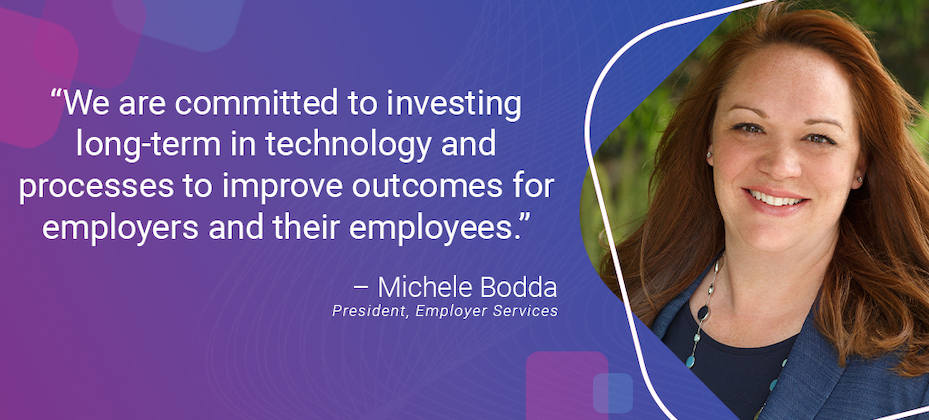
You may have recently seen the announcement of Experian’s new Employer Services business. While we have a longstanding history of serving multiple industries, we recognize some may wonder what prompted Experian to enter this space. It may even seem like a means to another end. In an effort to dispel any preconceived notions, I’d like to highlight what led us to invest in this business, how we plan to address employers most pressing pain points as employees return to work and what the industry can expect from us. The truth is our clients asked us to enter the employer services market. Employers have been seeking alternatives to legacy services. They’ve been asking to have a company of Experian’s scale and capabilities fill in the gaps, invest in innovation, and provide high-touch customer support. Essentially, our goal is to deliver on their ask and be an indispensable partner to employers across the U.S. Here are three ways we are bringing this vision to life: 1. The industry’s best and most trusted providers are now part Experian. A critical piece of our strategy is to bring together the best the industry has to offer. We have a solid track record when it comes to acquiring companies who disrupt industries with innovative solutions to difficult problems. So, we scoured the market to identify companies that would allow us to provide unmatched human capital management expertise. Through our acquisitions of Emptech, Corporate Cost Control (CCC), and Tax Credit Co. (TCC), I am confident we have assembled the best-of-the-best. Individually, each company has a trusted reputation for providing unmatched service to some of the most recognizable brands. As we come together, we are leveraging our combined capabilities to deliver secure, scalable and transparent services to even more businesses. We can assist employers across industries with streamlining complex and time-consuming Human Resources activities and support their finance team’s tax credits processes, through services including: Electronic I-9 verification management Unemployment claims management Employment and income verification fulfillment Tax credits and incentives management, including Work Opportunity Tax Credits (WOTC) Ultimately, we are helping employers turn workforce management into a competitive advantage by improving candidate and employee experiences, safeguarding employee information and maximizing the benefits of various tax credits programs. By leveraging our experts, our clients can spend more time focusing on their people. 2. Our services are backed by high-touch customer service and powered by industry-leading innovation. While we are rightfully recognized as the largest credit bureau in the country, I’ve personally seen our business grow over the past 20 years into something much more than a credit bureau. We are a global technology company and market leader in business insights and analytics, focused on empowering consumers. We invest heavily in innovation across a wide spectrum of industries, and we are committed to investing long-term in technology and processes to improve outcomes for employers and their employees. In fact, Experian has been recognized as one of the most innovative companies in the world by Forbes for several years – for our work in all of the industries we serve. At the same time, our services are delivered with the highest standards of data privacy, accuracy, security and transparency. Our clients will always know how their data is being used and how it benefits their employees. Our business continues to evolve to deliver world-class services for our clients and consumers. We’re bringing this same innovative mindset and focus to meet the evolving needs of employers. 3. We’re “All In” on Employer Services. While we recognize the employer services space was ripe for innovation long before the pandemic, the ensuing stay-at-home orders, rising unemployment, reemployment and legislation changes created a perfect storm for employers, Human Resources and finance professionals. We’re facing an entirely new set of workforce challenges today. Whether you need unparalleled unemployment claims management, tax credit expertise, verification of income and employment reliability and transparency or work eligibility certification, we’re here to bring the best Experian has to offer to help and we’re going all in. Our promise is that we will listen to our customers to understand their unique needs and invest to provide the capabilities and high-touch service tailored to best serve them. We know employers need a partner they can trust, who is focused on their business and their employee’s experience and who will bring new ideas to the table on managing a complex workforce in this ever-changing environment. We have the teams in place with deep expertise to tackle the toughest challenges. We’re thrilled to be here, and we’re committed for the long-term. You can learn more about our Employer Services business by visiting www.experian.com/employer-services.

The use of digital payments continues to trend upwards. While the pandemic pushed consumers online quickly out of necessity, it has since become a preference due to the convenience factor. As businesses transform their operations to accommodate this rapidly growing volume of digital transactions, they must factor in the additional vulnerability caused for online fraud and identity theft. At Experian we are committed to helping our clients improve the customer experience, while at the same time protecting consumer identities and information. Experian was recently acknowledged in Juniper Research’s Online Payment Fraud Deep Dive Strategy & Competition 2021-2025 as an established leader in fraud detection and prevention. Juniper Research, one of the leading global analyst firms in the mobile and digital technology sector, scored Experian high for their marketing & branding strength, service range & features, financial performance in the sector, experience in the sector, operations & global reach, partnerships, creativity & innovation, and future business prospects. View infographic with key fraud trends According to Juniper Research, “Experian continues to invest into its fraud detection and prevention solution and uses its vast array of customer data to deliver an effective set of solutions across the entire consumer journey, from onboarding, through account management/account takeover and transaction risk mitigation.” The reports highlights Experian CrossCore platform noting, “Experian leverages a combination of proprietary solutions and partner capabilities and data – integrated into its CrossCore platform – where it leverages a robust machine learning approach that takes into account these dynamic sources of data.” All of Experian’s fraud detection and prevention services are available through Experian’s CrossCore partner ecosystem, which combines advanced analytics, rich data assets, identity insights and fraud prevention capabilities. Businesses using the Experian CrossCore partner ecosystem can connect any new or existing tools and systems in one place to quickly adjust strategies based on evolving threats and business needs, which helps to improve efficiency and reduce operational costs. Learn more about the CrossCore platform here.