
The recent wildfires in Los Angeles are now among the most destructive recorded in California’s history. Thousands of structures have been damaged or destroyed, and many families are facing the heartbreaking loss of their homes, businesses and personal belongings. The fires have also tragically claimed lives and caused significant injuries. In the wake of such devastation, the immediate priority for everyone is, of course, ensuring the safety and well-being of themselves and their loved ones. As communities come together to navigate this challenging time, we are committed to being a resource to consumers. Our hope is to help those impacted by the fires preempt or prevent potential impacts to their financial health and identity where possible. If you or someone you know has been impacted by the Los Angeles fires, here are some key points to keep in mind. 1. Safeguard Your Identity Natural disasters can unfortunately create opportunities for identity theft. Important documents containing personal information may be lost or scattered. According to the Federal Trade Commission, instances of identity theft have nearly tripled over the last decade and scammers often exploit chaotic situations and vulnerable consumers. Be Wary of Scammers: Sadly, following natural disasters, opportunistic fraudsters often deploy schemes tied to charity and donations, insurance, new financing, construction or clean up, and more. These perpetrators may lift and deploy tactics that were successful following natural disasters in other areas and deploy them to target those impacted by the LA wildfires. Stay vigilant against fraudsters who may try to steal your personal information or money through disaster-related schemes or offers that sound too good to be true. Use Free Credit Monitoring and Fraud Alerts: Take advantage of these services to keep an eye on your credit activity. If you notice anything suspicious, report it immediately to your bank or financial institution. Consider Freezing Your Credit: If your personal information has been compromised, freezing your credit with the three major credit reporting agencies can prevent new fraudulent credit applications. You can freeze your credit for free with Experian by clicking here or enrolling in its free app on your mobile device. 2. Contact Your Lenders In times of crisis, many financial institutions are willing to work with affected consumers. If you’re worried about paying your bills on time due to the fires, reach out to your mortgage, auto loan, and credit card companies as soon as possible. Your lenders can report accounts as deferred or in forbearance if you live in an area impacted by the fires. This means no late payments will be reported, allowing you to focus on immediate concerns. However, interest might continue to accrue on the balance, so be sure to understand the terms of any agreement. 3. Use Your Credit Report as a Financial Tool Tracking down contact information for each of your lenders can be overwhelming. Your credit report, which you can access for free at annualcreditreport.com or via the Experian website or its free app on your mobile device, can be a helpful starting point. While, understandably, protecting your credit history or identity may not be your immediate concern, taking a proactive approach could help prevent any or further damage to your financial health at a time when you need access to credit the most. For more tools and resources to protect your credit standing and financial health, please visit Ask Experian.

Experian is celebrating the one-year anniversary of The Legacy League Game Show™, a dynamic and interactive event that has revolutionized financial literacy education for students at Historically Black Colleges and Universities (HBCUs) and Hispanic Serving Institutions (HSIs). This innovative program, part of the B.A.L.L. for Life™ initiative, combines the excitement of a game show with essential lessons on credit and financial management. We marked the occasion where it debuted in 2023: at EntreprenUTSA at the University of Texas San Antonio. The Legacy League Game Show™ has traveled to ten universities such as Morgan State and Shaw Universities and major events across the United States. The National Urban League describes the event as transformational; HomeFree-USA calls it a “model for how to teach anything to Gen Z and other generations.” Thousands of students have participated across the country, and more than 99% report an increase in their financial literacy after the experience. As someone whose family didn’t discuss money matters growing up, this impact is especially gratifying. In addition to making learning fun, The Legacy League Game Show™ addresses a critical issue: financial invisibility among young consumers, particularly within communities of color. Forty percent of consumers under 25 are credit invisible, with 26% of Hispanic and 28% of Black consumers affected, compared to 16% of their white and Asian peers. Special guests, including rapper and college basketball standout Flau’jae, comedian and actor Mike Merrill, Louisiana State University wide receiver Chris Hilton, Jr. and Grammy-nominated D Smoke have joined the game show, adding star power and excitement. Next year, The Legacy League Game Show™ will hit the road again, visiting more schools and events. We already have stops planned at the #IYKYK Pitch Competition in partnership with HomeFree-USA, the University of Illinois in collaboration with the Hispanic Alliance for Career Enhancement (HACE), and the UnidosUS National Conference. Check out the action from our 2024 stops by clicking here.Learn more about Experian’s commitment to underserved communities in The Power of YOU 2024: Diversity, equity, inclusion and social impact report.

Modernizing the conversation around credit and financial literacy is a key commitment for Experian, especially for young adults. That’s why we partner with organizations like the Singleton Foundation to produce “Your World on Money,” to meet young people where they are, with engaging, easy-to-understand video shorts about credit, budgeting, and saving and more. We’re thrilled this commitment and creativity has earned both Gold and Bronze Anthem Awards, which recognize excellence in social good, celebrate the impactful work of organizations and initiatives that are driving positive change. Financial literacy is often not taught in schools, and the language around credit and personal finance can be intimidating. By normalizing these conversations, we hope to inspire confidence and action, helping young adults make informed financial decisions as they navigate life’s milestones. Our United for Financial Health partnership with the Singleton Foundation continues with our new series, the Finance Couch, where college students join our experts on a coach in the middle of a Los Angeles campus to answer their money questions. And our Anthem Award-winning series, HeartBroke, helps couples whose relationships are tested with financial issues to determine if they can work through it or end up HeartBroke(n).

Harnessing Generative AI for Financial Success: Transforming Financial Literacy and Health in the Digital Age
Financial EducationThroughout time, we’ve seen examples of how new technologies can reshape the way we live our lives and manage our finances. As a millennial, the standouts to me are the start of the internet and the rise of the smart phone and mobile banking. Each innovation has opened new ways of learning and simplifying the way we do things. Now, we find ourselves on the brink of another intriguing shift with the rise of generative AI. This development is especially timely, as we know consumers are hungry for information and resources to improve their credit scores and overall financial health. To get a better sense of how consumers are tapping into this technology, we deployed a survey which showed a significant number of Americans are already embracing generative AI. In fact, 63% of consumers are familiar with generative AI, including 84% of Gen Zers and 79% of millennials. Having learned about finances through trial and error (an approach I wouldn’t recommend), and now dedicating myself to consumer education advocacy, I find this incredibly exciting. Especially considering many consumers, nearly half, are also beginning to tap technology to help manage their personal finances. It’s perhaps no surprise this resonates most for America’s youngest consumers, with 67% of Gen Zers and 62% of millennials stating they use or are considering to use the technology to manage their personal finances. The good news is consumers who are using the technology for personal financial management are reporting an overwhelmingly positive experience – an impressive 96% reported positive experiences and 77% stated they use generative AI for personal financial tasks at least once a week. Key findings include: FINDINGSTOTALGEN Z (18-27)MILLENNIAL (28-43)GEN X (44-59)BOOMER (60-78)SILENT (79+)Indicate they are somewhat or very familiar with GenAI technology63%84%79%58%40%29%Indicate using GenAI to learn about a new topic or personal finances33%46%43%28%19%18%Indicate they are using or considering using GenAI powered tools or apps to help with managing personal finances47%67%62%41%28%23% As we continue to explore the benefits of generative AI, it’s clear this technology can be a valuable resource for improving financial literacy as we look ahead. We believe that the responsible use of AI can open new opportunities for consumers seeking to enhance their financial health. However, as with anything new, there are a few things consumers should keep in mind if they are currently leverage, or considering leveraging generative AI to learn about or manage their finances or credit scores, including: Don’t forget the basics: While there’s no question generative AI can be a helpful tool for managing your finances, consumers shouldn’t lose sight of the “old school” ways to protect their financial health and credit standing. This includes checking your credit report and scores regularly. You can get a free copy of your Experian credit report and FICO® Score[1] updated daily at www.experian.com or via Experian’s free mobile app. Consumers can also get a free credit report from each of the three credit reporting agencies once a week at www.annualcreditreport.com. Verify your findings: Generative AI tools are only as good as the information they consume and there’s no shortage of misinformation about managing your credit scores and finances that exists online. Always cross-check AI-generated financial advice with reputable sources. You can find answers to many personal finance and credit-building questions on Ask Experian—Experian’s free credit advice blog. Be safe and use generative AI responsibly. Many of the generative AI tools that exist today collect and store user data. Be mindful of the personal information you share with generative AI tools to ensure your information is protected. In short, the rise of generative AI marks a pivotal moment in personal finance education, and an exciting one for me. As we embrace this technology, I believe we can create a more informed and financially empowered consumer base. [1] Credit score calculated based on FICO® Score 8 model. Your lender or insurer may use a different FICO® Score than FICO® Score 8, or another type of credit score altogether. Learn more.

We believe that financial literacy leads to empowerment. That is why Experian supports initiatives and partners with community organizations to deliver financial education. We also develop products and services that give more control to consumers over their credit profile and financial health. As part of advancing our mission of Financial Power to All®, we are proud to announce we are helping more than 5,000 Hispanic individuals nationwide by relieving $10 million dollars of consumer debt. To provide families with this boost, we joined forces with ForgiveCo, a Public Benefit Corporation (PBC), to administer the acquisition and cancellation of qualifying consumer debt for the selected recipients. Beneficiaries will also receive a one-year premium Experian membership for free that offers access to their Experian credit report in English and Spanish[i], FICO® Score[ii], bilingual educational content, and other financial resources. We hope this effort helps raise awareness of the importance of financial literacy for everyone, and that Experian has resources to help individuals reach their financial dreams. To amplify the message, we collaborated with multi-platinum, award-winning singer and songwriter Prince Royce and you can see his video here. In fact, we have been making a concerted effort the last several years to evolve our educational resources and products to better support all underserved communities. Some of our other activities include the creation of the B.A.L.L. for Life initiative that connects African American and Hispanic youth with financial education, supporting scholarships for Asian Americans through the Ascend organization, providing custom resources for Out & Equal and Born This Way Foundation for the LGBTQ+ community, supporting the NextGen Innovation Lab for Disability:IN, and sponsoring credit counseling for the military community with Operation HOPE. For resources in Spanish, Experian offers a credit e-book and consumers can access a full suite of articles at the Ask Experian blog here. [i] Only Experian credit reports are available in Spanish. All other services associated with an Experian membership are available in English only. English fluency is required for full access to Experian’s products. [ii] Credit score calculated based on FICO® Score 8 model. Your lender or insurer may use a different FICO® Score than FICO® Score 8, or another type of credit score altogether. Learn more.

Whether due to job loss, shortened working hours, or the need to take off time from work to care for ill family members, the current COVID-19 outbreak will undoubtedly cause financial hardship for millions of Americans. Understandably, the current situation is causing some consumers to fear losing something they’ve worked incredibly hard for – their home. For many, a home is the largest purchase they’ll ever make. We spend many years of our lives working to purchase a home and then many years after working to fill it with memories. We understand how important it is for you to protect your home. Thankfully, we’re seeing mortgage lenders, federal associations and the financial industry working together in truly unprecedented ways to help consumers cope with new financial challenges brought on by COVID-19. Last week, the Department of Housing and Urban Development, Fannie Mae and Freddie Mac — two of the largest mortgage services in the county — announced they are suspending foreclosures and evictions for at least 60 days. You can read more about this announcement here. This was followed by New York, an area hit particularly hard by COVID-19, urging mortgage servicers to refrain from reporting late payments for 90 days. The order outlines ways lenders can provide support to consumers who are unable to make timely mortgage payments, including forbearing mortgage payments for 90 days from their due dates. As part of this, late payments would not be reported to credit reporting agencies like Experian for 90 days and consumers would not have to pay late or online payment fees. The order also postpones foreclosures and evictions for 90 days and requires lenders to proactively outreach to consumers, through text, email or other means to ensure they’re aware of the assistance that’s being offered. Los Angeles, Miami and other cities across the U.S. are now also halting evictions. This news was shared in conjunction with Bank of America announcing additional support to borrowers, including the option to defer, or essentially pause, mortgage payments during the current outbreak. Many of the largest mortgage lenders in the country are offering the same support to consumers. Please note, the Department of Housing and Urban Development, Fannie Mae and Freddie Mac acted fast, and these are the guidelines as of the time when this article was written. As things are still early, our Experian mortgage team will stay abreast with potential new developments and update this information if or as things will change. These are unprecedented times and we are starting to see lenders and consumers engage in equally unprecedented ways as we work to overcome the new reality we’re all facing. At the same time, we are seeing interesting trends unfold in terms of mortgage lending activity. According to the Mortgage Bankers Association, as of March 25, 2020, these include: Refinancing existing mortgages, which has been booming with interest rates at historically low levels, declined almost 35% compared to the previous week, but is still twice as high as it was the previous year. Not surprisingly, the states with the biggest declines are the states hardest hit by the COVID-19 outbreak (i.e. New York, Washington, and California) In addition, with the economy under pressure, there was a nearly 30% decline in weekly new mortgage applications. If you or someone you know is a homeowner, I hope you found this information useful. Remember, if you are concerned you may miss a mortgage payment, the first and best move you can make, to protect your home and your financial health, is to contact your mortgage lender as soon as possible. Lenders do not want you to miss a payment any more than you do. They can discuss options for navigating these unusual circumstances. Keep in mind, these programs are available to you if you are facing financial hardship due to the COVID-19 crisis, for example, if you lost your job or had to be hospitalized. Of course, we’re all hoping not to be in either of these categories. If you haven’t been financially impacted by the current COVID-19 crisis, you are expected to continue to make your mortgage payments (and meet all your other financial obligations). You should feel good about being able to do that as it will make you part of the important group of individuals who can keep contributing to sustaining the American economy.

Last year we revealed that there were around 5.8 million people in the UK who were virtually invisible to the financial system. These ‘credit invisibles’ might have limited financial data because they just turned 18 and are new to credit, or they may have recently moved to the UK. Alternatively, perhaps they conduct most of their transactions in cash or simply haven’t used credit for a long time. Either way, we wanted to spotlight the issue, to explain how we can help people regain control of their financial footprints and ensure more people get access to affordable financial products and services. So, as our support for Credit Awareness Week moves into its fourth year, we decided to check in on our progress. The positive news is that we have managed to reduce this financially excluded population by nearly half a million in the last 12 months, to just over 5.3 million – as the map below shows. Credit Awareness Week 2020 offers us all the chance to reflect on all the hard work that so many of us have put into tackling financial exclusion. As a result of this work, more people can access the mainstream services they need, and many are paying less than they otherwise would have. Yet there is much more which needs to be done. We need to continue to innovate and find new solutions to help widen affordable financial access for all. Promoting a better understanding of the things that people can do to help improve their financial track record. Together we can continue our mission to bring more people into the mainstream financial system and deliver better, more affordable products and services for everyone.

Experian’s “2019 The Power of You” Report Showcases Our Diverse and Inclusive Culture, Innovative Brand
Diversity & InclusionWe are proud of our workplace culture at Experian North America. Today, we released our third annual inclusion and diversity “2019 The Power of You” report. We encourage our employees to bring their whole selves to work and have created a culture of inclusion that helps to fuel our continued product innovation. Our Power of You movement began in 2017 to raise awareness about our efforts around inclusion and to provide employees with greater transparency of the initiatives that are part of this program. Progressive policies across a wide range of initiatives such as pay equity, paternal leave, flexible working arrangements and corporate social responsibility help to make our employees feel proud, committed and empowered to work at Experian. “Diversity of background, of experience and of thought bring new ideas to our organization which foster the innovation that helps to improve the lives of consumers every day. Our culture of inclusion and diversity underpins our business success which, underpins what our brand stands for,” said Craig Boundy, former CEO of Experian North America. “With the launch of our ‘2019 The Power of You’ report, we are excited to share how our inclusive workplace is helping to drive our culture of innovation.” Some highlights of our 2019 report include: We have 1,200 women in STEM positions 47% of new hires are women and 44% are non-white Women and men are promoted equally We created our newest ERG, Aspire, which focuses on mental health and physical disability awareness and caregiving We have a total of eight ERGs with 1,200 active participates Employees participate in events including charity walks, fundraising events, and toy and food drives, among others Events recognize International Women’s Day, Veteran’s Day, the Lunar New Year, National Coming Out Day, Cinco de Mayo, Asian Pacific American Heritage Month, Black History Month, Ramadan, Kwanzaa, Hispanic Heritage Month and Diwali, among others Employees spent more than 12,000 hours volunteering With the support of our employees, we donated more than $10,000 for California wildfire relief to the Red Cross Employees packed a total of 65,880 meals volunteering with Rise Against Hunger locations in Costa Mesa, Allen and Franklin, California We currently have 38 clubs with 800 members We rolled out a new Paid Family Care Leave Program, expanding on our existing Paid Parental Leave Program Additional programs include the launch of a new, enhanced Employee Assistance Program, which offers a greater level of resources and benefits for mental and behavioral health for employees and families and the Experian Hardship Fund, launched in 2018 to help employees who are facing financial hardship. We continued our Humans of Experian video series, which highlights the stories of employees who have unique backgrounds that enhance the diversity of our company. We also had hundreds of our employees from throughout the organization volunteer to personally evaluate Experian Boost™. Employees participated in this program because they believed in the product’s potential to help millions of Americans. At Experian, we continuously foster a culture of development and growth and we have various forms of mentorship, career paths and leadership programs to support our employees. Our commitment to creating an inclusive workplace has also received numerous accolades. We were named one the 100 Best Companies to Work For in 2020 and one of the Best Workplaces for Diversity in 2020 by Fortune and Great Place to Work. Additionally, for the second consecutive year, we were awarded a perfect score in the Human Rights Campaign Foundation’s 2020 Corporate Equality Index. Experian was also named a Top Workplace in 2020 in Orange County, Calif., by the Orange County Register for the seventh consecutive year, and one of the world’s most innovative companies by Forbes magazine for five years. A copy of this year’s report can be found here.
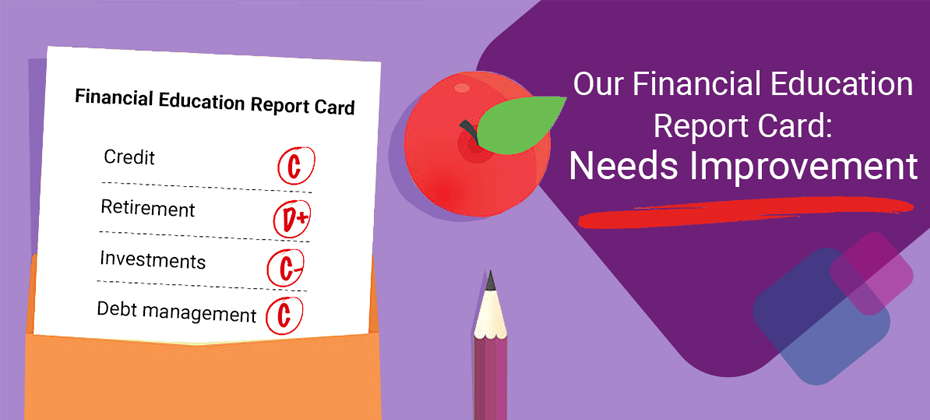
If you asked me how I’d feel about taking a personal finance class in school when I was growing up in a small town near St. Louis, Missouri, I probably would’ve told you it sounds better than trigonometry and chemistry on the list of classes I had to take. They weren’t my best subjects. Now that I’m a few years older, and I hope a bit wiser, I can promise you I would answer that question a lot differently if asked today. I now know there are some instances in life where it makes sense to learn by making mistakes, but money is not one of them. Like many people, I had my first experience with credit and money management when I took out a student loan. I was the first person in my family to go to college, so we didn’t know what we were getting ourselves into. Unfortunately, I learned the impact of poor borrowing habits and high interest rates the hard way – for many, many years. Learning about money, and especially credit, by making mistakes can lead to long term damage to your financial health, which is one of the many reasons I’m passionate about financial education in schools today. Effective financial education programs will help young adults be more successful older adults. We know that if a young person has a basic understanding of how credit works, they tend to be less likely to overextend their credit card use. It’s one of the reasons Experian was the first in its industry to invest in youth financial education, as a founding partner of the Jump$tart Coalition for Personal Financial Literacy two decades ago. Over that time, we’ve continued to support the organization. Eleven years ago, we launched the Jump$tart National Educator Conference that offers teachers around the country tools and information about personal finance to take back to their classrooms. Last year, more than 350 teachers attended the conference. This year alone they will teach more than 48,000 students across the country about personal finance. It’s been a very powerful partnership. While we’ve made a lot of progress in educating our youth about personal finance, there is still a lot of work to do. As of this year, 21 states across the U.S. require high school students to take a personal finance course, an increase of 4 states since 2018, according to a recently released report from the Council for Economic Education. This report also reinforced the idea that students who receive financial education borrow more sensibly. They tend to look at low-cost over high-cost financing options and they are more likely to apply for aid, receive grants and accept federal loans, which all tend to be lower interest forms of borrowing. Applying for grants or low-cost financing options could have made a serious impact on my financial health as a young adult. Considering student loan debt has now reached $1.56 trillion, it’s time we all start paying more attention to the positive impact financial education can have on our young people as well as our economy. Not only is financial education in schools the right thing to do, we know it’s something students want. We recently surveyed a group of more than 500 high school graduates to learn what they want when it comes to finance and credit education. Some key findings include: 49% of Gen Z consumers surveyed said they found financial topics to be somewhat interesting or very interesting—and 11% of them even said they loved learning about them. Only about one-third—36%—of Gen Z consumers said they had taken a class on a financial topic, and among that group, many of them still had looming financial questions. Of the 64% that had never taken a financial education class, 43% reported wanting to learn to save money, 38% wanted to learn how to manage their expenses, and another 36% said they wanted to take a class that taught them how to file their taxes. A large majority—76%—of Gen Z consumers said that they thought their high school should have offered a class on managing finances. So, what can we do to help ensure our young people grow up to be financially healthy adults? If you’re a parent and want to find out if your children’s school offers financial education, head to https://checkyourschool.org/. If your school is not on the list, learn how you can become engaged in this initiative by working with JumpStart. In the meantime, you can also find free, educational resources on our website to help teach your children about personal finance and credit. We have prepared a simple lesson plan, presentations and online brochures that are free to download, and you can find answers to commonly asked questions about personal finance, credit, fraud, identity theft and more on our Ask Experian blog and our weekly Twitter Credit Chats.

Experian North America Awarded Fortune “100 Best Companies to Work For in 2020” Distinction
NA – North AmericaAt Experian, we value a workplace culture based on inclusion, innovation and the diversity of perspectives that each of our employees bring to work every day. In recognition of this commitment, we are extremely proud to be named to Fortune’s “100 Best Companies to Work for in 2020” list. Each year, Fortune recognizes the 100 best companies in the U.S. to work for and examines company programs as well as opportunities for innovation, among other factors. To determine the list, Great Place to Work oversaw the country’s largest ongoing annual workforce study. The organization analyzed the feedback from 4.3 million employees in the U.S. to more than 60 survey questions describing the extent to which their organization creates a “Great Place to Work For All.” The ranking accounted for the experiences of all employees including women, people of color, members of the LGBT community, older team members, and disabled employees. At Experian we aspire to have a truly diverse and inclusive workplace that fosters innovation, and have created a variety of different programs to achieve this goal. As part of this, we celebrate our diversity through a range of fun, engaging and informative cultural events, including those supported by our Employee Resource Groups (ERGs). Employees can also join one of our many social clubs to share interests with colleagues, or volunteer with nonprofit organizations to give back to the communities in which Experian operates. Our culture of inclusion is truly something to celebrate, and that’s because of every single person who makes up the Experian family and brings our brand to life every day. All of this is supported by our culture of continuous innovation; from the way we work to the solutions we create. This commitment to innovation has helped us create a workplace where our teams across the world have a desire to help change the lives of millions for the better. The diversity of thinking across Experian, and the way in which we harness it, helps fuel our innovation and ultimately our ongoing success as a business. This makes our work relevant to our consumers and clients, adding more value in their own lives – creating a better tomorrow for them. As a result, we continue to have a positive impact on consumers, businesses and the economy. We do this with our products, technology, and innovation — from finding breakthroughs around better utilizing data, to identifying ways we can make access to credit faster and simpler for millions around the world. At Experian, we are dedicated to making our workplace more just than a business. It’s a community that supports all our employees and promotes a culture where people can be comfortable being their authentic selves. And because of that commitment, we’re proud to join the ranks of Fortune’s “100 Best Companies to Work For in 2020.”