
The recent wildfires in Los Angeles are now among the most destructive recorded in California’s history. Thousands of structures have been damaged or destroyed, and many families are facing the heartbreaking loss of their homes, businesses and personal belongings. The fires have also tragically claimed lives and caused significant injuries. In the wake of such devastation, the immediate priority for everyone is, of course, ensuring the safety and well-being of themselves and their loved ones. As communities come together to navigate this challenging time, we are committed to being a resource to consumers. Our hope is to help those impacted by the fires preempt or prevent potential impacts to their financial health and identity where possible. If you or someone you know has been impacted by the Los Angeles fires, here are some key points to keep in mind. 1. Safeguard Your Identity Natural disasters can unfortunately create opportunities for identity theft. Important documents containing personal information may be lost or scattered. According to the Federal Trade Commission, instances of identity theft have nearly tripled over the last decade and scammers often exploit chaotic situations and vulnerable consumers. Be Wary of Scammers: Sadly, following natural disasters, opportunistic fraudsters often deploy schemes tied to charity and donations, insurance, new financing, construction or clean up, and more. These perpetrators may lift and deploy tactics that were successful following natural disasters in other areas and deploy them to target those impacted by the LA wildfires. Stay vigilant against fraudsters who may try to steal your personal information or money through disaster-related schemes or offers that sound too good to be true. Use Free Credit Monitoring and Fraud Alerts: Take advantage of these services to keep an eye on your credit activity. If you notice anything suspicious, report it immediately to your bank or financial institution. Consider Freezing Your Credit: If your personal information has been compromised, freezing your credit with the three major credit reporting agencies can prevent new fraudulent credit applications. You can freeze your credit for free with Experian by clicking here or enrolling in its free app on your mobile device. 2. Contact Your Lenders In times of crisis, many financial institutions are willing to work with affected consumers. If you’re worried about paying your bills on time due to the fires, reach out to your mortgage, auto loan, and credit card companies as soon as possible. Your lenders can report accounts as deferred or in forbearance if you live in an area impacted by the fires. This means no late payments will be reported, allowing you to focus on immediate concerns. However, interest might continue to accrue on the balance, so be sure to understand the terms of any agreement. 3. Use Your Credit Report as a Financial Tool Tracking down contact information for each of your lenders can be overwhelming. Your credit report, which you can access for free at annualcreditreport.com or via the Experian website or its free app on your mobile device, can be a helpful starting point. While, understandably, protecting your credit history or identity may not be your immediate concern, taking a proactive approach could help prevent any or further damage to your financial health at a time when you need access to credit the most. For more tools and resources to protect your credit standing and financial health, please visit Ask Experian.
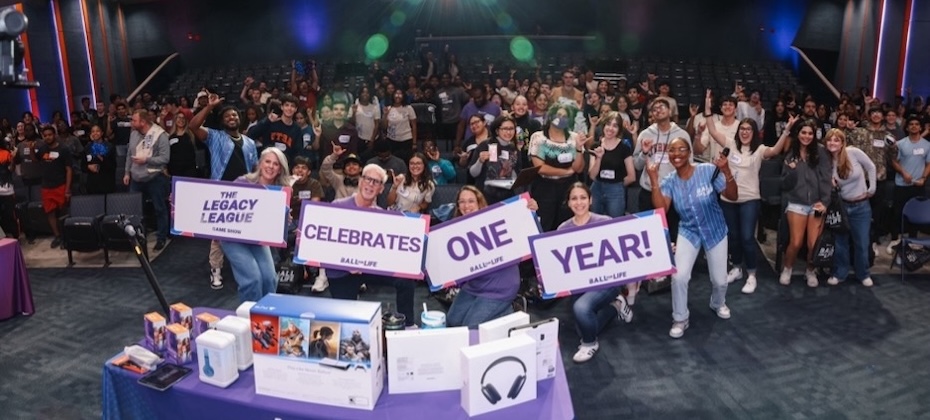
Experian is celebrating the one-year anniversary of The Legacy League Game Show™, a dynamic and interactive event that has revolutionized financial literacy education for students at Historically Black Colleges and Universities (HBCUs) and Hispanic Serving Institutions (HSIs). This innovative program, part of the B.A.L.L. for Life™ initiative, combines the excitement of a game show with essential lessons on credit and financial management. We marked the occasion where it debuted in 2023: at EntreprenUTSA at the University of Texas San Antonio. The Legacy League Game Show™ has traveled to ten universities such as Morgan State and Shaw Universities and major events across the United States. The National Urban League describes the event as transformational; HomeFree-USA calls it a “model for how to teach anything to Gen Z and other generations.” Thousands of students have participated across the country, and more than 99% report an increase in their financial literacy after the experience. As someone whose family didn’t discuss money matters growing up, this impact is especially gratifying. In addition to making learning fun, The Legacy League Game Show™ addresses a critical issue: financial invisibility among young consumers, particularly within communities of color. Forty percent of consumers under 25 are credit invisible, with 26% of Hispanic and 28% of Black consumers affected, compared to 16% of their white and Asian peers. Special guests, including rapper and college basketball standout Flau’jae, comedian and actor Mike Merrill, Louisiana State University wide receiver Chris Hilton, Jr. and Grammy-nominated D Smoke have joined the game show, adding star power and excitement. Next year, The Legacy League Game Show™ will hit the road again, visiting more schools and events. We already have stops planned at the #IYKYK Pitch Competition in partnership with HomeFree-USA, the University of Illinois in collaboration with the Hispanic Alliance for Career Enhancement (HACE), and the UnidosUS National Conference. Check out the action from our 2024 stops by clicking here.Learn more about Experian’s commitment to underserved communities in The Power of YOU 2024: Diversity, equity, inclusion and social impact report.

Modernizing the conversation around credit and financial literacy is a key commitment for Experian, especially for young adults. That’s why we partner with organizations like the Singleton Foundation to produce “Your World on Money,” to meet young people where they are, with engaging, easy-to-understand video shorts about credit, budgeting, and saving and more. We’re thrilled this commitment and creativity has earned both Gold and Bronze Anthem Awards, which recognize excellence in social good, celebrate the impactful work of organizations and initiatives that are driving positive change. Financial literacy is often not taught in schools, and the language around credit and personal finance can be intimidating. By normalizing these conversations, we hope to inspire confidence and action, helping young adults make informed financial decisions as they navigate life’s milestones. Our United for Financial Health partnership with the Singleton Foundation continues with our new series, the Finance Couch, where college students join our experts on a coach in the middle of a Los Angeles campus to answer their money questions. And our Anthem Award-winning series, HeartBroke, helps couples whose relationships are tested with financial issues to determine if they can work through it or end up HeartBroke(n).

Harnessing Generative AI for Financial Success: Transforming Financial Literacy and Health in the Digital Age
Financial EducationThroughout time, we’ve seen examples of how new technologies can reshape the way we live our lives and manage our finances. As a millennial, the standouts to me are the start of the internet and the rise of the smart phone and mobile banking. Each innovation has opened new ways of learning and simplifying the way we do things. Now, we find ourselves on the brink of another intriguing shift with the rise of generative AI. This development is especially timely, as we know consumers are hungry for information and resources to improve their credit scores and overall financial health. To get a better sense of how consumers are tapping into this technology, we deployed a survey which showed a significant number of Americans are already embracing generative AI. In fact, 63% of consumers are familiar with generative AI, including 84% of Gen Zers and 79% of millennials. Having learned about finances through trial and error (an approach I wouldn’t recommend), and now dedicating myself to consumer education advocacy, I find this incredibly exciting. Especially considering many consumers, nearly half, are also beginning to tap technology to help manage their personal finances. It’s perhaps no surprise this resonates most for America’s youngest consumers, with 67% of Gen Zers and 62% of millennials stating they use or are considering to use the technology to manage their personal finances. The good news is consumers who are using the technology for personal financial management are reporting an overwhelmingly positive experience – an impressive 96% reported positive experiences and 77% stated they use generative AI for personal financial tasks at least once a week. Key findings include: FINDINGSTOTALGEN Z (18-27)MILLENNIAL (28-43)GEN X (44-59)BOOMER (60-78)SILENT (79+)Indicate they are somewhat or very familiar with GenAI technology63%84%79%58%40%29%Indicate using GenAI to learn about a new topic or personal finances33%46%43%28%19%18%Indicate they are using or considering using GenAI powered tools or apps to help with managing personal finances47%67%62%41%28%23% As we continue to explore the benefits of generative AI, it’s clear this technology can be a valuable resource for improving financial literacy as we look ahead. We believe that the responsible use of AI can open new opportunities for consumers seeking to enhance their financial health. However, as with anything new, there are a few things consumers should keep in mind if they are currently leverage, or considering leveraging generative AI to learn about or manage their finances or credit scores, including: Don’t forget the basics: While there’s no question generative AI can be a helpful tool for managing your finances, consumers shouldn’t lose sight of the “old school” ways to protect their financial health and credit standing. This includes checking your credit report and scores regularly. You can get a free copy of your Experian credit report and FICO® Score[1] updated daily at www.experian.com or via Experian’s free mobile app. Consumers can also get a free credit report from each of the three credit reporting agencies once a week at www.annualcreditreport.com. Verify your findings: Generative AI tools are only as good as the information they consume and there’s no shortage of misinformation about managing your credit scores and finances that exists online. Always cross-check AI-generated financial advice with reputable sources. You can find answers to many personal finance and credit-building questions on Ask Experian—Experian’s free credit advice blog. Be safe and use generative AI responsibly. Many of the generative AI tools that exist today collect and store user data. Be mindful of the personal information you share with generative AI tools to ensure your information is protected. In short, the rise of generative AI marks a pivotal moment in personal finance education, and an exciting one for me. As we embrace this technology, I believe we can create a more informed and financially empowered consumer base. [1] Credit score calculated based on FICO® Score 8 model. Your lender or insurer may use a different FICO® Score than FICO® Score 8, or another type of credit score altogether. Learn more.

We believe that financial literacy leads to empowerment. That is why Experian supports initiatives and partners with community organizations to deliver financial education. We also develop products and services that give more control to consumers over their credit profile and financial health. As part of advancing our mission of Financial Power to All®, we are proud to announce we are helping more than 5,000 Hispanic individuals nationwide by relieving $10 million dollars of consumer debt. To provide families with this boost, we joined forces with ForgiveCo, a Public Benefit Corporation (PBC), to administer the acquisition and cancellation of qualifying consumer debt for the selected recipients. Beneficiaries will also receive a one-year premium Experian membership for free that offers access to their Experian credit report in English and Spanish[i], FICO® Score[ii], bilingual educational content, and other financial resources. We hope this effort helps raise awareness of the importance of financial literacy for everyone, and that Experian has resources to help individuals reach their financial dreams. To amplify the message, we collaborated with multi-platinum, award-winning singer and songwriter Prince Royce and you can see his video here. In fact, we have been making a concerted effort the last several years to evolve our educational resources and products to better support all underserved communities. Some of our other activities include the creation of the B.A.L.L. for Life initiative that connects African American and Hispanic youth with financial education, supporting scholarships for Asian Americans through the Ascend organization, providing custom resources for Out & Equal and Born This Way Foundation for the LGBTQ+ community, supporting the NextGen Innovation Lab for Disability:IN, and sponsoring credit counseling for the military community with Operation HOPE. For resources in Spanish, Experian offers a credit e-book and consumers can access a full suite of articles at the Ask Experian blog here. [i] Only Experian credit reports are available in Spanish. All other services associated with an Experian membership are available in English only. English fluency is required for full access to Experian’s products. [ii] Credit score calculated based on FICO® Score 8 model. Your lender or insurer may use a different FICO® Score than FICO® Score 8, or another type of credit score altogether. Learn more.

To quote The Rime of the Ancient Mariner, ‘water, water everywhere, / nor any drop to drink.’ I think the same can be true of data. While organizations have more data than ever before, very few are able to capitalize on this resource and actually leverage it for insight. There is no question on the value of data. It is viewed as a key competitive advantage, and in some instances, a strategic financial asset. However, translating data into meaningful insight is a completely different task to storing and managing it from a regulatory perspective. We see many companies investing in all sorts of data initiatives, like analytics, machine learning automation, data governance, customer insight, etc. Yet, most companies still report they are not sufficiently data driven. Each year we conduct a global study of data usage and data management practices. This year, we surveyed over 1,000 practitioners on how they want to leverage data. The research dug into some of the obstacles they face and why so few are able to leverage data for insight. We found three key areas emerge. First, there is a large degree of distrust in information. The average professional looking at data does not understand how that data got there, when it is useful, and what state it is in. While data can lead to increased agility and better decision making, a significant level of distrust often causes leaders to fall back on making decisions by gut instinct rather than by informed data insight. In fact, we have consistently seen over the past several years that people believe almost a third of their data is inaccurate. Second, we are seeing a rising level of data debt. Data debt is a lot like technical debt. You have a set of data assets that aren’t necessarily fit for purpose or have a high degree of inaccuracy. Unless you take the time to fix that information and govern it properly, you are always going to have a suboptimal data operation. In turn, poor quality means many companies are not fully seeing the ROI or expected benefit from some of the investments they are making. Finally, there is a data skills shortage. This doesn’t just mean data professionals, like data analysts, chief data officers (CDOs), and data scientists. There is also a general lack of understanding around data within the broader business. We see a growing number of companies talking about enabling wider usage of data across the business and wanting to do more with data insight, but very few people across organizations are truly data literate. Our survey results indicated a tide changing where now most companies report that data literacy needs to be a core competency of employees over the next five years. To generate the level of insight needed to fully leverage data as a valuable asset, organizations have to start to tackle issues around inaccuracy, trust, and certainly data skills. Without fixing these components, organizations will continue to be surrounded by all of this useful data that doesn’t actually provide them with what they need. To learn more about these challenges and our new study, please download the report at https://www.edq.com/resources/data-management-whitepapers/2020-Global-data-management-research/.

As part of the company’s commitment to diversity and inclusion, Experian is celebrating Lunar New Year. This article is by executive co-sponsors of Experian’s Asian American Employee Resource Group (ERG): Dacy Yee, Chief Customer Officer and Jimmy Cheung, SVP of Information Security and Compliance. Lunar New Year, also known as Chinese New Year or Spring Festival, is celebrated in various Asian countries such as China, Taiwan, Vietnam, Korea, Japan, Singapore, Malaysia, the Philippines and others. For some cultures, it’s a 15-day long celebration filled with symbols and traditions that have different meanings. 2020 is the Year of the Rat, which is the first of all the zodiac animals. The Rat is seen as a sign of wealth and surplus in Chinese culture, and those born on the Year of the Rat are optimistic, energetic and likable by all! See the table below to determine your zodiac animal. In our families, the preparation for the Lunar New Year celebration starts a week before the New Year day. We clean the house thoroughly to remove any bad luck from the preceding year and decorate the interior with red objects—a color often associated with good fortune, wealth and longevity in the Chinese culture. Back when we were young, our parents would buy us new outfits to make sure that we looked presentable when visiting friends and families, and would also allow us unlimited access to sweets and treats, as it symbolized a sweet year ahead. The holiday has always been about more than just the coming of a new year. Lunar New Year meant spending time with loved ones, indulging in a delicious Asian feast, and partaking in age-old traditions that gave us a sense of pride and adoration for our culture. These are just some of the things that make the holiday so special to us (that, and receiving hong baos—red envelopes with money—from our elders). This year, our Asian American ERG worked hard to put on an outstanding Lunar New Year; it’s our group’s largest annual event! Experian enjoyed a diverse cultural showcase of seven different countries, a Chinese sleeve dance, Tinikling (Filipino stick dance), a Taiwanese aboriginal dance, a catered lunch and more. Tinikling is a traditional Philippine folk dance that involves two people tapping and sliding bamboo while dancers step over and in between the sticks. Our Asian American ERG performed tinikling for us today during our #LunarNewYear celebration! 🧧🐀 pic.twitter.com/JiwfzXp3wq — Experian (@Experian) February 6, 2020 We are also proud to announce we partnered with the Center for the Pacific Asian Family (CPAF) and hosted a donation drive to assist in their commitment to ending domestic and sexual violence in Asian Pacific Islander (API) communities. Many of us started the Lunar New Year on a positive note, and we want to ensure that’s true for those in need as well As always, we are so grateful to Experian for providing an environment where we are not only allowed but encouraged to bring our whole selves to work every day. Through various events hosted at Experian campuses across the country, we were able to impact 1,500 employees and expose them to the wonderful cultures of Asia. It is an honor to be able to share this part of our lives with our colleagues and show them how beautiful and rich various Asian cultures are. We look forward to a healthy and prosperous new year. 恭喜發財! Gong Hay Fat Choy! Jimmy Cheung Co-Executive Sponsor Asian American Employee Resource Group Dacy Yee Co-Executive Sponsor Asian American Employee Resource Group Photos taken by Nhan T. Nguyen.

Football Legend Akbar Gbajabiamila Helps People Build Financial Game Plan with Experian Boost
Financial EducationExperian’s game plan is focused on improving the financial health of consumers everywhere. As part of that journey, we recently went to Miami, Florida, ahead of the Big Game, with pro football legend and American Ninja Warrior host Akbar Gbajabiamila to discuss how Experian Boost is helping millions increase their credit scores. Gbajabiamila, author of “Everyone Can be a Ninja,” is passionate about helping people develop a financial game plan and he understands having a good credit score is a key component of good financial health. “There’s something I’m truly passionate about and it’s financial literacy. Credit scores are something so many people hear about, but they don’t know how to interact with them. Experian has a platform that allows people to personally impact their credit scores. You can literally take your everyday utility bills, add them into your Experian credit report and get credit for that,” said Gbajabiamila. The days leading up to the Big Game provided an exciting time for Gbajabiamila to share with consumers across the country about how Experian Boost is instantly improving credit scores and helping people take control of their credit. In fact, Akbar’s take on the important role credit scores play in financial health was enthusiastically received by many on-air hosts who echoed the need to speak about it more frequently. As Akbar shared, “Whether you’re a professional athlete or a fan of professional sports, it’s important that you pay attention to your credit report. And Experian Boost is the right step.” View highlights from our trip to Radio Row in the video below and learn more about Experian Boost by visiting www.Experian.com/BoostAmerica.

Explore Experian’s insights for customer identity and its interrelationship with security, convenience, and personalization, from consumers and businesses Businesses often talk about creating the ultimate digital experience for customers but far less about the interrelationship between security, convenience, and personalization. This results in siloed security measures at major decision points across the customer journey. And, it’s a disconnect that’s perpetuated through equally siloed CRM systems that strive to identify customer preferences but fail to do so in a consistent and appealing way. The impact on consumers is that they are dragged through a maze of security and risk protocols while at the same time being targeted or re-targeted products and services that are not always relevant. We challenged senior executives at 650 companies to think about whether they can accurately identify their customers and meet their customers’ needs for a relevant experience to not only help them create a more trusted relationship with a consumer but also to reduce fraud losses. We also surveyed over 6,500 consumers who had a lot to say about what constitutes best-in-class digital customer experience. Perception versus reality Our study found that 95% of businesses worldwide believe they are accurately identifying their customers yet 55% of consumers don’t feel recognized. In our survey last year, 84% of businesses said that if they could better identify their customers, then they could easily spot fraud. However, 57% of business reported having significantly higher fraud losses this year versus last year. How can this be true if businesses are in fact as strong as they believe they are at recognizing their customers and thus, presumably by extension, fraudsters? This then begs the question: how are businesses defining “recognition” and is it really working? Are they recognizing a customer to a person or are they able to categorize a customer into prescriptive buckets such as broad demographic delineations? Expectations for customer engagement Our study also found that 74% of consumers say security is still the most important factor when deciding to engage with a business online. This has been a consistent finding over the past two years. In fact, consumers are even willing to give more personal information for greater security and easier access to their accounts later, once they are comfortable. Despite this, over half of businesses are prioritizing personalization over security when making improvements to their customer experience. Consumers acknowledged experiencing and appreciating the changes businesses are making to their digital experience however security remained to be their most important criteria for engaging or continuing to engage with a business. What now? Desires for ultimate experience and concerns for security are still shaping the digital relationship between consumers and businesses where identity is at the heart of every customer decision and interaction. We believe businesses will need to invest further in data, infrastructure, and advanced analytics in order to get to a point of truly recognizing a consumer digitally as opposed to categorizing for broad brush pseudo personalization purposes. Only then will businesses start to make a dent in fulfilling the high consumer expectations for recognition as well as in mitigating rising fraud. Download our report (15 min read) and find out more about: Challenges standing in the way of businesses trying to identify their customers What different businesses and countries are doing to improve identity authentication The new type of customer journey that executives believe will improve the digital experience

I am delighted to announce that Experian has been recognised by the Top Employers Institute as a Top Employer in the UK, Spain, Bulgaria and South Africa. The annual research programme recognises leading employers around the world. Organisations certified as Top Employers dedicate themselves to providing the very best working environment for employees through their progressive ‘people-first’ HR practices. Being recognised as a Top Employer four years in a row is a significant achievement for us, but it wouldn’t have been possible without the support of our incredible workforce. By listening to our people and encouraging new ideas, they have continued to help us develop our working culture and pushed the boundaries to create the best possible working environment. An integral part of this is to encourage diversity throughout Experian and that means building our ways of working and our approach in a way that offers equality of opportunity, supporting our employees from the moment they join our organisation, at every level, and letting people work flexibly, in the way that suits them. We have been working hard to create a place where everyone has the freedom to explore and share interests, no matter what their individual story is, without fear of judgement. The more inclined we are to bring our rich outside world to work, the more we will expose others to new perspectives and different thinking, making Experian a great place to work. I’m extremely proud of the progress we’ve made over the last 12 months, with my personal highlights including our on-going partnerships with the likes of Women in Data, Stonewall and the Business Disability Forum, as well as the development of our employee health and well-being offerings. It’s important that we continue to build on this success, looking for new ways to do things, and continuing to provide a working environment that our people love.